
 Jun, 1 2026
Most of us grab a generic pill from the pharmacy without a second thought. It’s cheaper, it works, and it looks just like the brand-name version. But when something goes wrong-when a patient suffers a Serious Adverse Event is a medical occurrence that results in death, is life-threatening, requires hospitalization, or causes significant disability-the paperwork trail can get messy. You might assume that because generics make up about 90% of prescriptions in the U.S., they generate 90% of the safety reports. The data says otherwise. In fact, brand-name manufacturers still submit the vast majority of serious adverse event (SAE) reports, even after their patents expire and generics take over the market.
This gap isn’t just a statistical curiosity; it’s a potential blind spot in patient safety. If you are a healthcare provider, a pharmacist, or someone involved in pharmaceutical compliance, understanding how to report these events correctly for generic drugs is critical. The rules are technically the same as for brand drugs, but the practical execution is fraught with challenges. Let’s break down what you need to know about the procedures, the pitfalls, and the new tools making reporting easier in 2026.
The Regulatory Framework: Same Rules, Different Realities
At its core, the law doesn’t distinguish between a brand-name drug and its generic counterpart when it comes to safety reporting. Under 21 CFR 312.64(b) is a federal regulation requiring investigators to report adverse effects caused by investigational drugs to sponsors promptly, investigators must report any adverse effect reasonably regarded as caused by the drug. For marketed drugs, sponsors-including generic manufacturers-must notify the U.S. Food and Drug Administration is the federal agency responsible for protecting public health through the regulation and supervision of food safety, tobacco products, dietary supplements, prescription and over-the-counter pharmaceutical drugs, vaccines, biopharmaceuticals, blood transfusions, medical devices, electromagnetic radiation emitting devices, cosmetics, animal foods & feed and veterinary products (FDA) of any serious and unexpected adverse experience within specific timeframes.
The FDA defines a "serious" adverse event clearly. It includes outcomes that are fatal, life-threatening, require hospitalization or prolong existing hospitalization, result in persistent or significant disability or incapacity, cause congenital anomalies or birth defects, or require intervention to prevent permanent impairment. If a patient on generic metoprolol ends up in the ICU due to severe bradycardia, that is a serious adverse event. The clock starts ticking the moment the manufacturer receives this information.
For generic manufacturers, the deadline is strict: they must submit reports to the FDA within 15 calendar days of receiving the information. They also have to keep records of all adverse drug experiences for 10 years after receipt, per 21 CFR 310.305. Across the Atlantic, the European Medicines Agency is the European Union's agency responsible for the scientific evaluation, supervision, and safety monitoring of medicinal products (EMA) operates on an even tighter schedule. Fatal or life-threatening unexpected adverse reactions must be notified within 7 days, with a full report following within 8 more days. These timelines are non-negotiable, designed to ensure that safety signals are detected quickly before they affect thousands of patients.
The Reporting Gap: Why Generics Are Underreported
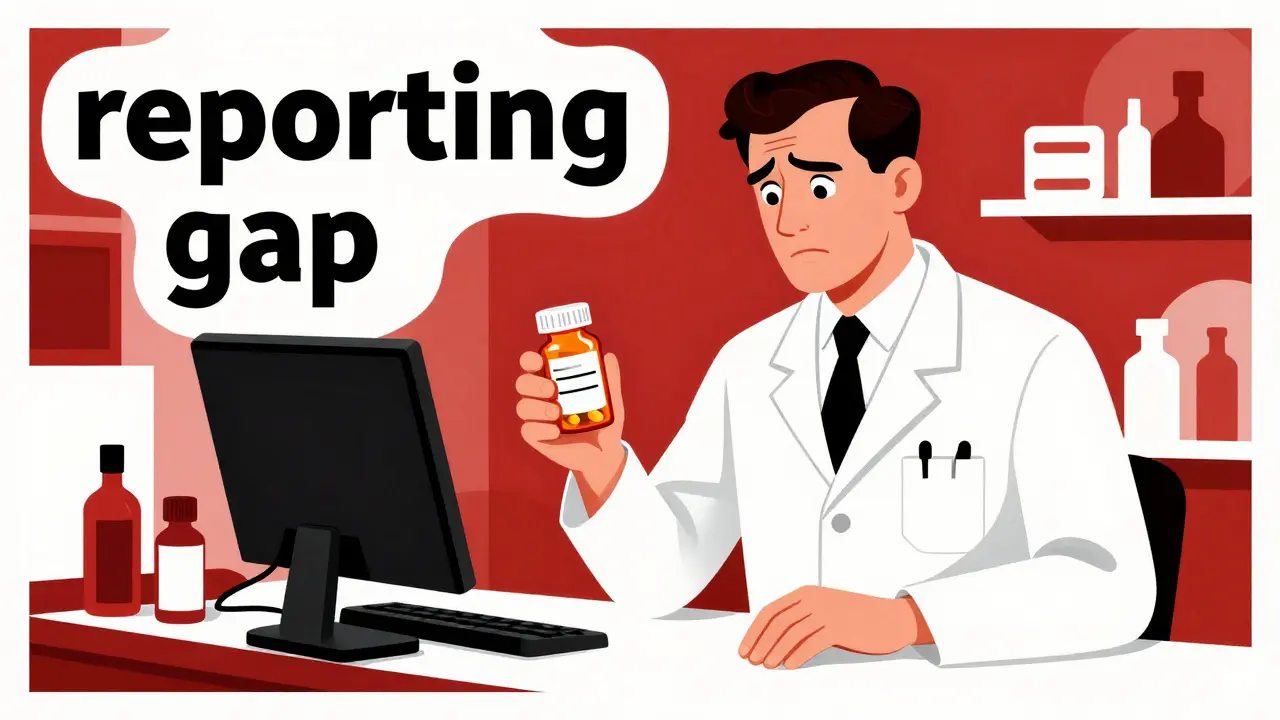
If the rules are identical, why does the data look so skewed? A landmark study published in the NIH PMC database (2018) analyzed FDA Adverse Event Reporting System (FAERS) data from 2004 to 2015. The findings were stark. While brand drugs accounted for only about 1% of dispensed prescriptions for widely used medications like amlodipine and simvastatin during parts of that period, brand manufacturers submitted approximately 68% of all serious adverse event reports. This discrepancy persisted even after generic versions entered the market.
Consider losartan, a common blood pressure medication. The study documented a statistically significant increase in adverse event reporting trends after generic entry, yet the brand name still dominated the reports. This contradicts the logical expectation that reporting would shift proportionally with prescription volume. With generics representing roughly 90% of all prescriptions dispensed in the United States, according to the 2022 Generic Drug Savings Report, we should see a corresponding surge in generic-related safety data. Instead, we see a void.
Dr. Daniel Korn, Director of the Division of Pharmacovigilance I at the FDA’s Center for Drug Evaluation and Research, highlighted this issue in a 2019 workshop, noting that underreporting for generics creates a "significant gap" in post-marketing surveillance. Dr. Jerry Avorn of Harvard Medical School echoed this concern in JAMA Internal Medicine, warning that the current system fails to capture the complete safety profile of generic drugs. The risk? Subtle differences between formulations-perhaps in inactive ingredients or manufacturing processes-might go undetected if the safety net is porous.
| Factor | Brand-Name Drugs | Generic Drugs |
|---|---|---|
| Prescription Volume (US) | ~10% | ~90% |
| Share of SAE Reports | Disproportionately High (~68%) | Disproportionately Low |
| Pharmacovigilance Resources | 98% have dedicated departments | Only 42% have dedicated departments |
| Manufacturer Identification | Easy (Single source) | Difficult (Multiple sources, frequent switches) |
| Regulatory Deadline (FDA) | 15 calendar days | 15 calendar days |
Practical Challenges for Healthcare Providers
So, where does the breakdown happen? It often starts at the pharmacy counter or the doctor’s desk. When a patient reacts badly to a generic medication, the first hurdle is identifying exactly which manufacturer made that specific pill. Pharmacies frequently switch suppliers based on cost and availability. One month you get a generic levothyroxine from Company A; the next month, it’s from Company B. The pill looks the same, but the maker is different.
Maria Chen, a pharmacist, shared a common frustration on the American Pharmacists Association forum: "When I see a patient with a reaction to a generic medication, I often don't know which manufacturer's product they took since pharmacies frequently switch suppliers, making accurate reporting difficult." This isn't just anecdotal. An Institute for Safe Medication Practices (ISMP) survey found that 68% of healthcare providers reported difficulty identifying the specific generic manufacturer when submitting adverse event reports, compared to only 12% for brand-name drugs.
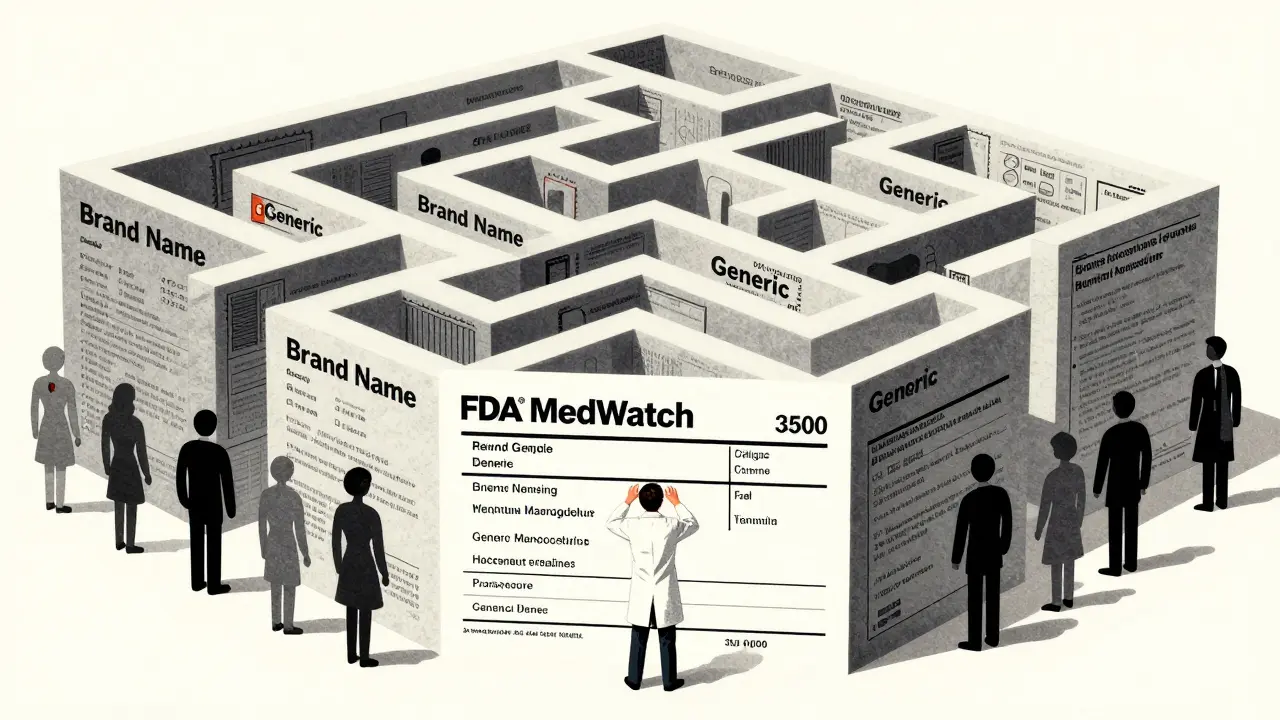
The reporting tool itself, the FDA’s MedWatch Form 3500 is the official form used by healthcare professionals and consumers to report adverse events and product quality problems to the FDA, adds to the friction. The online portal requires reporters to specify whether the product is a "Brand Name" or "Generic Name" and demands manufacturer information. If you don’t have the manufacturer’s name, the process stalls. Dr. Robert Kim, a family physician, noted on Doximity that he often defaults to reporting to the brand manufacturer because patients rarely know who made their generic pill. The FDA’s own 2019 usability study confirmed this pain point: 42% of healthcare providers abandoned adverse event reports for generics due to uncertainty about the manufacturer, compared to just 9% for brands.
Time is another factor. Completing a MedWatch report typically takes 15-30 minutes. For generics, that jumps to 45+ minutes as providers scramble to find the National Drug Code (NDC) or check old bottle labels. In a busy clinic, those extra 30 minutes are often the reason a report never gets filed.
How to Report Correctly: A Step-by-Step Guide
If you suspect a serious adverse event linked to a generic drug, accuracy is your best defense against underreporting. Here is how to navigate the process effectively:
- Secure the Physical Evidence: Before the patient leaves, ask them to bring the medication bottle. The manufacturer’s name is usually printed in small type on the label or the container itself. Do not rely on memory or the prescription slip alone, as these may not list the specific generic supplier.
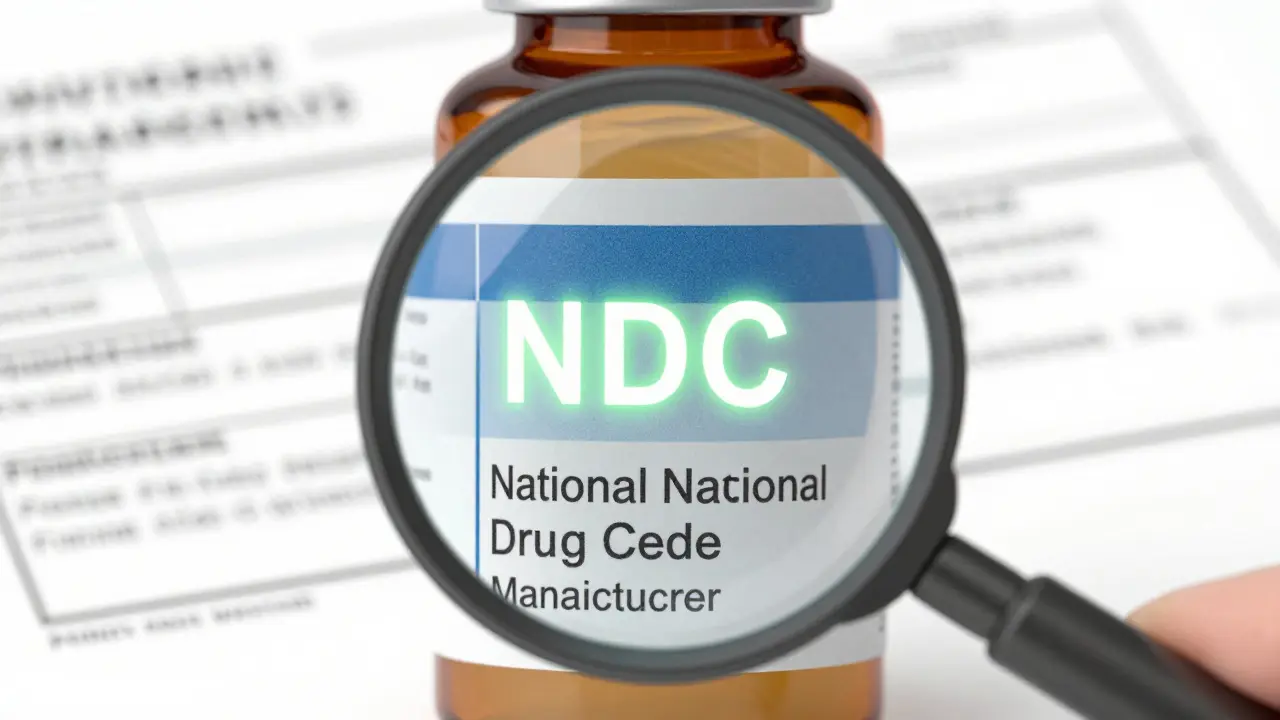
- Identify the NDC Number: Look for the National Drug Code (NDC) on the bottle. This 10- or 11-digit number uniquely identifies the labeler, product, and package size. You can use the National Library of Medicine’s DailyMed database to look up the NDC and confirm the exact manufacturer. This step adds about 10 minutes to your workflow but ensures precision.
- Determine Severity Criteria: Verify that the event meets the FDA’s definition of "serious." Did it require hospitalization? Was it life-threatening? Did it cause disability? Document the start date, time of onset, body site, and severity clearly. The EMA’s ICH E2D guideline emphasizes including a full description of the reaction and the specific criterion for regarding the report as serious.
- Use MedWatch Form 3500: Access the FDA’s MedWatch online portal. Select "Generic Name" and enter the active ingredient. Crucially, fill in the manufacturer field using the information gathered from the NDC lookup. If you cannot identify the manufacturer, note "Unknown Manufacturer" but provide all other details; partial data is better than no data, though it limits signal detection.
- Submit Within Timeframes: Ensure the report is submitted promptly. For manufacturers, the 15-day clock is strict. For healthcare providers, while there is no legal penalty for delay, timely reporting aids in faster signal detection. Aim to submit within 24-48 hours of identifying the event.
Institutional solutions are also emerging. The American Society of Health-System Pharmacists (ASHP) recommends implementing barcode scanning of medication containers at the point of administration. Pilot studies at 12 hospital systems showed this increased generic AE reporting accuracy by 63%. If you work in a hospital setting, advocate for this technology-it captures the manufacturer data automatically, removing the human error element.
Industry Shifts and Future Outlook
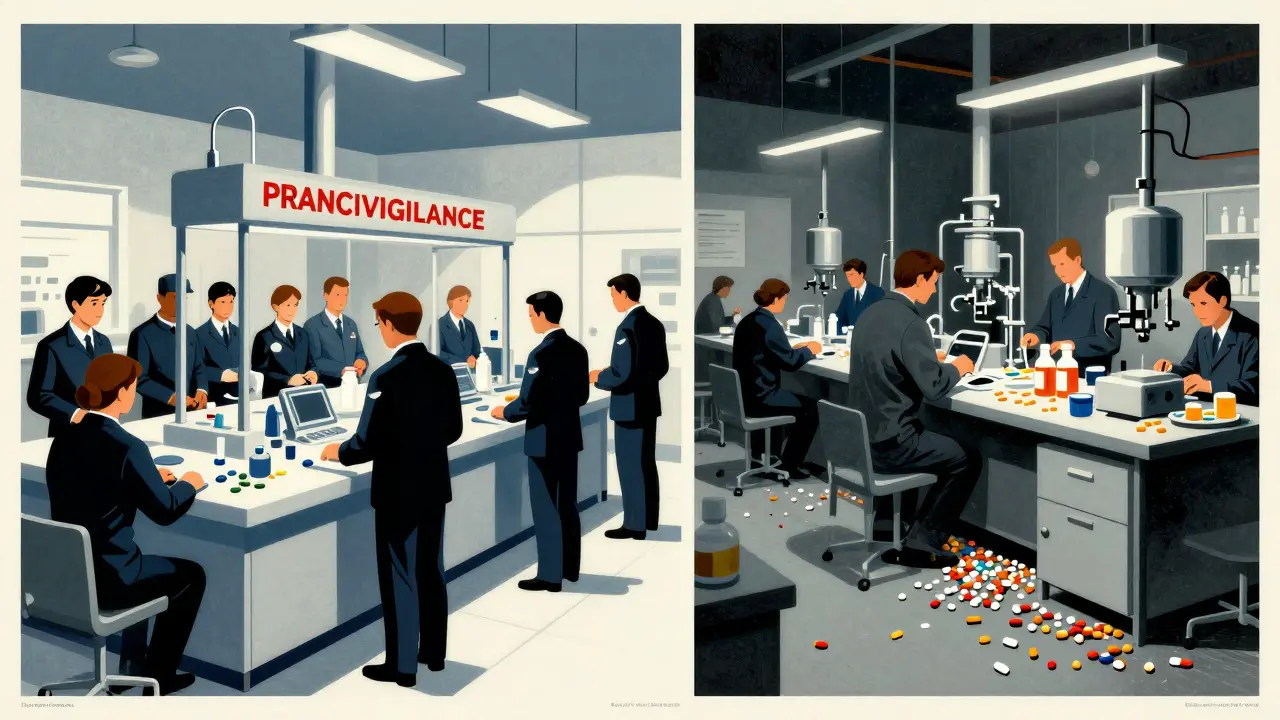
The landscape is changing, albeit slowly. The generic pharmaceutical industry consists of about 200 manufacturers in the U.S., with the top 10 (including Teva, Viatris, and Amneal) controlling 65% of the market. However, smaller manufacturers-who account for 32% of generic prescriptions-submitted only 4.7% of all generic-related adverse event reports in the NIH study. This disparity highlights a resource gap. Large companies have dedicated pharmacovigilance teams; smaller ones often rely on third-party contractors or lack robust internal systems.
Regulators are taking notice. The FDA’s Generic Drug User Fee Amendments (GDUFA III, 2023-2027) allocated $15 million specifically for enhancing post-market safety monitoring of generic drugs. In June 2023, the FDA issued draft guidance proposing that pharmacies include manufacturer information on all prescription labels to facilitate accurate reporting. Additionally, the FDA launched a pilot program in 2024 with major pharmacy chains to automatically capture manufacturer information at dispensing. Preliminary modeling suggests this could increase generic AE reporting completeness by 55% within three years.
Technology spending is also rising. Industry analysts project that pharmacovigilance technology spending by generic manufacturers will grow from $185 million in 2023 to $320 million by 2027. This investment indicates a growing recognition that the old ways of handling safety data are insufficient. The goal is clear: close the reporting gap to ensure that generic drugs, which serve the majority of patients, have safety profiles as robust as their brand-name predecessors.
What constitutes a 'serious' adverse event for generic drugs?
A serious adverse event (SAE) is defined by the FDA as any adverse event that results in death, is life-threatening, requires hospitalization or prolongs existing hospitalization, results in persistent or significant disability or incapacity, causes a congenital anomaly or birth defect, or requires medical or surgical intervention to prevent one of these outcomes. This definition applies equally to both brand-name and generic drugs.
Why are adverse events for generic drugs underreported?
Underreporting stems from several factors: difficulty identifying the specific generic manufacturer due to frequent pharmacy supplier switches, lack of dedicated pharmacovigilance resources in smaller generic companies, and cumbersome reporting forms that require detailed manufacturer data. Studies show 68% of providers struggle to identify the generic manufacturer, leading many to abandon reports or default to brand names.
How do I find the manufacturer of a generic drug?
The most reliable method is to locate the National Drug Code (NDC) on the medication bottle or packaging. You can then look up this code in the National Library of Medicine’s DailyMed database to identify the specific manufacturer. Alternatively, check the small print on the label or consult the pharmacy’s dispensing records, which often log the supplier.
What is the deadline for reporting serious adverse events to the FDA?
Manufacturers must report serious and unexpected adverse drug reactions to the FDA within 15 calendar days of receiving the information. Healthcare providers are encouraged to report as soon as possible via MedWatch Form 3500, though there is no statutory penalty for delayed reporting by individuals. The EMA requires notification within 7 days for fatal or life-threatening cases.
Are generic drugs less safe than brand-name drugs?
Generic drugs are required to be bioequivalent to their brand-name counterparts, meaning they deliver the same active ingredient in the same amount and strength. However, the underreporting of adverse events for generics creates a data gap that makes it harder to detect rare safety signals. This doesn't necessarily mean they are less safe, but rather that our surveillance system is currently less effective at monitoring them.