
 Aug, 19 2026
Imagine waking up with a gnawing pain in your upper stomach that gets better after you eat but worse when you lie down. For millions of people worldwide, this isn't just indigestion; it's a peptic ulcer, a raw sore in the lining of your stomach or the first part of your small intestine (duodenum). While we used to blame spicy food and stress, modern medicine has pinpointed two main culprits: a sneaky bacterium called Helicobacter pylori (H. pylori) and long-term use of painkillers like ibuprofen. The good news? This condition is highly treatable. By combining specific antibiotics to kill the bacteria with acid-reducing medications to let the tissue heal, doctors can resolve most cases effectively.
What Exactly Is Peptic Ulcer Disease?
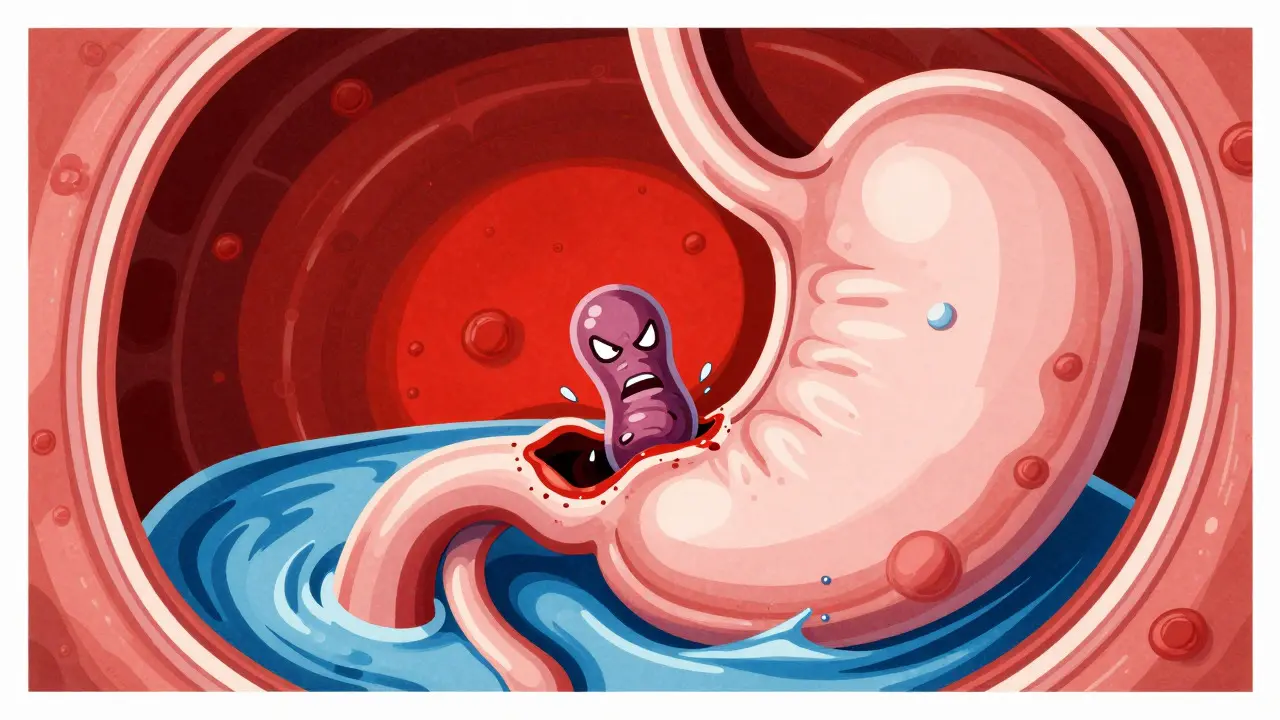
Peptic ulcer disease (PUD) occurs when the protective mucus layer of the stomach or duodenum breaks down, allowing stomach acid to damage the underlying tissue. Think of your stomach lining as a shield. Normally, it secretes mucus and bicarbonate to neutralize acid before it eats into the muscle wall. When that shield fails, acid burns through the surface, creating an open wound. This affects roughly 8 million people globally, according to recent data from UCI Health. You might not realize you have one until symptoms become noticeable. Common signs include burning epigastric pain, heartburn, nausea, and a feeling of fullness after eating only a small amount. In severe cases, you might vomit blood or pass dark, tarry stools, which are red flags requiring immediate medical attention.
The Two Main Causes: Bacteria vs. Painkillers
Why does the lining break down? It almost always comes back to one of two factors. First is Helicobacter pylori. This spiral-shaped bacterium colonizes the gastric mucosa, causing inflammation and increasing acid production. Research shows that over 50% of patients with duodenal ulcers and 30-50% of those with gastric ulcers test positive for H. pylori. Second is the use of nonsteroidal anti-inflammatory drugs (NSAIDs), such as aspirin, ibuprofen, or naproxen. These drugs block enzymes that protect the stomach lining, making it vulnerable to acid. Today, NSAIDs account for more than 50% of peptic ulcers, especially in older adults managing chronic pain. Interestingly, smoking also plays a role, increasing your risk by 2 to 3 times, while heavy alcohol consumption (more than three drinks daily) can boost risk by 300%.
How Doctors Diagnose the Problem
You can’t diagnose an ulcer at home. A gastroenterologist will typically perform an endoscopy, where they insert a thin tube with a camera down your throat to look directly at the stomach lining. During this procedure, they often take a biopsy to test for H. pylori. Other tests include stool antigen tests or breath tests, which detect the bacteria without needing a scope. Accurate diagnosis is crucial because the treatment differs significantly depending on whether the cause is bacterial or chemical (NSAID-induced). If H. pylori is present, you need antibiotics. If it’s caused by medication, you focus on stopping the irritant and suppressing acid.
Antibiotic Therapy: Eradicating H. Pylori
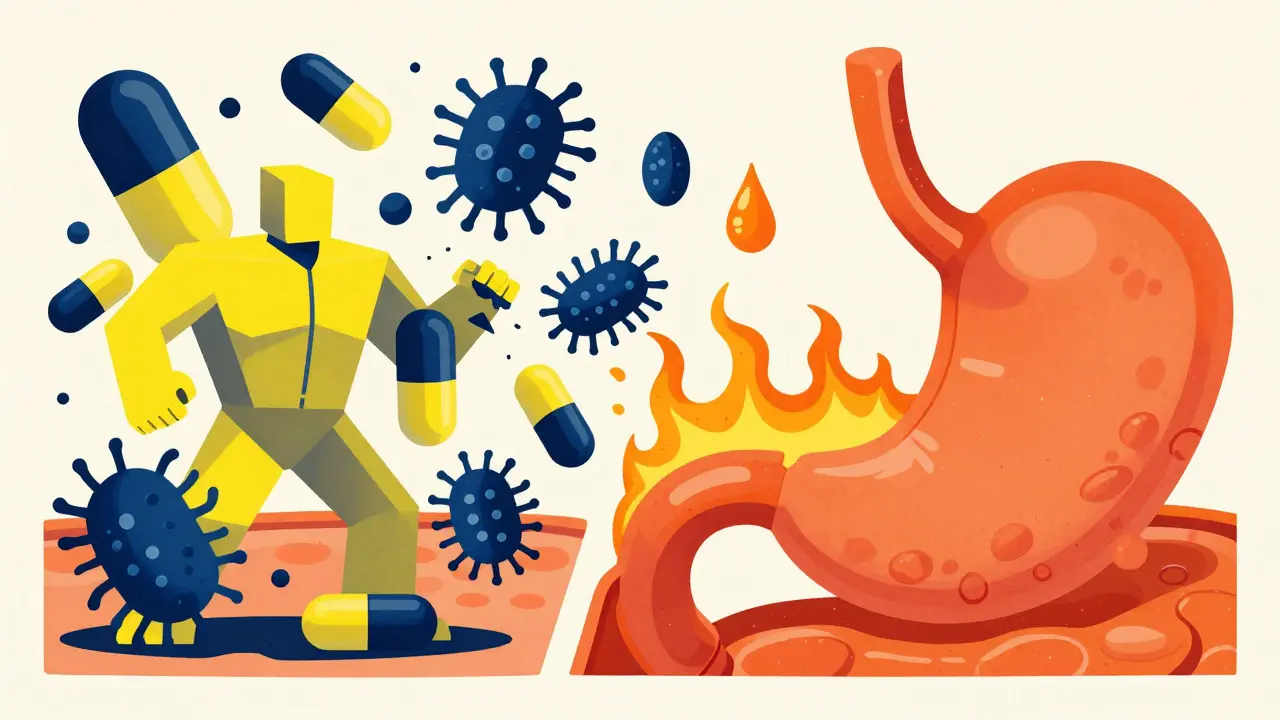
If H. pylori is the culprit, the goal is eradication. The standard approach is a combination regimen usually lasting 7 to 14 days. This typically involves two different antibiotics plus a proton pump inhibitor (PPI). Why two antibiotics? Because using just one often leads to resistance. Common combinations include amoxicillin and clarithromycin, or metronidazole and clarithromycin. Some newer guidelines recommend quadruple therapy, adding bismuth subsalicylate to the mix, especially in areas where clarithromycin resistance is high. Adherence is key here. Missing doses is the primary reason treatment fails. Patients often report side effects like metallic taste (common with metronidazole) or digestive upset, but sticking to the schedule ensures the bacteria don’t survive and mutate.
Acid-Reducing Medications: Letting the Wound Heal
While antibiotics kill the bug, acid reducers give the ulcer time to close. There are two main classes: Proton Pump Inhibitors (PPIs) and H2-receptor antagonists. PPIs are the gold standard today because they block the final step of acid production, keeping the stomach nearly acid-free for 24 hours or more. Popular PPIs include omeprazole, lansoprazole, esomeprazole, rabeprazole, and pantoprazole. They work best when taken 30 to 60 minutes before a meal. H2 blockers, like famotidine or cimetidine, work by blocking histamine receptors, reducing acid for about 10-12 hours. While effective, they are generally less potent than PPIs for healing established ulcers. For duodenal ulcers, controlling nighttime acid secretion is particularly important, which is why PPIs are preferred.
| Feature | Proton Pump Inhibitors (PPIs) | H2-Receptor Antagonists |
|---|---|---|
| Examples | Omeprazole, Esomeprazole, Pantoprazole | Famotidine, Cimetidine, Nizatidine |
| Duration of Effect | 24-72 hours per dose | 10-12 hours |
| Acid Suppression Level | Near-complete inhibition | Partial reduction |
| Best Used For | Healing active ulcers, long-term maintenance | Mild symptoms, occasional reflux |
| Timing | 30-60 mins before meals | Before meals or at bedtime |
Treating NSAID-Induced Ulcers
If your ulcer stems from NSAIDs rather than bacteria, antibiotics won’t help. The strategy shifts to removing the irritant. Ideally, you stop taking the NSAID entirely. However, if you need pain relief for arthritis or chronic conditions, doctors might switch you to acetaminophen (Tylenol), which is gentler on the stomach, or a COX-2 inhibitor, which targets pain without stripping away all stomach protections. In some cases, a doctor may prescribe misoprostol, a prostaglandin analog, to reinforce the stomach lining. Often, a PPI is added to this regimen to ensure acid levels stay low enough for the ulcer to heal completely.
Lifestyle Factors That Speed Up Healing
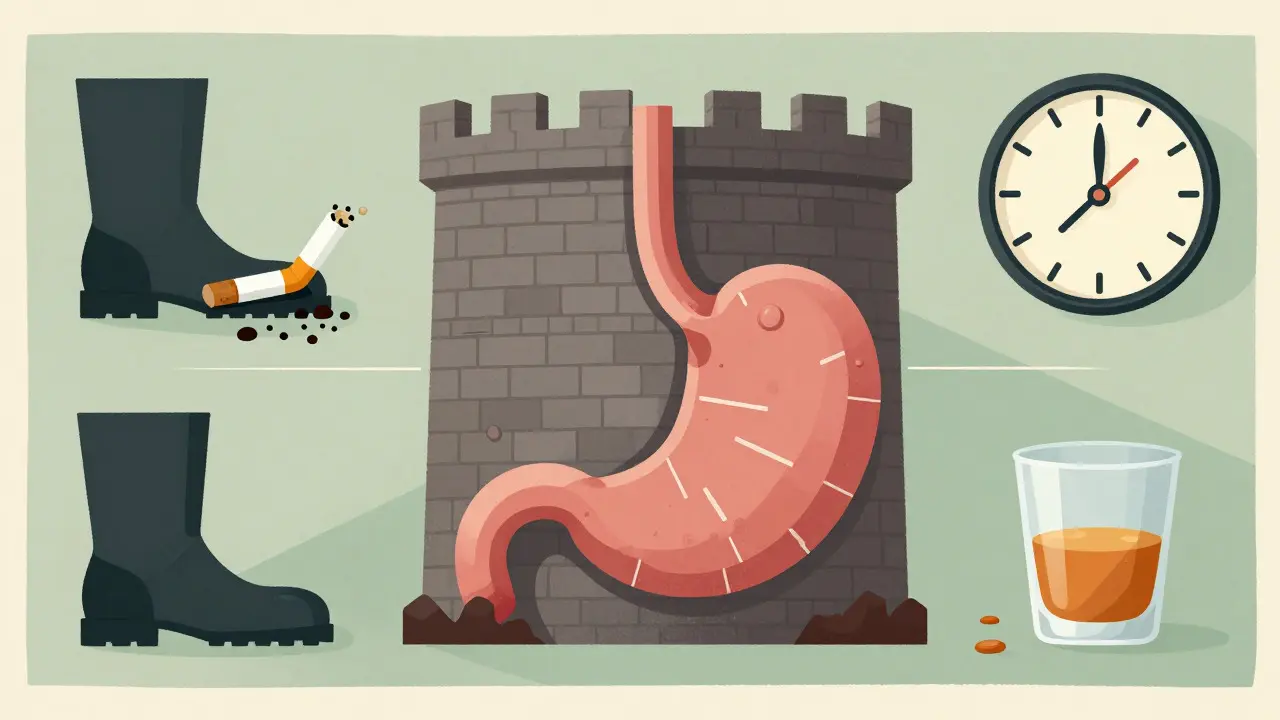
Medication does the heavy lifting, but your habits influence the outcome. Smoking impairs blood flow to the stomach lining and reduces mucus production, so quitting is one of the most impactful changes you can make. Alcohol should be limited, as excessive intake irritates the mucosa directly. Diet-wise, there’s no strict “ulcer diet,” but avoiding foods that trigger your specific pain-often fatty or acidic items-can improve comfort. Stress doesn’t cause ulcers directly, but it can worsen symptoms, so managing anxiety through relaxation techniques can help you feel better during recovery.
Long-Term Considerations and New Treatments
Most ulcers heal within 4 to 8 weeks of starting treatment. However, recurrence is possible if H. pylori wasn’t fully eradicated or if NSAID use continues. Re-testing for H. pylori after completing antibiotics is recommended to confirm success. On the horizon, new drugs like vonoprazan, a potassium-competitive acid blocker, show promise with higher eradication rates than traditional regimens. As antibiotic resistance grows, personalized therapy based on resistance testing is becoming more common. For now, the combination of targeted antibiotics and consistent acid suppression remains the most reliable path to getting your life back on track.
Does spicy food cause peptic ulcers?
No, spicy food does not cause ulcers. While it may aggravate symptoms in someone who already has an ulcer, it is not a root cause. The primary causes are H. pylori infection and NSAID use.
How long do I need to take antibiotics for H. pylori?
The standard course lasts between 7 and 14 days. You must finish the entire prescription even if you feel better earlier to prevent antibiotic resistance.
Can I take PPIs for a long time?
For most people, PPIs are safe for short-to-medium term use. Long-term use requires monitoring for potential side effects like vitamin B12 deficiency or bone density issues, so discuss duration with your doctor.
What should I do if my ulcer doesn't heal?
If an ulcer is refractory (doesn't heal), see a specialist. Common reasons include missed antibiotic doses, resistant H. pylori strains, or continued NSAID use. Your doctor may adjust the medication regimen or investigate other causes.
Is peptic ulcer disease contagious?
The ulcer itself isn't contagious, but H. pylori can spread through close contact, sharing utensils, or poor hygiene. Practicing good handwashing helps reduce transmission risk.