
 Jan, 11 2026
Isotretinoin Mental Health Risk Assessment Tool
Personal Risk Assessment
This tool estimates your risk of experiencing depression while taking isotretinoin based on your medical history and current mental health status. Results are for informational purposes only and should not replace professional medical advice.
Your estimated risk of depression while on isotretinoin:
When you're struggling with severe acne, isotretinoin can feel like a lifeline. For many, it clears skin that nothing else could touch-sometimes permanently. But behind the promise of clear skin is a quiet, persistent concern: isotretinoin and depression. Is the risk real? Should you be scared? Or is this just another medical scare that got blown out of proportion?
What Isotretinoin Actually Does
Isotretinoin is a powerful drug, a synthetic form of vitamin A. It shrinks the oil glands in your skin, cuts down sebum production, and kills the bacteria that cause acne. It’s not a cream or a pill you take for a few weeks. Most people take it for 15 to 20 weeks, often at a dose of 0.5 to 1.0 mg per kilogram of body weight. By the end, about 85% of users see their acne stay gone for years, if not permanently. That’s why dermatologists still prescribe it-even after decades of controversy.The Controversy: Depression and Suicidal Thoughts
The link between isotretinoin and depression isn’t new. Since the 1980s, there have been reports of patients feeling low, anxious, or even having thoughts of self-harm while on the drug. In 2009, the original brand, Accutane, was pulled from the U.S. market-not because it didn’t work, but because of lawsuits tied to psychiatric side effects. Fast forward to 2025, and the data is messy. On one side, the FDA’s own adverse event database shows over 19,000 reported psychiatric cases linked to isotretinoin between 2004 and 2024. Depression showed up in nearly half of them. Suicidal thoughts were reported in over 17%, with a reporting odds ratio of 11.16-meaning these cases were far more common among isotretinoin users than in the general population. But here’s the twist: a massive 2023 study in JAMA Dermatology, looking at over 1.6 million people, found no increased risk. The actual rate of suicide attempts among isotretinoin users was 0.14% in a year-lower than the rate in teens without acne. Depression rates were about 3.8%, which is right in line with what you’d expect in teenagers and young adults anyway. So why the disconnect? One big reason: reporting bias. People who feel worse on the drug are more likely to report it. Those who feel fine? They don’t call their doctor. The people who report depression on isotretinoin aren’t random-they’re often the ones who already had anxiety, a history of depression, or were under serious emotional stress from their acne.Who’s at Real Risk?
The truth isn’t that isotretinoin causes depression in healthy people. It’s that it can make existing mental health struggles worse-or uncover them. Studies show that if you’ve had depression, anxiety, or suicidal thoughts before, your risk goes up. One 2024 analysis found that patients with a psychiatric history were 3.5 times more likely to have a negative mental health reaction. And it’s not just about past diagnoses. If you’ve been on antidepressants, had therapy, or been hospitalized for mood disorders, you’re in a higher-risk group. Oddly, higher doses of isotretinoin were linked to lower suicide risk in the same studies. Why? Researchers think it might be because people who get higher doses clear their acne faster-and their mood improves with their skin. Acne itself is a major trigger for depression. For many, the real cause of their low mood isn’t the drug-it’s the constant shame, social isolation, and bullying that comes with severe acne.What Doctors Are Doing Now
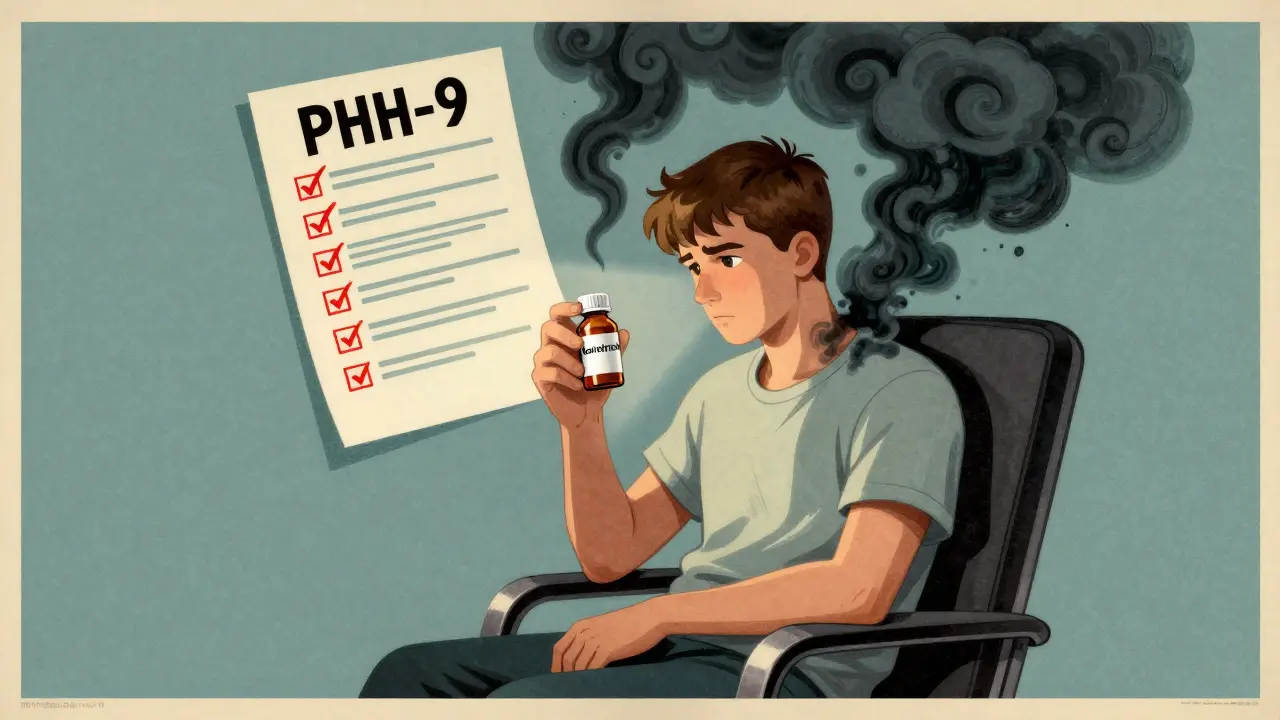
Because the science is mixed, doctors aren’t guessing anymore. They’re following strict, updated protocols. In the U.S., the iPLEDGE program-which every prescriber must use to legally give out isotretinoin-now requires monthly depression screenings using the PHQ-9 questionnaire. If your score hits 10 or higher, you’re referred to a mental health professional before you can get your next prescription. But top dermatology clinics are going further. At UCSF, every patient gets a mandatory “mental health pause” at week 8. That’s when most psychiatric symptoms, if they’re going to show up, tend to appear. You have to meet with your doctor in person. No phone calls. No texts. You answer questions like: “Have you had thoughts of hurting yourself?” “Do you feel numb or detached?” “Are you crying more than usual?” The American Academy of Dermatology recommends a full psychiatric history before you even start. That means asking about:- Previous depression, anxiety, bipolar disorder, or suicide attempts
- Family history of mental illness
- Current medications (especially antidepressants or mood stabilizers)
- Stress levels, sleep quality, and social support
Red Flags: When to Stop
Not every bad mood means you need to quit. Everyone has bad days. But there are clear signs that you should stop isotretinoin immediately:- Any suicidal thoughts-even if you say, “I’m not going to do it, but I think about it”
- Sudden, extreme mood swings-like going from calm to rage in minutes
- Feeling emotionally numb, like you can’t feel joy or sadness anymore
- Severe anxiety that doesn’t improve with therapy or medication
- Psychotic symptoms: hearing voices, feeling watched, paranoid thoughts
What About Other Acne Treatments?
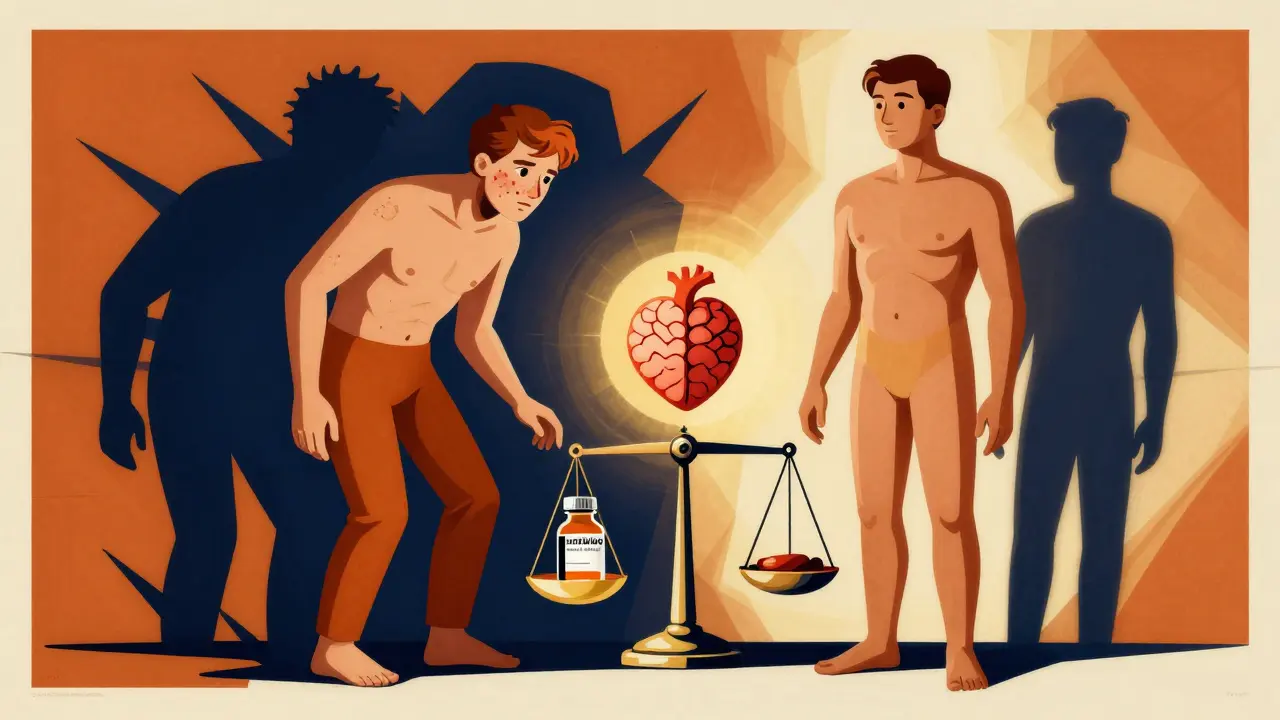
Some people assume antibiotics like doxycycline or minocycline are safer. But minocycline has its own mental health risks. A 2017 study found 1.7% of users developed depression-lower than isotretinoin’s reported rates, but still real. Topical retinoids like tretinoin don’t carry psychiatric warnings, but they’re not strong enough for severe nodular acne. The truth? No acne treatment is risk-free. But isotretinoin is the only one that can truly clear stubborn, scarring acne. If you’ve tried everything else and your skin is still wrecking your life, the benefit may outweigh the risk.Real Stories: The Good, the Bad, and the Ugly
Online forums are full of raw, unfiltered stories. On Reddit’s r/Accutane, 147,000 people share their experiences. One thread from July 2024 had 387 responses:- 43% said their depression or anxiety got worse
- 29% felt no change
- 18% said their mood improved-because their acne was gone
What’s New in 2025
The science is evolving. In 2024, the FDA launched a pilot program that links PHQ-9 screenings directly to the iPLEDGE system. Now, patients answer the depression questionnaire online every week during the first 8 weeks. If the system flags a high score, your doctor gets an alert. New research also points to genetics. A July 2024 study found that people with a specific gene variation (BDNF Val66Met) were 68% more likely to develop depression on isotretinoin. That doesn’t mean you’ll get tested for it yet-but it’s a step toward personalized treatment. And here’s something most people don’t know: low vitamin B12 can mimic depression symptoms. A 2022 study found 18.7% of isotretinoin users had low B12 levels. Doctors now check it before and during treatment. If it’s low, they give you a supplement-and sometimes, the “mood side effect” disappears.Final Advice: What You Should Do
If you’re considering isotretinoin:- Be honest with your doctor about your mental health history-even if it feels embarrassing
- Ask for a baseline PHQ-9 score before you start
- Set up weekly check-ins with someone you trust-a friend, partner, or therapist
- Don’t ignore early signs: irritability, crying for no reason, losing interest in things you used to love
- Know that stopping the drug doesn’t mean failure. Your skin can be treated later. Your mental health can’t wait.
- Don’t skip your monthly screenings. They’re there to help, not to judge
- Keep a mood journal. Write down how you feel each week. It helps your doctor see patterns
- If you feel worse, don’t wait until your next appointment. Call your dermatologist today
Frequently Asked Questions
Does isotretinoin cause depression in everyone?
No. Most people do not develop depression on isotretinoin. Large studies show the absolute risk is low-about 3.8% for depression and 0.14% for suicide attempts. These rates are similar to or lower than what’s seen in teens and young adults without acne. The drug doesn’t cause depression in healthy people without risk factors.
How long after starting isotretinoin do mental health side effects appear?
Most psychiatric symptoms show up between weeks 4 and 12, with the highest risk around week 8. This is why many clinics require a mandatory check-in at that point. Symptoms rarely appear after week 16, so ongoing monitoring becomes less urgent-but still important.
Can I still take isotretinoin if I’ve had depression before?
Yes-but with extra care. If you’ve had depression, anxiety, or suicidal thoughts in the past, your doctor will likely require more frequent monitoring, possibly a consultation with a psychiatrist before starting. Many patients with past mental health issues do well on isotretinoin, especially if their acne was severely affecting their mood.
What should I do if I feel worse on isotretinoin?
Don’t ignore it. Contact your dermatologist immediately. Don’t wait for your next appointment. If you’re having suicidal thoughts, call a crisis line or go to the emergency room. Stopping isotretinoin usually leads to improvement within 2 to 4 weeks. Your mental health matters more than your skin.
Are there alternatives to isotretinoin for severe acne?
Yes, but none are as effective. Oral antibiotics like doxycycline or minocycline help, but acne often returns after stopping. Hormonal treatments like spironolactone work for some women. Laser and light therapies can reduce inflammation. But for severe nodular or cystic acne that doesn’t respond to anything else, isotretinoin remains the most reliable option for long-term clearance.