
 May, 27 2026
Getting prescribed a new medication while you are pumping or breastfeeding can feel like hitting a panic button. Your first thought is often, "Do I have to throw away all my milk?" The short answer is almost always no. In fact, fewer than 2% of medications require you to completely stop breastfeeding. However, managing your supply during this time requires a bit more organization than usual. You need to know exactly how to store and label breast milk so that you don't waste precious ounces and ensure your baby gets the safest feed possible.
The goal here isn't just about keeping milk fresh; it's about tracking which batches contain trace amounts of medication and which ones do not. By separating your milk based on timing and labeling it clearly, you maintain control over your supply. This guide breaks down the practical steps for storing, labeling, and managing your milk when you are taking temporary drugs, from antibiotics to painkillers.
Understanding the 'Pump and Dump' Myth
Before we get into containers and labels, let's clear up a major misconception. Many mothers believe they must "pump and dump"-express milk and immediately discard it-for any medication. According to Dr. Thomas Hale's comprehensive reference text, Medications and Mothers' Milk, a standard resource for healthcare providers, most drugs fall into safety categories L1 (safest) through L5 (contraindicated). For the vast majority of L1 and L2 medications, such as common antibiotics or ibuprofen, there is no need to discard milk at all. The drug levels in milk are too low to harm the infant.
Even for medications that require caution, complete cessation is rare. Instead of dumping milk, experts recommend strategic timing. If a doctor advises waiting between doses, you might express milk during the peak concentration window and save it for later use (like cooking or skincare) or freeze it until the drug clears your system, rather than throwing it in the trash. Understanding this distinction saves you gallons of milk and reduces stress.
Standard Storage Rules vs. Medication Adjustments
The baseline for storing human milk comes from guidelines by the CDC and the Academy of Breastfeeding Medicine. These organizations established the "Rule of 4s," which is easy to remember but needs tweaking when medication is involved.
- Room Temperature: Up to 4 hours. Keep milk away from direct sunlight and heat sources.
- Refrigerator: Up to 4 days. Store milk in the back of the fridge, not the door, where temperatures fluctuate.
- Freezer: 6 to 12 months, depending on whether it's a separate freezer unit or inside a refrigerator.
When you introduce medication, these timelines still apply for freshness, but you add a layer of pharmacokinetics. Most short-acting medications leave your body within 24 to 48 hours. If you are taking a drug with a long half-life, you may need to separate milk expressed during the treatment period from milk expressed before or after. Always consult your pharmacist or lactation consultant about the specific half-life of your prescription. For example, if you take a dose at 8 AM, the peak concentration in your blood-and thus your milk-might occur 1 to 2 hours later. Milk expressed during that window is what you need to label carefully.
How to Label Milk for Medication Safety
Labeling is your best defense against confusion. Standard advice says to write the date and time. When you are on medication, you need to go further. The Mayo Clinic recommends using waterproof labels and ink, which is crucial because freezer burn and condensation can ruin ordinary paper tags.
Create a simple coding system for your bottles or bags. Here is a practical approach:
- Date and Time: Essential for rotation. Use a consistent format, like "MM/DD/YYYY - 08:00 AM."
- Medication Status: Add a note such as "Pre-Med," "During Med," or "Post-Med."
- Drug Name (Optional but Helpful): If you are cycling through different meds, writing "Amoxicillin" helps you track which batch corresponds to which treatment phase.
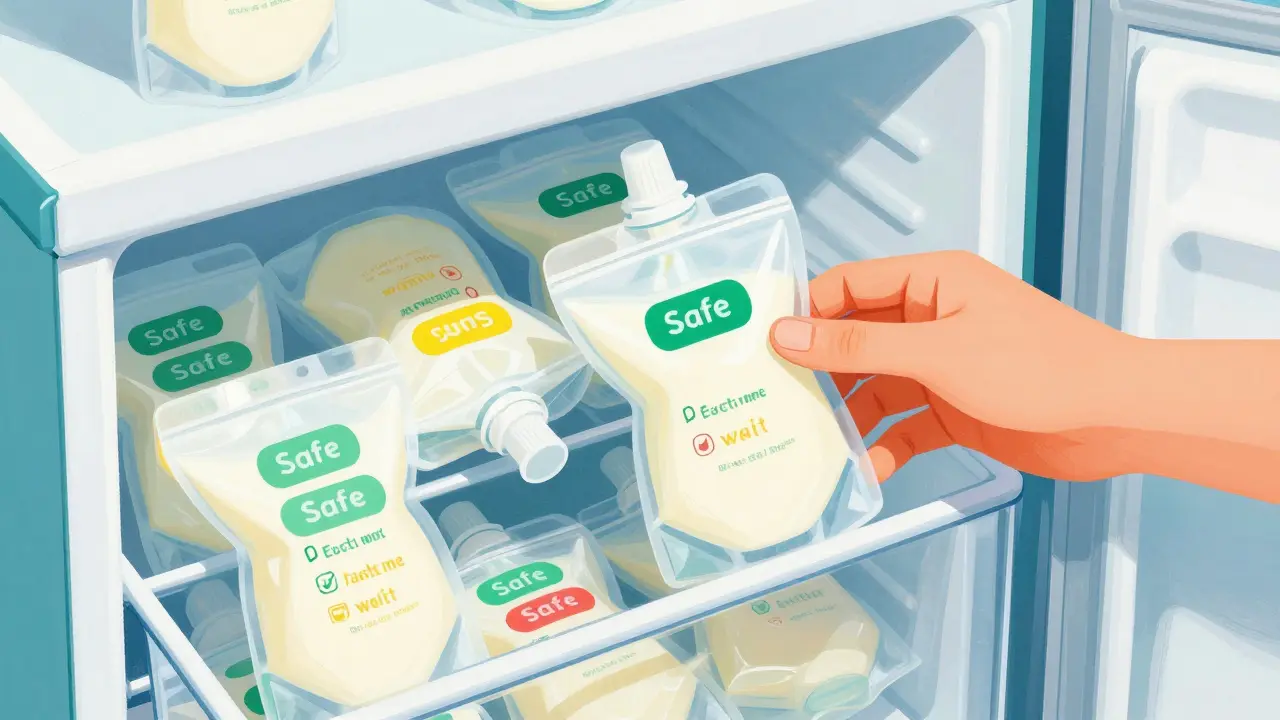
- Color-Coding: Many mothers find success using colored stickers. For instance, green for safe-to-feed-now, yellow for wait-and-freeze, and red for discard-if-not-used-by-date. A survey on BabyCenter found that 78% of users who used color-coded stickers prevented unnecessary milk waste.
If you are using reusable glass bottles, consider using dry-erase markers directly on the lid, but ensure the marker is truly waterproof. For disposable bags, stick to adhesive labels that can withstand freezing temperatures without peeling off.
Separating Batches: Practical Strategies
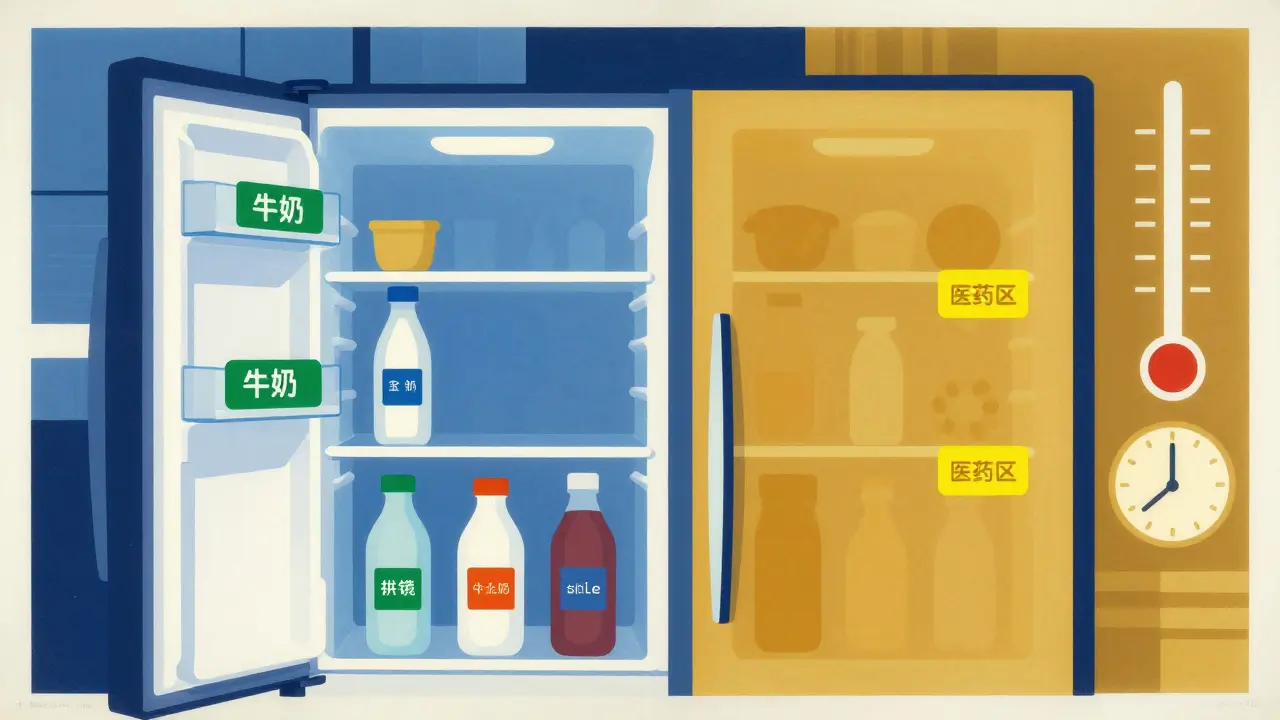
You don't need to buy a second set of pumps or bottles. You just need a designated space in your fridge or freezer. Create a "Medication Zone" in your refrigerator. Place all milk expressed while you are actively taking the drug in this zone. Keep your "clean" milk (expressed before starting the med or after finishing the course) in a separate area.
Here is how to handle the transition:
| Phase | Action | Storage Recommendation |
|---|---|---|
| Pre-Medication | Express as usual. | Store in main fridge/freezer. Label as "Safe" or "Green". |
| During Medication | Express to maintain supply. | Store in "Medication Zone." Label with drug name and time. Freeze if unsure about feeding. |
| Post-Medication | Wait for clearance period (usually 5 half-lives). | Return to normal storage. Label as "Safe" or "Green". |
If you are unsure whether the medication is safe to feed, freeze the milk from the "During Medication" phase. Freezing pauses bacterial growth and allows you to wait until you have confirmed the drug has cleared your system. Once you have finished the course and waited the recommended clearance time (often 48 to 72 hours), you can thaw and feed that milk, provided it hasn't exceeded its freezer lifespan. Remember, frozen milk should be thawed in the refrigerator, not at room temperature, to keep bacteria counts low.
Traveling and On-the-Go Storage
Life doesn't stop when you start a new prescription. If you need to travel or go out, the CDC states that milk can be stored in an insulated cooler bag with frozen ice packs for up to 24 hours. This rule holds true even with medication, but the labeling becomes even more critical. When you return home, you must transfer the milk to permanent containers and update the labels immediately.
Don't mix old and new milk in the same container unless the new milk is colder than the old milk. When adding fresh expression to already stored cold milk, chill the new milk in the fridge for a few minutes before pouring it in. This prevents warming the older batch. For medication-specific milk, never mix "medicated" milk with "non-medicated" milk. Keep them separate until you are certain the medicated batch is safe to combine.
Common Mistakes to Avoid
Based on community data from platforms like Reddit and KellyMom.com, several errors trip up parents:
- Failing to Label Timing: Writing only the date means you lose track of when the medication was taken relative to pumping. Always include the time.
- Mixing Batches Prematurely: Combining milk from different times dilutes your ability to track exposure. Keep batches distinct.
- Discarding Too Early: Throwing away milk out of fear is the biggest waste. Verify with a pharmacist or use resources like LactMed (a database from the National Library of Medicine) to check safety profiles before discarding.
- Ignoring Expansion: Breast milk expands when frozen. Leave at least an inch of space at the top of the bottle or bag. This is especially important for smaller batches expressed during medication windows, as you don't want to waste the entire container due to a burst seal.
When to Seek Professional Help
If you are prescribed a medication classified as L4 or L5 in Hale's database, or if your doctor explicitly instructs you to stop breastfeeding, follow their advice strictly. In these cases, you may need to pump and discard the milk to maintain your supply while protecting your baby. An International Board Certified Lactation Consultant (IBCLC) can help you create a personalized plan. They can calculate the exact half-life of your drug and tell you precisely when it is safe to resume feeding or using stored milk.
Remember, your health matters too. Taking necessary medication is part of being a healthy parent. With proper storage, clear labeling, and accurate information, you can navigate temporary prescriptions without losing your milk supply or compromising your baby's safety.
Do I really need to pump and dump for every medication?
No. Fewer than 2% of medications require complete discontinuation of breastfeeding. Most common drugs, including many antibiotics and pain relievers, are considered compatible with breastfeeding. Always check with your pharmacist or a resource like LactMed before discarding milk.
How long does medication stay in breast milk?
It depends on the drug's half-life. Generally, it takes about 5 half-lives for a medication to clear your system completely. For most short-term medications, this is 24 to 48 hours. Your pharmacist can provide the specific half-life for your prescription.
Can I mix milk expressed before medication with milk expressed during medication?
It is best to keep them separate initially. Mixing them makes it difficult to track which milk contains the medication. Once you have confirmed the medication has cleared your system, you can treat all subsequent milk as safe, but avoid mixing pre- and post-medication batches until you are sure.
What is the best way to label milk for medication tracking?
Use waterproof labels or markers. Include the date, time, and a status indicator such as "Pre-Med," "During Med," or "Post-Med." Color-coded stickers can also help visually distinguish batches in the fridge or freezer.
Is it safe to freeze milk expressed while on medication?
Yes, freezing is a great option if you are unsure about feeding the milk immediately. It preserves the milk while allowing time for the medication to clear your system. Just ensure you label it clearly so you don't accidentally feed it too early.