
 Jul, 21 2026
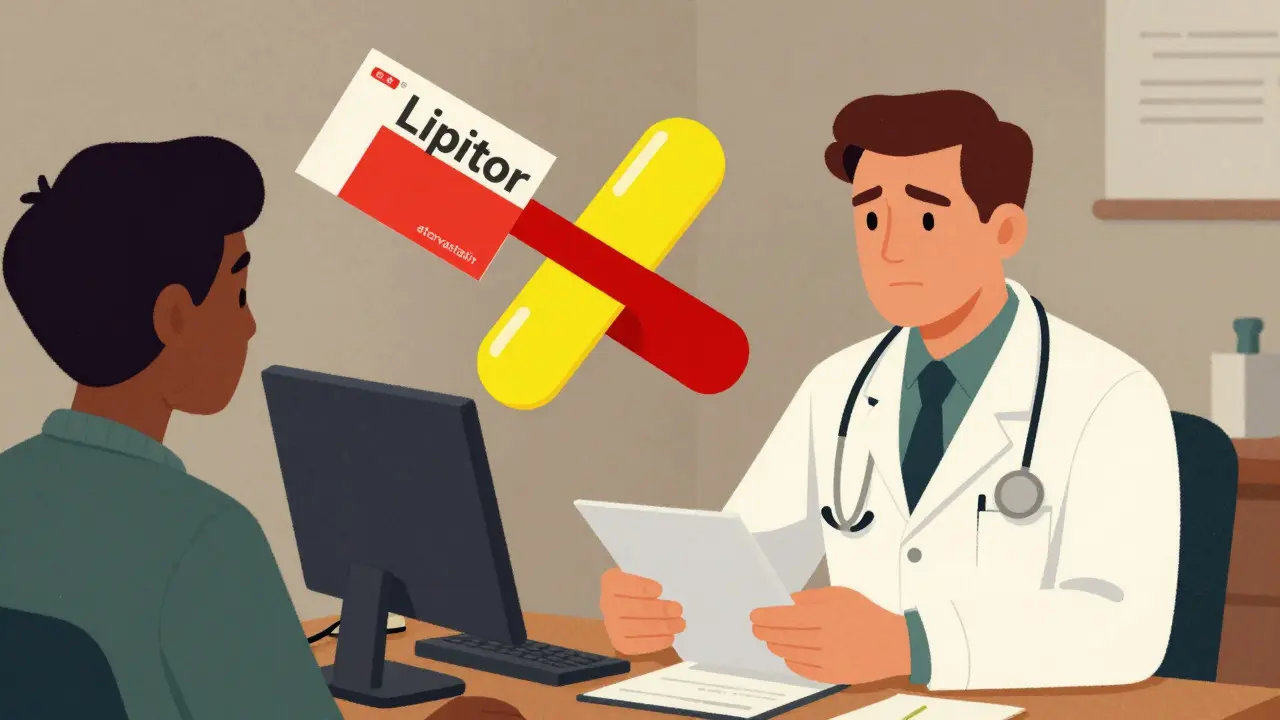
Imagine you are a doctor in Bristol, sitting at your desk with a patient who has been on Lipitor for years. Their insurance or the local health system pushes you to switch them to atorvastatin. You know the science says they are equivalent. But what if that one in fifty patients is yours? What if the switch causes a seizure, a thyroid fluctuation, or simply a loss of trust?
This is the daily tension behind generic prescribing. It is not just about saving money-though the savings are massive. It is about balancing clinical safety, regulatory requirements, and patient confidence. For healthcare providers, understanding the professional recommendations on generic prescribing is no longer optional; it is a core part of modern practice.
The Core Principle: Why Generic Is the Default
At its heart, generic prescribing means writing prescriptions using the International Non-proprietary Name (INN) rather than a brand name. This isn't a new idea. The World Health Organization launched the INN program in 1950 to standardize drug names globally. Today, this approach is the backbone of cost containment and medication safety in systems like the UK's National Health Service (NHS) and the US healthcare sector.
Why do guidelines push so hard for generics? The numbers are stark. Generic drugs typically cost 80% to 85% less than their branded counterparts. In the NHS, while generic medicines account for nearly 90% of prescription items, they make up only about 26% of total drug spending. That efficiency releases resources for other critical care areas. A report from Surrey CCG in 2018 estimated potential annual savings of £1.3 billion through increased generic substitution alone.
Beyond cost, there is safety. Using a single generic name reduces medication errors. When a drug has dozens of brand names across different markets, confusion arises. Standardizing on the INN cuts that risk by half, according to data from the Institute for Safe Medication Practices (2019). Furthermore, lower out-of-pocket costs improve patient adherence. A 2017 study in the Journal of the American Medical Association found that better adherence due to cheaper generics led to 15% fewer hospitalizations for chronic conditions.
Regulatory Standards: How Equivalence Is Proven
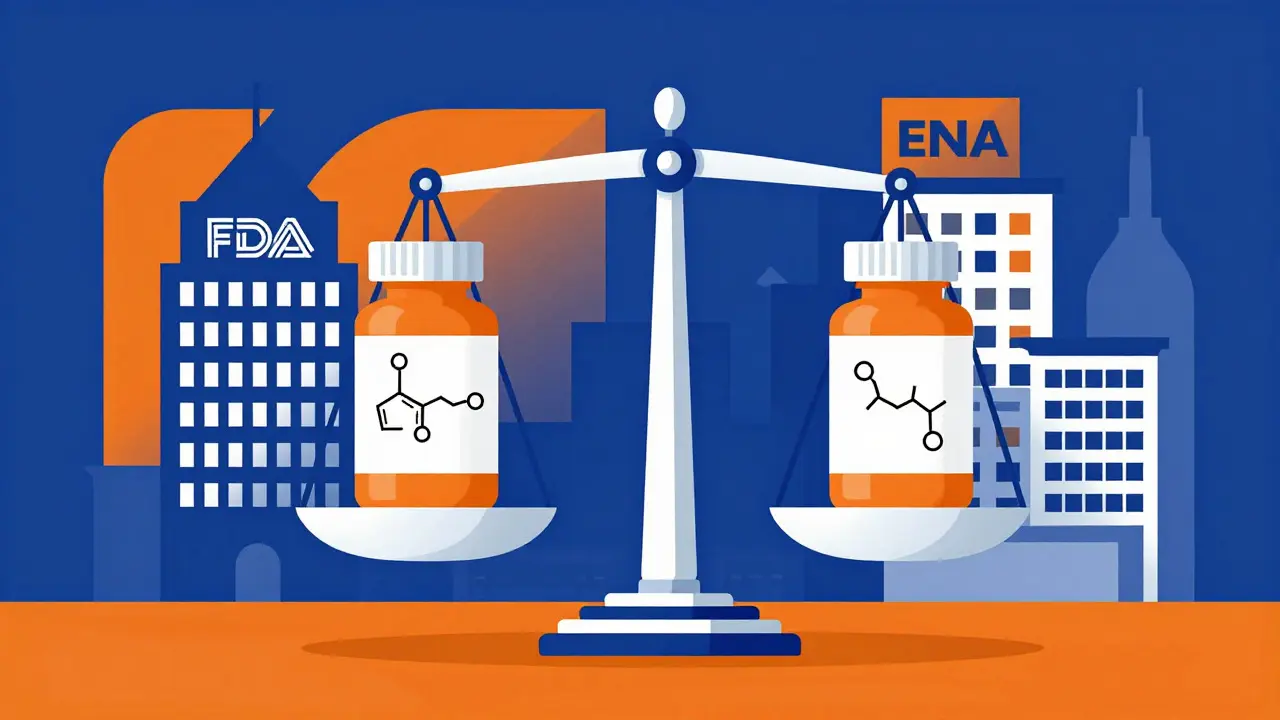
You might wonder: how can we be sure the generic works the same way? Regulatory bodies have strict rules. In the United States, the FDA’s Orange Book lists therapeutically equivalent products. To get approved, a generic must demonstrate bioequivalence, meaning its pharmacokinetic profile falls within 80% to 125% of the reference listed drug. It must contain the same active ingredient, strength, dosage form, and route of administration.
In Europe, the European Medicines Agency (EMA) follows Directive 2001/83/EC, requiring proof of pharmaceutical equivalence and bioequivalence. The UK’s Medicines and Healthcare products Regulatory Agency (MHRA) enforces similar standards. These aren't loose guidelines; they are legal requirements ensuring that the generic meets identical quality, purity, and potency standards as the original brand.
| Region | Key Authority | Equivalence Standard | Primary Reference Tool |
|---|---|---|---|
| United States | FDA | 80-125% Bioequivalence | Orange Book |
| European Union | EMA | Pharmaceutical & Bioequivalence | Directive 2001/83/EC |
| United Kingdom | MHRA / NHS | Same as EU standards | British National Formulary (BNF) |
When to Break the Rule: The Three Exceptions
While generic prescribing is the default, it is not absolute. The British National Formulary (BNF) identifies three specific categories where brand-name prescribing is clinically warranted. Knowing these exceptions is crucial for any prescriber.
- Narrow Therapeutic Index (NTI) Drugs: These are medications where small changes in blood concentration can lead to toxicity or treatment failure. Examples include carbamazepine, digoxin, levothyroxine, phenytoin, and warfarin. For these drugs, switching between brands can cause significant fluctuations in therapeutic effect. The BNF explicitly advises caution here.
- Modified-Release Preparations: Some drugs, like certain formulations of theophylline, rely on complex delivery mechanisms. Different manufacturers may use different technologies to achieve the "modified release," which can alter how the drug enters the bloodstream. Substitution here requires careful consideration.
- Biologic Products: Biologics are large, complex molecules produced in living cells. Unlike small-molecule generics, biosimilars are "similar" but not identical. The MHRA’s 2021 guidance recommends prescribing biologics by brand name to prevent automatic substitution. Switching between originator biologics and different biosimilars can increase immunogenicity risks-the body developing antibodies against the drug.
For approximately 2% of all medications, brand-name prescribing remains necessary. For the rest, generics are safe and effective.
The Human Factor: Patient Acceptance and the Nocebo Effect
Even when the science is clear, patients often resist switching. A 2022 NHS England survey found that while 78% of GPs agreed generics reduce costs without compromising care, 34% worried about patient acceptance. On forums like Reddit’s r/medicine, doctors share stories of patients demanding specific brands despite evidence to the contrary.
Part of this resistance is psychological. Research published in *Patient Education and Counseling* (2021) highlighted the "nocebo effect." When patients believe a generic is inferior, they are more likely to report side effects or lack of efficacy, even if the drug is chemically identical. Dr. Emily Chen of the University of Manchester noted that explaining the rationale for substitution increased patient acceptance from 67% to 89%.
How do you handle this? Use the "Explain, Empower, Engage" framework developed by the Generic Medicines Group. Try saying: "This generic version contains exactly the same active ingredient as the brand you've been taking. It has been tested to work the same way, and it will save you approximately £12 per month with no difference in effectiveness." Clear, confident communication bridges the gap.
Implementation Strategies for Clinicians
Adopting generic prescribing habits takes time. New prescribers often need 2-3 months to reach high compliance rates. The NHS England Generic Prescribing Toolkit (2023) offers a four-step process:
- Audit: Check your current prescribing patterns using tools like the Prescribing Analytics Dashboard. Identify where brand names are being used unnecessarily.
- Educate: Train yourself and your team on the BNF’s three-category exception framework. Make sure everyone knows which drugs require brand continuity.
- System Defaults: Work with IT to set electronic prescribing systems to default to generic names. This reduces cognitive load and accidental brand prescribing.
- Monitor: Track adherence through data from the NHS Business Services Authority. Aim for a 90% generic prescribing rate, as recommended by NHS England.
Practices that implement these steps typically see generic rates jump to 92-95% within six months. The remaining 5-8% represents clinically justified brand prescriptions.
Future Directions: Intelligent Substitution
The landscape is evolving. As drugs become more complex, so do the guidelines. The MHRA updated its guidance in March 2023 to address complex generics like glatiramer acetate, requiring brand-name prescribing due to manufacturing sensitivities. Meanwhile, the FDA’s GDUFA III regulations strengthen post-market surveillance for generics.
Dr. Sarah Garner of NHS England envisions a future of "intelligent substitution." This means using real-world evidence to identify which patients can safely switch and which need brand continuity. It’s a shift toward personalized generic prescribing, maintaining the core principle of cost-effectiveness while enhancing individual patient safety.
What is the difference between a generic drug and a biosimilar?
A generic drug is an exact copy of a small-molecule brand drug, containing the same active ingredient and meeting strict bioequivalence standards. A biosimilar is highly similar to an original biologic product but not identical, as biologics are complex molecules made in living cells. Biosimilars require more careful monitoring during switches due to potential immunogenicity risks.
Which drugs should always be prescribed by brand name?
According to the BNF and MHRA, drugs with a narrow therapeutic index (like warfarin, levothyroxine, and carbamazepine), certain modified-release preparations, and most biologic products should be prescribed by brand name to ensure consistent therapeutic outcomes and minimize risks associated with switching manufacturers.
Do generic drugs work as well as brand-name drugs?
Yes, for the vast majority of medications. Regulatory agencies like the FDA and EMA require generics to prove bioequivalence, meaning they deliver the same amount of active ingredient into the bloodstream over the same period. Clinical studies consistently show comparable efficacy and safety for generic versus brand drugs in non-exception categories.
Why do some patients feel generics don't work for them?
This is often due to the nocebo effect, where negative expectations lead to perceived side effects or reduced efficacy. Additionally, inactive ingredients (fillers, dyes) can differ between manufacturers, potentially causing allergies or intolerances in sensitive individuals. However, for most patients, any perceived difference is psychological rather than pharmacological.
How much money can generic prescribing save?
Generic drugs typically cost 80-85% less than brand-name equivalents. In the US, generics saved the healthcare system $2.2 trillion between 2009 and 2019. In the UK NHS, increasing generic substitution could save billions annually, freeing up resources for other healthcare needs while maintaining high-quality patient care.