
 Jul, 20 2026
Medication Overuse Headache Risk Checker
Select the primary type of acute medication you take for headaches and how many days per month you use it.
Assess Your Usage
Enter your data above to see if you are approaching dangerous overuse thresholds defined by the International Headache Society.
It sounds like a cruel joke. You take a pill to stop the pain, but the very next day, the headache returns-worse than before. So you take another. And another. Before you know it, you are taking medication almost every single day just to feel normal, yet the relief lasts for hours instead of days. If this sounds familiar, you might not be dealing with a worsening migraine or tension headache. You could be trapped in a cycle known as medication overuse headache, often called a "rebound headache."
This isn't about being weak or having a low pain tolerance. It is a recognized medical condition where the treatment becomes the trigger. According to the International Classification of Headache Disorders (ICHD-3) published by the International Headache Society in 2018, this phenomenon transforms episodic headaches into chronic daily suffering. The good news? It is reversible. But first, you have to break the cycle.
How to Spot Medication Overuse Headache
Identifying a drug-related headache requires looking at your calendar, not just your symptoms. The core definition is simple but strict: you experience headaches on more than 15 days per month for at least three months, and during that time, you have been regularly overusing acute headache medication.
But what counts as "overuse"? Not all pills carry the same risk. Your body reacts differently depending on the class of drug you are taking. Here is how the thresholds break down based on current clinical guidelines:
| Medication Type | Examples | Overuse Threshold | Risk Level |
|---|---|---|---|
| Opioids & Butalbital | Oxycodone, Hydrocodone, Tramadol, Butapap | ≥ 10 days/month | High |
| Triptans | Imitrex (sumatriptan), Zomig (zolmitriptan) | ≥ 10 days/month | High |
| Combination Analgesics | Excedrin (contains caffeine/aspirin/acetaminophen) | ≥ 15 days/month | Moderate |
| Simple NSAIDs/Acetaminophen | Ibuprofen (Advil), Naproxen (Aleve), Tylenol | ≥ 15 days/month | Lower (unless max dose exceeded) |
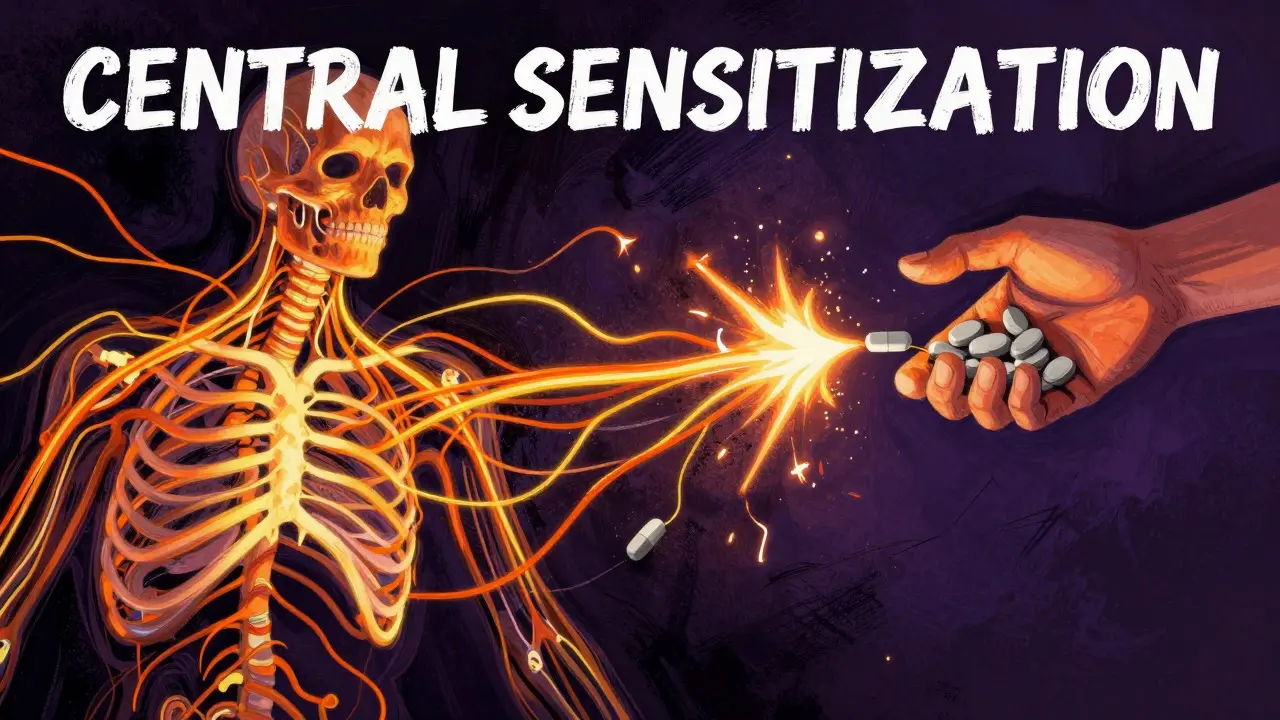
If you find yourself crossing these lines consistently, your brain has likely undergone central sensitization. Research from NCBI StatPearls updated in June 2023 shows that patients with this condition exhibit increased sensitivity to stimuli and altered neurotransmitter metabolism, particularly in serotoninergic systems. Essentially, your nervous system forgets how to regulate pain without chemical help.
Why Does This Happen?
You didn't do anything wrong initially. Most people start with a standard migraine or tension-type headache. Perhaps you had a bad week at work, so you took an extra Excedrin. Then a hangover led to two Ibuprofen. Slowly, the frequency creeps up.
The mechanism is paradoxical. Acute medications are designed to block pain signals temporarily. When used too frequently, the brain adapts by lowering its pain threshold. It starts interpreting normal sensory input as painful. This creates a vicious cycle: the medication wears off, the lowered threshold triggers a new headache, and you reach for the pill again.
This condition affects women significantly more than men, accounting for 70-80% of cases according to Dr. Stephen D. Silberstein’s updates in the Merck Manual (July 2023). While the exact reason for this gender disparity remains under study, hormonal fluctuations may play a role in how female brains process pain and medication metabolism.
Breaking the Cycle: Withdrawal Strategies
The only way to cure a drug-related headache is to stop the offending medication. There is no magic pill that fixes it while you keep taking the old ones. However, quitting cold turkey can be brutal. Withdrawal symptoms are real, physical, and intense.
A 2022 study from the Cleveland Clinic involving 350 patients documented common withdrawal experiences:
- Intensified Headaches: 92% of patients reported their headaches getting worse before they got better.
- Nausea: Experienced by 68% of patients.
- Vomiting: Occurred in 42% of cases.
- Hypotension: Low blood pressure affected 29%.
Given these risks, doctors generally recommend one of two approaches:
- Immediate Discontinuation: Stopping the medication abruptly. This method shows higher success rates (65-70% at two months) compared to tapering, but it often requires inpatient care if you are dependent on opioids or butalbital. About 15-20% of patients need hospital support for severe withdrawal.
- Gradual Tapering: Slowly reducing the dose over weeks. This is less traumatic physically but has a lower success rate (45-50%) because the prolonged exposure can sometimes sustain the sensitization longer.
Dr. Michael C. Levin notes in the Merck Manual that for opioids or barbiturates, gradual tapering is safer to prevent severe withdrawal crises. For triptans or NSAIDs, immediate cessation is usually preferred.
Preventive Therapy: The Missing Piece
Stopping the painkillers is only half the battle. If you quit without addressing the underlying migraine or tension disorder, you will likely relapse. In fact, Dr. Stewart Tepper of the Cleveland Clinic emphasizes that 78% of patients relapse within three months if they don’t start preventive therapy concurrently.
Preventive medications work differently than acute treatments. They aim to stabilize the nervous system so headaches occur less frequently, reducing the urge to reach for rescue meds. Common evidence-based options include:
- Topiramate: An anticonvulsant typically dosed between 40-100mg daily.
- Propranolol: A beta-blocker used at 80-160mg daily.
- CGRP Monoclonal Antibodies: Newer injectables like erenumab (Aimovig) at 70-140mg monthly. These target specific pain pathways and show 50-60% efficacy rates according to the American Academy of Neurology (2023).
Starting these drugs during the withdrawal phase helps bridge the gap when your head hurts most, giving your nervous system time to reset without the temptation of acute analgesics.
New Hope: Gepants and Non-Overuse Alternatives
For years, patients had few safe options for frequent acute treatment. Triptans worked well but carried high overuse risks. Now, a new class of drugs called gepants is changing the landscape.
Gepants, including ubrogepant (Ubrelvy), rimegepant (Nurtec ODT), and zavegepant (Zavzpret), block CGRP receptors similarly to monoclonal antibodies but in pill or nasal spray form. Crucially, phase III clinical trials published in Neurology (2021-2022) indicate that gepants "don't seem to cause medication overuse headaches."
This makes them a game-changer for patients who still need occasional acute relief but want to avoid the rebound trap. While expensive (often around $750/month), prescription growth for this class surged by 200% from 2021 to 2023, reflecting their growing acceptance as a safer alternative.
What to Expect During Recovery
Recovery is not linear. Based on user experiences from online communities like Reddit’s r/Migraine, many patients report initial disbelief. "I thought my doctor was blaming me," wrote one user in March 2023. Another shared, "After 5 weeks off Excedrin, my headache days dropped from 28 to 9 per month."
Here is a realistic timeline for what you might face:
- Weeks 1-2: The hardest period. Withdrawal symptoms peak. Headaches may be constant. Stick to the plan.
- Weeks 3-4: Symptoms begin to fluctuate. Some days may be pain-free. Preventive meds start building effectiveness.
- Months 2-3: Significant reduction in headache frequency. The brain begins to desensitize.
- Month 6: Most patients see a return to pre-overuse patterns. Chronic daily headaches should resolve.
To manage this, keep a detailed headache diary. Record every dose, every symptom, and every trigger. This data helps your doctor adjust preventive strategies and proves progress when motivation wanes.
Practical Tips for Success
1. Plan Ahead: Don't wait until you're in pain to talk to your doctor. Schedule an appointment specifically to discuss medication review. 2. Limit Rescue Meds: During withdrawal, limit non-overused rescue medications to no more than 2 days per week. 3. Stay Hydrated: Dehydration worsens withdrawal headaches. Aim for 2-3 liters of water daily. 4. Get Support: Tell family or coworkers you are going through a medical detox. You may need to miss work during the first week. 5. Avoid Triggers: Cut back on alcohol, ensure regular sleep, and manage stress through gentle exercise like walking or yoga.
Breaking free from drug-related headaches is challenging, but it is entirely possible. By understanding the mechanisms, choosing the right withdrawal strategy, and embracing modern preventive therapies, you can reclaim your life from the rebound cycle.
How long does it take to recover from medication overuse headache?
Most patients see significant improvement within 4 to 6 weeks after stopping the overused medication. Complete resolution of chronic daily headache patterns typically occurs within 2 to 3 months, though some individuals may take up to 6 months for full normalization of headache frequency.
Can I still take ibuprofen if I have medication overuse headache?
During the withdrawal phase, you should ideally avoid all acute headache medications except for strictly limited rescue doses. If you must use ibuprofen, limit it to no more than 2 days per week to prevent re-triggering the overuse cycle. Consult your doctor for personalized limits.
Are gepants safe for frequent use?
Yes, current clinical data suggests that gepants (like Ubrelvy and Nurtec) do not cause medication overuse headaches, making them a safer option for patients who require acute treatment more frequently than traditional triptans or combination analgesics.
What are the worst withdrawal symptoms from stopping migraine meds?
The most common and severe symptoms include intensified headaches (reported by 92% of patients), nausea (68%), vomiting (42%), and fatigue. Opioid and butalbital withdrawals can also cause hypotension and anxiety, often requiring inpatient medical supervision.
Does medication overuse headache go away permanently?
Yes, if you successfully withdraw from the overused medication and maintain a preventive treatment plan, the condition is reversible. However, without ongoing prevention, there is a high risk of relapse, with 78% of patients returning to overuse habits within three months if not properly supported.