
 Aug, 24 2026
Waking up with your eyes glued shut by crusty debris is miserable. If this happens to you more than once a week, you might be dealing with Blepharitis, a chronic inflammation of the eyelid margins that affects nearly half of all eye care patients. It’s not contagious, and it rarely hurts your vision permanently, but it can make life feel gritty and uncomfortable every single day. The good news? You don’t always need heavy prescription drops to find relief. For most people, a simple, consistent routine involving heat is the key to unlocking better eye comfort.
What Is Blepharitis and Why Does It Happen?
Think of your eyelids as having two distinct zones where trouble can start. Anterior blepharitis occurs at the front edge of the lid, right where your lashes grow. This type often involves the tiny oil glands (Zeis and Moll glands) that sit next to each hair follicle. On the other hand, Posterior blepharitis, also known as Meibomian Gland Dysfunction (MGD), happens on the inner edge of the lid. Here, dozens of larger Meibomian glands secrete the oily layer that keeps your tears from evaporating too quickly.
When these glands get clogged or irritated, the oil becomes thick like toothpaste instead of flowing smoothly like water. This thick buildup irritates the skin and the surface of the eye. According to recent data from the National Eye Institute, about 47% of patients visiting eye professionals have some form of this condition. It’s incredibly common, especially as we age. Prevalence jumps from 12% in people aged 20-40 to 38% in those over 60. While stress, allergies, and rosacea can trigger flare-ups, for many, it’s just a matter of genetics and aging affecting how well those tiny glands function.
Recognizing the Symptoms: Is It Just Dry Eyes?
It’s easy to mistake blepharitis for standard dry eyes, but there are specific signs that point to lid margin inflammation. If you notice any of the following, it’s worth a closer look:
- Morning Crusting: Waking up with lids stuck together due to dried secretions. About 93% of patients report this "glued shut" feeling.
- Redness and Swelling: The edges of the eyelids look pink or angry, particularly in the morning.
- Gritty Sensation: A persistent feeling like sand or dust is trapped under the lid, reported by 81% of sufferers.
- Dandruff-like Flakes: Small, white scales at the base of the eyelashes.
- Foamy Tears: Tears that look bubbly rather than clear, indicating an imbalance in the tear film.
If you only experience dryness without the redness, crusting, or flaking, it might be pure dry eye. But if the lid margin itself looks inflamed, blepharitis is likely the root cause. Ignoring it doesn’t make it go away; it usually gets worse, leading to styes or chalazia (blocked oil gland bumps).
The Power of Heat: Why Warm Compresses Work
You might wonder why heat helps. Your Meibomian glands produce oil that solidifies when it cools down. When this oil is thick, it blocks the ducts. Applying heat softens this hardened oil, allowing it to flow out again. Think of it like clearing a clogged drain with hot water-the heat melts the blockage so it can pass through.
Research shows that maintaining a temperature between 40°C and 45°C (104°F - 113°F) is critical. Below 38°C, the oil doesn’t soften enough. Above 48°C, you risk burning the delicate skin of your eyelids. Studies from the Cleveland Clinic found that consistent warm compress application for just 21 days improved the quality of gland secretion by 68%. It’s not magic, but it is physics working in your favor.
Step-by-Step Guide to Proper Warm Compress Care
Technique matters more than the tool you use. Many people fail because they rush the process or don’t keep the compress warm long enough. Here is the gold-standard protocol recommended by major ophthalmology associations:
- Cleanse First: Wash your hands thoroughly. Remove any eye makeup. Start with clean lids to avoid pushing bacteria into the glands.
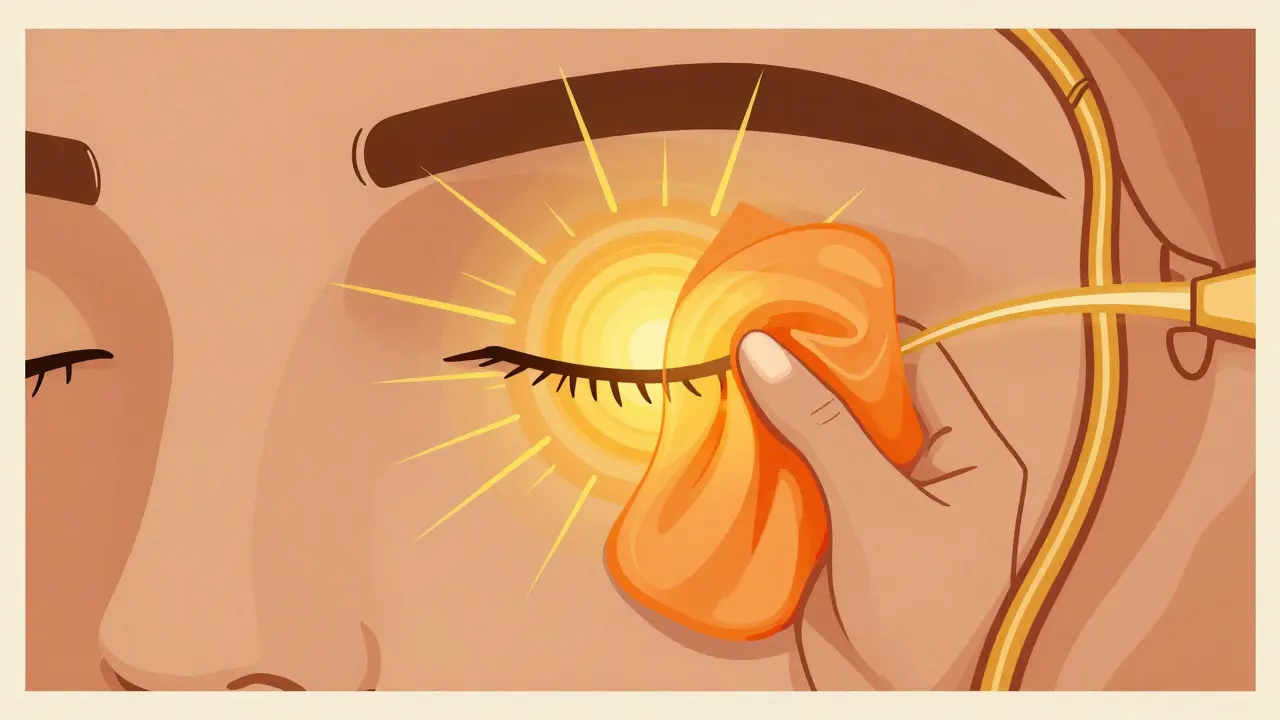
- Apply Heat: Use a clean washcloth soaked in hot (not scalding) water, or a microwavable gel pack. Close your eyes gently. Hold the compress against your closed eyelids for 10 to 15 minutes. Crucial Tip: Keep the compress warm. If using a washcloth, re-soak it in hot water every few minutes to maintain that therapeutic 40-45°C range.
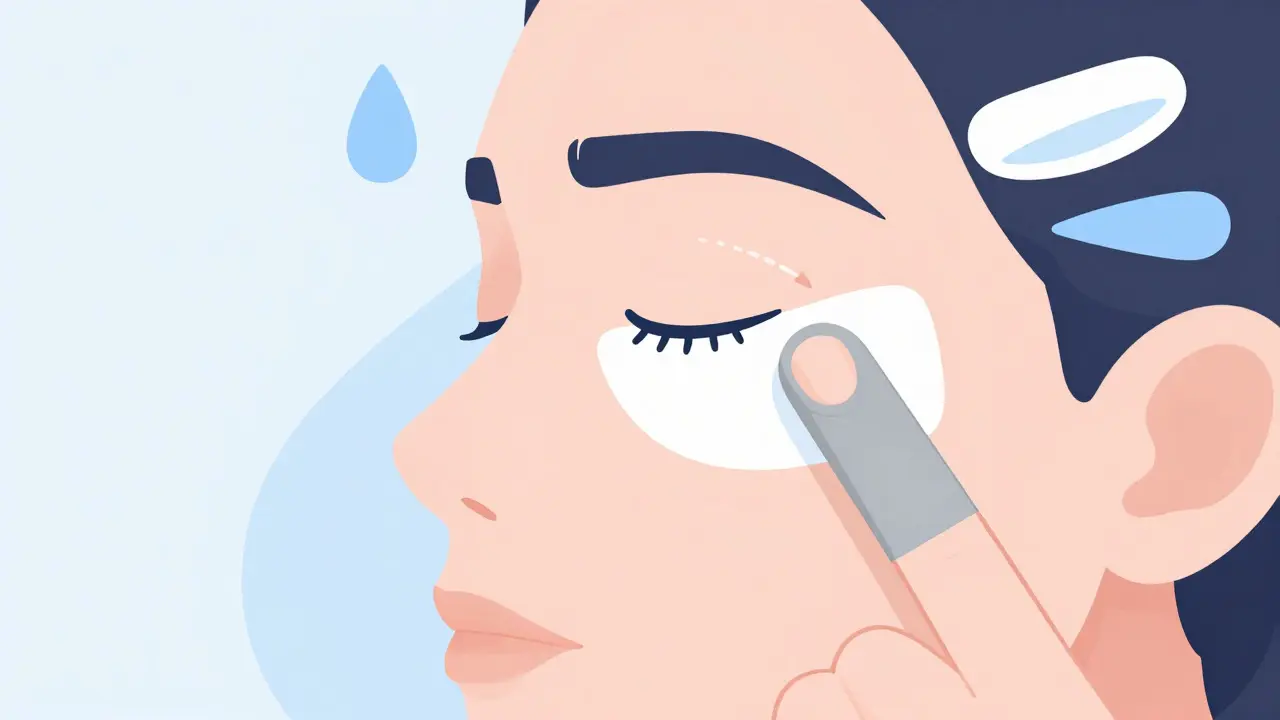
- Massage the Lids: This step is often skipped, but it’s essential. After removing the compress, use your index finger to gently press and roll along the upper eyelid downward toward the lashes. Do the same on the lower lid, moving upward. Use light pressure-just enough to feel resistance. This mechanical action helps express the softened oil from the glands. Spend about 30 seconds on each eye.
- Clean Again: Use a preservative-free lid scrub or diluted baby shampoo on a cotton swab to wipe away the excess oil and debris that was just expressed. Rinse gently.
- Lubricate: Apply preservative-free artificial tears if your eyes still feel dry or irritated.
Do this twice daily, ideally in the morning and before bed. Consistency is the biggest predictor of success. Patients who stick to this routine for 30 days see significantly better results than those who do it sporadically.
Choosing the Right Tool: Washcloths vs. Electronic Devices
You have options. Traditional washcloths are free and effective if you’re disciplined about keeping them warm. However, they cool down quickly. Microwavable gel packs hold heat longer (about 12 minutes on average) and are reusable. Then there are specialized electronic warming masks. These devices are pricier ($15-$40+) but offer precise temperature control and convenience. They heat automatically and often vibrate slightly to aid massage. Clinical data suggests users of these devices have higher adherence rates because the process feels less like a chore and more like a spa treatment. If you struggle with consistency, investing in a device might save you time and frustration in the long run.
| Method | Avg. Heat Duration | Cost | Best For |
|---|---|---|---|
| Traditional Washcloth | ~8-9 minutes | $0 (reusable) | Short-term use, budget-conscious users |
| Microwavable Gel Pack | ~12-13 minutes | $10-$20 (one-time) | Regular home use, better heat retention |
| Electronic Warming Mask | 15+ minutes (regulated) | $15-$40+ | High adherence needs, precision seekers |
Common Mistakes That Ruin Results
Even with the best tools, technique errors can stall progress. Here are the top pitfalls to avoid:
- Insufficient Time: Many people apply heat for only 2-3 minutes. You need the full 10-15 minutes to liquefy the deep-seated oil.
- Too Hot or Too Cold: Scalding your face doesn’t help; it just damages tissue. Lukewarm water won’t melt the blockage. Aim for that sweet spot of 40-45°C.
- Skippping Massage: Heat softens the oil, but massage pushes it out. Without the mechanical expression, the oil just sits there and re-hardens.
- Inconsistency: Doing it for three days and then quitting for two weeks resets the clock. Blepharitis is chronic; it requires maintenance, not just a one-time fix.
- Using Harsh Soaps: Avoid regular facial cleansers on the lid margin. They strip natural oils and can worsen irritation. Stick to preservative-free lid scrubs or gentle baby shampoo.
When to See a Doctor
Warm compresses resolve mild-to-moderate cases for about 80% of patients. However, you should see an eye care professional if:
- Symptoms persist after 3-4 weeks of diligent home care.
- You develop a painful lump (stye or chalazion) that doesn’t go away.
- Your vision blurs or changes shape.
- The redness spreads to the rest of the face or forehead.
- You suspect an allergic reaction or infection requiring antibiotics.
Doctors may prescribe antibiotic drops, oral antibiotics, or anti-inflammatory medications for severe cases. They can also perform in-office procedures like LipiFlow or Intense Pulsed Light (IPL) therapy to clear stubborn blockages. But for most people, mastering the home routine is the first and most important step.
FAQs About Blepharitis Care
How long does it take for warm compresses to work?
You might notice slight improvement in comfort within a few days, but significant reduction in crusting and redness typically takes 14 to 21 days of consistent twice-daily application. Full stabilization of symptoms often occurs around the 30-day mark.
Can I wear contact lenses with blepharitis?
Yes, but it can be tricky. The inflammation can make lenses feel more irritating. If you wear contacts, ensure your lens hygiene is impeccable. Some doctors recommend switching to daily disposables during flare-ups to reduce bacterial load. Always remove lenses before applying warm compresses.
Is blepharitis caused by dirty hands?
Not directly. While touching your eyes with dirty hands can introduce bacteria, blepharitis is primarily a functional issue with the oil glands. It’s related to gland clogging and inflammation, not just external dirt. However, poor hygiene can exacerbate the condition.
What is the best temperature for a warm compress?
The ideal range is 40°C to 45°C (104°F to 113°F). This is hot enough to soften the meibomian oil but safe enough to prevent burns. Test the compress on your inner wrist before applying it to your eyes.
Does diet affect blepharitis?
Emerging research suggests that omega-3 fatty acids can improve the quality of the oil produced by the glands. Supplementing with EPA/DHA (around 2,000 mg daily) has been shown to increase treatment efficacy by 34% when combined with warm compresses. Eating fatty fish like salmon or taking high-quality fish oil supplements may help.