
 Aug, 17 2026
DOAC Side Effect Profile Matcher
Select the factors that apply to your health profile below to see which anticoagulant may best suit your needs. This tool uses data from recent comparative studies.
1. Select Your Risk Factors
2. Comparative Analysis
Select your risk factors and click "Analyze My Profile" to see a personalized comparison.
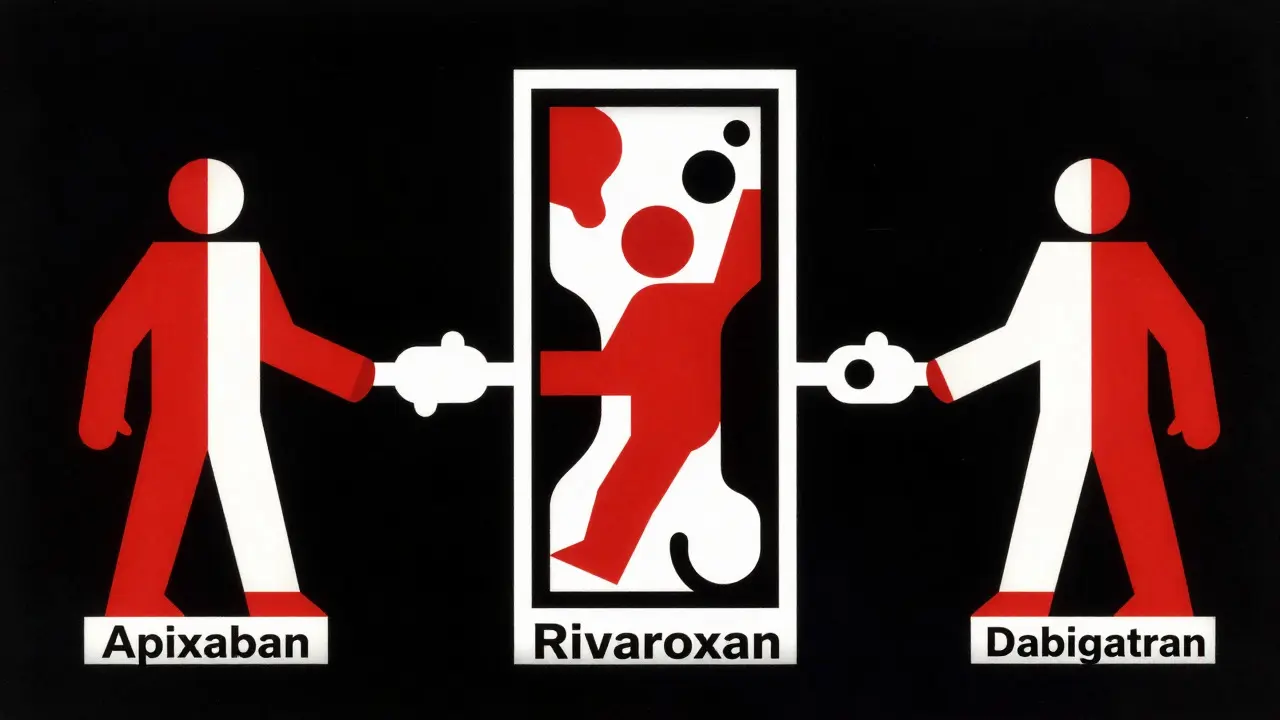
Choosing between Apixaban, Rivaroxaban, and Dabigatran is no longer a matter of picking the "newest" or "cheapest" option. It is about matching the specific side effect profile to your body’s unique risks.
While all three are Direct Oral Anticoagulants (DOACs) used to prevent strokes in atrial fibrillation and treat clots, they behave differently inside your system. One might be gentler on your stomach, while another puts more strain on your kidneys. Understanding these distinct profiles helps you have a sharper conversation with your doctor about which medication fits your health history best.
How These Blood Thinners Work Differently
To understand why their side effects vary, we first need to look at how they stop clots. The coagulation cascade is a chain reaction of proteins that help blood clot. DOACs interrupt this chain at different points.
- Dabigatran is a direct thrombin inhibitor. It blocks Factor IIa (thrombin), the final enzyme that converts fibrinogen into fibrin to form a clot mesh.
- Rivaroxaban and Apixaban are Factor Xa inhibitors. They block an earlier step in the process, preventing the activation of thrombin itself.
This mechanistic difference matters because it influences where bleeding is most likely to occur. For instance, blocking thrombin directly (as Dabigatran does) has been linked in some studies to slightly higher rates of gastrointestinal bleeding compared to blocking Factor Xa. Conversely, the specific binding affinity of Apixaban to Factor Xa may contribute to its favorable safety profile in certain populations.
Gastrointestinal Bleeding: The Key Differentiator
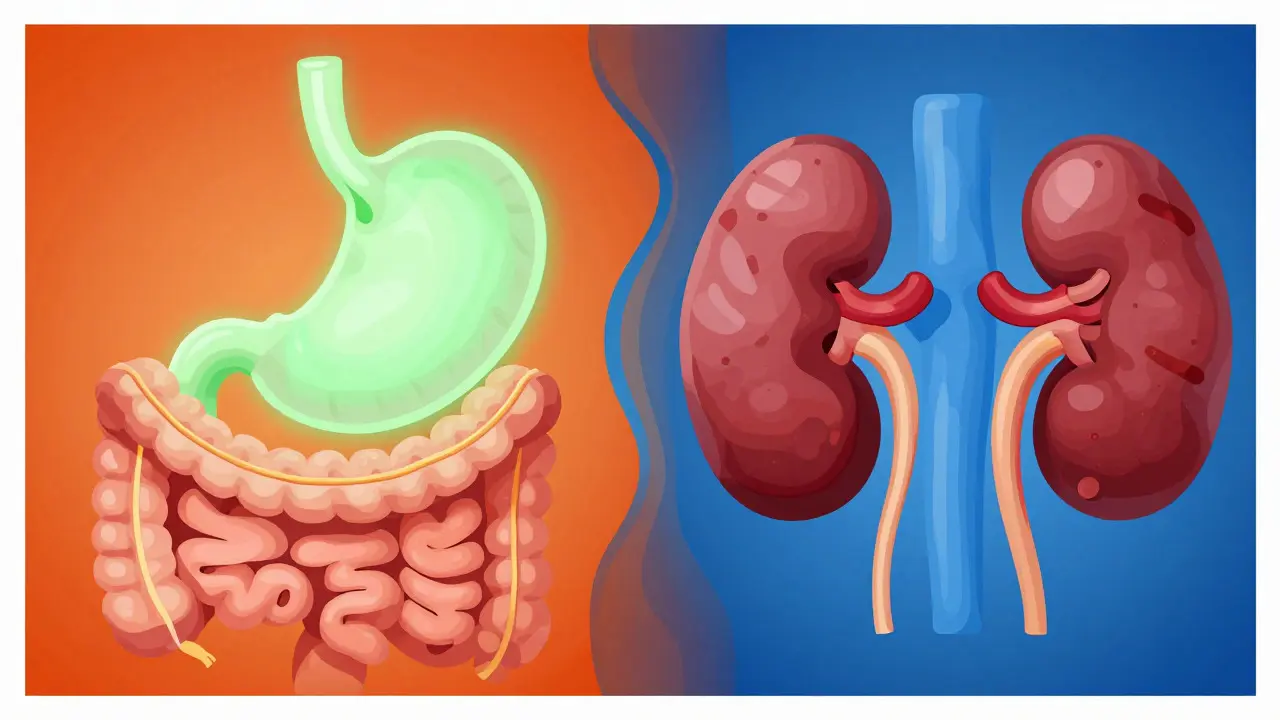
If there is one side effect that consistently separates these three drugs in real-world data, it is stomach and intestinal bleeding. This is often the deciding factor for patients with a history of ulcers or those who take NSAIDs regularly.
Large-scale comparative studies have shown clear patterns here. A major analysis published in JAMA Network found that Rivaroxaban was associated with significantly higher rates of gastrointestinal bleeding compared to Apixaban. Specifically, the study reported 35.2 GI bleeds per 1,000 person-years for Rivaroxaban versus 16.3 for Apixaban. That is more than double the risk.
Dabigatran also showed higher GI bleeding rates than Apixaban in multiple trials. An Oxford Academic study noted event rates of 3.22 per 100 person-years for Dabigatran compared to 2.17 for Apixaban. If you have had a previous bleed from your digestive tract, your doctor will likely lean toward Apixaban due to this consistent statistical advantage.
| Medication | GI Bleed Rate (per 1,000 person-years) | Risk Comparison vs. Apixaban |
|---|---|---|
| Apixaban | 16.3 | Baseline (Lowest Risk) |
| Rivaroxaban | 35.2 | ~2x Higher Risk |
| Dabigatran | ~32.2 (estimated from 3.22/100) | ~2x Higher Risk |
Kidney Function and Renal Clearance
Your kidneys play a huge role in how long these drugs stay in your body. This is critical if you have chronic kidney disease (CKD).
Dabigatran is the outlier here. Approximately 80% of Dabigatran is excreted unchanged by the kidneys. This means if your kidney function declines, the drug builds up in your system, increasing the risk of bleeding everywhere. Because of this, Dabigatran requires strict dose adjustments and is contraindicated if your creatinine clearance drops below 30 mL/min for the standard dose.
In contrast:
- Apixaban is only 25% renally cleared. It is generally safer for patients with moderate to severe kidney impairment.
- Rivaroxaban is 33% renally cleared. It sits in the middle but still requires caution as kidney function worsens.
If your eGFR (estimated glomerular filtration rate) is low, Apixaban is often the preferred choice among the three because it relies less on your kidneys to clear the medication from your bloodstream.
Heart Attack and Intracranial Hemorrhage Risks
Beyond bleeding, there are subtle differences in other serious events, such as heart attacks (myocardial infarction) and brain bleeds (intracranial hemorrhage).
The Heart Attack Question: Some meta-analyses have suggested a potential link between Dabigatran and a slightly increased risk of acute coronary syndrome (ACS) or heart attack compared to other DOACs. One analysis of five randomized controlled trials reported a statistically significant 48% relative increase in MI with Dabigatran. While the exact mechanism isn't fully understood, it may relate to how direct thrombin inhibition affects inflammatory pathways in the arteries. For patients with a high burden of coronary artery disease, doctors may hesitate to prescribe Dabigatran over Apixaban or Rivaroxaban.
The Brain Bleed Question: All three DOACs are far safer than Warfarin regarding intracranial hemorrhage. However, recent head-to-head data suggests nuances. A 2022 study indicated that Rivaroxaban might have a lower rate of intracranial hemorrhage compared to Apixaban (HR 0.86). This contradicts the older assumption that all Factor Xa inhibitors are identical in this regard. Therefore, while Apixaban wins on stomach safety, Rivaroxaban might offer a marginal edge in protecting against brain bleeds in specific contexts.
Dosing Convenience and Adherence
Side effects aren't just about what happens when you take the pill; they're about whether you actually take it correctly. Missed doses lead to clots; extra doses lead to bleeds.
- Rivaroxaban: Once daily for stroke prevention. This is often cited as a major adherence benefit. Fewer pills mean fewer chances to forget.
- Apixaban: Twice daily. Consistent timing is crucial.
- Dabigatran: Always twice daily, regardless of the condition being treated.
If you struggle with remembering medications twice a day, Rivaroxaban’s once-daily regimen for atrial fibrillation could be a practical advantage, provided your stomach can handle it.

Who Should Choose Which? A Practical Guide
There is no single "best" DOAC. The right choice depends on your individual risk factors. Here is how clinicians typically weigh the options:
- Patient with History of GI Bleeding or Ulcers: Apixaban is generally preferred due to its lower GI bleeding risk.
- Patient with Significant Kidney Disease (eGFR < 30-45): Apixaban is often the safest bet due to low renal clearance. Dabigatran is usually avoided.
- Patient with High Coronary Artery Disease Burden: Clinicians may prefer Apixaban or Rivaroxaban to avoid the potential ACS signal associated with Dabigatran.
- Patient Prioritizing Simplicity (Once Daily): Rivaroxaban is the only option among the three for once-daily dosing in AFib, but must be weighed against its higher GI bleed risk.
- Patient with Normal Kidney Function and No GI Issues: Any of the three may be appropriate. Cost and insurance coverage often become the deciding factors.
Remember, generic versions of all three drugs are now widely available and cost significantly less than brand-name Eliquis, Xarelto, or Pradaxa. Price should not be the primary driver of safety decisions, but it is a valid consideration for long-term therapy.
Frequently Asked Questions
Is Apixaban safer than Rivaroxaban?
Generally, yes, regarding gastrointestinal bleeding. Studies show Apixaban has roughly half the rate of GI bleeds compared to Rivaroxaban. However, Rivaroxaban may have a slight advantage in reducing intracranial hemorrhage risk in some datasets. The "safer" choice depends on whether your main risk is stomach bleeding or brain bleeding.
Can I switch from Dabigatran to Apixaban?
Yes, switching is common, especially if you develop kidney issues or GI bleeding. Since Dabigatran has a longer half-life and high renal clearance, doctors often wait 24 hours after the last Dabigatran dose before starting Apixaban to ensure the old drug has cleared sufficiently, though protocols vary. Always consult your cardiologist or hematologist for the exact transition timeline.
Which DOAC is best for elderly patients?
For patients over 80, Apixaban is frequently recommended. Large studies confirm that its bleeding advantage persists in the elderly population. Additionally, its lower dependence on renal clearance makes it safer for older adults who naturally experience some decline in kidney function.
Does Dabigatran cause more heart attacks?
Some meta-analyses suggest a modestly increased risk of acute coronary syndrome with Dabigatran compared to other DOACs. While the absolute risk remains low, this signal has led many clinicians to prefer Factor Xa inhibitors (like Apixaban) for patients with significant coronary artery disease.
Are generics of these blood thinners as effective?
Yes. Generic Apixaban, Rivaroxaban, and Dabigatran have been approved by regulatory bodies like the FDA after demonstrating bioequivalence to their brand-name counterparts. They contain the same active ingredient and work identically in the body, offering a significant cost savings without compromising efficacy or safety.