
 Dec, 7 2025
Every household in the UK has medicine - whether it’s your daily blood pressure pill, your child’s asthma inhaler, or that bottle of ibuprofen you keep for headaches. But where you store it could be putting lives at risk. Medication storage isn’t just about keeping things tidy. It’s about preventing accidents that send children to the emergency room, stop teens from misusing pills, and protect elderly relatives from dangerous mix-ups.
Why Your Medicine Cabinet Is the Worst Place
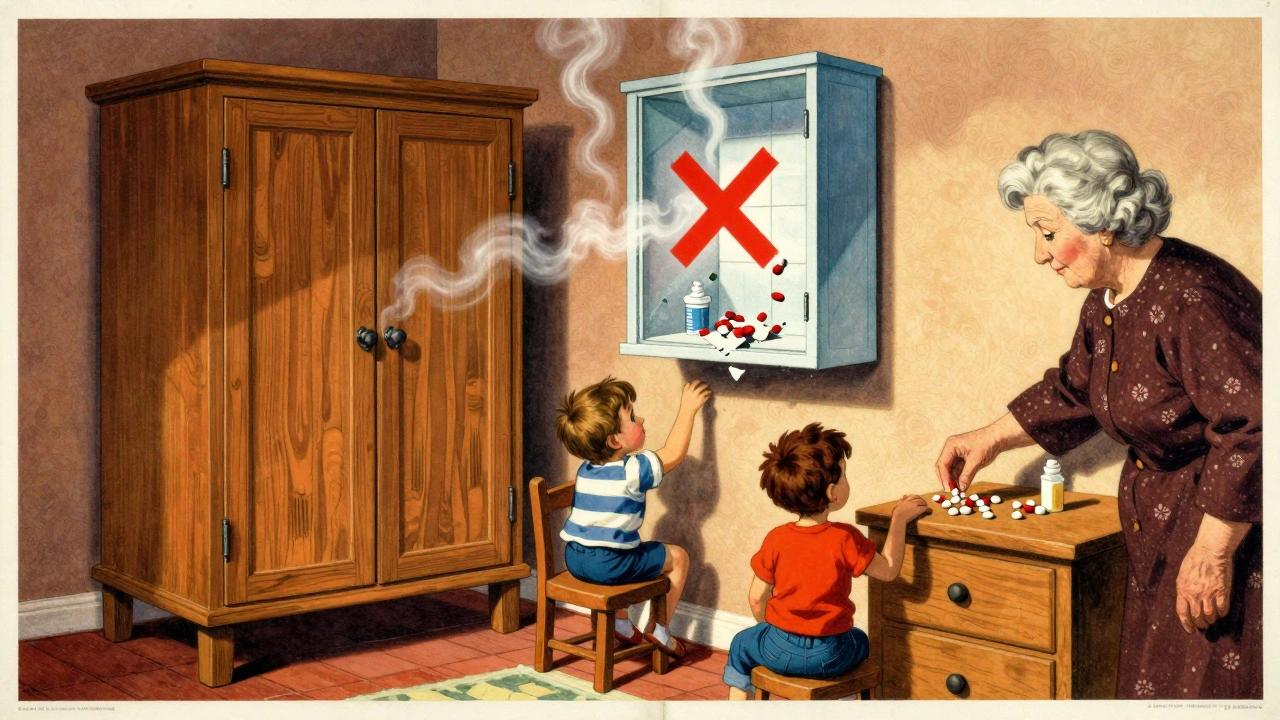
Most people think the bathroom cabinet is the obvious spot. It’s convenient, near the sink, and you use medicine there. But here’s the problem: humidity. Every time you shower, the air fills with steam. That moisture doesn’t just fog up the mirror - it seeps into your pills. Studies show that 67% of common medications start breaking down within 30 days when stored in a humid bathroom. That means your painkiller might not work when you need it. Your insulin could lose potency. Your antidepressant might not do its job. And it’s not just about effectiveness. Bathrooms are easy for kids to reach. Even if you think your cabinet is high enough, children as young as 24 months can climb on chairs, pull open drawers, and get into locked cabinets if the lock isn’t strong enough. The Washington State Department of Health found that 73% of accidental poisonings happened because meds were left in unlocked cabinets, on countertops, or in purses.The Gold Standard: Locked, Cool, and Out of Reach
The safest place to store all medications - prescription and over-the-counter - is in a locked container, away from heat and moisture. That means:- A locked cabinet in a bedroom or closet
- A dedicated medicine safe (costs as little as £20)
- A locked drawer in a dresser
- Even a locked gun safe or fireproof document box - if it’s dry and cool
Children and Grandparents: Two High-Risk Groups
You might think your kids are too small to reach the top shelf. Think again. The CDC reports that 60,000 children under five end up in emergency rooms every year in the US alone because they got into medicine. And nearly half of those cases happen in grandparents’ homes. Why? Because older adults often keep meds in easy-to-reach places - on the kitchen counter, beside the bed, in a purse. They forget that toddlers are climbers, explorers, and curious by nature. The same goes for teenagers. Most opioid misuse starts at home. The National Institutes of Health found that 92% of teens who abused prescription painkillers got them from a family member’s medicine cabinet. That’s not theft - it’s access. If your child can open a cabinet, they can find pills.Lock It After Every Use
This is the one habit that makes the biggest difference. Forty-two percent of poisoning incidents happen in the five to ten minutes after someone takes their medicine. They open the bottle, take the pill, and leave the cap off or the container on the counter while they get water, check the time, or answer the door. Make this rule: Never leave medicine out after use. Put it back in the locked container immediately. Even if you’re just going to the next room. Even if you’re only gone for a minute. That’s the window where accidents happen.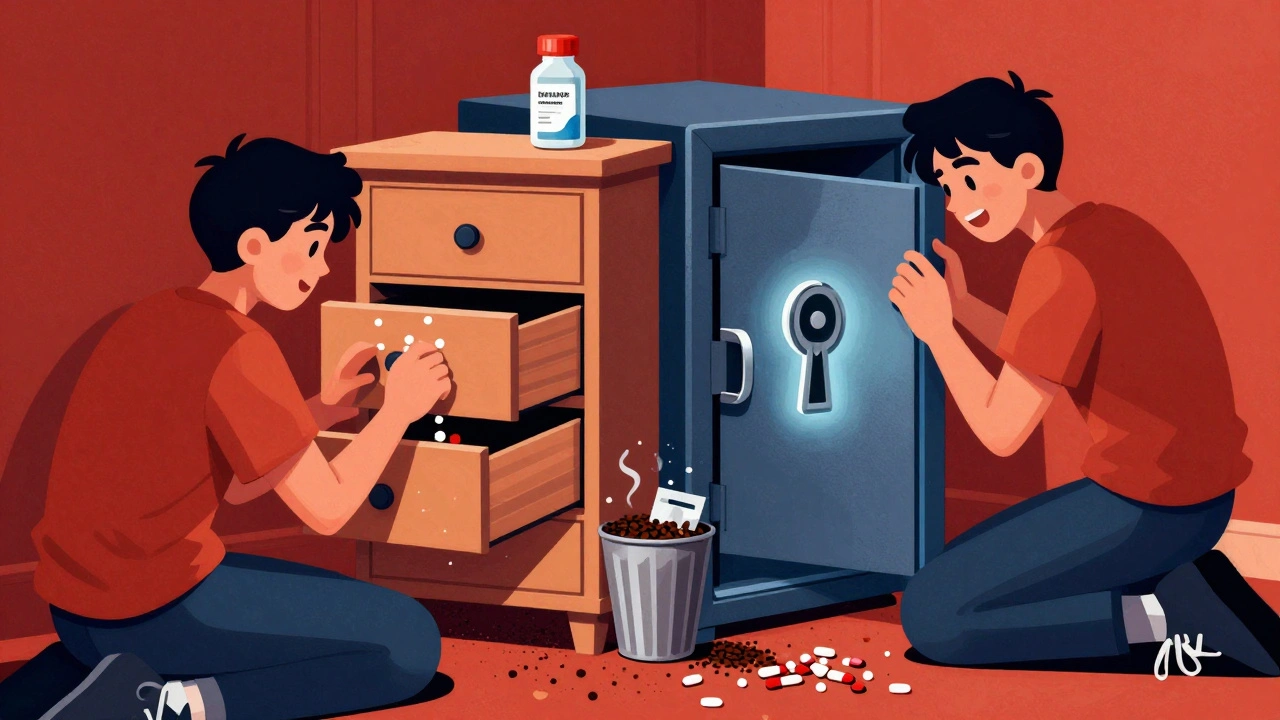
Keep Original Labels - Always
Don’t transfer pills to pill organizers unless you absolutely have to. And even then, keep the original bottle nearby with the label intact. Why? Because labels have critical info: the patient’s name, dosage, expiration date, and the National Drug Code. If someone takes the wrong pill, emergency workers need to know exactly what it is. A plastic container with 20 white pills inside? That’s a nightmare for paramedics. If you use a pill box, label each compartment with the day and time. And never mix different people’s meds in the same box. That’s how mistakes happen.What About Old or Expired Medicine?
Don’t flush pills down the toilet. Don’t throw them in the trash without doing something first. Both can pollute water or be dug up by animals or kids. The safest way to dispose of old medicine is to take it to a pharmacy that offers a take-back program. In the UK, most community pharmacies will accept unwanted or expired meds for safe disposal. You don’t need a receipt. You don’t need to explain why. If no take-back program is nearby, mix the pills with something unappetizing - coffee grounds, cat litter, dirt - then seal them in a plastic bag before tossing them in the bin. This makes them unappealing and hard to recover.Technology Can Help - But Isn’t Required
There are smart medicine safes now that use fingerprints or PIN codes. Some even log who opened it and when. These are great for families with dementia patients or teens at risk of misuse. But you don’t need tech to be safe. A simple £25 lockbox from a hardware store works just as well. The University of Michigan found that digital locks are 78% effective at preventing access. But a basic locked cabinet? It’s 90% effective - if you actually lock it every time.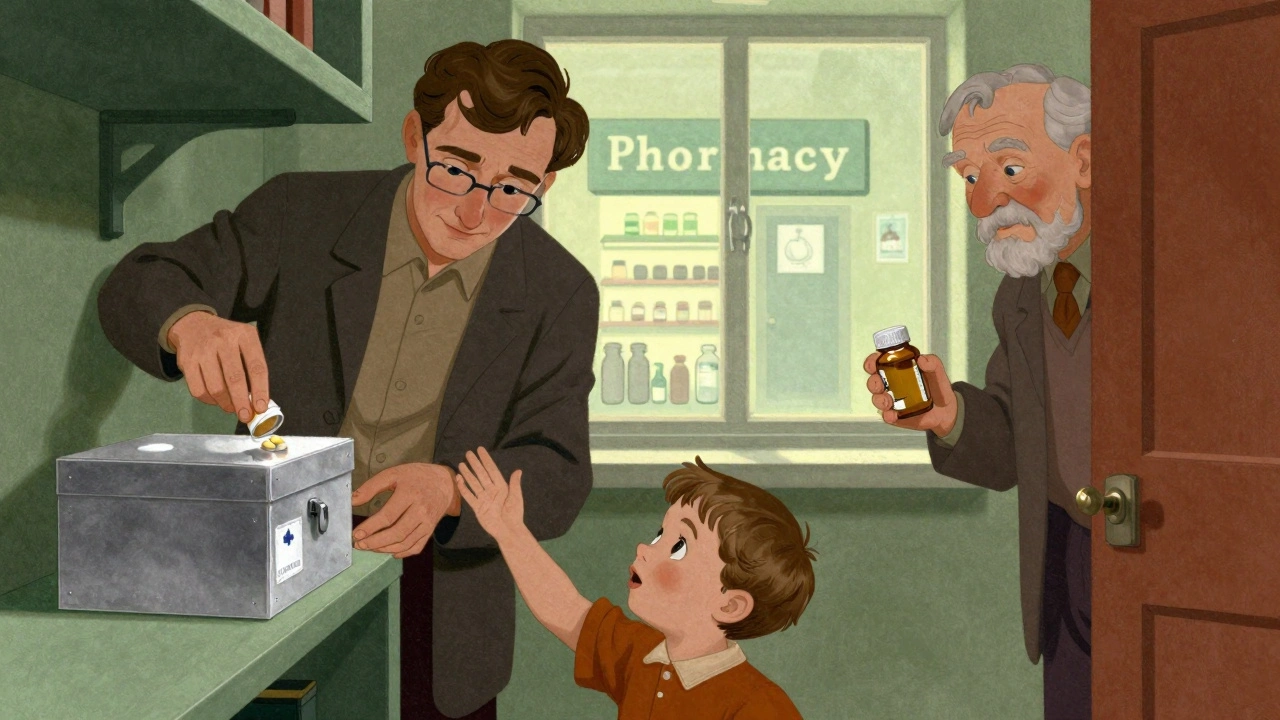
Common Mistakes (And How to Fix Them)
- Mistake: Storing meds in the bathroom. Fix: Move them to a bedroom drawer or closet.
- Mistake: Leaving pills in a purse or coat pocket. Fix: Designate one locked spot for all meds - even if you carry them out daily.
- Mistake: Assuming child-resistant caps are enough. Fix: They’re not. Half of kids can open them by age five. Lock the whole container.
- Mistake: Keeping old meds “just in case.” Fix: Check expiration dates every six months. Toss what’s past its date.
One Simple Checklist to Start Today
Do this right now - before you finish reading:- Find every medicine in your home - bathroom, kitchen, bedroom, car, purse, drawer.
- Collect them all in one place.
- Sort out what’s expired or no longer needed.
- Take the expired ones to your pharmacy for disposal.
- Put the rest in a locked box or cabinet - not the bathroom.
- Lock it after every use, no exceptions.
What If Someone Already Took Something?
If you suspect a child, pet, or adult has swallowed medicine that wasn’t meant for them, don’t wait. Don’t call your GP first. Call emergency services immediately. In the UK, dial 999. If you’re unsure what was taken, bring the container with you. The label has the info they need. Poison Control isn’t a backup - it’s your first step. In the UK, you can also call NHS 111 for advice, but if it’s serious - like loss of consciousness, vomiting, or seizures - go straight to emergency care.Medication safety isn’t about being paranoid. It’s about being smart. A locked box costs less than a takeaway coffee. But it could save a life.
Can I store medicine in the kitchen cupboard?
Yes - but only if it’s away from heat sources like the oven, dishwasher, or windows. Kitchens often get too hot or humid. A cupboard in a cooler part of the house, like a hallway or bedroom, is better. Always lock it.
Are child-resistant caps enough to keep kids safe?
No. While child-resistant caps are required by law, they’re not child-proof. Studies show half of children can open them by age five. That’s why locked storage is the only reliable method. Caps reduce risk - but they don’t eliminate it.
What if I have dementia or memory problems?
For people with dementia, locking all meds can be dangerous if they need quick access. Work with your doctor to find a balance. Use a pill dispenser with alarms, keep only a few days’ supply out, and store the rest in a locked box. Always have a caregiver check meds daily.
Should I store my insulin in the fridge?
Yes - unopened insulin should be refrigerated between 2-8°C. Once opened, most types can be kept at room temperature (below 25°C) for 28-30 days. Always keep insulin in a locked section of the fridge - separate from food - to avoid accidental use by others.
Can I store medicine in my car?
Only if absolutely necessary - and never for long. Cars get extremely hot in summer (over 50°C) and freezing in winter. Heat and cold ruin medicine. If you must keep a rescue inhaler or EpiPen in your car, use an insulated case and check it monthly. Never leave it on the seat in direct sunlight.
How often should I check my medicine storage?
Every six months. Look for expired pills, broken seals, discoloured tablets, or strange smells. Toss anything questionable. Also check that your lock still works and that no one has moved your meds to a less safe spot.
What should I do with old or unused medicine?
Take it to any pharmacy in the UK - they’ll dispose of it safely for free. If that’s not possible, mix pills with coffee grounds or cat litter, seal them in a plastic bag, and throw them in the bin. Never flush them or leave them in the open trash.
Is it safe to keep medicine in a drawer with other items?
Only if the drawer is locked. If it’s easy to open, it’s not safe. Kids and visitors can find it. Even if you think no one else uses your home, guests, cleaners, or grandchildren might. Locking the drawer is the only way to guarantee safety.
Storing medicine safely isn’t about perfection. It’s about consistency. Lock it. Keep it cool. Toss the old stuff. Do it every day. That’s how you protect your family - not with expensive gear, but with simple, smart habits.
Anna Roh
December 8, 2025 AT 14:00So basically just lock your meds like you lock your weed? Cool. I guess that makes sense.
Katherine Chan
December 10, 2025 AT 08:01I love how this post doesn’t scare you-it just gives you the facts and says ‘do this’ like a calm friend who actually cares. Locking it after every use? I’m stealing that habit. Small change, huge impact.
Olivia Portier
December 11, 2025 AT 04:11My grandma used to keep her pills on the windowsill next to her tea mug. I thought it was cute until she almost gave my cousin her blood pressure med thinking it was sugar pills. Now we have a little lockbox on her nightstand. She hates it but she’s alive. Worth it.
Philippa Barraclough
December 11, 2025 AT 11:39It’s interesting how the bathroom cabinet is so universally assumed to be the default storage location despite being scientifically unsuitable. The humidity factor alone should disqualify it, yet cultural inertia persists. The real issue isn’t ignorance-it’s convenience culture. We optimize for ease over safety until something tragic happens, and then we scramble. The solution is simple, but human behavior is stubborn. We need more systemic nudges-not just individual responsibility. Lockboxes should be included in every new home kit, like smoke detectors.
om guru
December 12, 2025 AT 16:28Medication safety is not optional. It is a duty to family. Lock it. Keep it cool. Dispose properly. Do this daily. No excuses. Life depends on consistency.
Richard Eite
December 14, 2025 AT 09:33UK post but everyone in America is still leaving pills on the counter like it’s 1999. We have the tech we have the locks we have the awareness. Stop being lazy. Your kid could die because you didn’t lock a drawer. That’s not a tragedy. That’s negligence.
Simran Chettiar
December 15, 2025 AT 20:40One must contemplate the metaphysics of medicine storage. The pill is not merely a chemical compound-it is a vessel of intention, a silent promise between body and pharmacy. To leave it unguarded is to invite chaos into the sacred space of bodily autonomy. The bathroom, with its steam and mirrors, becomes a temple of false security. We worship convenience while forgetting that the body is not a machine to be serviced haphazardly. A locked drawer is not a cage-it is a covenant. A covenant with time, with memory, with the fragile miracle of life that depends on a single tablet taken at the right hour. Do we not owe ourselves that much?
Tim Tinh
December 17, 2025 AT 01:03My mom used to keep all her meds in her purse. I found her insulin in there last year next to her lipstick and a half-eaten granola bar. We bought her a £15 lockbox from Amazon and now she forgets she even has it. Best part? She doesn’t panic when she can’t find it because she knows it’s safe. Simple fixes work.
Asset Finance Komrade
December 18, 2025 AT 04:07Interesting how this assumes all households are nuclear, stable, and free of drug-seeking relatives. What about multi-generational homes where 3 people share a single drawer? Or families where one member has chronic pain and another has addiction? Locking meds doesn’t solve systemic neglect-it just hides it behind a cheap latch. Real safety requires therapy, not locks.
Jennifer Blandford
December 19, 2025 AT 20:05I used to think this was overkill… until my niece got into my ex’s old painkillers. She was fine, thank god, but the ER wait was 6 hours and I’ve never felt so powerless. Now I have a lockbox in my closet. It’s ugly. It’s inconvenient. But it’s peace of mind. And that’s worth more than any aesthetic.
Brianna Black
December 21, 2025 AT 18:28The fact that we need to be told to lock up medicine like it’s contraband says something deeply wrong about our society. We treat health like a commodity to be hoarded or stolen, not a right to be protected. The real solution isn’t a lockbox-it’s universal healthcare, accessible mental health support, and education that starts in elementary school. But until then… yes, lock it. Please.
Tiffany Sowby
December 21, 2025 AT 23:56Wow. So now I’m supposed to feel guilty because I don’t have a lockbox? My kid is 12, he’s not a toddler, and I’m not a monster for keeping my meds in the drawer next to my socks. This post reads like a parenting panic attack dressed as public health advice.