
 Mar, 3 2026
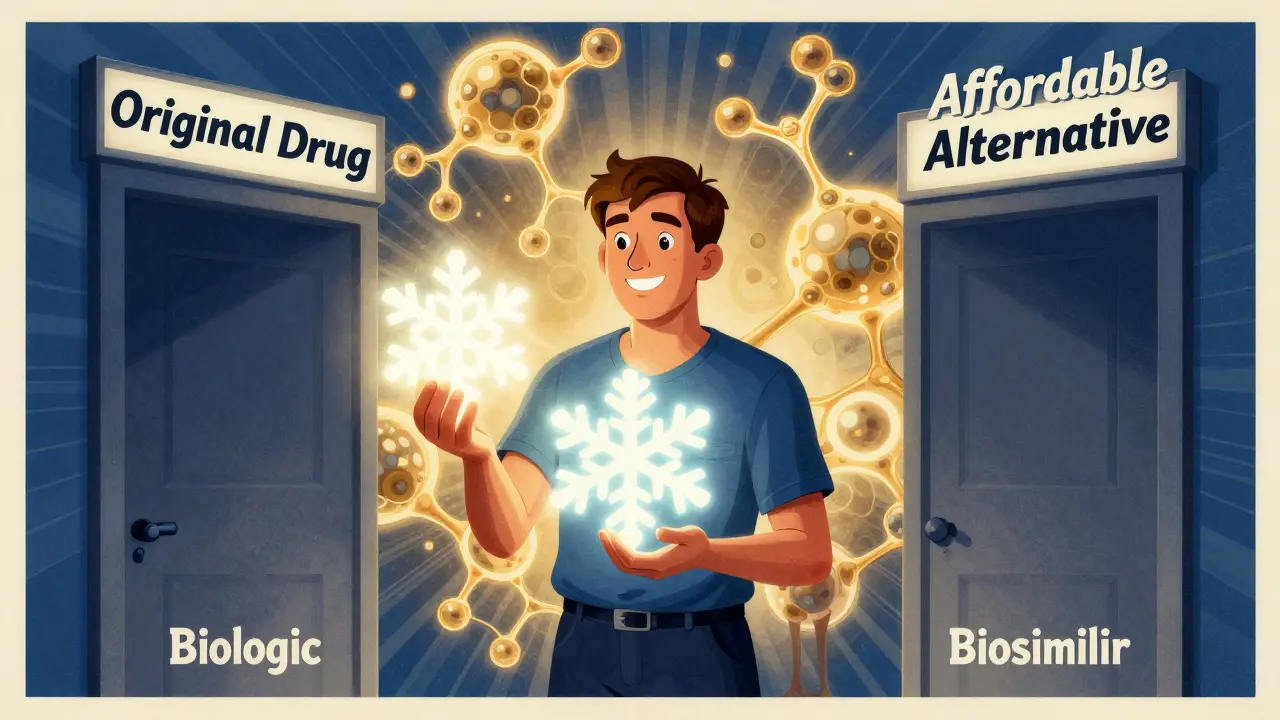
When you hear the word biosimilars, it might sound confusing - like a mix of science and marketing jargon. But here’s the simple truth: biosimilars are real, approved medicines that work just like the original biologic drugs you might already be taking - but often at a lower cost. They’re not copies in the way a generic pill is a copy. They’re more like a very close twin: same function, same results, just made a little differently.
What makes a biologic drug different?
Most pills you take - like aspirin or metformin - are made from chemicals in a lab. They’re small, simple molecules. Biologic drugs are completely different. They’re made from living cells - human, animal, or even yeast cells - that are programmed to produce complex proteins. These proteins can target specific parts of your immune system, fight cancer, or replace missing hormones like insulin.
Think of it this way: a chemical drug is like a key made of metal. A biologic is like a snowflake - intricate, delicate, and unique. Because they’re made from living systems, no two batches are exactly alike. Even the original manufacturer can’t make them perfectly identical every time. That’s why biosimilars don’t have to be perfect copies. They just have to work the same way.
How are biosimilars different from generic drugs?
This is where things get mixed up. Many people think biosimilars are just generics for fancy drugs. They’re not. Generics are exact chemical duplicates of small-molecule drugs. If you switch from brand-name Lipitor to generic atorvastatin, you’re getting the same molecule, down to the last atom.
Biosimilars? They’re not identical. They’re highly similar. The FDA says they must have no clinically meaningful differences from the original biologic. That means: same dose, same way of giving it (injection or IV), same side effects, same effectiveness. But because they’re made from living cells, tiny variations are normal - and expected. These differences don’t affect how the drug works in your body.
Here’s a quick comparison:
| Feature | Generics | Biosimilars |
|---|---|---|
| Drug Type | Small-molecule chemicals | Large, complex proteins from living cells |
| Copy Type | Exact chemical duplicate | Highly similar, not identical | Approval Process | Relies on bioequivalence studies | Requires extensive lab, animal, and clinical testing |
| Examples | Generic ibuprofen, metformin | Zarxio (for Neupogen), Renflexis (for Remicade) |
| Cost Reduction | Usually 80-90% cheaper | Usually 15-30% cheaper |
How do we know biosimilars are safe?
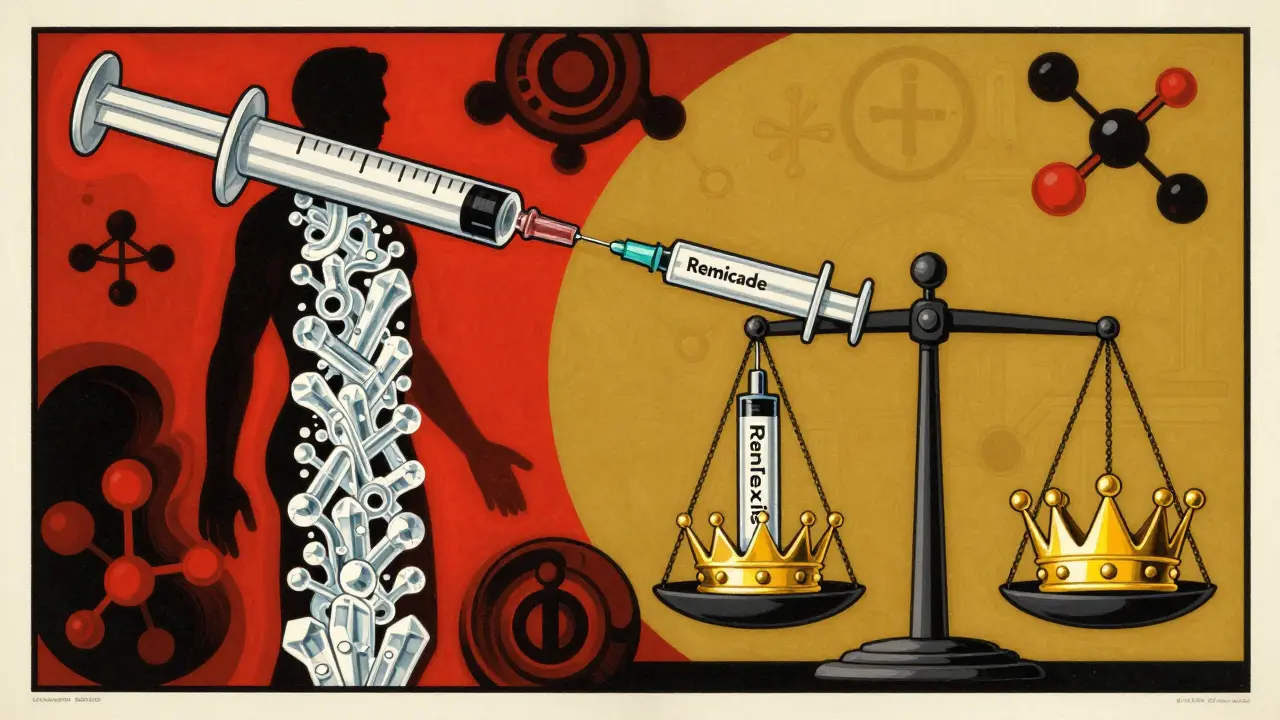
The FDA doesn’t just approve biosimilars based on theory. They require over 100 tests - from molecular structure analysis to clinical trials involving hundreds of patients. For example, the biosimilar Renflexis (used for rheumatoid arthritis) was tested in a clinical trial with 541 people. Their outcomes were compared directly to the original drug, Remicade. No difference in safety or effectiveness was found.
Biosimilars are also monitored after they’re on the market. If someone has a bad reaction, it’s tracked. That’s how we know they’re safe over time. In Europe, where biosimilars have been used for over 15 years, studies show no increase in side effects compared to the original biologics.
And here’s something important: switching from a brand-name biologic to a biosimilar is safe. Studies have looked at patients who switched - some even switched back and forth - and found no drop in effectiveness or rise in side effects. Your doctor doesn’t need to worry about your body rejecting the new version.
What conditions do biosimilars treat?
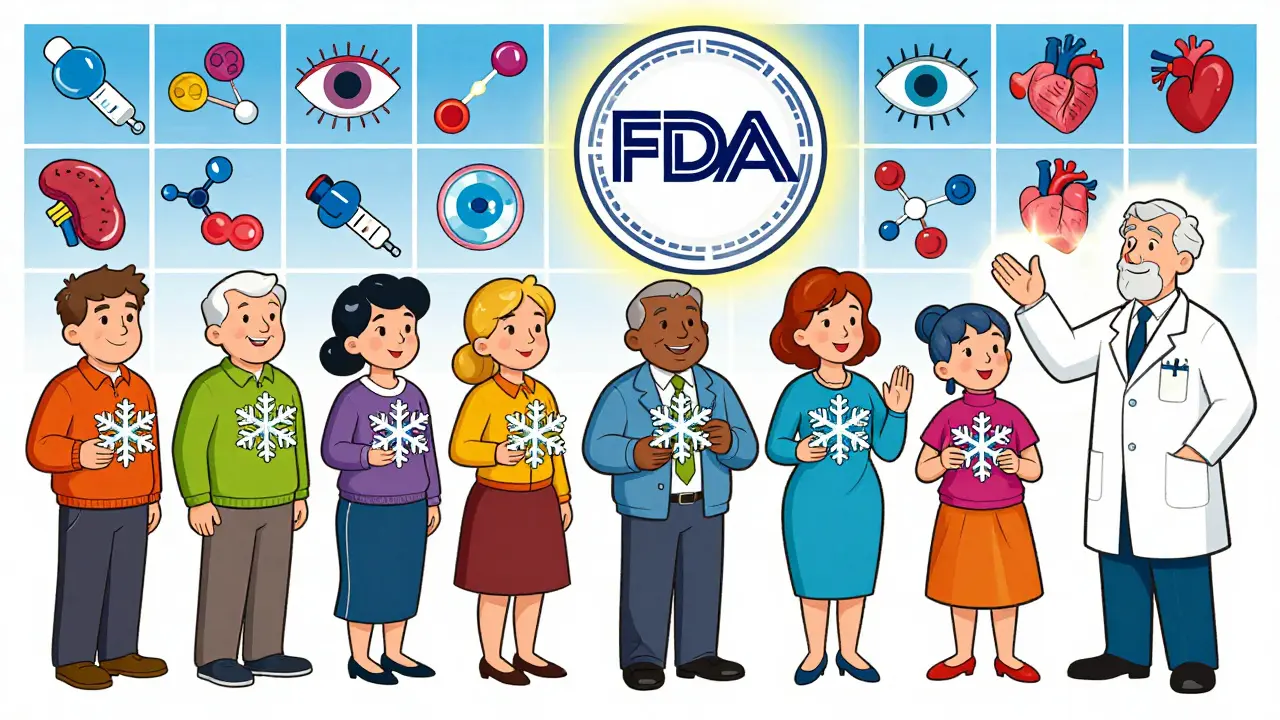
Biosimilars aren’t just for one disease. They’re used for serious, long-term conditions that used to be very expensive to treat:
- Rheumatoid arthritis and other autoimmune diseases (like Crohn’s disease or psoriasis)
- Certain types of cancer (breast, colon, lung)
- Diabetes (biosimilar insulins)
- Chronic kidney disease
- Macular degeneration (an eye condition)
For example, if you’re on Humira (adalimumab) for arthritis, there’s now a biosimilar called Amjevita that works the same way. If you’re on Avastin (bevacizumab) for cancer, there’s a biosimilar called Mvasi. These aren’t experimental. They’re used every day in hospitals and clinics across the U.S.
Will your insurance make you switch?
Maybe. Insurance companies often prefer biosimilars because they’re cheaper. Some plans will require you to try a biosimilar before they pay for the original biologic. This isn’t about saving money at your expense - it’s about making treatment more affordable for everyone.
But you always have a say. If your doctor says the original drug is better for you - maybe because of how your body responded before - your insurance usually can’t force you to switch. Talk to your doctor and your insurer. You’re not stuck with whatever they pick.
How do you know if you’re getting a biosimilar?
Biosimilars have different names than the original drugs. That’s by design. The generic part of the name is the same - like infliximab - but each biosimilar gets a four-letter suffix to tell them apart. For example:
- Original: infliximab (Remicade)
- Biosimilar: infliximab-dyyb (Renflexis)
- Biosimilar: infliximab-abda (Inflectra)
Your prescription will list the exact name. If you’re unsure, ask your pharmacist. They can tell you if what you’re getting is a biosimilar. Don’t worry - it’s not a trick. It’s just how the system works to keep things clear.
What about the future?
The first biosimilar approved in the U.S. was Zarxio in 2015. Since then, 32 have become available. More are coming. The FDA is now approving “interchangeable” biosimilars - ones that can be swapped in at the pharmacy without your doctor’s approval. The first one was Semglee, a biosimilar insulin approved in 2021.
As more biosimilars enter the market, prices for both biosimilars and original biologics are starting to drop. Experts predict biosimilars could save the U.S. healthcare system over $50 billion by 2026. That means more people can get the treatment they need - without being priced out.
What should you do?
If you’re on a biologic drug, here’s what to remember:
- Biosimilars are safe, effective, and approved by the FDA.
- They’re not experimental. They’ve been tested as thoroughly as the original.
- They can save money - for you and the system.
- You can switch safely if your doctor agrees.
- You don’t have to switch if your doctor says the original is better for you.
Don’t let confusing names scare you. Ask questions. Talk to your doctor. Read the label. You’re not just a patient - you’re in charge of your care. And now, you know what biosimilars really are: a smart, safe, and affordable option that’s here to stay.
Are biosimilars the same as generics?
No. Generics are exact chemical copies of small-molecule drugs like aspirin or statins. Biosimilars are highly similar versions of complex biologic drugs made from living cells. They can’t be identical, but they work the same way and have the same safety profile.
Is it safe to switch from a brand-name biologic to a biosimilar?
Yes. Multiple studies show that switching between a brand-name biologic and its biosimilar is safe and doesn’t affect how well the drug works or increase side effects. The FDA and major medical groups confirm this.
Why are biosimilars cheaper than the original biologics?
They’re not as cheap as generics because making biologics is complex and expensive. But since multiple companies can now produce them after patents expire, competition lowers prices. Biosimilars typically cost 15-30% less than the original.
Can I ask my doctor for a biosimilar?
Absolutely. You have the right to ask if a biosimilar is an option for you. Your doctor will consider your medical history and decide what’s best. Many doctors are now comfortable recommending biosimilars because of the strong safety data.
Do biosimilars have the same side effects as the original?
Yes. Because they work the same way in your body, biosimilars have the same potential side effects as the original biologic. The FDA requires this to be proven before approval. If you’ve had side effects with the original, you might experience similar ones with the biosimilar - but not worse.
If you’re considering a switch or just learning about your treatment, remember: biosimilars aren’t a compromise. They’re a smart, science-backed choice that helps more people get the care they need.
Ivan Viktor
March 5, 2026 AT 05:14Zacharia Reda
March 5, 2026 AT 05:53Donna Zurick
March 6, 2026 AT 09:00Tobias Mösl
March 6, 2026 AT 11:24tatiana verdesoto
March 7, 2026 AT 21:45Ethan Zeeb
March 8, 2026 AT 09:57Darren Torpey
March 8, 2026 AT 20:43Mariah Carle
March 9, 2026 AT 02:22Justin Rodriguez
March 9, 2026 AT 18:23Siri Elena
March 10, 2026 AT 17:37Divya Mallick
March 12, 2026 AT 01:06