
 Apr, 8 2026
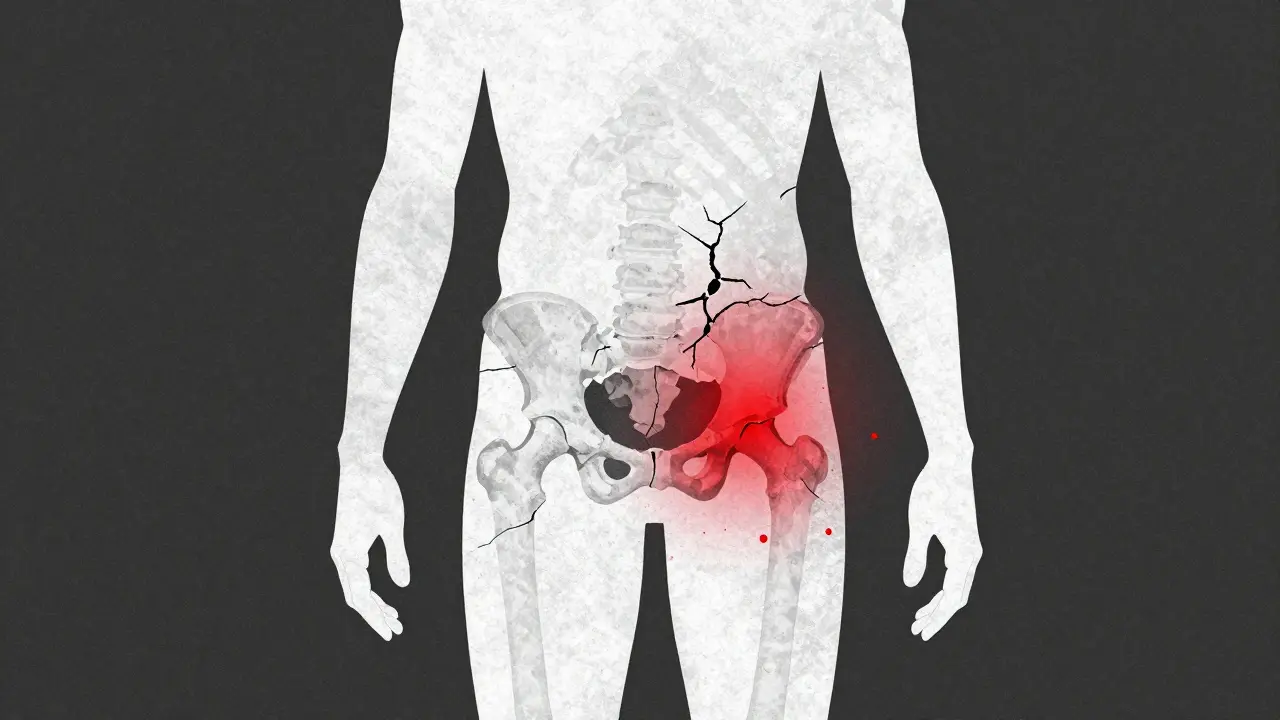
Imagine waking up and realizing that a simple trip or a slight twist of the ankle has caused a bone to snap. For many, this is the first time they ever discover they have a bone health problem. Osteoporosis is often called a "silent disease" because you can't feel your bones thinning; you only notice it once a fracture happens. That is why DEXA Scan is the gold standard imaging test used to measure bone mineral density (BMD) and predict the likelihood of future fractures. Also known as Dual-energy X-ray absorptiometry, it allows doctors to see inside the bone structure long before a break occurs.
What Exactly Happens During a DEXA Scan?
If you have never had one, don't worry-it is completely non-invasive and painless. You simply lie flat on a padded table while a scanner arm passes over your body. The machine sends two different X-ray beams (low and high energy) through your bones. By measuring how much of each beam is absorbed, the computer can tell the difference between soft tissue and actual bone mass.
Most clinics focus on the "big three" areas: the lumbar spine, the total hip, and the femoral neck. These are the spots where fractures most commonly occur and cause the most disability. A typical session takes about 10 minutes. In terms of safety, the radiation dose is incredibly low-roughly 0.001 to 0.03 mSv. To put that in perspective, that is less than the amount of natural background radiation you'd get from the environment over just two days.
Decoding Your Results: T-Scores and Z-Scores
When you get your report back, you won't see a simple "yes" or "no." Instead, you will see numbers called T-scores and Z-scores. These are the keys to understanding your DEXA scan interpretation.
T-score is a comparison of your bone density to that of a healthy young adult with peak bone mass. It tells the doctor how much you have "lost" compared to the ideal baseline. On the other hand, Z-score compares your bone density to other people of your own age, sex, and ethnicity. If your Z-score is significantly low, it might signal that something other than aging-like a vitamin deficiency or a hormonal issue-is stealing your bone mass.
| T-Score Value | Classification | What It Means |
|---|---|---|
| -1.0 or higher | Normal | Your bone density is within the expected healthy range. |
| Between -1.0 and -2.5 | Osteopenia | Low bone mass; you are at higher risk than normal but not yet osteoporotic. |
| -2.5 or lower | Osteoporosis | Significant bone loss; high risk of fracture. |
Why BMD Isn't the Whole Story
Having a low T-score is a warning sign, but it isn't a crystal ball. Some people with osteopenia break a bone, while some with osteoporosis never do. This is because bone density is only one piece of the puzzle. The quality of the bone (its architecture) and your lifestyle play huge roles.
For example, someone with a -2.6 score who exercises and eats a balanced diet might actually be safer than someone with a -2.2 score who smokes and has a history of falls. This is why doctors now use a tool called FRAX is a fracture risk assessment tool developed by the World Health Organization that calculates the 10-year probability of a major fracture . Instead of just looking at the scan, FRAX plugs in your BMD along with other risk factors like your weight, smoking status, and family history to give a more accurate percentage of risk.
Comparing DEXA to Other Bone Tests
You might hear about other tests like QCT (Quantitative Computed Tomography) or ultrasound. While they have their place, they aren't replacements for a DEXA scan. QCT provides a 3D view of the bone, which is great for seeing the difference between cortical and trabecular bone, but it delivers much higher radiation (up to 8 mSv) and costs significantly more.
Ultrasound is great for quick screenings at health fairs, but it lacks the precision needed for a clinical diagnosis. DEXA remains the gold standard because it is the most validated tool against actual fracture outcomes. It's the only one routinely recommended by the U.S. Preventive Services Task Force for at-risk populations.
When Should You Get Screened?
Standard guidelines suggest that women aged 65 and older and men aged 70 and older should get a baseline scan. However, you shouldn't wait if you have specific risk factors. If you've had a fracture from a minor fall, are taking long-term steroids (like prednisone), or have a family history of hip fractures, a scan is usually recommended much earlier.
Medicare typically covers these screenings biennially for the age-eligible population. If you are younger, talk to your doctor about whether your clinical profile justifies an early screen. Catching osteopenia early allows you to make dietary and exercise changes that can stop you from ever crossing the line into osteoporosis.
The Future of Bone Health Tracking
We are moving beyond just measuring "how much" bone you have. New tech like the Trabecular Bone Score (TBS) is a software-based tool that analyzes the texture of the bone to assess its microarchitecture is being integrated into DEXA. Think of it like checking the quality of a bridge; it's not just about how thick the steel is, but how the beams are arranged. Adding TBS to a scan can improve fracture prediction by up to 18%.
We are also seeing AI enter the room. New algorithms can now detect vertebral fractures on a scan with over 94% sensitivity, spotting tiny collapses in the spine that a human eye might miss. This means treatment can start months or years earlier than it would have in the past.
Does a DEXA scan hurt?
No, it is completely painless. You lie on your back on a table, and the scanner passes over you. There are no needles and no contrast dyes involved.
How often do I need a bone density test?
For most people with normal results, a scan every few years is sufficient. If you are taking medication to treat osteoporosis, your doctor will likely want a scan every 1 to 2 years to see if the drug is working.
What is the difference between osteopenia and osteoporosis?
Osteopenia is the "warning zone" where bone density is lower than normal (T-score between -1.0 and -2.5). Osteoporosis is the clinical stage where bones are thin and fragile enough that the risk of fracture is high (T-score of -2.5 or lower).
Is the radiation in a DEXA scan dangerous?
The radiation dose is extremely low, often compared to the amount of background radiation you naturally receive from the earth and space over just a couple of days. It is significantly safer than a standard chest X-ray or a CT scan.
Can I have a DEXA scan if I have a hip replacement?
Yes, but the metal implant can interfere with the reading in that specific hip. Your technician will usually scan the opposite hip or the forearm to get an accurate measurement of your bone density.
Next Steps for Your Bone Health
If you just received a scan and the results weren't what you hoped for, don't panic. The first step is to combine your T-score with a FRAX assessment to see your real-world risk. From there, focus on three pillars: weight-bearing exercise (like walking or lifting weights), increasing calcium and vitamin D intake, and discussing whether pharmacological intervention is necessary.
If you've had a previous spinal surgery or have severe arthritis in your spine, let your doctor know. These conditions can sometimes "trick" the DEXA machine into thinking your bones are denser than they actually are, which might mean you need a different site, like the hip or forearm, for a more accurate reading.
Rauf Ronald
April 9, 2026 AT 13:45This is a great breakdown of the basics. Just want to add that for those starting weight-bearing exercises, don't just jump into heavy lifting if you're already in the osteoporosis range. Start with a physical therapist to learn how to avoid spinal flexion, because some of those typical gym moves can actually be risky for fragile vertebrae. Consistency is everything here!
Timothy Burroughs
April 11, 2026 AT 13:29typical government guidelines always trying to push the same old tests
everyone knows that real health comes from the American way of living and hard work not some machine telling you your bones are thin
probably just a way to sell more drugs
Daniel Trezub
April 11, 2026 AT 22:04Actually the FRAX tool is kind of overrated if you really think about it. It's just a statistical probability model and doesn't account for individual variations in bone collagen quality which is way more important than just the mineral density the scan picks up. I mean, it's fine for a general guide, but calling it 'accurate' is a bit of a stretch.
shelley wales
April 12, 2026 AT 17:58It's so reassuring to know that the radiation is that low. I was nervous about the X-rays but seeing the comparison to background radiation really puts my mind at ease. Thank you for sharing this helpful guide!
Toby Sirois
April 13, 2026 AT 08:45I've seen a lot of people ignore their T-scores and it's honestly pathetic. If you're at -2.0 and not changing your diet, you're basically asking for a broken hip. It's simple science. You eat the calcium, you do the weights, or you deal with the consequences. Most people are just too lazy to actually follow a regimen and then they wonder why they're hurting.
Jitesh Mohun
April 14, 2026 AT 08:36stop whining about the diet and just lift the weights
if you got osteopenia just push harder in the gym before you end up in a wheelchair
simple as that
Rupert McKelvie
April 14, 2026 AT 19:25The part about AI detecting vertebral fractures is actually quite brilliant. It gives so much hope that we can catch these things before they become a major life-altering event. Definitely a bright future for preventative medicine.
Sarabjeet Singh
April 16, 2026 AT 07:27Keep moving and stay positive everyone! A bit of walking every day makes a huge difference. Let's all stay active together.