
 Mar, 23 2026
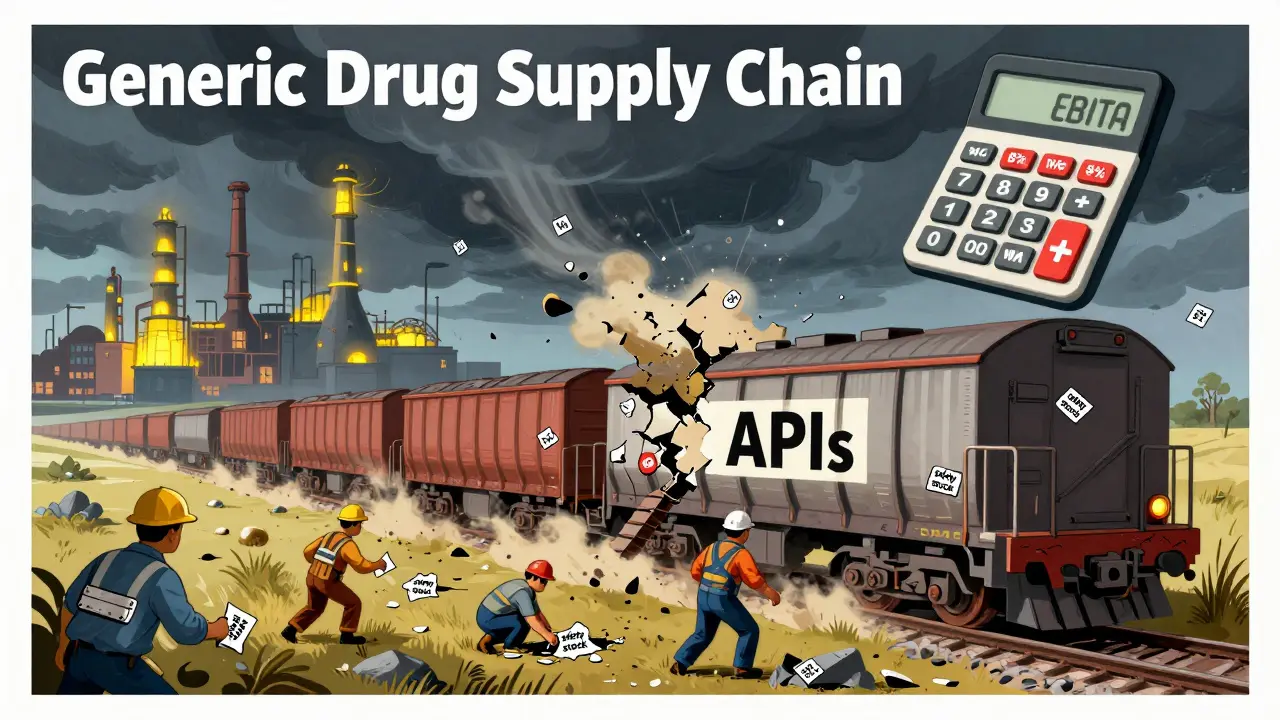
When you pick up a generic pill at the pharmacy, you probably don’t think about the supply chain behind it. But that chain is under more pressure than ever. Generic drugs make up over 90% of prescriptions in the U.S., yet they account for just 15% of total drug spending. The math seems simple: low price, high volume. But in reality, this model is fragile. Supply chain efficiency isn’t just about cutting costs-it’s about survival.
The Affordability Paradox
Generic drug manufacturers operate on razor-thin margins. The average EBITA margin is just 8%, down from 12.5% in 2018. Why? Because when one company lowers its price, everyone else has to follow. This creates a race to the bottom. But here’s the twist: the cheaper the drug, the riskier the supply chain becomes. According to Drug Patent Watch’s 2023 analysis, low-priced generics are 73% more likely to face shortages than higher-priced ones. Why? Because companies cut every possible cost-including safety buffers, backup suppliers, and redundant manufacturing lines.Eighty percent of the world’s active pharmaceutical ingredients (APIs) are made in just three countries. One factory shutdown-a power outage, a labor strike, a regulatory inspection-can ripple across the entire system. In 2022, a single plant in India halted production of a common blood pressure medication, causing nationwide shortages for months. That’s not an anomaly. It’s the new normal.
What Efficiency Really Means
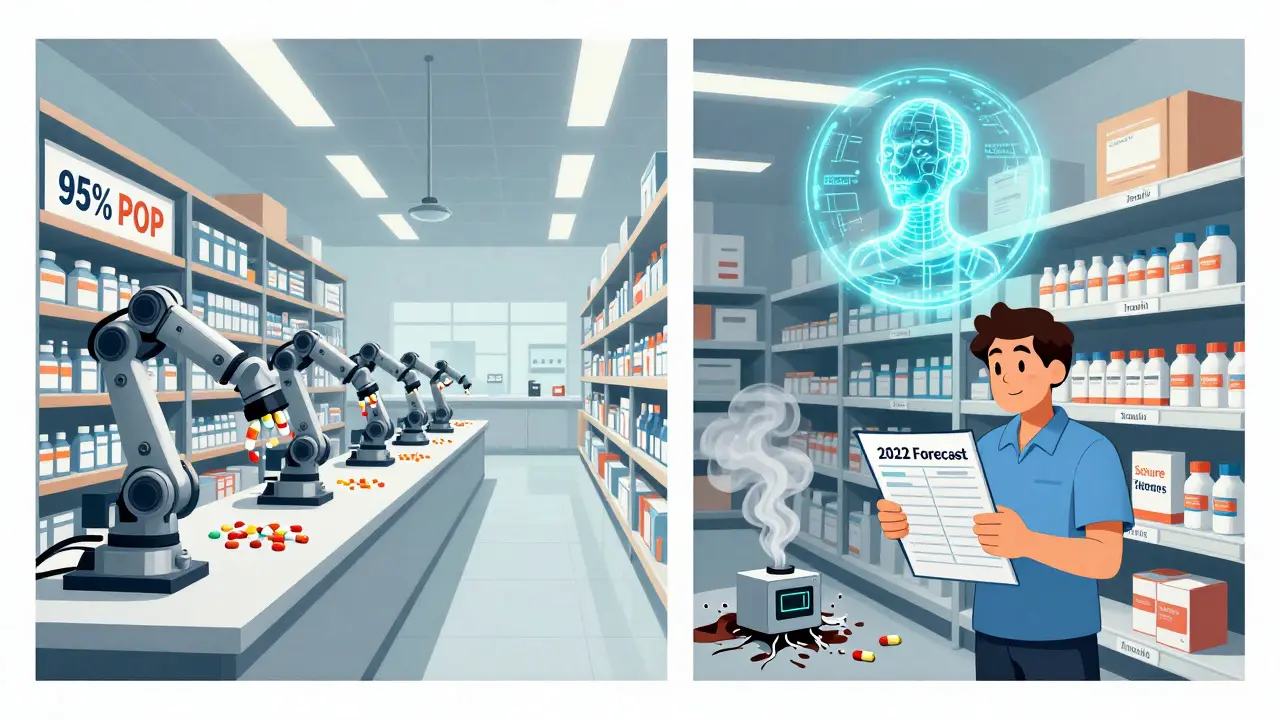
Efficiency in generic distribution isn’t about working faster. It’s about working smarter. Top performers don’t just reduce inventory-they predict demand with precision. Leading distributors use the Economic Order Quantity (EOQ) formula: Q = √(2KD/G). This isn’t just theory. Companies using this model cut stockouts by 30-45%. It balances the cost of ordering against the cost of holding stock. Too much inventory? Money tied up. Too little? Lost sales and angry customers.But inventory is only one piece. Perfect Order Percentage (POP) measures whether every order arrives on time, complete, undamaged, and correctly documented. Top distributors hit 95%+ POP. The industry average? Below 80%. That gap isn’t accidental. It’s built into how they use data.
Cloud-based ERP systems give real-time visibility across warehouses, trucks, and factories. IoT sensors track temperature and humidity during transit-critical for 45% of generics that degrade if exposed to heat or moisture. AI forecasting tools cut prediction errors by 25-40%. Teva Pharmaceutical’s 2022 overhaul slashed inventory carrying costs by 32% in just 14 months. They didn’t hire more staff. They gave their planners better tools.
The Two Models: Efficient vs. Responsive
There are two ways to run a generic drug supply chain: Efficient Chain Model and Responsive Chain Model. The Efficient Model is dominant. It’s built for high volume, low variation. Think of it like a freight train-once it’s moving, it’s cheap to keep going. Companies like Nestlé’s pharmaceutical division turn their inventory 12.7 times a year. The industry average? 8.3. That’s a 53% advantage.But this model has a blind spot: it can’t handle sudden spikes. If a flu outbreak hits or a new FDA warning causes doctors to switch prescriptions, the Efficient Model freezes. That’s where the Responsive Model shines-it’s built for flexibility, not cost. But it’s too expensive for generics. The cost of maintaining extra inventory, backup suppliers, and flexible logistics eats up margins.
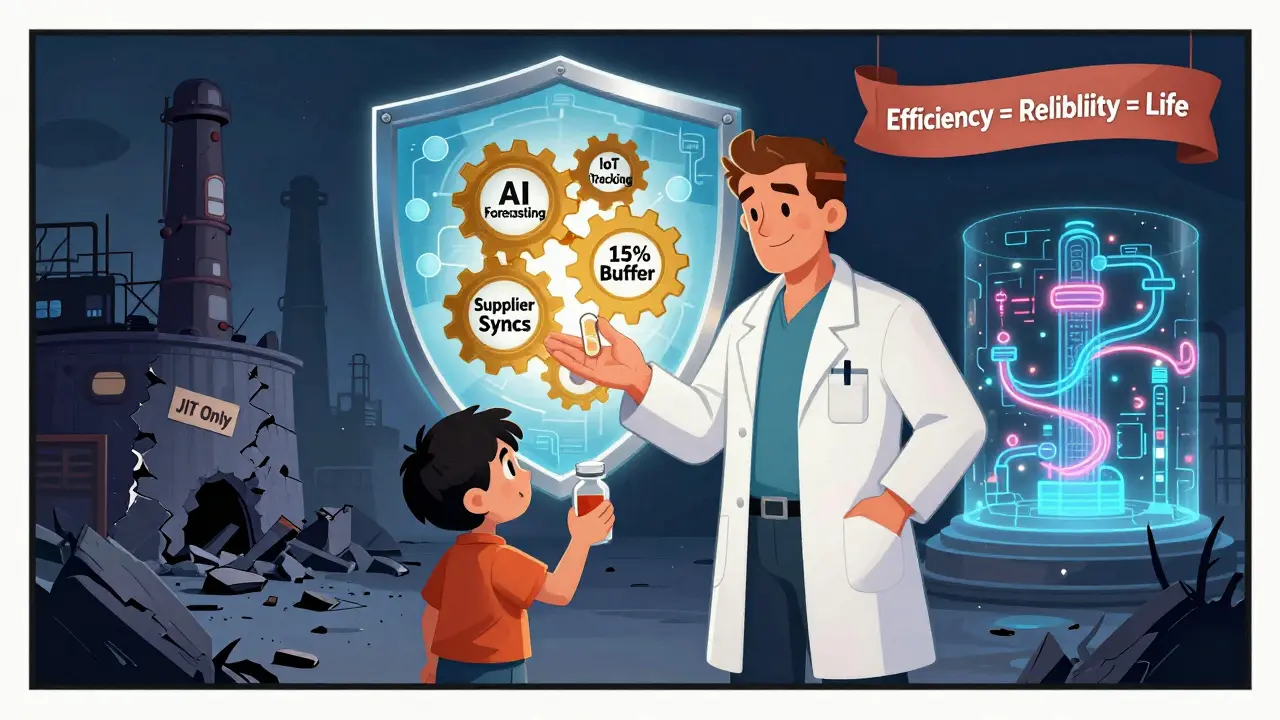
So distributors are stuck. They can’t afford to be responsive. But they can’t afford to be fragile either. The answer? A hybrid approach. Keep the Efficient Model for stable drugs. Add small, smart buffers for high-risk ones. A 15% safety stock for critical medications isn’t waste-it’s insurance. Sixty-eight percent of distributors who eliminated all safety stock saw severe shortages within a year.
Technology: The Divide
The biggest gap in the industry isn’t between companies-it’s between those using modern tech and those still using spreadsheets. Forty-two percent of the top 50 generic distributors now use AI-driven forecasting. Only 15% of smaller players do. Why? Cost. Implementing a full cloud-based system can cost $2-4 million. But the ROI is clear. Cardinal Health invested $150 million in predictive analytics in 2022. Their market share grew by 3.2% the same year. McKesson’s new 'DemandSignal' platform cut forecast errors by 37% in early trials.Meanwhile, legacy systems are holding back others. Sixty-five percent of companies trying to upgrade hit roadblocks integrating old software with new platforms. Deployment timelines stretch by 6-9 months. Some never finish. The result? A widening gap. Top quartile distributors now hit 9.2% EBITA margins. Bottom quartile? Just 6.8%. That’s not a small difference-it’s a survival line.
Regulations and Real-World Pain
The FDA’s Drug Supply Chain Security Act (DSCSA) requires full electronic traceability by 2023. That means every pill must be tracked from factory to pharmacy. It’s good for safety. Bad for costs. Compliance added 5-8% to operational expenses. The EU’s similar rules added 6-10%. For a company already running on 8% margins, that’s a punch.Operational managers report two big frustrations: approval delays and poor software documentation. One manager at McKesson said too many layers of management slowed down supplier quote changes, forcing 22% more expensive expedited shipments. Another said they had to wait weeks for a system update because the vendor’s documentation was unclear. Oracle SCM Cloud got 4.5 stars for features but only 3.8 for documentation. SAP IBP? 4.7. The difference isn’t just in software-it’s in how well it supports real people doing real work.
What Works in Practice
The most successful distributors do four things:- They use predictive analytics-not just historical sales data-to forecast demand. Historical trends miss sudden shifts. AI spots patterns in prescription changes, insurance formulary updates, and even social media chatter about drug shortages.
- They maintain 15-20% buffer inventory for critical generics. Not for everything. Just the ones that can’t be replaced quickly. Blood thinners, insulin, seizure meds.
- They track OEE (Overall Equipment Effectiveness) at manufacturing sites. Top performers hit 85%+. The average? 70%. That 15-point gap means fewer delays, less waste, and more consistent output.
- They collaborate with suppliers. Instead of treating them as vendors, they share forecasts and production schedules. Teva and its top API suppliers now hold weekly digital syncs. Stockouts dropped 40% in six months.
The Future Is Integrated
By 2027, MIT predicts top distributors will operate with digital twins of their entire supply chain. A digital twin is a live, virtual copy of your physical network. It simulates every possible disruption-weather, strikes, regulatory changes-and tells you the best move before it happens. That’s not science fiction. It’s the next step.Right now, distributors are choosing: upgrade or get left behind. The ones who don’t improve efficiency won’t just lose margin-they’ll lose market share. Morgan Stanley predicts that by 2025, companies with OEE below 85% or perfect order rates under 95% will lose 15-20% of their market share. Consolidation is coming. Smaller players without the capital to invest in tech won’t survive.
Efficiency in generic distribution isn’t about being cheap. It’s about being reliable. And in healthcare, reliability isn’t optional-it’s life or death.
Why are generic drug shortages getting worse?
Shortages are worsening because manufacturers cut costs to stay competitive, removing backup suppliers and safety stock. With 80% of active ingredients made in just three countries, any disruption-like a factory shutdown or regulatory delay-can cause nationwide shortages. Low-priced drugs have 73% higher risk of shortages because they offer no financial cushion to absorb disruptions.
What’s the most effective way to reduce inventory costs in generic distribution?
The most effective method is using the Economic Order Quantity (EOQ) formula to balance ordering and holding costs, combined with AI-powered demand forecasting. Companies using this approach reduce inventory carrying costs by 22-35% and cut stockouts by 30-45%. Pairing this with real-time IoT tracking and cloud-based ERP systems ensures inventory levels match actual demand, not guesswork.
Can just-in-time (JIT) inventory work for generic drugs?
JIT reduces storage costs by 22-35%, but it increases stockout risk by 15-20% during disruptions. It works only for stable, high-volume drugs with reliable suppliers. For critical medications-like insulin or heart drugs-JIT is dangerous. Top distributors use JIT selectively and always keep a 15% safety buffer for essential drugs.
How do regulatory requirements affect supply chain efficiency?
Regulations like the FDA’s DSCSA and the EU’s Falsified Medicines Directive require full electronic traceability, adding 5-10% to operational costs. While they improve safety, they strain margins. Efficient distributors integrate compliance into their systems from the start, turning regulation from a cost center into a competitive advantage through better tracking and audit readiness.
What skills are most in demand for supply chain roles in generic distribution?
Advanced analytics is the top priority-87% of hiring managers say it’s critical. Other key skills include cross-functional collaboration, regulatory knowledge (especially FDA and EU rules), and experience with cloud-based ERP and IoT systems. Soft skills matter too: the ability to influence stakeholders and break down silos between procurement, logistics, and manufacturing.
Danielle Arnold
March 24, 2026 AT 11:13James Moreau
March 24, 2026 AT 21:15Jesse Hall
March 25, 2026 AT 16:56Sean Bechtelheimer
March 27, 2026 AT 08:30Seth Eugenne
March 27, 2026 AT 09:27Jefferson Moratin
March 28, 2026 AT 05:15Caroline Dennis
March 28, 2026 AT 16:07Zola Parker
March 28, 2026 AT 21:06florence matthews
March 29, 2026 AT 22:18Kenneth Jones
March 31, 2026 AT 17:45Mihir Patel
April 1, 2026 AT 05:16Kevin Y.
April 1, 2026 AT 23:34