
 Jan, 8 2026
Every 40 seconds, someone in the U.S. has a stroke. And while many people know the warning signs - sudden numbness, slurred speech, face drooping - far fewer understand the critical difference between the two main types: ischemic and hemorrhagic. These aren’t just medical terms. They’re two completely different emergencies that demand different responses. Getting it wrong can cost lives.
What Happens in an Ischemic Stroke?
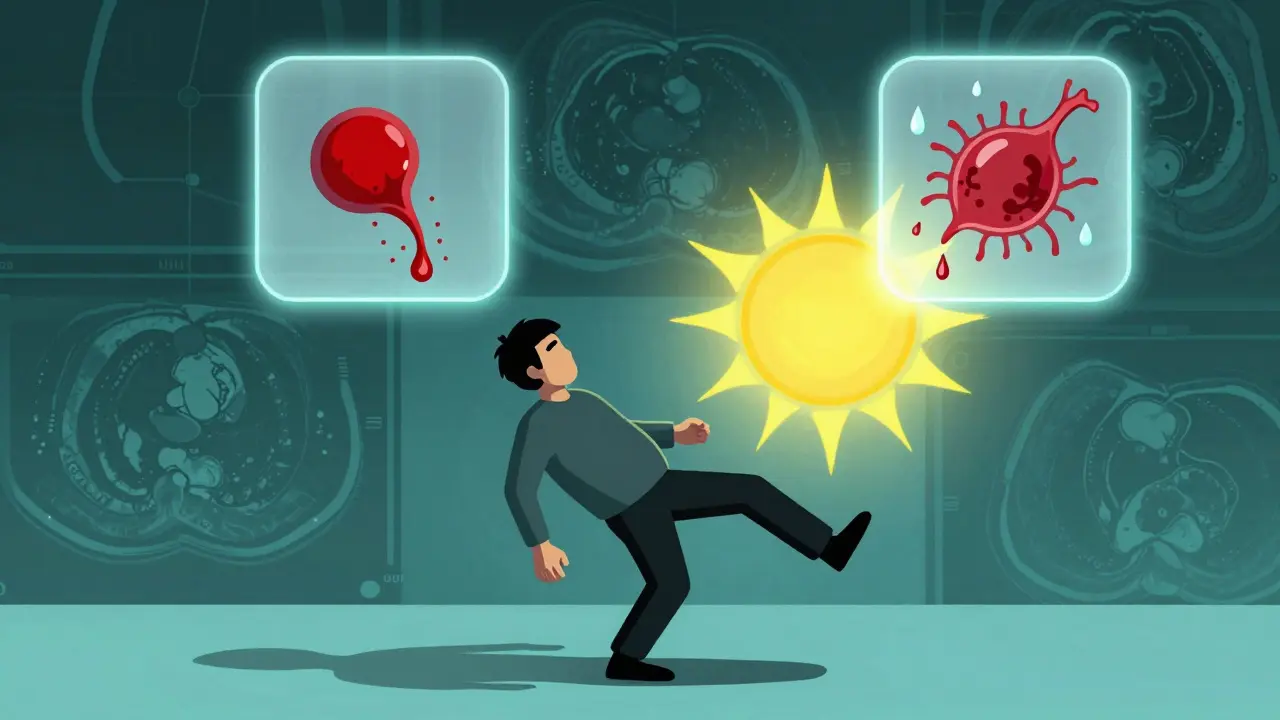
Ischemic strokes make up about 87% of all strokes. That means if you or someone you know has a stroke, it’s most likely this type. It happens when a clot blocks blood flow to part of the brain. Without oxygen, brain cells start dying within minutes.
There are two main ways these clots form. One is a thrombotic stroke - a clot builds up right inside a brain artery, usually because of fatty buildup (atherosclerosis). These often affect larger vessels and can cause sudden weakness on one side of the body. The other is an embolic stroke - a clot forms elsewhere, often in the heart, then travels through the bloodstream and gets stuck in a smaller brain artery. This is common in people with atrial fibrillation, where the heart beats irregularly and lets blood pool and clot.
Some ischemic strokes have no clear cause, even after full testing. These are called cryptogenic strokes and make up about 30% of all ischemic cases. They’re frustrating, but not hopeless - many can be prevented with the right long-term care.
What Happens in a Hemorrhagic Stroke?
Hemorrhagic strokes are less common - only about 13-15% of cases - but they’re often more violent. Instead of a blockage, a blood vessel bursts inside or around the brain. Blood leaks out, crushing brain tissue and increasing pressure inside the skull.
There are two main kinds. Intracerebral hemorrhage means the bleeding happens inside the brain tissue itself. This is almost always tied to high blood pressure. Over time, pressure weakens small arteries, and one just gives way. Subarachnoid hemorrhage is bleeding on the surface of the brain, usually from a ruptured aneurysm - a weak, bulging spot in a blood vessel wall. These can strike without warning, even in younger people.
The symptoms here are different. While ischemic strokes might creep up over minutes, hemorrhagic strokes hit like a thunderclap. People describe it as the worst headache of their life - sudden, explosive, unlike anything before. Other red flags: vomiting, seizures, loss of consciousness, one pupil larger than the other, or sudden confusion. A 2017 study found 92% of hemorrhagic stroke patients had severe headache, compared to just 19% of ischemic stroke patients.
How to Tell Them Apart - Fast
At the hospital, doctors don’t guess. They scan. A non-contrast CT scan is the first step - it shows bleeding in minutes. That’s why time matters. If you’re having an ischemic stroke, giving a clot-busting drug like tPA when there’s already bleeding could kill you. That’s why every second counts.
There’s no way to tell for sure at home. But certain patterns can raise suspicion. If someone has a sudden, severe headache with vomiting or loss of consciousness, think hemorrhagic. If numbness or weakness creeps in slowly over 10-20 minutes, think ischemic. But don’t wait. Even if you’re unsure - call 999. Don’t drive yourself. Don’t wait to see if it gets better.
Treatment: Different Problems, Different Fixes
Ischemic stroke treatment is about reopening the blocked artery. If you get to the hospital within 3 to 4.5 hours, you might get tPA (alteplase) or tenecteplase - drugs that dissolve clots. For large vessel blockages, a mechanical thrombectomy can physically remove the clot, even up to 24 hours after symptoms start. This procedure has saved thousands of people from permanent disability.
Hemorrhagic stroke treatment is about stopping the bleeding and reducing pressure. Surgery might be needed to clip an aneurysm or coil it from the inside. Medications lower blood pressure fast, reduce brain swelling, and prevent seizures. In some cases, minimally invasive techniques - like draining blood with a small tube - have improved survival rates by 10% compared to older methods.
There’s no universal treatment. What works for one person could harm another. That’s why imaging before treatment isn’t optional - it’s life-saving.
Prevention: Tailored to the Type
Preventing a stroke means knowing which kind you’re trying to stop.
For ischemic stroke, the biggest risk is atrial fibrillation. If you have it, taking a blood thinner like apixaban or warfarin cuts your stroke risk by 60-70%. That’s not a small win. It’s the difference between living independently and needing full-time care. Also, daily low-dose aspirin or clopidogrel helps prevent clots in people who’ve already had one.
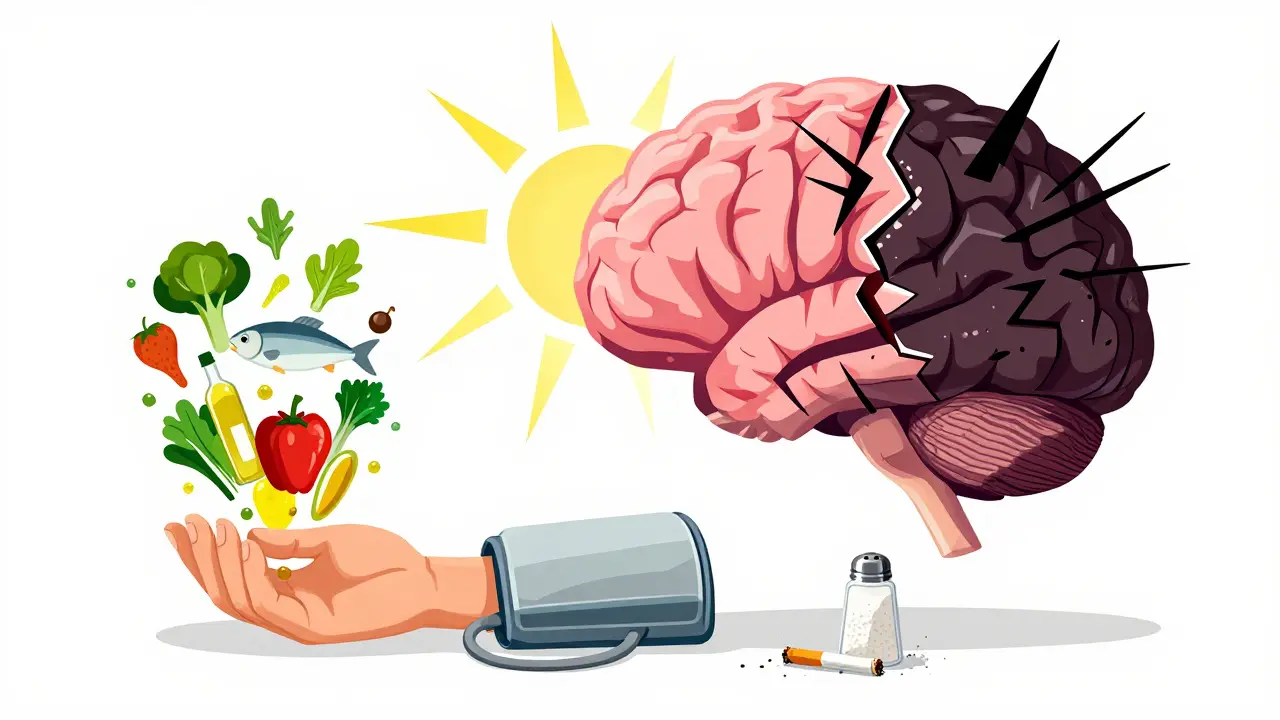
For hemorrhagic stroke, the number one enemy is high blood pressure. The SPRINT trial showed that keeping systolic pressure below 120 mmHg - not 140 - cuts hemorrhagic stroke risk by 38%. That means checking your blood pressure regularly, taking meds as prescribed, and avoiding salt-heavy diets. Many people think their blood pressure is fine because they feel okay. That’s dangerous. Hypertension doesn’t always have symptoms.
Lifestyle changes help both types. The Mediterranean diet - rich in olive oil, fish, nuts, vegetables, and whole grains - cuts overall stroke risk by 30%. Walking 150 minutes a week reduces stroke risk by 27%. Quitting smoking? Your stroke risk drops by half within a year. Alcohol? Limit it. Even moderate drinking raises blood pressure and increases hemorrhagic stroke risk.
Why Prevention Isn’t Just About Medicine
Most people think stroke prevention means popping pills. But the real power is in daily habits. A 2022 review found that people who combined healthy diet, regular exercise, no smoking, and moderate alcohol had up to 80% lower stroke risk than those who didn’t.
And it’s not just about avoiding stroke - it’s about avoiding disability. A stroke survivor in Bristol told me last year: “I thought I was fine after the clot was cleared. But the numbness didn’t go away. I didn’t realize I needed rehab until I couldn’t button my shirt.” Physical therapy, speech therapy, and occupational therapy are part of recovery - not optional extras.
Telestroke networks are helping too. In rural areas, a neurologist can review a CT scan in real time via video link. That means people outside big cities get the same fast diagnosis and treatment as those in London or Manchester.
What You Can Do Right Now
You don’t need to wait for a stroke to act. Here’s your checklist:
- Check your blood pressure monthly. If it’s above 130/80, talk to your doctor.
- If you have atrial fibrillation, don’t skip your blood thinner. Even if you feel fine.
- Know the FAST signs: Face drooping, Arm weakness, Speech difficulty, Time to call 999.
- Quit smoking - even one cigarette a day raises stroke risk.
- Move daily. Walk, garden, dance - just don’t sit still for hours.
- Eat real food: vegetables, beans, fish, nuts. Avoid processed meats, sugary drinks, and fried foods.
And if you see someone showing signs - don’t wait. Don’t assume it’s just a migraine or fatigue. Call 999. Say, “I think this is a stroke.” That simple phrase can trigger the fastest response possible.
What’s Next for Stroke Care
Science is moving fast. Blood tests that can tell ischemic from hemorrhagic stroke in 15 minutes are already in trials. AI tools are cutting door-to-treatment time by over 50 minutes. MRI scans are letting doctors treat ischemic strokes up to 9 hours after symptoms start - a huge leap from the old 4.5-hour window.
But the biggest breakthrough isn’t in a lab. It’s in awareness. More people are learning FAST. More ambulances are equipped with portable scanners. More hospitals have stroke teams ready 24/7. That’s why survival and recovery rates are improving - even as the population ages.
Stroke isn’t just something that happens to older people. It’s happening to people in their 40s and 50s too. And the longer you wait, the less chance you have to recover fully. Prevention isn’t about fear. It’s about control. You can’t control everything. But you can control your blood pressure. Your diet. Your movement. Your response when something feels wrong.
Can you have a stroke and not know it?
Yes. These are called silent strokes. They don’t cause obvious symptoms like weakness or speech loss, but they still damage brain tissue. Over time, multiple silent strokes can lead to memory problems, trouble thinking, or even dementia. They’re often found by accident on an MRI done for another reason. The best way to catch them? Manage your risk factors - especially blood pressure and cholesterol.
Are strokes hereditary?
Stroke itself isn’t inherited, but the conditions that cause it can be. If your parents had high blood pressure, atrial fibrillation, or diabetes, you’re more likely to develop those too. That means your stroke risk is higher. But genetics isn’t destiny. Lifestyle choices still have the biggest impact. Even with a family history, eating well, staying active, and controlling blood pressure can cut your risk by more than half.
Can young people have strokes?
Absolutely. About 10-15% of strokes happen in people under 50. Causes include heart defects, blood clotting disorders, drug use (especially cocaine), or undiagnosed high blood pressure. Younger people often get misdiagnosed because doctors assume it’s a migraine or anxiety. If you’re young and suddenly have numbness, vision changes, or trouble speaking - don’t brush it off. Call 999.
What’s the difference between a TIA and a stroke?
A TIA - or transient ischemic attack - is a mini-stroke. Symptoms are the same: weakness, speech trouble, vision loss. But they last less than an hour and don’t cause permanent damage. That doesn’t mean it’s harmless. In fact, 1 in 3 people who have a TIA will have a full stroke within a year if they don’t get treatment. A TIA is a warning sign. Treat it like an emergency.
Is it safe to take aspirin if you think you’re having a stroke?
No. Aspirin thins the blood. If you’re having a hemorrhagic stroke, taking aspirin could make the bleeding worse. You can’t tell the difference at home. The only safe thing to do is call 999. Emergency responders will assess the situation and give the right treatment - not you guessing with pills.
How long does stroke recovery take?
Recovery varies. Some people improve quickly in the first few weeks. Others need months or years of therapy. The first 3-6 months are the most critical for regaining function. But progress can continue for years with consistent rehab. The key is starting early - even if you feel better, keep going with therapy. Stopping too soon increases the risk of another stroke and long-term disability.
Final Thought: Act Before It’s Too Late
Strokes don’t care how old you are, how healthy you think you are, or how busy you are. They strike fast. And the window to fix them is even faster. The best treatment isn’t a drug or a surgery - it’s knowing the signs and acting before panic sets in.
You don’t need to be a doctor to save a life. You just need to know FAST. And if you see it - call 999. No hesitation. No doubt. Because in stroke, time isn’t just important. It’s everything.
Angela Stanton
January 9, 2026 AT 09:37Okay but let’s be real - most people don’t even know what ‘cryptogenic’ means, let alone that it’s 30% of ischemic strokes. 🤯 We need public health campaigns that don’t sound like a med school lecture. Also, tPA window extension to 24hrs? That’s game-changing. Why isn’t this on every EMS protocol yet? 🚑 #StrokeAwareness #NeuroNerd
Johanna Baxter
January 10, 2026 AT 07:36My uncle had a stroke and they gave him aspirin first 😭 turned out it was hemorrhagic. He’s been in a nursing home for 3 years now. NOBODY told us not to give aspirin. This post saved my life. I’m telling everyone. 💔
Jerian Lewis
January 10, 2026 AT 12:39It’s funny how we treat stroke like some mysterious event when it’s mostly just hypertension and atrial fibrillation. People ignore their BP because ‘they feel fine.’ That’s not health - that’s denial. The science is clear. The will to act? Not so much.
Kiruthiga Udayakumar
January 11, 2026 AT 20:25India has zero stroke awareness. My cousin had a TIA and went to a local ‘doctor’ who gave him painkillers. He had a full stroke 2 weeks later. This post should be translated into 10 Indian languages. Stop waiting for the government. Share this now. 🇮🇳
Patty Walters
January 12, 2026 AT 12:11Just wanted to say thank you for mentioning rehab. So many people think once the clot’s gone, they’re fine. Nope. My mom did 6 months of OT and still struggles with buttoning shirts. But she’s walking again. Don’t skip therapy. Even if you feel ‘okay.’ 💪
Phil Kemling
January 14, 2026 AT 03:11Time isn’t just important - it’s the only currency that matters in stroke. But what does ‘time’ even mean? Is it the moment symptoms start? The moment you call 911? The moment the CT scan is ordered? We’ve reduced door-to-needle time, but not the psychological lag - the hesitation, the denial, the ‘maybe it’ll pass.’ That’s the real bottleneck. And it’s not medical. It’s existential.
Ashley Kronenwetter
January 15, 2026 AT 14:29While the information presented is accurate and well-sourced, I must emphasize that the use of informal language and emojis in public health communication may undermine the perceived credibility of the message among older demographics. A more formal dissemination strategy may be warranted for broader public health impact.
Drew Pearlman
January 15, 2026 AT 23:59Hey, I just want to say how much I appreciate this post. I used to think strokes were just for grandpas, but now I know they can hit anyone - even my 47-year-old neighbor who thought her headache was just stress. She got help because she remembered FAST. Now she’s back to gardening. It’s not about fear. It’s about hope. And knowledge. Keep sharing this stuff. We’re all in this together.
Pooja Kumari
January 16, 2026 AT 05:49Okay so I work in a hospital in Mumbai and I’ve seen this too many times - young people coming in with strokes after binge drinking, smoking weed, or just ignoring their BP because ‘it’s not that bad.’ And then the family blames the hospital. NO. It’s not the hospital’s fault. It’s the lack of education. We need mandatory stroke awareness in high schools. Like sex ed. Like fire drills. This isn’t optional. It’s survival. And if you’re reading this and you’re under 50 - stop pretending you’re invincible. Your brain doesn’t care how young you are.
Jacob Paterson
January 17, 2026 AT 17:42Oh wow. So aspirin is bad if you’re having a stroke? Who knew? 🙄 I guess all those ‘stroke first aid’ TikToks telling people to chew aspirin were just… wrong? Maybe next time someone tells you to ‘take a baby aspirin’ you should ask them if they’ve ever passed med school. Or just call 999. Genius.
Elisha Muwanga
January 18, 2026 AT 05:52Another overhyped liberal health article. We don’t need more ‘lifestyle changes’ - we need less immigration, more discipline, and fewer people ignoring their blood pressure because they’re too busy scrolling. This post is 80% virtue signaling. The real solution? Stop enabling poor choices with free healthcare. Let people suffer the consequences. Then maybe they’ll learn.