
 Jan, 9 2026
Levothyroxine-Soy Timing Calculator
Do not consume soy products during this time
Recommended: Wait at least 3 hours before consuming soy products
Based on clinical guidelines: American Thyroid Association recommends separating soy intake by at least 3 hours from levothyroxine.
High-Risk Soy Foods
- Soy milk (especially unfortified)
- Tofu and tempeh
- Edamame
- Soy protein isolate (in bars, shakes)
- Miso and soy sauce
Lower-Risk Options
- Soy lecithin (small amounts)
- Soy oil
- Fermented soy (natto)
If you're taking levothyroxine for hypothyroidism, and you eat soy - whether it's tofu, soy milk, edamame, or even a protein bar with soy isolate - you might be unknowingly reducing how well your medication works. This isn't a myth or a vague warning. It's a well-documented, clinically significant interaction backed by over 30 years of research and real patient cases where thyroid levels went dangerously off-track simply because of what was eaten with the pill.
How Soy Blocks Levothyroxine
Levothyroxine is a synthetic version of the thyroid hormone your body needs to regulate metabolism, energy, temperature, and brain function. It’s absorbed in the small intestine. But soy contains compounds called isoflavones - mainly genistein and daidzein - that bind to the medication in your gut. This binding stops levothyroxine from being absorbed into your bloodstream the way it should. Studies using precise lab methods like liquid chromatography-tandem mass spectrometry show that when soy is taken at the same time as levothyroxine, the amount of hormone your body actually absorbs drops by 20% to 40%. One 2021 review of 63 studies found the average reduction was 25.3%. That’s not a small dip - it’s enough to push your TSH levels into the hypothyroid range again, even if you’re taking the right dose. This isn’t just about whole soy foods. Even small amounts of soy protein matter. A 2006 study found that 20 grams of soy protein (about half a cup of tofu) cut absorption by 15.8%. At 40 grams (a full cup of edamame or a soy-based protein shake), the drop jumped to over 35%. And here’s the kicker: it doesn’t matter if you’re on Synthroid, Levoxyl, or a generic brand. All levothyroxine tablets are affected the same way.Who’s at the Highest Risk?
Some people are far more vulnerable than others. Infants with congenital hypothyroidism are at serious risk. In documented cases, babies given soy formula alongside levothyroxine stayed severely hypothyroid - with TSH levels over 200 µIU/mL - even when their doses were increased. One infant’s free thyroxine dropped below 0.4 ng/dL, which is dangerously low for brain development. Pediatric endocrinologists now treat this as a medical emergency. Elderly patients are another high-risk group. As we age, stomach acid production drops, which already makes levothyroxine absorption less reliable. Add soy into the mix, and the problem gets worse. Nearly half of all levothyroxine users in the U.S. are over 65. Many of them eat soy products regularly - whether it’s soy milk in their coffee or tofu stir-fry for dinner - without realizing the impact. Vegetarians and vegans are also disproportionately affected. About 78% of people following plant-based diets consume soy at least three times a week, according to Endocrine Society data. For them, avoiding soy entirely isn’t realistic. But understanding timing can make all the difference.Soy vs. Other Dietary Interferents
Soy isn’t the only thing that messes with levothyroxine. Calcium supplements, iron pills, and even coffee can reduce absorption too. But soy ranks third in severity - behind calcium (which cuts absorption by 35%) and iron (32%), but ahead of coffee (21%) and high-fiber foods (18%). The big difference? Calcium and iron need a 4-hour gap before or after your pill. Soy? You need at least 3 hours. Why? Because soy protein empties from your stomach in about 2.8 hours on average. If you take your pill too soon after eating soy, it’s still hanging around in your gut, ready to bind to the medication. Here’s the catch: soy is everywhere. It’s in soy lecithin (found in 70% of packaged foods), soy protein isolate (used in 68% of vegetarian meat alternatives), and even some breads and energy bars. You don’t need to eat a full block of tofu to get a dose of isoflavones - a single soy latte can contain 20-30 mg. That’s enough to interfere.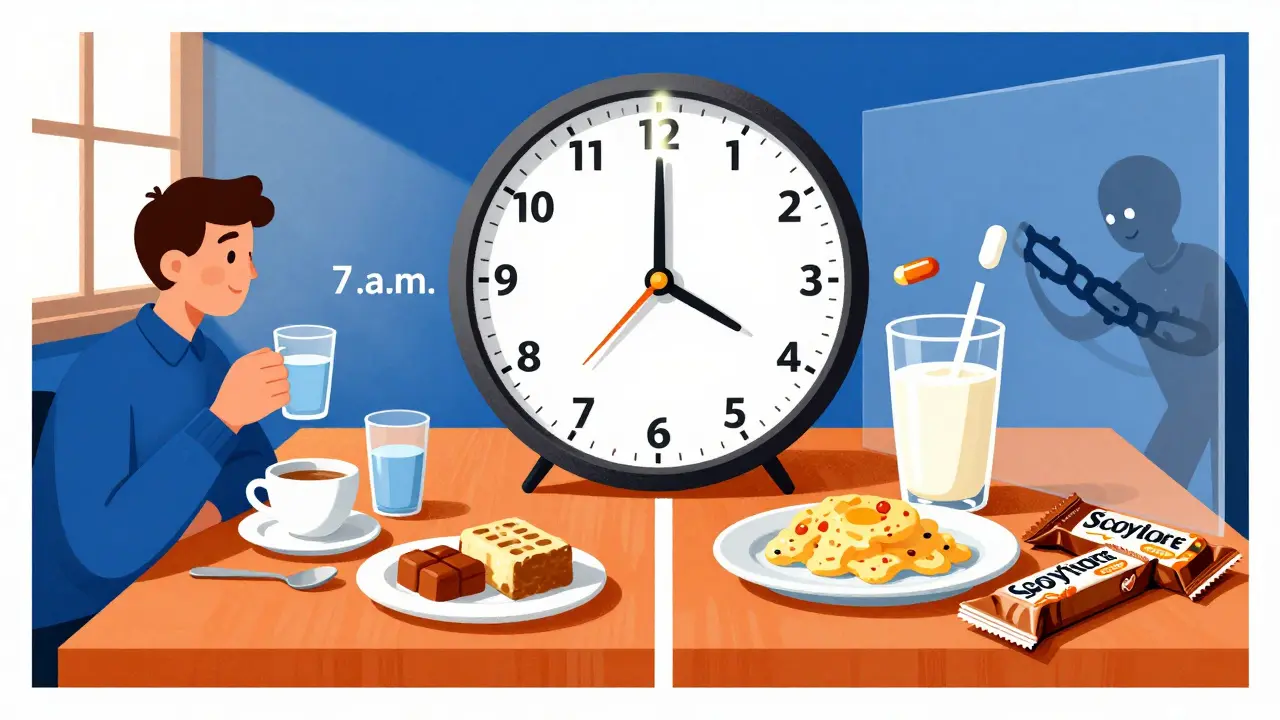
What Should You Do?
You don’t have to give up soy. But you do need to change when you eat it. Take your levothyroxine on an empty stomach, first thing in the morning, with a full glass of water. Wait at least 3 to 4 hours before eating any soy product - or drinking soy milk, or having a soy-based snack. That means if you take your pill at 7 a.m., don’t have tofu scramble or soy yogurt until after 11 a.m. or noon. If you take your pill at night, make sure your last soy-containing meal was at least 3 hours before. No soy dinner, no soy dessert. Simple. For parents of infants on levothyroxine: if your baby is on soy formula and their TSH isn’t dropping despite the right dose, talk to their pediatric endocrinologist immediately. Switching to a non-soy formula is often the fastest fix. Most infant formulas in the U.S. are soy-free - you just need to ask for them.What About Newer Levothyroxine Formulations?
Some newer versions of levothyroxine are designed to be more reliable. Tirosint®, a softgel capsule, has been shown in clinical trials to absorb better than tablets when taken with soy. In one study of 45 patients, Tirosint maintained 18.3% higher absorption compared to standard tablets when soy was consumed. That’s not a cure - but it’s a helpful tool for people who struggle with dietary restrictions. There’s also emerging research on a new formulation called Levo-Sorb®, currently in Phase II trials. Early results show it maintains 92% absorption even with soy present - a game-changer if it gets approved. But it’s not available yet.Why Do Some People Say It Doesn’t Affect Them?
You’ve probably heard someone say, “I’ve been having soy lattes with my Synthroid for 10 years and my TSH is fine.” That’s true - for some people. But here’s the thing: thyroid hormone needs are different for everyone. Your body’s ability to absorb levothyroxine depends on your stomach pH, gut health, age, genetics, and even your gut bacteria. Some people naturally absorb more. Others have slower gastric emptying. A few may have genetic variants that make them less sensitive to soy isoflavones. But that doesn’t mean the interaction doesn’t exist. It means you got lucky. The problem is, you might not stay lucky. Stress, illness, changes in diet, or aging can shift your absorption. A TSH that’s been stable for years can suddenly spike - and soy could be the hidden cause. A 2023 survey by ThyroidChange found that 28% of patients had unexplained TSH fluctuations, and soy was responsible for 17% of those cases - second only to calcium supplements. Many patients didn’t even know soy could be the culprit until their doctor finally connected the dots.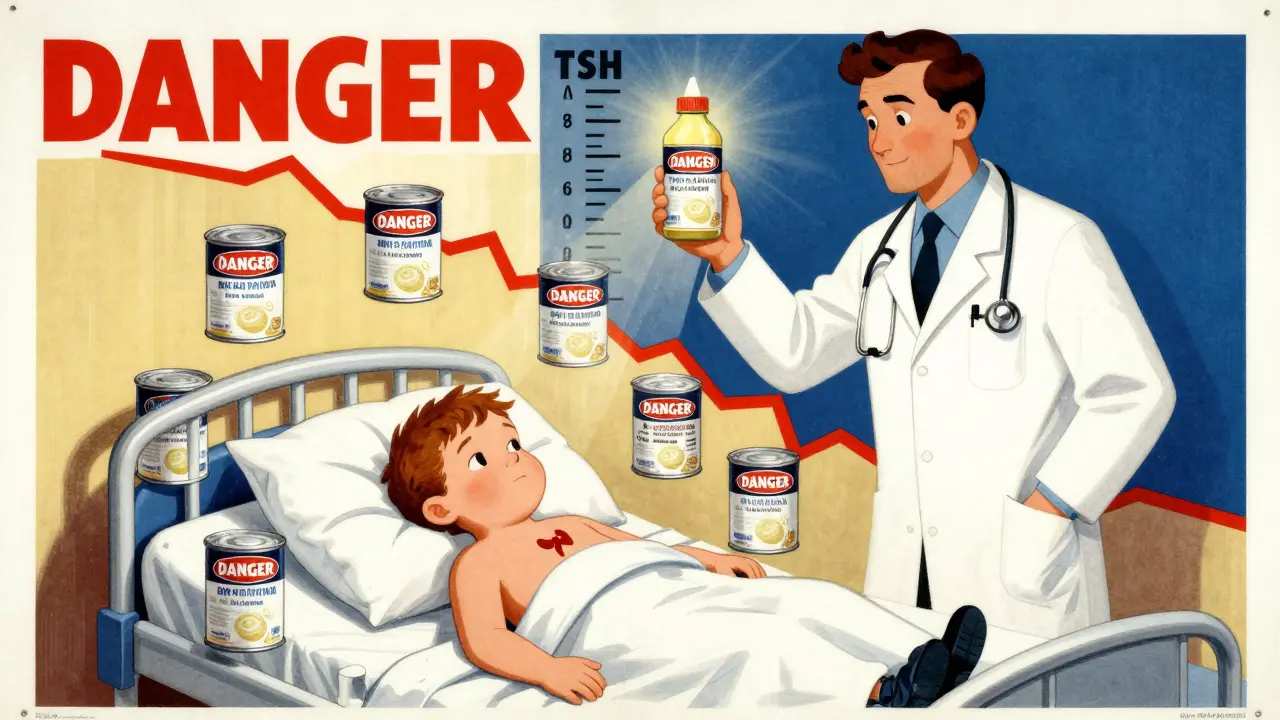
Sean Feng
January 10, 2026 AT 19:27Soy and levothyroxine? Yeah I knew that.
Priscilla Kraft
January 12, 2026 AT 15:32This is such an important post 🙏 I'm a vegan and had no idea my soy milk at breakfast was messing with my meds. I switched to almond milk and my TSH dropped back into range in 6 weeks. Don't ignore this - your thyroid will thank you.
Jason Shriner
January 13, 2026 AT 01:16So let me get this straight… I’ve been eating tofu scrambles with my Synthroid for 8 years and my doctor never told me? 😳
Maybe I’m not a hypothyroid zombie after all - maybe I’m just a walking clinical trial.
Also, soy lecithin in my dark chocolate? Is that the real villain? The plot thickens.
I feel like I’ve been betrayed by my granola bar.
And now I’m just sitting here wondering if my kombucha has soy in it too.
What even is food anymore?
My life is a footnote in a 2021 review paper.
Someone please send help. Or at least a soy-free protein bar.
Vincent Clarizio
January 13, 2026 AT 02:35Let’s be real - this isn’t just about soy. This is about the entire pharmaceutical-industrial complex’s failure to educate patients. Levothyroxine is one of the most prescribed drugs in America, yet pharmacists are still handing out scripts without a single word about dietary interference? That’s not negligence - that’s systemic abandonment. We’ve got 67% of prescriptions with warnings? That means 33% of people are being left in the dark while their TSH spirals. And for what? Because soy is ‘plant-based’ and therefore morally superior? No. Because no one wants to tell people they can’t have their morning soy latte. We’d rather have people suffering quietly than inconvenience a lifestyle trend. The real tragedy isn’t the isoflavones - it’s the apathy of the medical establishment. And don’t even get me started on how Tirosint is 5x more expensive and still not covered by half the insurers. This isn’t medicine. It’s capitalism with a thyroid label.
Sam Davies
January 14, 2026 AT 09:14Interesting. Though I suspect the real issue is that most people can't be bothered to read the leaflet. Or, more accurately, the leaflet doesn't exist in a form that doesn't require a PhD in pharmacokinetics to interpret. Soy? Pfft. I mean, if you're taking thyroxine and still drinking soy milk with your cereal, you probably also think 'natural' means 'safe'.
Christian Basel
January 14, 2026 AT 21:24Pharmacokinetic interference via isoflavone-mediated competitive inhibition of intestinal absorption - confirmed via LC-MS/MS in multiple RCTs. The 25.3% average reduction is statistically significant (p < 0.001). The 3-hour separation window aligns with gastric emptying half-life of soy protein. Case closed. Stop the anecdotal noise.
Adewumi Gbotemi
January 14, 2026 AT 23:09I am from Nigeria, we don't eat much soy here. But I have a cousin in America with thyroid problem. I will send this to him. Simple: take pill, wait 3 hours, then eat soy. No drama. Just science.
Matthew Miller
January 15, 2026 AT 16:34So you're telling me my 7 a.m. soy latte is the reason my TSH is 8.2? And I thought it was just stress? Or maybe my cat? Or my ex? No. It's the soy. Of course it's the soy. I'm not even mad. I'm just disappointed. I spent $400 on a smart scale and a sleep tracker but didn't think to check if my breakfast was sabotaging my meds. Congrats, soy - you win. I'll be switching to oat milk. And maybe therapy.
Jennifer Littler
January 16, 2026 AT 13:07As someone who works in endocrine pharmacy, I can confirm this is under-discussed. We get 3-4 patients a week who come in with 'unexplained' TSH spikes - and 70% of them are vegan or vegetarian. We now have a checklist: 'Soy? Calcium? Coffee? Timing?' - and we ask it every time. It’s not controversial. It’s basic. Why aren’t more providers doing this? Because they assume patients know. They don’t. And we’re not doing enough to bridge that gap.
Alfred Schmidt
January 17, 2026 AT 06:28WHY DOES NO ONE TELL YOU THIS?!?!?!?!
My TSH was 15.8 last year. I was exhausted. My hair was falling out. My brain felt like wet cardboard.
I changed NOTHING except I stopped having soy yogurt with my pill.
Three weeks later - TSH 2.1.
My doctor said, 'Hmm, interesting.'
THAT'S IT?!?!
YOU'RE TELLING ME I COULD'VE BEEN FINE IF I'D JUST WAITED 3 HOURS?!
I spent $12,000 on specialists, supplements, and 'thyroid cleanses' - and the answer was in the damn food label!
WHY IS THIS NOT ON EVERY PACKAGING?!
WHY ISN'T THIS A PUBLIC SERVICE ANNOUNCEMENT?!
WHY AM I STILL ALIVE?!
Thank you for posting this. I feel like I've been given back my life.
Alex Smith
January 18, 2026 AT 09:37Hey - if you're reading this and you're on levothyroxine and eat soy, you're not broken. You're just misinformed. This isn't about being perfect. It's about being aware. I used to have tofu stir-fry at 7 p.m. and take my pill at 11 p.m. - I thought I was fine. Turns out, my body was just barely scraping by. Now I take it at 7 a.m., wait until noon for soy. Life’s easier. Thyroid’s happier. No need to quit soy. Just delay it. You got this.
Roshan Joy
January 19, 2026 AT 05:49This is gold 🙌 I'm a diabetic on levothyroxine and eat soy every day. Now I know to take my pill before breakfast and wait till lunch. Also, soy sauce is okay? Good to know. I'll check my labels now. Thanks for making this so clear - no jargon, just facts. You saved someone today.