
 Feb, 2 2026
When you take opioids for chronic pain, you’re already aware of the risks: drowsiness, constipation, dependence. But there’s one danger most people never talk about-sleep apnea getting dramatically worse, and your oxygen levels crashing while you sleep. This isn’t rare. It’s happening to thousands of people right now, often without anyone noticing until it’s too late.
How Opioids Break Your Breathing at Night
Opioids don’t just dull pain-they slow down your brain’s natural breathing signals. While you’re awake, your body can compensate. You feel short of breath, you yawn, you adjust. But when you fall asleep, that wakefulness drive disappears. That’s when opioids turn dangerous. Your brainstem, specifically the pre-Bötzinger complex, controls your breathing rhythm. Opioids bind to μ-receptors there and silence it. Studies show this reduces your response to low oxygen by 25-50% and to high carbon dioxide by 30-60%. In plain terms: your body stops reacting when it needs to breathe more. You don’t gasp. You don’t stir. You just keep sleeping… while your oxygen drops. At the same time, opioids relax the muscles in your throat. The genioglossus muscle, which holds your airway open, becomes floppy. This increases the chance of your airway collapsing-especially if you already have obstructive sleep apnea. The result? A mix of central apneas (your brain forgets to breathe) and obstructive apneas (your airway shuts). Together, they create a perfect storm.The Numbers Don’t Lie
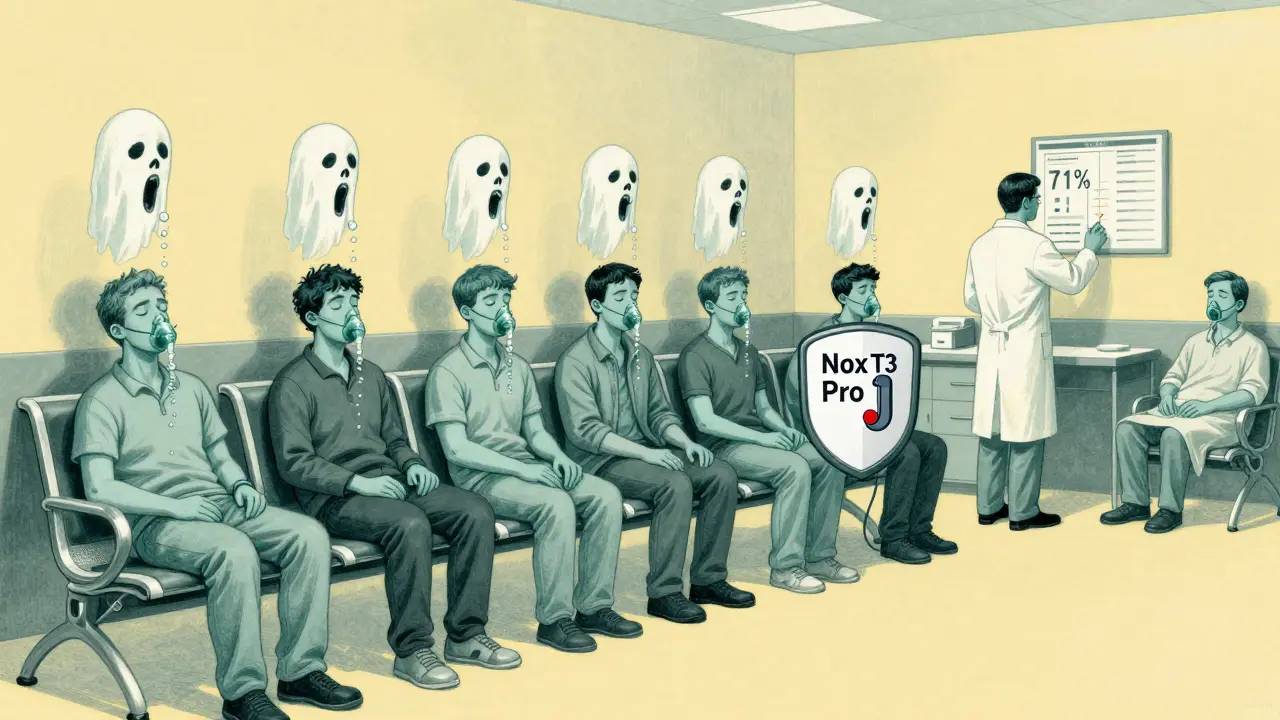
If you’re on long-term opioids, your odds of having sleep apnea are shockingly high. One 2022 study found that 71% of chronic opioid users had moderate to severe sleep apnea (AHI ≥15). Nearly half had severe apnea (AHI ≥30). That’s more than double the rate in the general population. Central sleep apnea is especially common. In one study, 80% of opioid users had central apneas with an average of 12 events per hour. Compare that to healthy adults, who average 2-5. And it gets worse with dose. For every 10 mg increase in morphine equivalent daily dose, your AHI goes up by 5.3%. At doses over 100 mg MEDD, 65% of patients have more than 20 central apneas per hour. Nighttime oxygen levels? Even more alarming. In one study, 68% of opioid users had oxygen saturation below 88% for more than five minutes during sleep. Only 22% of non-users did. When you combine opioids with untreated obstructive sleep apnea, your risk of oxygen dropping below 80% jumps 3.7 times.Why Methadone Is the Worst Culprit
Not all opioids are equal. Methadone is the biggest offender. It stays in your system longer, builds up, and hits the brainstem harder. Studies show people on methadone are over four times more likely to develop moderate-to-severe sleep apnea than those on other opioids. Fentanyl patches and long-acting oxycodone also carry high risk. Short-acting opioids like hydrocodone are less dangerous-but still risky if used daily. If you’re on methadone for pain or addiction treatment, you’re in the highest-risk group. Yet, many clinics still don’t screen for sleep apnea. That’s a problem. One patient on 120 mg/day methadone had 35 central apneas per hour and oxygen levels dipping to 76%. He didn’t know anything was wrong-until his wife started recording his nighttime gasps.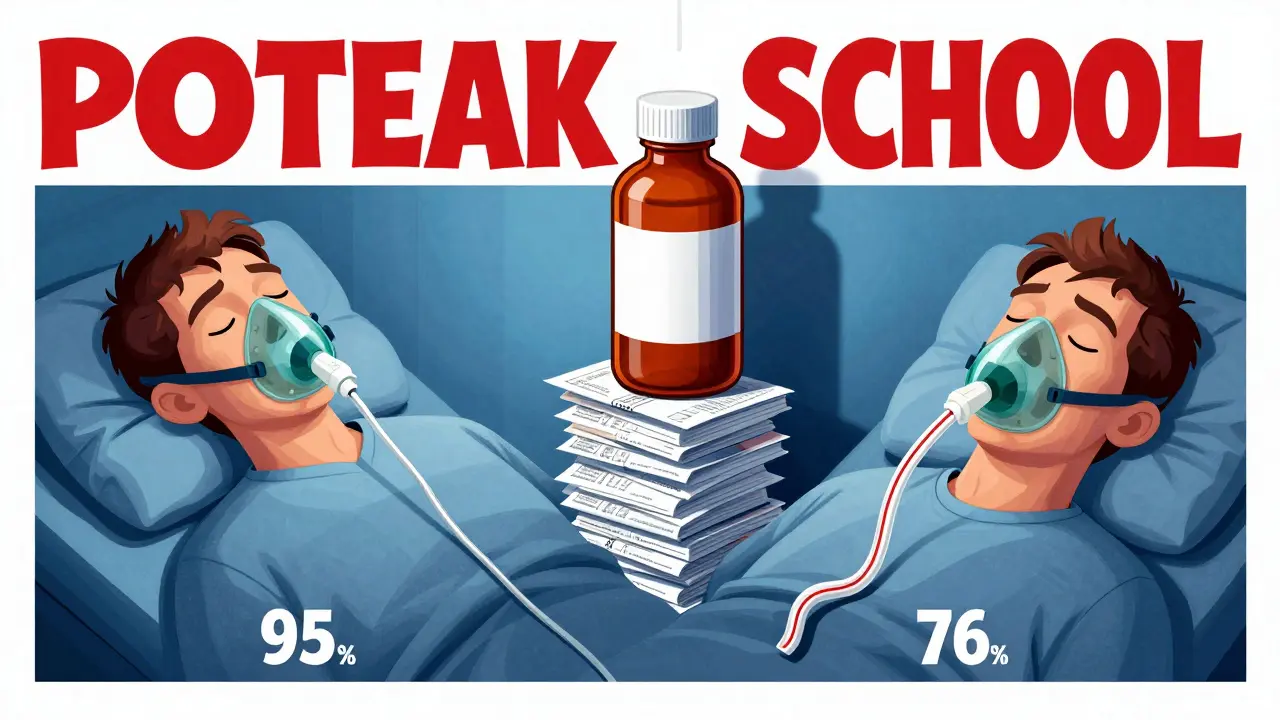
Who’s Most at Risk?
You’re at higher risk if you:- Take opioids daily for more than 3 months
- Have a BMI over 30 (obesity)
- Snore loudly or have been told you stop breathing while sleeping
- Feel excessively tired during the day, even after 8 hours of sleep
- Have high blood pressure or heart problems
- Take more than 50 mg MEDD daily
What Doctors Should Be Doing
The American Academy of Sleep Medicine and the CDC now recommend screening for sleep apnea before starting long-term opioid therapy-especially if you’re on 50 mg MEDD or more. That means a sleep study. Polysomnography (an overnight sleep lab test) is the gold standard. But for many, home sleep tests are now an option. The FDA cleared the Nox T3 Pro in early 2023 specifically for opioid users. It’s 92% accurate at spotting apnea with AHI over 15. If you’re diagnosed with sleep apnea, CPAP is the first-line treatment. But here’s the catch: opioid users have lower adherence. Why? Drowsiness, brain fog, and nasal dryness make the mask uncomfortable. One study found only 58% of opioid users stick with CPAP, compared to 72% of others. Alternative approaches include:- Reducing opioid dose if possible
- Switching to a less respiratory-depressant opioid
- Positional therapy (sleeping on your side)
- Acetazolamide-a diuretic that stimulates breathing. Early trials show it cuts AHI by 35% in opioid users.
Real Stories, Real Consequences
At the Cleveland Clinic, implementing routine sleep screening for opioid patients led to a 41% drop in respiratory events over 18 months. That’s lives saved. But not everyone gets help. A 2021 survey of 350 primary care doctors found only 28% routinely screen for sleep apnea before prescribing opioids. Many say they don’t have access to sleep specialists. Others don’t know the guidelines exist. On Reddit’s r/ChronicPain, hundreds of users describe the same pattern: “I started oxycodone and suddenly I’m waking up choking.” “My wife says I stop breathing for 10 seconds at a time.” “I thought it was just the pain meds making me tired-but it was my breathing.” Many report dramatic improvements after getting a CPAP machine. One user wrote: “I went from needing 10 naps a day to sleeping through the night. I didn’t know I was that sick.” But there’s a darker side. One case report described a patient who stopped opioids entirely but still had severe sleep apnea. His brain had adapted-permanently. The damage wasn’t reversible.What You Can Do Right Now
If you’re on opioids long-term:- Ask your doctor: “Could my sleep apnea be made worse by my pain meds?”
- Track your symptoms: Do you snore? Wake up gasping? Feel exhausted even after 8 hours?
- Ask for a home sleep test if a full lab study isn’t available.
- If you’re on methadone or over 50 mg MEDD, insist on screening-even if you feel fine.
- Don’t wait for symptoms to get worse. Nighttime hypoxia doesn’t always cause pain. It just slowly damages your heart, brain, and lungs.
The Bigger Picture
Over 10 million Americans take opioids daily for chronic pain. That’s millions of people whose breathing is quietly being suppressed every night. The medical community is finally waking up to this crisis. The American Thoracic Society lists managing sleep apnea in opioid users as one of its top five research priorities. New drugs are being tested-like cebranopadol, which may relieve pain without depressing breathing. But they’re years away. Right now, the only proven fix is screening and treatment. This isn’t about stopping pain treatment. It’s about making it safer. You don’t have to choose between pain relief and survival. You just need to know the risk-and act on it.Can opioids cause sleep apnea in people who never had it before?
Yes. Opioids don’t just worsen existing sleep apnea-they can trigger it in people who never had symptoms. Studies show that 71% of chronic opioid users develop moderate-to-severe sleep apnea, even if they had no prior history. This happens because opioids suppress the brain’s breathing drive and relax throat muscles, creating both central and obstructive apneas. You don’t need to be overweight or snore to be at risk.
Is it safe to take opioids if I already have sleep apnea?
It’s risky, but not impossible. If you have untreated sleep apnea and start opioids, your risk of nighttime oxygen drops and respiratory arrest increases dramatically. However, if you’re already using CPAP and your apnea is well-controlled, the risk is lower-but still present. Always tell your pain doctor about your sleep apnea diagnosis. Your dose may need to be reduced, and your CPAP settings may need adjustment.
What’s the difference between central and obstructive sleep apnea with opioids?
Central sleep apnea means your brain stops sending the signal to breathe. Opioids cause this by depressing the brainstem. Obstructive sleep apnea means your airway collapses, even though your brain is trying to breathe. Opioids make this worse by relaxing throat muscles. Most opioid users get a mix of both. Central apneas are more common and more dangerous because they’re silent-you don’t snore or jerk awake. You just stop breathing, and your body doesn’t wake you up.
Can I stop opioids if I have sleep apnea?
Stopping opioids may improve your breathing-but not always. In some cases, the brain’s breathing control becomes permanently altered after long-term opioid use. One case report showed no improvement in sleep apnea even after opioid discontinuation. Never stop opioids suddenly. Work with your doctor on a slow taper, while monitoring your sleep. If your apnea improves after reducing or stopping, it’s a sign the opioids were the main trigger.
Are home sleep tests accurate for opioid users?
Yes, newer home tests like the Nox T3 Pro are validated specifically for opioid users and detect apnea with 92% accuracy. Older home tests often miss central apneas because they don’t measure brain activity. The Nox T3 Pro includes airflow, oxygen, and respiratory effort sensors, making it reliable for spotting both central and obstructive events. If your doctor says a home test won’t work, ask if they’ve seen the 2023 FDA clearance for this device.
Amit Jain
February 4, 2026 AT 09:11Bro, this is wild. Opioids mess with your breathing while you sleep? I thought it was just about getting high or addicted. Turns out, your body forgets how to breathe. Scary stuff. Get checked if you’re on pain meds long-term.
Mandy Vodak-Marotta
February 5, 2026 AT 17:11Okay but like… I’ve been on oxycodone for 5 years for my back and I just thought I was tired because I’m old or something. My wife has been telling me I sound like a chainsaw with pauses. I thought she was exaggerating. Turns out she’s been recording me and I stop breathing for 15 seconds at a time?? I just scheduled a sleep study. If this saves my life, I’m gonna cry. Also, why isn’t this on every doctor’s checklist??
Keith Harris
February 6, 2026 AT 02:32Oh wow, another ‘opioids are evil’ fearmongering post. You know what’s worse? The fact that people are getting addicted to CPAP machines because they’re scared to breathe on their own. The real crisis is that doctors are scared to prescribe opioids because of this nonsense. People with chronic pain are dying from untreated pain while you all panic about oxygen levels. Wake up. This is medical gaslighting dressed up as ‘science.’
Kunal Kaushik
February 7, 2026 AT 00:40Bro this hit different 😔 I’ve been on methadone for 3 years for nerve pain. Never knew I was stopping breathing at night. My wife said I sound like a dying whale. We got a home test last week. AHI of 28. I’m starting CPAP next week. Feels weird wearing it, but I’d rather breathe than die in my sleep. Thanks for the info, man. 🙏
Coy Huffman
February 7, 2026 AT 23:34It’s funny how we’ll spend hours debating the ethics of pain management while ignoring the fact that our bodies are basically shutting down in silence. The brainstem doesn’t care about your political views or your ‘right to pain relief.’ It just wants oxygen. And when opioids silence it… you don’t get a warning beep. You just… stop. And then you’re gone. No fanfare. No last text. Just a quiet room and a wife wondering why you didn’t wake up. We treat pain like a battle. But sometimes the enemy is the weapon itself.
caroline hernandez
February 8, 2026 AT 15:24From a clinical perspective, the central apnea component in opioid-induced respiratory depression is underdiagnosed because standard home sleep apnea tests (HSATs) lack central apnea detection sensitivity unless they include respiratory effort monitoring. The Nox T3 Pro’s inclusion of chest and abdominal belts is what makes it FDA-cleared for this population. Without effort sensors, you’re missing the true central apnea index. CPAP adherence remains low due to opioid-induced sedation reducing motivation and increasing mask intolerance. Consider adjunctive acetazolamide (750 mg/day) - it’s off-label but has Phase 2 data showing 35% AHI reduction in opioid users with central apnea. Also, positional therapy is underutilized - 60% of opioid users with OSA have significant supine-predominant events.
Roshan Gudhe
February 9, 2026 AT 23:09It’s not just about breathing. It’s about the quiet erosion of autonomy. We’re told to trust doctors, but the system doesn’t screen because it’s easier to prescribe than to coordinate sleep studies. We’re not lazy. We’re not weak. We’re just people who need pain relief and got handed a slow poison wrapped in a prescription. The real tragedy isn’t the apnea - it’s that we didn’t know we were being sacrificed for convenience. Maybe next time, we ask: ‘What am I really paying for?’
Antwonette Robinson
February 10, 2026 AT 22:31Oh sweetie, you got a sleep study? How adorable. Did you also get a hug from your therapist and a pamphlet on ‘self-care’? I’m sure your 12-hour CPAP trial will fix everything. Meanwhile, your doctor is probably still prescribing 120mg of oxycodone because ‘it’s the only thing that works.’ Spoiler: it’s not. It’s just the only thing that doesn’t require paperwork. 🙄
Alec Stewart Stewart
February 12, 2026 AT 05:21Hey, if you’re on opioids and you’re tired all the time, don’t just blame it on aging. Get checked. Seriously. I didn’t think I had sleep apnea until my wife said I sounded like a foghorn with a 10-second mute button. Got the test. AHI of 31. CPAP changed my life. I actually remember what it’s like to wake up not feeling like I ran a marathon. You don’t have to suffer. There’s help. You’re not alone.
Janice Williams
February 12, 2026 AT 15:11While I appreciate the anecdotal nature of this post, it lacks rigorous statistical controls, fails to account for confounding variables such as concurrent benzodiazepine use, and misrepresents the clinical guidelines by implying universal screening is mandatory rather than conditionally recommended. Furthermore, the assertion that ‘opioids cause sleep apnea’ is a gross oversimplification of a complex pathophysiological interaction. One must consider baseline respiratory reserve, body composition, and neurochemical adaptation. This post is dangerously reductive.
Ed Mackey
February 12, 2026 AT 17:59i just got on oxy for my back and i didnt even know this was a thing. my wife says i snore like a chainsaw but i thought it was just me. i think im gonna ask my doc about a sleep test. also i spelled apnea wrong in my search lol
Nathan King
February 13, 2026 AT 11:24It is worth noting that the American Thoracic Society’s 2023 position statement on opioid-induced respiratory depression underscores the imperative for multidisciplinary care pathways, including pulmonology, pain medicine, and sleep medicine collaboration. The data presented herein, while compelling, are largely derived from cross-sectional cohorts with limited longitudinal follow-up. Prospective, randomized trials evaluating the impact of preemptive CPAP initiation on mortality in opioid-treated populations remain scarce. Until such evidence is established, clinical decisions must be tempered with caution and individualized risk-benefit analysis.