
 Jan, 21 2026
Pancreatitis Risk Assessment Tool
Enter medications to check risk...
Most people don’t think their blood pressure pill or cholesterol medicine could cause life-threatening pancreatitis. But every year, hundreds of patients in the U.S. and Europe wake up with crushing abdominal pain-only to find out their own medications triggered a severe, sometimes fatal, inflammation of the pancreas. This isn’t rare. It’s underdiagnosed. And if you’re on certain drugs, you need to know the signs before it’s too late.
What Exactly Is Drug-Induced Severe Pancreatitis?
Severe pancreatitis from medications happens when a drug damages the pancreas, causing it to swell, leak digestive enzymes, and start digesting itself. Unlike gallstones or alcohol, which are the usual culprits, this type comes from something you swallow daily-often without realizing the risk. The condition was first linked to drugs in the 1970s, and today, about 1 in 30 cases of acute pancreatitis is caused by medication. But here’s the kicker: while most pancreatitis cases are mild, drug-induced cases are far more likely to turn severe.
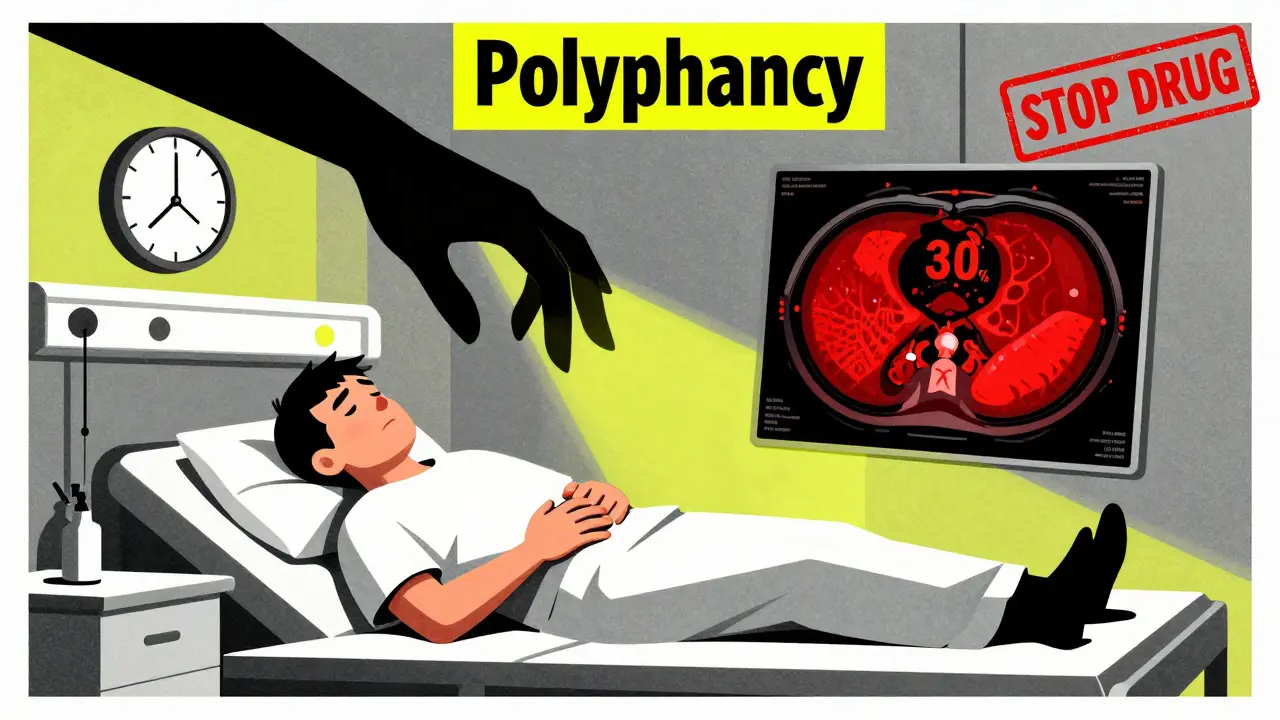
Severe means one or more of these: organ failure lasting over 48 hours, more than 30% of the pancreas turning dead (necrosis), or a full-body inflammatory response. Mortality? Up to 30%. That’s higher than pancreatitis caused by gallstones. And the worst part? It often gets missed.
Which Medications Are Most Likely to Cause It?
Not all drugs carry the same risk. Eight classes have strong evidence linking them to severe pancreatitis. Some are common. Some are taken long-term. And many are prescribed without warning.
- ACE inhibitors (lisinopril, enalapril): Used for high blood pressure. Cases spike after 6-12 months of use.
- Statins (simvastatin, atorvastatin): Even after years of safe use, sudden pancreatitis can occur.
- Diuretics (furosemide, hydrochlorothiazide): Often given to older adults with heart or kidney issues.
- Diabetes drugs (exenatide, sitagliptin, SGLT2 inhibitors like dapagliflozin): The FDA added stronger warnings in 2023 after dozens of severe cases.
- Immunosuppressants (azathioprine, valproic acid): Especially dangerous for people with Crohn’s or lupus. Valproic acid causes necrotizing pancreatitis in 22% of cases.
- Antiretrovirals (didanosine): Rare now, but still a known risk in HIV patients on older regimens.
- Oral contraceptives: Especially high-dose estrogen formulas. Risk increases with age and smoking.
Dr. Dhiraj Yadav from the University of Pittsburgh says azathioprine and valproic acid are the most dangerous. “These aren’t just side effects-they’re time bombs,” he wrote in 2022. “Patients on them need to be monitored like they’re on chemotherapy.”
Warning Signs You Can’t Ignore
Most people think of pancreatitis as sudden, sharp pain. But drug-induced cases are sneakier. They don’t hit overnight. They creep in over days or weeks.
Here’s what to watch for:
- Upper abdominal pain that radiates to your back-often worse after eating.
- Nausea and vomiting that doesn’t go away with over-the-counter meds.
- Fever or chills without a cold or flu.
- Rapid heartbeat or feeling unusually breathless.
- Jaundice (yellowing of skin or eyes)-a sign the pancreas is blocking the bile duct.
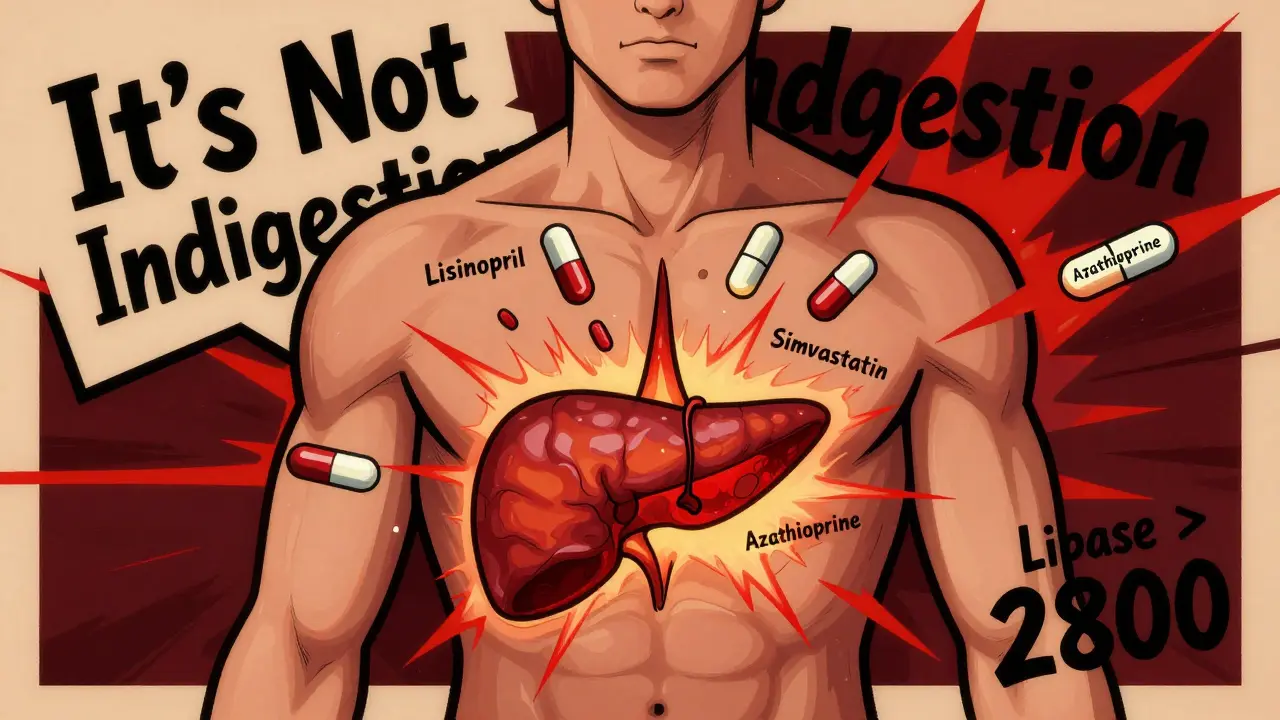
One patient on Reddit described it: “I thought it was indigestion. I took Tums for three days. By day four, I couldn’t stand up. My lipase was over 2,800. Normal is under 60.”
Delayed diagnosis is the biggest problem. A survey from PatientsLikeMe found 68% of drug-induced cases were initially dismissed as “just gastritis” or “food poisoning.” If you’re on any of the high-risk meds above and have persistent pain for more than 48 hours, demand a lipase blood test. It’s the most accurate marker-far better than amylase.
How Doctors Diagnose It
There’s no single test for drug-induced pancreatitis. It’s a diagnosis of exclusion. That means your doctor must rule out gallstones, alcohol, genetic causes, and infections first.
The process looks like this:
- Lipase test: Levels at least three times above normal confirm pancreatitis.
- Imaging: A CT scan shows if there’s necrosis, fluid buildup, or swelling. MRI is better for early detection.
- Medication timeline: Did symptoms start within 1-4 weeks of starting a new drug or increasing a dose? That’s a red flag.
- Resolution after stopping: If pain fades within 1-8 weeks after quitting the drug, it’s likely drug-induced.
Rechallenge-taking the drug again to see if symptoms return-is the only way to prove causation. But it’s rarely done. Too risky. So doctors rely on timing, bloodwork, and ruling out other causes.
What Happens in the Hospital
If you’re diagnosed with severe drug-induced pancreatitis, you’re going to the ICU-or at least the GI ward-for aggressive treatment.
Here’s what’s standard:
- IV fluids: 250-500 mL per hour for the first 24-48 hours. This keeps your pancreas perfused and prevents organ failure. Too little fluid? Higher risk of death.
- Pain control: Acetaminophen first. If that’s not enough, low-dose morphine. Avoid meperidine-it’s outdated and risky.
- Nothing by mouth: You won’t eat or drink for the first day or two. Your gut needs to rest.
- Early feeding: By day 2-3, if you can’t eat, a feeding tube goes through your nose into your small intestine. This reduces infection risk and speeds recovery.
- Antibiotics: Only if the pancreas tissue dies and gets infected. Otherwise, don’t use them. They do more harm than good.
One key rule: Stop the drug within 24 hours of suspicion. A 2022 meta-analysis found delaying withdrawal by more than a day increases complications by 37%.
Recovery and Long-Term Outlook
Good news: if caught early, drug-induced pancreatitis can fully reverse. Unlike alcohol-related damage, which scars the pancreas forever, stopping the drug often lets the organ heal completely.
Studies show 65-75% of mild-to-moderate cases resolve without lasting damage. Even severe cases can recover if necrosis is small and managed well. But if you keep taking the drug? You’re playing Russian roulette with your organs.
Long-term, you’ll need to avoid that medication for life. And if you’re on multiple drugs? Your doctor should review your entire list. Polypharmacy is a silent killer here. The average patient with drug-induced pancreatitis takes 5.2 medications. That’s more than double the average healthy adult.
Why This Is Getting Worse
The problem is growing. In 2022, the FDA received over 4,200 reports of drug-related pancreatitis-a 13% jump from the year before. Why?
- More people are on diabetes drugs, statins, and blood pressure meds than ever.
- Older adults are taking more pills. The average 70-year-old is on six medications.
- Pharmaceutical companies are adding new drugs faster than safety data can catch up.
- Doctors aren’t trained to think “medication” when someone has abdominal pain.
The NIH just launched a national registry (DIPR) to track these cases. It’s a start. But until every ER and primary care clinic routinely asks, “What meds are you on?”-this will keep slipping through the cracks.
What You Should Do Now
If you’re on one of the high-risk drugs listed above:
- Know the warning signs. Don’t wait for “bad pain.” Even mild, persistent discomfort matters.
- Ask your doctor: “Could this drug cause pancreatitis?” Don’t be shy. It’s your right to know.
- Get a lipase test if you have unexplained abdominal pain, nausea, or back pain.
- Keep a list of all your meds-including supplements and OTC drugs. Bring it to every appointment.
- If you’ve had one episode, never take the drug again. Even a small dose can trigger it again.
And if you’re a caregiver for an older adult? Watch for subtle changes. They might not say their stomach hurts. They might just stop eating, feel tired, or seem “off.”
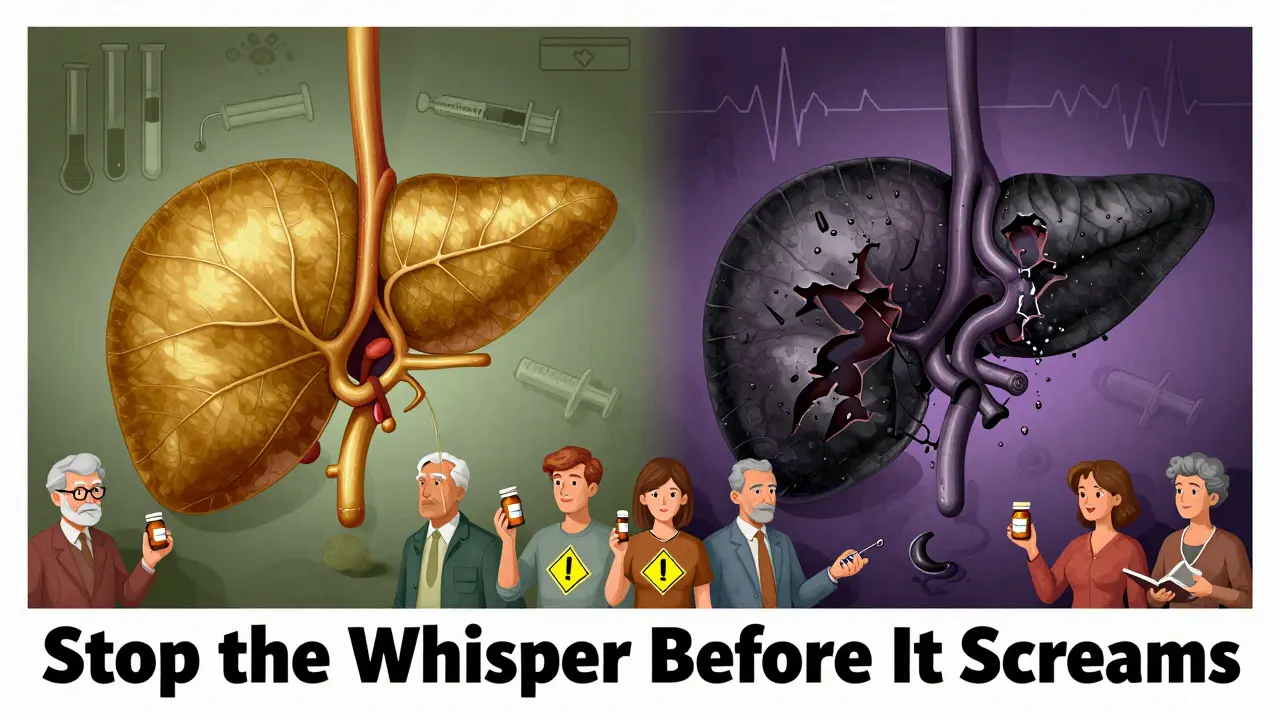
Drug-induced pancreatitis isn’t something you can ignore. It doesn’t always scream. Sometimes it whispers. But if you listen-before it’s too late-you can save a life.
Can over-the-counter painkillers cause pancreatitis?
Most common OTC painkillers like ibuprofen or acetaminophen are not linked to pancreatitis. However, high doses of NSAIDs over long periods have been reported in rare cases. The bigger risk comes from prescription drugs-especially those listed in this article. If you’re taking multiple medications, including OTCs, always review them with your doctor.
Is drug-induced pancreatitis permanent?
No, not if caught early. Unlike alcohol or genetic pancreatitis, which cause irreversible scarring, stopping the offending drug often allows the pancreas to heal completely. Recovery can take weeks to months, but full function typically returns. The key is early diagnosis and immediate discontinuation of the medication.
Can I restart the medication after recovery?
Absolutely not. Once you’ve had drug-induced pancreatitis from a specific medication, restarting it-even years later-carries a very high risk of recurrence. Studies show recurrence rates are over 80% if the drug is taken again. Your doctor should find a safe alternative. Never self-reintroduce a drug that caused this.
Are younger people at risk too?
Yes, though most cases occur in people over 60 due to polypharmacy. Younger patients on azathioprine for autoimmune diseases, valproic acid for epilepsy, or SGLT2 inhibitors for diabetes are also at risk. Even healthy 30-year-olds have developed severe pancreatitis from oral contraceptives or new diabetes drugs. Age isn’t a shield.
How long does it take for symptoms to appear after starting a drug?
It varies. Some cases appear within days-especially with immune-mediated reactions like azathioprine. Others take weeks or months, like with ACE inhibitors or statins. The median time is 7-14 days after starting or increasing the dose. If you’ve been on a drug for months and suddenly develop pain, don’t assume it’s unrelated.
Can I prevent this from happening?
You can reduce your risk. Ask your doctor about alternatives to high-risk drugs. If you’re on multiple medications, request a medication review every 6 months. Never ignore persistent abdominal pain. And if you’re prescribed a new drug, check its side effects-especially for pancreatitis. The FDA’s website and Drugs.com have updated safety alerts. Knowledge is your best defense.
Ryan Riesterer
January 21, 2026 AT 16:51Drug-induced pancreatitis is a well-documented but underreported iatrogenic event. The diagnostic challenge lies in the latency period and the absence of pathognomonic biomarkers. Lipase elevation >3x ULN remains the gold standard, but sensitivity drops if testing occurs after 72 hours. CT with contrast remains the most reliable modality for assessing necrosis, though MRI with MRCP offers superior soft tissue resolution in early stages. The median time to symptom onset is 10.4 days post-initiation, with ACE inhibitors and SGLT2 inhibitors showing the highest relative risk in longitudinal cohort studies. Early discontinuation is non-negotiable - delays beyond 24 hours correlate with a 37% increase in systemic inflammatory response syndrome (SIRS) and multi-organ failure. The NIH’s DIPR registry is a critical step toward pharmacovigilance modernization.
Sarvesh CK
January 21, 2026 AT 20:51It is fascinating, and indeed sobering, to consider how deeply embedded certain medications have become in our daily lives - so much so that we forget they are potent biochemical agents, not mere supplements. The pancreas, an organ that quietly regulates both digestion and glucose homeostasis, is particularly vulnerable to subtle disruptions in its microenvironment. When a drug alters the delicate balance of intracellular calcium signaling or induces oxidative stress in acinar cells, the consequences can be catastrophic. We often treat medicine as if it were a benign tool, but every pill carries an invisible signature of risk. Perhaps the real issue is not the drugs themselves, but our collective assumption that longevity requires polypharmacy. A simpler life, fewer pills, and more mindful monitoring might be the most effective preventive strategy of all.
Hilary Miller
January 23, 2026 AT 07:57My dad had this. Thought it was a stomach bug. Ended up in ICU for 10 days. He’s on lisinopril. Now he’s on a different BP med. Don’t ignore pain. Period.
Margaret Khaemba
January 25, 2026 AT 05:44I’m so glad someone finally wrote about this. My cousin was on sitagliptin and just kept saying her stomach felt ‘off’ for weeks - her doctor kept telling her it was stress. By the time they tested lipase, her pancreas was already necrotic. She’s fine now but had to get a feeding tube. Why isn’t this in every patient handout? I’m sending this to my whole family.
Malik Ronquillo
January 25, 2026 AT 09:07Stop taking all the meds and eat some kale you lazy hypochondriacs
Brenda King
January 25, 2026 AT 09:37This is so important 🙏 I work in primary care and we rarely ask about meds when someone has GI symptoms. I’m printing this out for our clinic. Also - if you’re on more than 5 meds, ask for a med review. It’s your right. And yes, Tums won’t fix this 😔
Keith Helm
January 26, 2026 AT 02:17May I request the full list of FDA adverse event reports for azathioprine-induced pancreatitis from 2018–2023? The source data would be valuable for institutional review.
Daphne Mallari - Tolentino
January 27, 2026 AT 02:41One cannot help but observe the alarming commodification of pharmacological intervention in contemporary American healthcare. The normalization of polypharmacy as a default, rather than a last resort, reflects a systemic failure of clinical judgment. The very notion that a patient might be prescribed six medications simultaneously - without a comprehensive risk-benefit audit - is not merely negligent; it is ethically indefensible. This is not medicine. It is pharmacological roulette.
Neil Ellis
January 27, 2026 AT 05:06This is the kind of post that makes me believe in Reddit again. So many of us are walking around with ticking time bombs in our medicine cabinets and no one’s telling us. I just got off my statin after reading this - my doctor was shocked, but I said ‘I’d rather have slightly higher cholesterol than a dead pancreas.’ And guess what? My energy’s better. Life’s too short to let pills run your body. Spread this like wildfire.
Alec Amiri
January 27, 2026 AT 21:24People are dying because they’re too lazy to look up their meds on Drugs.com. If you’re on a drug that says ‘pancreatitis’ in the side effects and you don’t know what that means, you shouldn’t be allowed to take it. Also, your doctor probably doesn’t know either. Read the label. Or don’t complain when you end up in the ICU.