
 Dec, 5 2025
When someone is diagnosed with schizophrenia, the first question most people ask is: What medication will help? The answer isn’t simple. Antipsychotic medications have been the backbone of treatment for over 70 years, but not all are the same. Some work better for certain symptoms. Some cause weight gain. Others make you restless. Some require weekly blood tests. Choosing the right one isn’t just about effectiveness-it’s about what a person can actually live with.
Two Generations, Very Different Drugs
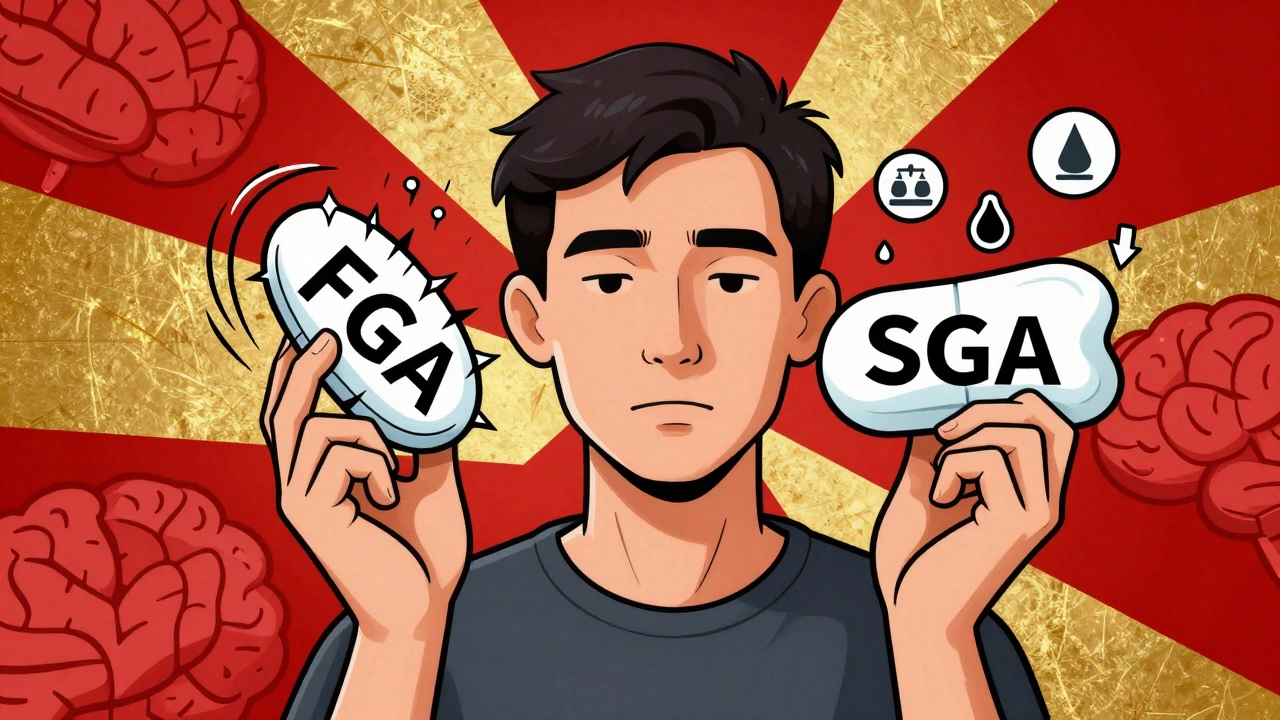
There are two main types of antipsychotics: first-generation (FGAs) and second-generation (SGAs), also called atypical antipsychotics. FGAs like haloperidol and chlorpromazine were developed in the 1950s. They block dopamine in the brain, which helps reduce hallucinations and delusions. But they often cause movement problems-tremors, stiffness, or a kind of inner restlessness called akathisia. About 30 to 50% of people on these drugs experience them, according to JAMA Psychiatry (2019). Many stop taking them because of these side effects. SGAs came along in the 1980s and 1990s. Clozapine, the first one approved in the U.S. in 1990, changed everything. Unlike FGAs, SGAs don’t just block dopamine. They also affect serotonin receptors. This gives them a different profile: fewer movement problems, but more metabolic issues like weight gain, high blood sugar, and cholesterol changes.Which Atypical Antipsychotics Are Used Today?
Today, most people with schizophrenia start on an atypical antipsychotic. Common ones include:- Aripiprazole (Abilify)
- Olanzapine (Zyprexa)
- Quetiapine (Seroquel)
- Risperidone (Risperdal)
- Paliperidone (Invega)
- Ziprasidone (Geodon)
- Lurasidone (Latuda)
- Cariprazine (Vraylar)
- Clozapine (Clozaril)
Effectiveness Isn’t Equal
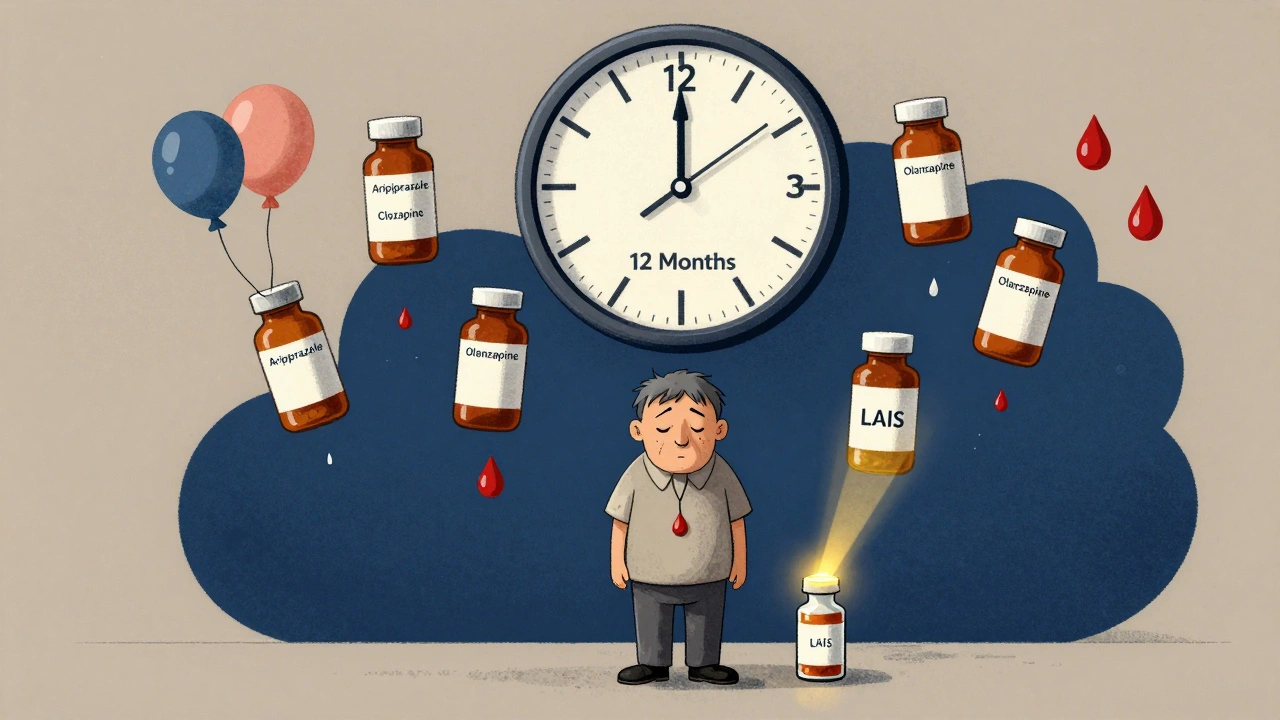
A lot of people think all antipsychotics work about the same. They don’t. A 10-year study of over 17,000 patients in npj Schizophrenia (2020) showed clear differences in how long people stayed on their meds. Clozapine had the longest time to discontinuation-over 16 months on average. Aripiprazole came next, at just over 10 months. Haloperidol, a first-gen drug, lasted only about 4.5 months before people stopped taking it. Another study in JAMA Network Open (2023) tracked 28,000 people and found that at 12 months, only 18.2% of those on aripiprazole had a relapse. For those on haloperidol, it was nearly 30%. That’s a big difference. Aripiprazole also outperformed risperidone, quetiapine, and haloperidol in head-to-head comparisons.Side Effects: The Real Dealbreaker
Effectiveness matters, but side effects often decide if someone sticks with treatment. The National Alliance on Mental Illness (NAMI) found that 63% of patients quit their first antipsychotic within six months. Why? Sedation (28%), weight gain (24%), and movement problems (18%). Weight gain varies wildly:- Clozapine: average 4.5 kg gain
- Olanzapine: 4.2 kg
- Quetiapine: 2.8 kg
- Risperidone: 1.9 kg
- Aripiprazole and ziprasidone: only 0.6 kg
Clozapine: The Last Resort With Big Rewards
Clozapine is the most effective antipsychotic for treatment-resistant schizophrenia-meaning when two or more other drugs have failed. Studies show it reduces symptoms in 30-50% of those cases. But it’s not easy to use. It can cause agranulocytosis, a dangerous drop in white blood cells. That’s why the FDA requires weekly blood tests for the first six months. After that, it’s every two weeks, then monthly. Despite the hassle, people who stay on clozapine often report the best quality of life. One patient on Mind.org.uk said, “After five failed medications, clozapine gave me my life back despite the blood tests.” Adherence rates for clozapine are higher than for any other antipsychotic-71% after 12 months, according to NAMI data.Long-Acting Injections: A Game Changer
Taking a pill every day is hard. For some, forgetting or refusing meds leads to relapse. Long-acting injectables (LAIs) are changing that. Paliperidone palmitate (Invega Sustenna), for example, is given once a month. A study in the New England Journal of Medicine (2021) found LAIs reduced discontinuation by 22% compared to oral risperidone. In Europe, 30% of antipsychotic prescriptions are LAIs. In the U.S., it’s 25%. But access is uneven. Many clinics don’t offer them. Insurance doesn’t always cover them. Still, for people who struggle with daily pills, LAIs can be life-changing.What About New Drugs?
The field is evolving. In 2023, the FDA approved lumateperone (Caplyta) for schizophrenia and bipolar depression. It showed symptom improvement without the weight gain common with older drugs. Two promising drugs in late-stage trials are KarXT and SEP-363856. KarXT works on muscarinic receptors, not dopamine. Early results show a 9.6-point drop on symptom scales-better than most current meds. SEP-363856, a TAAR1 agonist, improved symptoms with only 2% weight gain, compared to over 4 kg with olanzapine. There’s also ALKS 3831, a combo of olanzapine and samidorphan. It cuts olanzapine’s weight gain by 63%. That’s huge for people who need the drug’s effectiveness but can’t handle the metabolic side effects.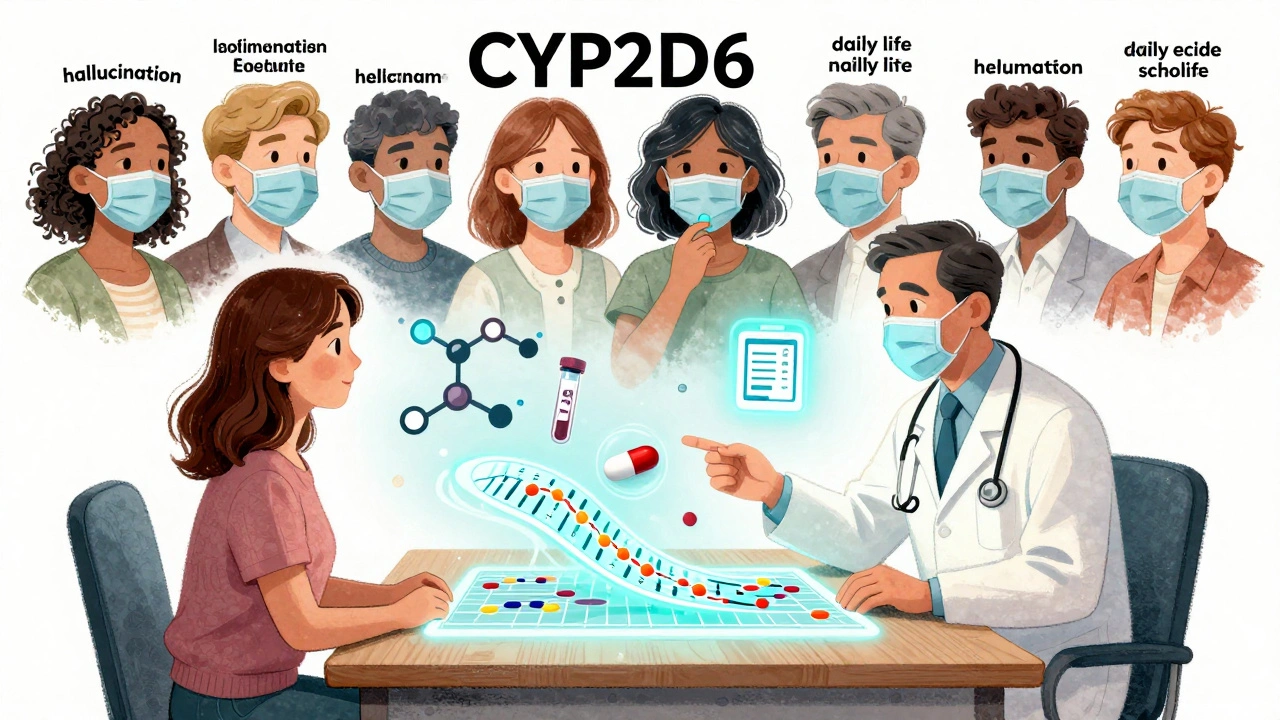
Starting Medication: What to Expect
Starting an antipsychotic isn’t a quick fix. It takes time. Doctors usually begin with a low dose and increase slowly over 4-8 weeks. Aripiprazole might start at 2 mg and go up by 2-5 mg every few days to avoid akathisia. Olanzapine might start at 5 mg and increase by 0.5-1 mg every 3-4 days to reduce drowsiness. Monitoring is key. For clozapine, it’s weekly blood tests. For others, it’s checking weight, blood sugar, and cholesterol every 3-6 months. Metabolic syndrome affects 35% of people on SGAs, according to Diabetes Care (2022). Adding metformin (1,000 mg daily) can reduce weight gain by over 4 kg in six months.Personalization Is the Future
There’s no one-size-fits-all antipsychotic. What works for one person might not work for another. Experts like Dr. Christoph Correll say aripiprazole, paliperidone, and olanzapine are top choices for early treatment because they prevent relapse best. But Dr. Stefan Leucht reminds us: the differences in relapse prevention are small. The real differences are in side effects. That’s why treatment is becoming more personal. Pharmacogenetic testing-checking how your body processes drugs based on your genes-is now recommended in some guidelines. People with certain CYP2D6 or CYP1A2 variants respond better to some drugs and have fewer side effects. Testing can reduce adverse events by 37%, according to the Pharmacogenomics Journal (2022).What Happens If Nothing Works?
About 30% of people with schizophrenia don’t respond well to antipsychotics, even after trying several. That’s called treatment-resistant schizophrenia. Clozapine is still the gold standard here. But even clozapine doesn’t work for everyone. In the OPTiMiSE trial, only 40% of non-responders improved with optimized clozapine doses. Some need electroconvulsive therapy (ECT). Others try combinations or experimental drugs. Digital tools are also being tested. Apps that track symptoms, remind patients to take meds, or offer cognitive behavioral therapy (CBT) can reduce symptoms by 25% when combined with medication, according to Schizophrenia Bulletin (2022).Final Thoughts: It’s Not Just About the Pill
Medication is essential, but it’s not the whole picture. Therapy, stable housing, social support, and regular exercise all play a role. The best antipsychotic is the one a person can take consistently. That’s why doctors need to listen-not just to symptoms, but to what the patient can handle. Weight gain? Too much drowsiness? Restlessness? These aren’t just side effects. They’re reasons people stop taking their meds. The goal isn’t just to silence hallucinations. It’s to help someone live a full life. And sometimes, that means choosing a drug that doesn’t work perfectly-but lets them get up, go to work, and feel like themselves again.What’s the difference between typical and atypical antipsychotics?
Typical antipsychotics (first-generation) mainly block dopamine D2 receptors and are more likely to cause movement disorders like tremors and stiffness. Atypical antipsychotics (second-generation) also affect serotonin receptors, which reduces movement side effects but increases risks of weight gain, high blood sugar, and cholesterol changes. Atypicals are now the first-line treatment for most people with schizophrenia because they’re better tolerated.
Why is clozapine only used as a last resort?
Clozapine is the most effective antipsychotic for treatment-resistant schizophrenia, but it carries a risk of agranulocytosis-a dangerous drop in white blood cells that can lead to severe infections. Because of this, patients must have weekly blood tests for the first six months, then every two weeks. The monitoring is strict, and many clinics don’t offer it. But for those who respond, it can be life-changing.
Which antipsychotic causes the least weight gain?
Aripiprazole and ziprasidone cause the least weight gain-about 0.6 kg on average over several months. In contrast, clozapine and olanzapine can cause over 4 kg of weight gain. For people concerned about metabolism, aripiprazole is often the preferred first choice among atypicals.
Can antipsychotics be taken as injections?
Yes. Long-acting injectables (LAIs) like paliperidone palmitate, risperidone microspheres, and aripiprazole lauroxil are given every 1 to 4 weeks. They help people who struggle with daily pills. Studies show LAIs reduce relapse and hospitalization rates by up to 22% compared to oral versions. They’re especially helpful for people with a history of non-adherence.
How long does it take for antipsychotics to work?
Some people notice improvements in agitation or hallucinations within days to weeks. But full symptom control often takes 6 to 12 weeks. Dosing usually starts low and increases slowly to avoid side effects. Patience is key-rushing the process can lead to unnecessary side effects or discontinuation.
What should I do if I can’t tolerate my current antipsychotic?
Don’t stop taking it suddenly. Talk to your doctor. Many side effects can be managed-like adding metformin for weight gain or lowering the dose for sedation. Switching to another antipsychotic is common. Aripiprazole, lurasidone, or ziprasidone are often good alternatives if weight gain or sedation is the issue. For movement problems, switching from risperidone to clozapine or quetiapine may help.
Are newer antipsychotics better than older ones?
Not necessarily. Newer drugs like lumateperone, KarXT, and SEP-363856 show promise for fewer side effects, but they’re not dramatically more effective at reducing core symptoms. The biggest advances are in reducing weight gain and metabolic problems. For many, the older atypicals like aripiprazole or lurasidone still offer the best balance of effectiveness and tolerability.
Can antipsychotics cure schizophrenia?
No. Antipsychotics manage symptoms like hallucinations, delusions, and disorganized thinking. They don’t cure the underlying condition. Many people need to take them long-term, sometimes for life. But with the right medication, therapy, and support, many people with schizophrenia can live independently, work, and maintain relationships.
joanne humphreys
December 7, 2025 AT 07:24It's wild how much variation there is between these meds. I've seen friends go from olanzapine to aripiprazole and swear their lives changed-not just because the voices got quieter, but because they could actually eat dinner without feeling like they'd gained ten pounds overnight. The metabolic side effects are the silent killers here.
Priya Ranjan
December 7, 2025 AT 09:09People don't realize that taking antipsychotics isn't a personal choice-it's a moral obligation. If you're diagnosed, you owe it to society to take the most effective drug, even if it makes you lethargic or obese. Quality of life is secondary to clinical outcomes. Stop prioritizing comfort over cure.
Gwyneth Agnes
December 8, 2025 AT 09:53Aripiprazole is the only one that doesn't turn you into a zombie.
Kay Jolie
December 9, 2025 AT 10:47Let’s be real-the real revolution isn’t in the pharmacology, it’s in the *narrative shift*. We’ve moved from a dopamine-centric dogma to a multimodal, receptor-symphonic approach. KarXT? That’s not just a drug-it’s a paradigmatic rupture in neuropsychopharmacology. The muscarinic modulation? Pure elegance. We’re not treating psychosis anymore; we’re harmonizing neural oscillations.
And yet, the system still clings to weekly blood draws like it’s 1992. We’ve got AI-driven predictive analytics for agranulocytosis risk, but we’re still using manual CBCs? The institutional inertia is staggering.
Also, anyone else notice how the weight gain data is always presented as averages? That’s misleading. I’ve seen patients gain 15kg on olanzapine. Others gain nothing. Epigenetics. Gut microbiome. The future is personalized, not probabilistic.
And don’t even get me started on LAIs. They’re not just compliance tools-they’re dignity-preserving interventions. Imagine not having to remember a pill every morning while your brain is still trying to unglue itself from the walls. That’s not medical care. That’s liberation.
pallavi khushwani
December 11, 2025 AT 02:23I think what’s missing in all this is how much the person’s environment matters. I have a cousin on clozapine-blood tests every week, yeah-but he also has his mom making him walk every evening, cooking low-sugar meals, and sitting with him when he’s anxious. The meds help, but the human stuff? That’s what keeps him from checking out completely.
It’s funny how we treat schizophrenia like it’s just a chemical imbalance, when really it’s a whole life falling apart and someone trying to glue it back together with pills and patience.
Also, I read that study about digital CBT apps. My brother uses one called Moodfit. It doesn’t fix anything, but sometimes when he’s hearing voices, he opens it and does the grounding exercise. It’s not magic, but it’s something. And that’s more than most systems give him.
Dan Cole
December 11, 2025 AT 14:35It is empirically demonstrable that the current paradigm of antipsychotic selection is fundamentally flawed. The reliance on population-level efficacy data ignores individual neurochemical variance. The CYP2D6 polymorphism, for instance, renders aripiprazole ineffective in 17% of Caucasians, yet it remains first-line in most guidelines. This is not medicine-it is bureaucratic standardization masquerading as science.
Furthermore, the dismissal of first-generation antipsychotics as ‘outdated’ is intellectually dishonest. Haloperidol remains more potent in suppressing positive symptoms than any SGA. The side effect profile is unacceptable, yes-but that does not negate its efficacy. The real failure is in the lack of adjunctive treatments to mitigate extrapyramidal symptoms.
And while we’re at it, let’s stop romanticizing clozapine. Yes, it works. But it is a blunt instrument. A 30% response rate in treatment-resistant cases? That means seven out of ten people still suffer. We need targeted therapies, not glorified shotgun approaches.
Billy Schimmel
December 13, 2025 AT 13:30So basically, the best drug is the one you don’t hate enough to stop taking? Huh. Guess we’ve been overcomplicating this whole thing.
Max Manoles
December 14, 2025 AT 03:36There’s a study from the University of Chicago in 2021 that tracked 1,200 patients on LAIs over 36 months. The relapse rate dropped to 12% compared to 34% for oral meds. But here’s the kicker-only 18% of eligible patients were offered LAIs in community clinics. The gap isn’t in science. It’s in access. And that’s a policy failure, not a medical one.
Also, metformin isn’t just for weight loss. It improves insulin sensitivity, reduces inflammation, and may even have neuroprotective effects. Yet it’s rarely prescribed alongside antipsychotics unless diabetes is already present. That’s negligence.
Katie O'Connell
December 14, 2025 AT 14:15It is imperative to acknowledge that the current pharmacological interventions for schizophrenia remain palliative in nature, and their deployment must be subject to the highest standards of clinical governance. The absence of definitive biomarkers for treatment response renders empirical selection inherently probabilistic. One must therefore exercise extreme caution in extrapolating efficacy metrics from aggregate data to individual clinical decision-making. The ethical burden of prescribing antipsychotics, particularly those with profound metabolic consequences, cannot be overstated.
Jackie Petersen
December 15, 2025 AT 23:38Why are we giving these drugs to people at all? The government just wants to chemically sedate the poor so they don’t riot. Look at the stats-most patients on these meds are homeless or on welfare. Coincidence? I think not. They’re not treating schizophrenia-they’re treating poverty with pills.
And why are we even talking about clozapine? That’s a drug they only give to people who’ve already been institutionalized. It’s not medicine. It’s containment.