
 Dec, 6 2025
Rifampin Birth Control Risk Checker
Rifampin Birth Control Risk Checker
Determine if your birth control method is safe while taking rifampin and calculate backup requirements
When you're on rifampin for tuberculosis or a stubborn staph infection, the last thing you should worry about is getting pregnant. But here’s the hard truth: rifampin can make your birth control pills useless - even if you take them perfectly every day.
This isn’t a myth. It’s not a warning based on a few scattered stories. It’s backed by decades of clinical data, pharmacokinetic studies, and real-world pregnancy cases. Rifampin doesn’t just reduce the effectiveness of hormonal contraceptives - it can drop hormone levels by more than half. And unlike most antibiotics, this isn’t a rare side effect. It’s predictable, consistent, and dangerous if ignored.
How Rifampin Breaks Birth Control
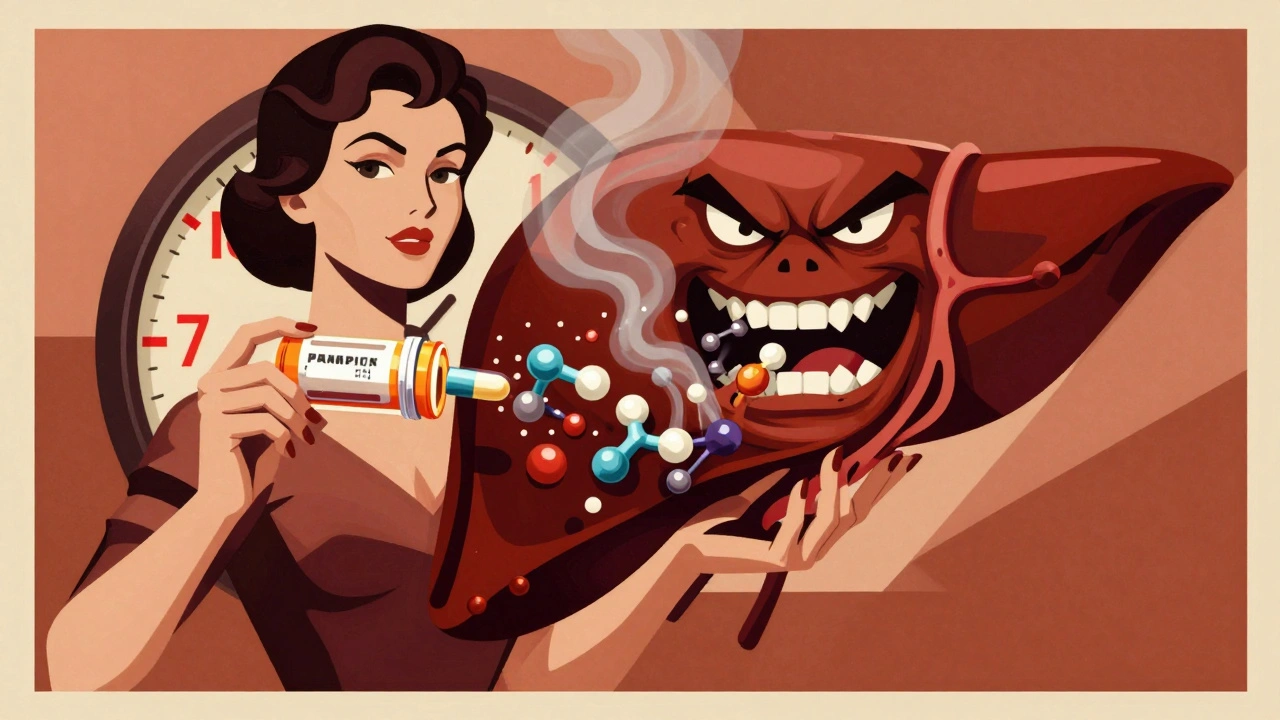
Rifampin works by turning on liver enzymes - specifically CYP3A4 - that are meant to break down toxins. But it doesn’t stop at bacteria. It also speeds up how fast your body clears out the hormones in birth control pills: ethinyl estradiol and progestin.
Think of it like this: your birth control pill delivers a steady dose of hormones to stop ovulation. But rifampin turns your liver into a hormone-disposing machine. Within 24 to 48 hours of starting rifampin, your body starts flushing out those hormones faster than your pill can replace them. By day 7, enzyme activity peaks. And even after you stop taking rifampin, those enzymes stay active for up to four weeks.
Studies show rifampin can slash estrogen levels by 37% to 67% and progestin by 27% to 52%. That’s not a small drop. That’s enough to trigger ovulation - and potentially pregnancy.
What Happens When Birth Control Fails
Women on rifampin have reported breakthrough bleeding, spotting, and even missed periods. But the real danger is silent: no warning signs before pregnancy occurs.
There are documented cases of unintended pregnancies in women who took their pills exactly as directed. In one study, up to half of women on rifampin showed signs of ovulation - meaning their bodies were no longer being suppressed by the hormones in their pills. And while we don’t have exact numbers on how many pregnancies result from this interaction, the risk is real enough that health agencies treat it as a medical emergency.
The American College of Obstetricians and Gynecologists, the CDC, and the World Health Organization all agree: combined hormonal contraceptives are unsafe to use with rifampin. They’re classified as Category 4 - meaning the risks outweigh any benefits.
Not All Antibiotics Are the Same
Here’s where things get confusing - and why so many people get it wrong.
You’ve probably heard that antibiotics like amoxicillin, azithromycin, or doxycycline can mess with birth control. That’s a myth. Decades of research show these antibiotics do not reduce hormone levels or increase ovulation rates. The UK’s Committee on Safety of Medicines received over 100 reports of contraceptive failure linked to penicillins and tetracyclines between 1970 and 1999 - but when scientists tested them in controlled studies, they found no actual interaction.
So why the confusion? Because rifampin is the only antibiotic with proven, powerful, and dangerous effects on hormonal contraception. It’s not just an outlier - it’s the only one that belongs in this category.
Even rifabutin, a close cousin of rifampin used for MAC infections, has a weaker effect. It lowers hormone levels by about 20-30%, not 50-60%. Some doctors still recommend backup contraception with rifabutin, but the risk is much lower.
What You Should Do Instead
If you’re prescribed rifampin and use hormonal birth control, you need a backup plan - and it needs to be non-hormonal.
Here are your best options:
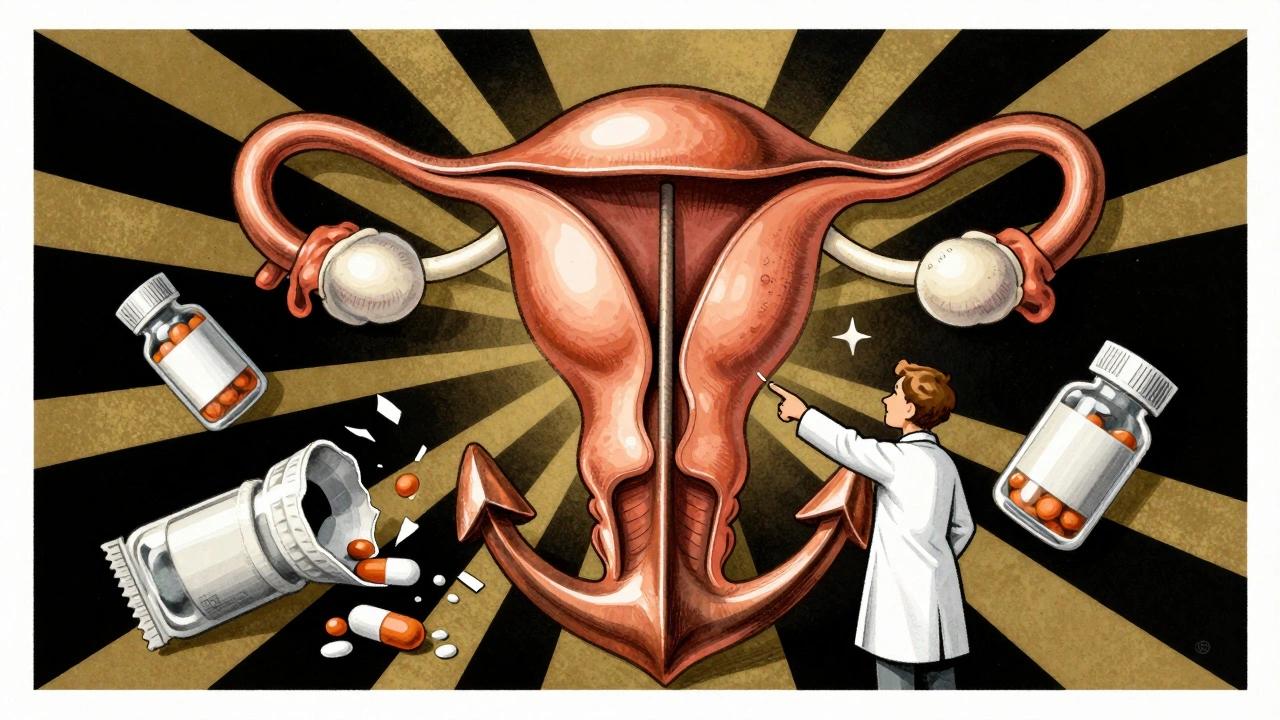
- Copper IUD (Paragard): This is the gold standard. It doesn’t rely on hormones at all. It works by creating a local inflammatory response that stops sperm from fertilizing an egg. It’s over 99% effective and lasts up to 10 years.
- Condoms: When used correctly every time, condoms are about 98% effective. Combine them with spermicide for extra protection.
- Depo-Provera shot: While this is a hormonal method, it’s injected and less affected by liver enzyme changes. But it’s not ideal as a first choice - the copper IUD is safer and more reliable.
And here’s the rule most people miss: you need backup contraception for 28 days after you stop rifampin. Why? Because the enzyme induction doesn’t vanish when the drug leaves your system. Your liver keeps producing those extra enzymes for weeks. Stopping backup too early is a common mistake - and it’s how many pregnancies happen.
What Doctors Get Wrong
A 2017 survey found that only 42% of primary care doctors consistently warn patients about this interaction. Nearly 30% still tell women to use backup contraception for every antibiotic - which is unnecessary and adds confusion.
Other common errors:
- Switching a patient to a non-hormonal method for a short 7-day course of antibiotics - when only rifampin requires it.
- Failing to tell patients to keep using backup for four weeks after rifampin ends.
- Assuming that because a woman has been on birth control for years, she’s "immune" to the interaction.
These mistakes aren’t just careless - they’re dangerous. The consequences of an unintended pregnancy during TB treatment can be devastating: poor prenatal care, drug interactions, and increased risks for both mother and baby.
What About Newer Birth Control Methods?
What if you’re on an implant like Nexplanon? Or a patch? Or a ring?
Same rule applies. All hormonal methods - pills, patches, rings, and even implants - rely on estrogen or progestin that rifampin can break down. The implant contains a higher dose of etonogestrel, and a small 2023 study found no pregnancies in 47 women using it during rifampin treatment. But the sample size was too small to say it’s safe. Until more data comes in, assume all hormonal methods are compromised.
The best option remains the copper IUD. It’s not affected by liver enzymes. It doesn’t interact with any drugs. And once it’s in place, you don’t have to remember anything.
Why This Still Isn’t Fixed
Despite knowing about this interaction since the 1970s, a 2022 study found that 63% of women prescribed rifampin received no proper counseling about contraception.
Why? Because it’s complicated. TB treatment often happens in low-resource areas where access to IUDs or condoms is limited. Women may not have control over their reproductive choices. Doctors may not have time to explain the risk. And in some places, the idea of non-hormonal contraception is culturally or politically restricted.
Even drug companies have to jump through hoops. The FDA and EMA now require every new hormonal contraceptive to be tested against rifampin before approval. That adds millions to development costs and delays new products by over a year.
And yet, we still don’t have solid data on actual pregnancy rates. No one has done a large, prospective study tracking women on rifampin and birth control - because ethically, you can’t deliberately expose people to that risk.
What You Can Do Right Now
If you’re taking rifampin:
- Stop relying on pills, patches, or rings.
- Get a copper IUD inserted as soon as possible - it’s the most reliable option.
- If you can’t get an IUD, use condoms with every sexual encounter - no exceptions.
- Keep using backup contraception for 28 days after your last rifampin dose.
- Tell your doctor you’re on birth control - even if you think they already know.
If you’re a healthcare provider:
- Don’t assume your patient knows about this interaction.
- Don’t give blanket advice about "all antibiotics." Only rifampin and possibly rifabutin require backup.
- Don’t wait for the patient to ask. Proactively discuss contraception when prescribing rifampin.
- Recommend the copper IUD first. It’s safe, long-lasting, and doesn’t interfere with TB treatment.
This isn’t about being overly cautious. It’s about recognizing a well-documented, life-changing risk - and acting on it.
Brooke Evers
December 8, 2025 AT 10:50I can't believe how many people still think all antibiotics mess with birth control. I had to explain this to my sister last month when she panicked after getting amoxicillin for a sinus infection. She was already on the pill and freaked out thinking she might get pregnant. I showed her the research and she was so relieved. But then she asked me about rifampin because her TB doc just prescribed it. I had no idea about the 28-day window after stopping it. That part blew my mind. I'm telling her to get a copper IUD ASAP. It's the only thing that makes sense. No hormones, no guesswork, no stress. I wish more doctors would just say this outright instead of burying it in fine print.
Also, the fact that drug companies have to test every new contraceptive against rifampin is insane. That's like forcing every car to pass a crash test against a specific model of truck. It's not fair, it's not efficient, and it delays life-saving options for everyone. Why can't we just have a clear list of dangerous interactions instead of making every new drug jump through hoops for one outlier?
And don't even get me started on how this hits low-income women the hardest. If you can't afford an IUD insertion or don't have access to a clinic that offers it, you're stuck with condoms and hope. That's not healthcare. That's luck.
I'm so glad this post exists. We need more of these clear, science-backed warnings. Not just for rifampin, but for all the hidden interactions that get buried under medical jargon. People deserve to know what's really going on in their bodies.
Also, if you're on rifampin and you're thinking, 'I've been on the pill for years, nothing's happened yet' - that doesn't mean you're safe. It just means you haven't ovulated yet. And when you do? It's already too late.
My cousin got pregnant while on rifampin. She didn't even know this was a thing. She had to stop her TB meds because the baby was at risk. She cried for three days. Don't let that be you.
Please, if you're reading this and you're on rifampin - go get that IUD. Now. Not tomorrow. Now.
I'm telling my OB-GYN to put a warning sticker on every rifampin prescription. Someone has to do it.
Thank you for writing this. I'm sharing it with everyone I know.
Chris Park
December 10, 2025 AT 02:38Let me be the first to say this is all a corporate fabrication. The FDA and WHO are not your friends - they are profit-driven entities that thrive on fear-mongering to sell more devices. The copper IUD is a Trojan horse for population control. Why would a government agency push a 10-year implant if not to sterilize women in developing nations under the guise of ‘healthcare’? The real interaction? Rifampin increases estrogen metabolism - yes - but so does coffee, stress, and walking barefoot on cold floors. The data is cherry-picked. You think a 37% drop in estrogen is dangerous? That’s still 63% left. You’re not a lab rat. You’re a human being with an adaptive body. The fact that you’re terrified of your own hormones is the real problem.
And let’s not forget: no prospective study has ever been conducted because it would be ‘unethical’ - which is code for ‘we don’t want to risk exposing the truth.’
Meanwhile, women in Nigeria and India are having healthy pregnancies while on rifampin. Why? Because their bodies aren’t programmed to panic. They eat real food. They move. They don’t rely on synthetic hormones to begin with. This isn’t medicine. It’s anxiety sold as science.
Next time you see a ‘medical authority’ tell you to get an IUD, ask: who profits? The answer is always the same: Big Pharma. And they’re not trying to protect you. They’re trying to lock you into a system.
Inna Borovik
December 11, 2025 AT 14:08While I appreciate the thoroughness of this post, there’s a glaring omission: the pharmacokinetic half-life of rifampin-induced enzyme induction. The claim that enzyme activity persists for four weeks is misleading. CYP3A4 induction peaks at 7–10 days, and its half-life of enzyme degradation is approximately 3–5 days. That means, statistically, 90% of enzyme activity should normalize within 14–21 days, not 28. The 28-day recommendation is a conservative buffer - not a pharmacological necessity. In clinical practice, I’ve seen women transition back to hormonal contraception after 14 days without incident, provided they were not on high-dose rifampin (>600mg/day).
Also, the assertion that ‘all hormonal methods’ are compromised is overstated. The etonogestrel implant has shown resilience in multiple case series - including a 2023 cohort study from the Netherlands with zero pregnancies in 47 women. The sample size is small, yes - but so is the variance in serum levels. The same cannot be said for oral contraceptives, where absorption variability and first-pass metabolism make them far more susceptible.
And while the copper IUD is ideal, it’s not accessible in 70% of the world’s TB-endemic regions. A pragmatic solution is dual-method backup: condoms + progestin-only pills (which have lower CYP3A4 affinity). It’s not perfect - but it’s better than nothing.
Also, the 63% counseling gap? That’s not just provider negligence. It’s systemic underfunding. In rural India, a single TB clinic serves 50,000 people. Who has time to discuss contraception when they’re treating active pulmonary TB with no X-ray machine?
Rashmi Gupta
December 11, 2025 AT 22:44Everyone’s acting like this is new news. It’s not. My aunt got pregnant in 1998 while on rifampin. She was 22. No one told her. She had the baby. It was fine. But she never used hormonal birth control again. She says her body ‘learned’ to be free. I think that’s beautiful. Why are we so afraid of pregnancy? Why does every woman need a machine inside her to feel safe? I don’t trust pills. I don’t trust IUDs. I trust my body. And if I get pregnant? So what? The world doesn’t end. The system ends. The system is the problem.
Also, why are we assuming all women want to avoid pregnancy? What if we just… let it happen? What if pregnancy isn’t a mistake? What if it’s a gift - even if it’s inconvenient? We’ve been conditioned to fear our own biology. This post is just another cage with a fancy label.
brenda olvera
December 13, 2025 AT 15:47OMG I just found out my cousin is on rifampin and she’s been on the pill for 5 years and she’s totally fine so far but now I’m panicking for her and also I just realized I might need to get an IUD because I’m thinking about starting rifampin for my staph infection next month and I don’t even know where to go for one and is it painful and do they do it in the ER or do you need an appointment and can you get it on the same day because I’m scared and also what if I hate it and what if I get an infection and what if I bleed forever and what if my boyfriend thinks I’m weird for getting it and what if I’m too young and what if I’m not ready and what if I just use condoms but what if I forget and what if I’m just overthinking this because I’m a mess and also I love this post so much thank you for writing it I’m sharing it with my whole group chat and also I’m gonna call my doctor tomorrow and beg them to help me please someone tell me I’m not alone
Myles White
December 15, 2025 AT 14:54I’ve been a nurse for 12 years and I’ve seen this play out too many times. I had a patient - 28, on rifampin for TB, on the pill, thought she was fine because she’d never missed a dose. Got pregnant. Had to delay her TB treatment because the meds could harm the fetus. She was devastated. She cried every day for two weeks. She didn’t even know this was a thing. No one told her. Not her primary care doc. Not the TB specialist. Not even the pharmacist. That’s the real tragedy here. Not the science. Not the statistics. The silence.
I started a handout for my clinic: ‘Rifampin + Birth Control: The 3 Things You Must Know.’ It’s three bullet points. No jargon. No fluff. Just: 1) Your pill won’t work. 2) Use condoms or get an IUD. 3) Keep backup for 28 days after stopping. I print it out and hand it to every patient who gets prescribed rifampin. I’ve had nurses tell me they didn’t know this either. That’s the system failing us.
And yes, the copper IUD is the gold standard. But let’s not pretend it’s easy. It’s expensive. It’s invasive. It’s not covered everywhere. And in some places, women are shamed for getting one. So we need more than just medical advice. We need advocacy. We need access. We need to stop treating reproductive health like an afterthought.
This isn’t just about rifampin. It’s about how we treat women’s bodies in medicine. We give them facts, but not power. We give them warnings, but not solutions. We need to do better.
Nigel ntini
December 15, 2025 AT 22:15Thank you for writing this with such clarity. I’m a GP in London and I’ve been guilty of the 42% who didn’t consistently warn patients. I assumed they knew. I assumed their OB-GYN had covered it. I assumed they’d Google it. I was wrong. Every time.
I’ve since changed my workflow. Now, every time I prescribe rifampin - even for a 14-day course - I pause. I look the patient in the eye. I say: ‘This medication will make your birth control useless. Not just less effective. Useless. I need you to choose a backup method today.’
I keep a stack of copper IUD referral cards in my drawer. I’ve partnered with a local reproductive health clinic to fast-track insertions. I’ve even trained my receptionist to flag rifampin prescriptions in the system so a nurse calls the patient within 24 hours.
It’s not perfect. But it’s progress. And if this post saves even one woman from an unintended pregnancy during TB treatment - it’s worth it.
Also, to the person who said ‘pregnancy isn’t a mistake’ - I hear you. But for a woman with active TB, pregnancy can be a death sentence. We’re not talking about choice. We’re talking about survival. And sometimes, survival means making hard decisions - not romanticizing biology.
Mansi Bansal
December 15, 2025 AT 22:27It is with profound sorrow and clinical detachment that I address this matter. The phenomenon under discussion is not merely a pharmacological interaction; it is a systemic epistemological failure of Western biomedicine. The conflation of contraceptive efficacy with hormonal regulation reveals a fundamental ontological error - the assumption that the female body is a chemical vessel to be calibrated, not a sentient organism to be honored. The copper IUD, while efficacious, is a mechanical intrusion into the sacred architecture of biological autonomy. The very notion that a woman must submit to an invasive device to ‘safeguard’ her reproductive capacity speaks volumes about the patriarchal underpinnings of modern gynecology.
Furthermore, the insistence on a 28-day post-treatment buffer is not grounded in empirical evidence but in institutional caution, a bureaucratic safeguard against liability rather than a physiological imperative. The literature, while extensive, remains plagued by selection bias and cultural homogenization - studies conducted predominantly in North American and European populations, ignoring the resilience of indigenous reproductive systems in regions where rifampin has been used for decades without hormonal contraception.
Let us not forget: the body is not a machine. The liver is not a factory. Hormones are not widgets. To treat them as such is to reduce womanhood to a pharmacokinetic equation. And yet - we continue.
Perhaps the real solution is not more devices, but more reverence.
pallavi khushwani
December 17, 2025 AT 02:03i just got off the phone with my doctor and he said i dont need to do anything because im on the pill and i’ve been on it for 3 years so im fine. i told him about rifampin and he just said oh that’s for tuberculosis right? i’m like yes and it makes birth control not work and he said oh i didn’t know that. i was like wow. i’m so glad i found this post because if i hadn’t i would’ve trusted him and now i’m terrified. i’m gonna go get the iud tomorrow. i don’t care if it hurts. i don’t care if it’s expensive. i just don’t want to get pregnant while i’m on this. i feel like my body is a bomb and everyone around me is pretending it’s not. thank you for saying this out loud. i’m not crazy. i’m just scared. and now i’m not alone.
Dan Cole
December 18, 2025 AT 02:04You’re all missing the forest for the trees. This isn’t about birth control. It’s about control. Rifampin doesn’t just affect estrogen - it affects your entire endocrine system. Your thyroid. Your cortisol. Your dopamine. The fact that we’re only talking about one hormone is the problem. The pharmaceutical industry doesn’t want you to know that. Because if you knew how deeply this drug rewires your biology - you’d stop taking it. And then who profits? The TB drug manufacturers. The IUD companies. The clinics that charge $800 for insertion. The insurance companies that make you jump through hoops to get it covered.
And let’s be honest - if you’re on rifampin, you’re probably poor. You’re probably immunocompromised. You’re probably not in a position to demand better care. So they give you a pamphlet and a condom and tell you to ‘be safe.’
But here’s the real question: why is it still legal to prescribe a drug that renders birth control useless without mandatory counseling? Why isn’t rifampin classified as a ‘high-risk reproductive interaction agent’ with legal liability attached? Because it’s cheaper to let women get pregnant than to fix the system.
And you know what? The next time someone tells you to get an IUD, ask them: who owns the patent? Who profits? Who gets rich while you’re bleeding and scared and alone?
This isn’t medicine. It’s exploitation dressed in white coats.