
 Mar, 2 2026
Medication Safety Checker for Post-Menopausal Women
Check Your Medications for Safety Risks
Identify potentially dangerous medications that may be unsafe for women over 50, especially after menopause. This tool checks against the Beers Criteria for medications to avoid in older adults.
Results
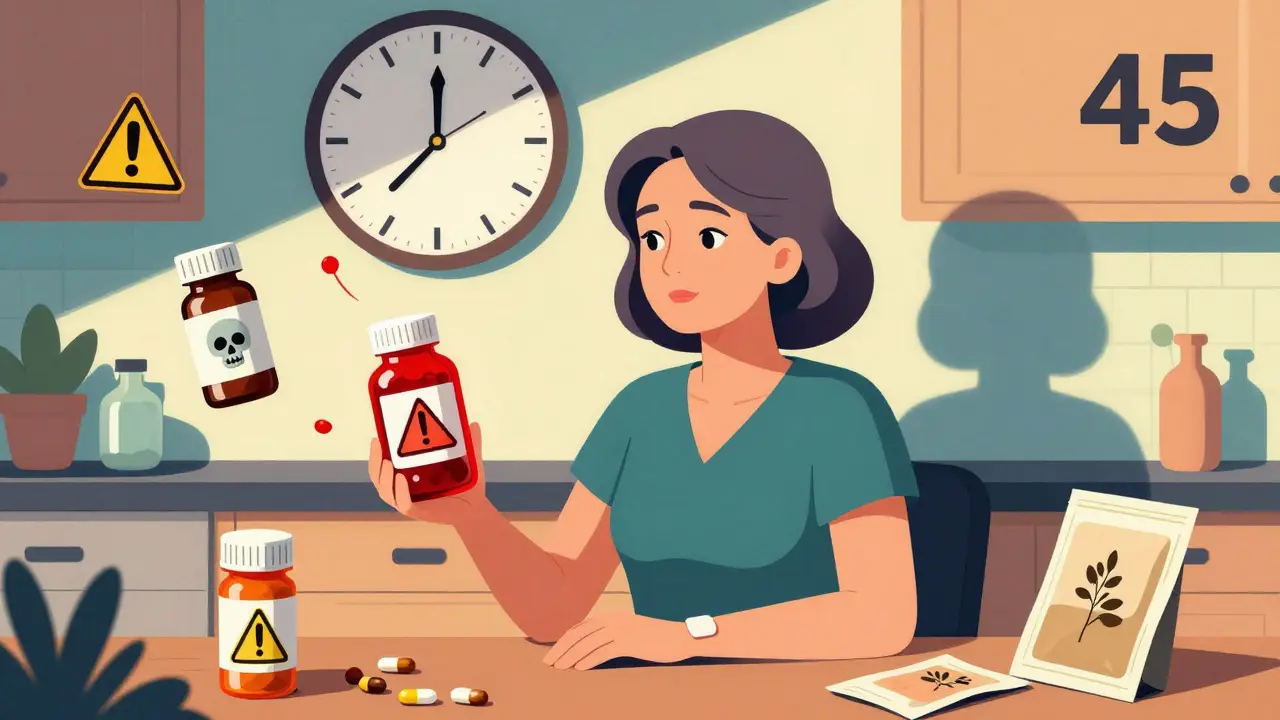
When you hit menopause, your body changes - and so do the way medications work in you. What was safe and effective at 45 might not be at 65. For post-menopausal women, medication changes aren’t just about adding new pills - they’re about removing the wrong ones, adjusting doses, and avoiding hidden dangers. Too many women take four or five prescriptions daily, often from different doctors, without ever having a full review. The result? Hospital visits, dangerous side effects, and unnecessary risks.
Why Medications Work Differently After Menopause
Your liver and kidneys don’t process drugs the same way after menopause. Hormone shifts slow down how fast your body breaks down medications. That means a dose that was fine for years can suddenly build up to toxic levels. Blood pressure pills, cholesterol drugs, and even painkillers can become riskier. Studies show that women over 65 are 35% more likely to be hospitalized because of bad drug reactions than men of the same age. And it’s not just about age - it’s about the hormonal shift.Take estrogen therapy, for example. If you take it by mouth, your liver has to process it first. That puts extra strain on your liver and increases the chance of blood clots. Transdermal patches or gels? They skip the liver entirely. That cuts the risk of clots by 30% to 50%. Yet, many doctors still start women on oral pills because it’s easier. That’s changing - but not fast enough.
The Real Risks of Hormone Therapy
Hormone therapy isn’t a one-size-fits-all fix. The big fear? Breast cancer. The Women’s Health Initiative study found that women taking estrogen plus progestin had a 24% higher risk of breast cancer after five years. But here’s the twist: women who had a hysterectomy and took estrogen alone? Their risk didn’t go up. Some studies even showed a small drop.And it’s not just cancer. Combined hormone therapy also raises stroke risk and increases the chance of pulmonary embolism. That’s why the U.S. Preventive Services Task Force says not to use it for preventing heart disease or osteoporosis. It doesn’t help enough to outweigh the danger.
What about non-hormonal options? SSRIs like paroxetine or escitalopram can cut hot flashes by half. But they come with their own problems - up to 40% of women report reduced sex drive or trouble reaching orgasm. For some, that trade-off is worth it. For others? Not even close.
Polypharmacy: The Silent Killer
Four or five prescriptions? That’s normal for a post-menopausal woman. But when you add in supplements, over-the-counter painkillers, and herbal remedies, you’re playing Russian roulette with your health. One woman in a WHO case study was taking diclofenac (a strong NSAID) for arthritis, along with blood thinners and blood pressure meds. She developed a bleeding ulcer. Her hemoglobin dropped from 12.5 to 8.1 in a week. She ended up back in the hospital.That’s not rare. The World Health Organization says 40% of older adults get prescriptions from multiple doctors - and no one’s talking to each other. One doctor prescribes a blood thinner. Another adds an NSAID. No one checks for interactions. The result? 15% of women over 65 are taking at least one medication that’s outright unsafe for them.
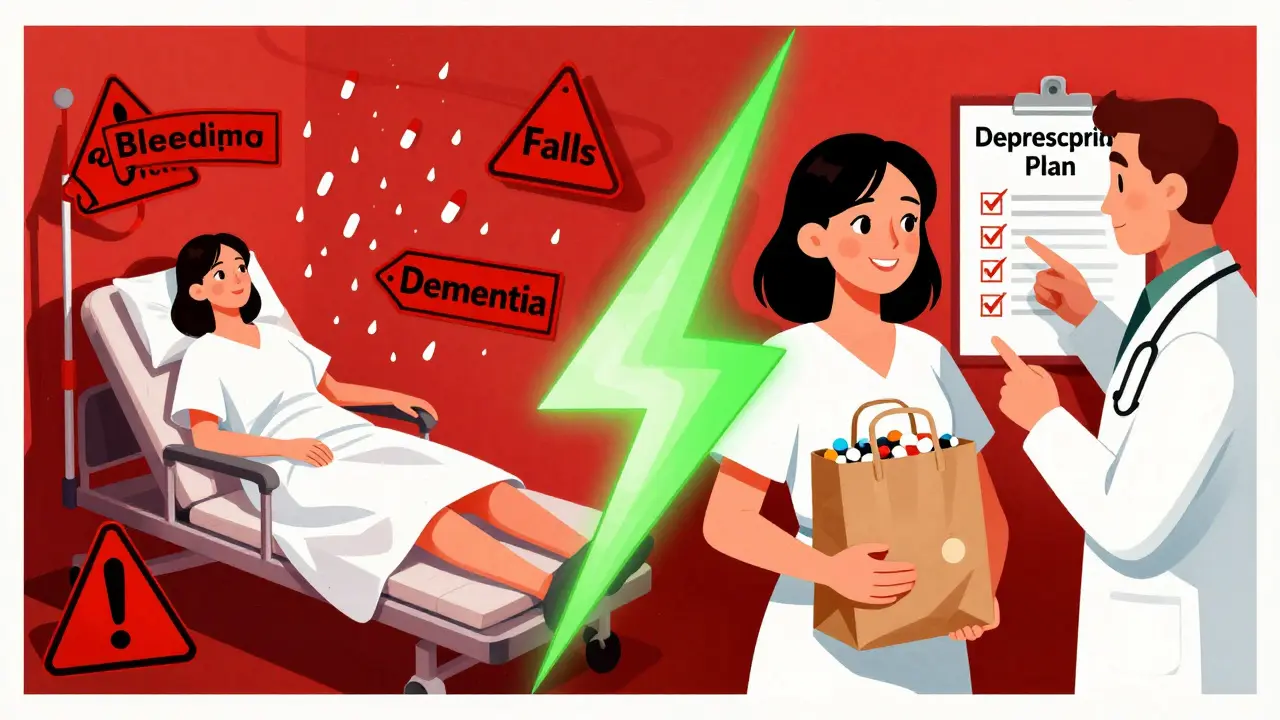
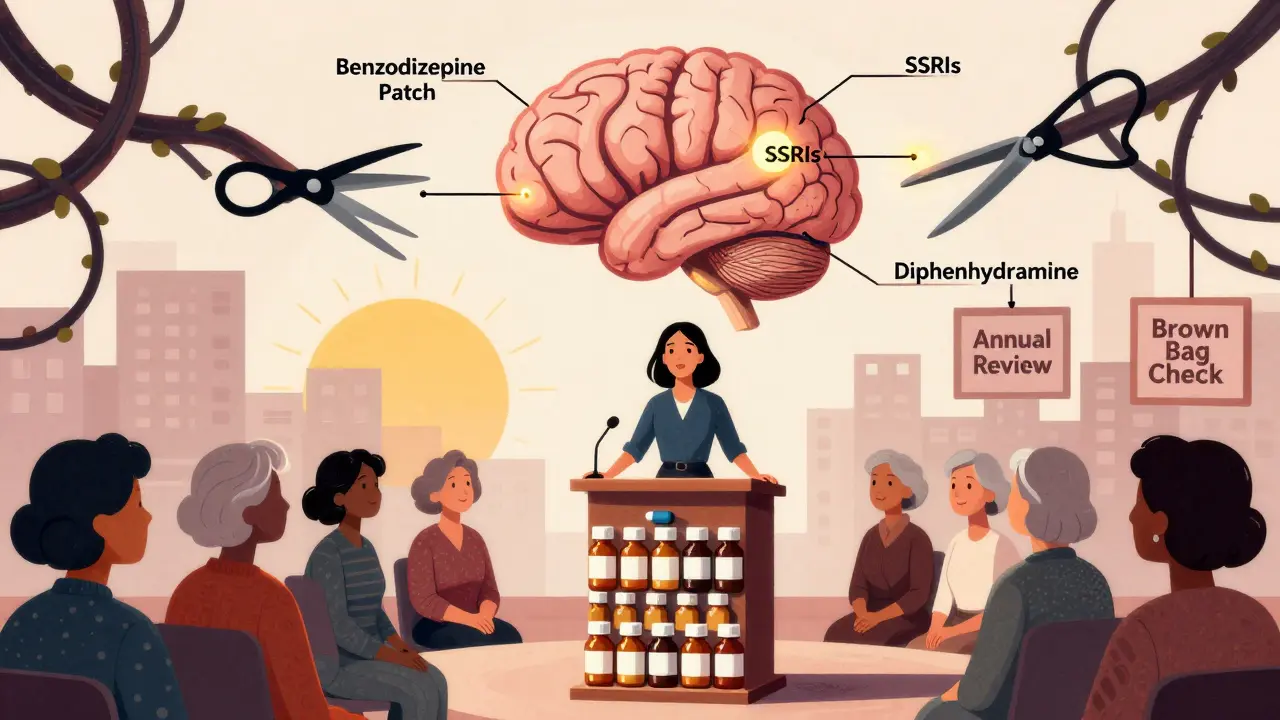
The Beers Criteria - a list of drugs to avoid in older adults - flags 30 risky medications. Long-acting benzodiazepines? They increase hip fracture risk by 50%. Anticholinergics like diphenhydramine? They’re linked to dementia. And yet, these drugs are still handed out like candy.
Deprescribing: Taking Pills Off, Not On
The goal isn’t to add more pills. It’s to take some away. Deprescribing means carefully stopping drugs that aren’t helping - or are hurting. It’s not as simple as just quitting. You can’t stop a blood pressure pill overnight. Or a steroid. Or an antidepressant. You need to taper slowly - over weeks, sometimes months.For benzodiazepines, tapering takes 8 to 12 weeks. For antidepressants, it’s 4 to 8 weeks. Skipping this step can cause rebound anxiety, seizures, or dangerous spikes in blood pressure. A 2019 study found that structured deprescribing cut medication burden by 1.4 drugs per person and reduced bad reactions by 33%.
But who does this? Most doctors don’t have the time. That’s why you need to take charge. Bring all your pills - every bottle, every supplement - to your next appointment. Ask for a “brown bag review.” That’s when your doctor looks at everything you’re taking and says, “Which of these are still necessary?”
What to Ask Your Doctor
You don’t have to guess what’s safe. Ask these questions:- Is this medication still needed, or was it prescribed for something I no longer have?
- Are there safer alternatives that don’t raise my risk of falls, dementia, or bleeding?
- If I’m on estrogen - is transdermal better than oral for me?
- Have you checked for interactions between all my drugs and supplements?
- Can we try stopping one to see if I feel better?
Don’t be afraid to say, “I’ve heard this drug might be risky for women my age.” That’s not being difficult - it’s being smart.
Tools That Actually Help
Pill organizers aren’t just for grandma. They work. A 2019 study in JAMA Internal Medicine found they cut medication errors by 81%. But only if you use them right. Make sure you fill them weekly. Check the labels. Don’t just dump pills in.Use apps like MyTherapy or Medisafe to track doses. Set reminders. Write down side effects. If your wrist hurts from a new pill, or you’re sleeping too much, write it down. Bring it to your doctor.
And check your prescriptions. The FDA now requires drug labels to include specific warnings for menopausal women. Read them. If a label says “avoid if you have a history of blood clots” and you’ve had one - ask why you’re still on it.
What’s New and What’s Coming
New treatments are emerging. TSECs - tissue-selective estrogen complexes - combine estrogen with a compound that protects the uterus. One version, conjugated estrogens/bazedoxifene, cut endometrial thickening risk by 70% in trials. That’s huge for women who still have their uterus but need hormone relief.And it’s not just hormones. The NIH is funding $25 million in research to find non-hormonal ways to manage hot flashes, sleep issues, and mood swings. Some are looking at acupuncture, cognitive behavioral therapy, and even plant-based compounds.
Genetic testing is starting to play a role too. If you’re on tamoxifen for breast cancer prevention, your body’s ability to process it depends on your CYP2D6 gene. Testing can tell you if the drug will work - or if it’s useless.
The Bottom Line
Post-menopausal medication safety isn’t about avoiding all drugs. It’s about using the right ones, at the right dose, for the right reason. Too many women suffer because no one asked, “Is this still helping?” or “Could this be hurting you more than the problem it’s meant to fix?”You have the right to ask. You have the right to review. You have the right to stop something that doesn’t feel right. Don’t wait for your doctor to bring it up. Bring your pills. Bring your questions. Bring your concerns. Your body changed. Your meds should too.
Is hormone therapy safe after menopause?
Hormone therapy can be safe - but only if it’s tailored to you. Transdermal estrogen (patches or gels) is safer than pills, especially if you have a history of blood clots, migraines with aura, or liver issues. Estrogen alone may be an option if you’ve had a hysterectomy. Combined estrogen-progestin therapy is not recommended for preventing chronic disease because the risks (breast cancer, stroke, blood clots) outweigh the benefits. Always discuss your personal risk factors - including family history of cancer or heart disease - before starting.
Why do I need to review my medications every year?
Your body changes after menopause - how you absorb, process, and react to drugs changes too. A medication that was fine at 55 might cause dizziness, confusion, or kidney strain at 70. Plus, you might be taking drugs for conditions you no longer have. Annual reviews help catch unnecessary, dangerous, or redundant prescriptions. The Beers Criteria lists 30 drugs that should be avoided in older adults. A yearly check-up can help remove them.
Can I stop taking my statin if I’m worried about side effects?
Don’t stop statins on your own. But do talk to your doctor. Many women stop because of muscle pain - and that’s valid. But sometimes, the pain isn’t from the statin. Other times, switching to a different statin (like rosuvastatin instead of simvastatin) or lowering the dose helps. A 2021 study in The Lancet Public Health found that 15% of women over 65 are on statins they don’t need. Your doctor can use your cholesterol levels, heart disease risk score, and side effect history to decide if you still need it.
What over-the-counter drugs should I avoid?
Avoid long-term use of NSAIDs like ibuprofen or naproxen - they raise your risk of stomach bleeding and kidney damage, especially if you’re on blood thinners or have high blood pressure. Diphenhydramine (Benadryl) and similar anticholinergics can cause memory problems and increase dementia risk. Cold and sleep aids often contain these. Always read labels. If it says “may cause drowsiness” or “avoid if you have glaucoma or prostate issues,” it’s probably not safe for you.
How do I know if I’m taking too many pills?
If you’re taking five or more prescription drugs daily - especially if you’re also using supplements or OTC meds - you’re at risk for polypharmacy. Signs include confusion, dizziness, falls, fatigue, or stomach upset that started after adding a new drug. If you’re using a pill organizer and still missing doses or taking pills twice, it’s a red flag. Ask your doctor for a “medication reconciliation” - a full list of everything you take, with each one’s purpose clearly explained. If you can’t explain why you’re on a drug, it’s time to question it.
tatiana verdesoto
March 3, 2026 AT 23:10My mom just went through this last year. She was on five different meds, including Benadryl for sleep and ibuprofen for ‘a little pain.’ One day she fell in the kitchen - no broken bones, but her whole world flipped. We did the brown bag review, and turns out three of those pills were from 2018. She’s down to two now, and she says she feels like herself again. No more foggy mornings. No more dizziness when she stands up. It’s not magic - just common sense.
Don’t wait for a fall to ask questions. Bring your pills. Bring your fears. You deserve to feel good, not just alive.
Tobias Mösl
March 5, 2026 AT 06:34Let’s be real - the system is rigged. Pharma companies don’t want you to stop taking meds. They want you on them forever. And doctors? They’re paid by the prescription, not by how many pills you stop. I’ve seen it: a woman on 8 meds, 3 of which are on the Beers Criteria list. The doctor just shrugs and says, ‘Well, it’s not hurting you yet.’
Transdermal estrogen? Yeah, it’s safer. But do you think your GP even knows that? No. They still hand out oral pills like candy because it’s easier than thinking. And don’t get me started on statins - half the women on them have zero cardiovascular risk. It’s profit, not science.
Jessica Chaloux
March 5, 2026 AT 12:35I just started HRT and I’m already terrified 😭
My doctor said oral estrogen was fine. Then I read this and now I’m Googling ‘transdermal estrogen near me’ at 2 a.m. What if I’m one of those women who gets a clot? What if I wake up one day with a stroke? I’m not even 60 yet and I feel like I’m playing Russian roulette with my body.
Why does no one warn us before we start? Why is this all so scary?? 😭
Ethan Zeeb
March 5, 2026 AT 19:02My wife’s been on a beta-blocker since she was 48 for anxiety. She’s 68 now. No anxiety. No palpitations. Just… tired. Always tired. We brought all her meds to her PCP last month. The doctor looked at the list and said, ‘I didn’t even know you were on this.’
She’s been off it for three weeks. No rebound anxiety. No side effects. Just more energy. She’s gardening again. That’s worth more than any pill. Don’t assume a drug is still needed just because it’s been on your list for 20 years.
Darren Torpey
March 6, 2026 AT 09:41Man, this post hit different. I’ve watched my aunt go from ‘I’m fine!’ to ‘I can’t remember my own granddaughter’s name’ in five years. Turns out, she was on diphenhydramine for ‘sleep issues’ - daily - for 12 years. Twelve. Years.
She’s off it now. Started CBT for insomnia. Sleeps better. Thinks clearer. And no more ‘confusion’ at family dinners. We need to stop treating menopause like a disease to be medicated into submission. It’s a transition. A natural one. And our meds should reflect that - not override it.
Also, pill organizers? Game-changer. Mine’s got a little sticker on it that says ‘One day at a time.’ Simple. Powerful.
Lebogang kekana
March 7, 2026 AT 19:17Listen. I’m from Johannesburg. I’ve seen grandmas in rural clinics getting prescriptions for drugs that were banned in the US 15 years ago. And here? Same damn thing. We’re not talking about health - we’re talking about profit.
My sister-in-law was on a benzodiazepine for ‘stress’ since her 50s. She’s 67 now. Can’t walk without a cane. Can’t remember her own phone number. The doctor said, ‘It’s just aging.’ No. It’s pharmacology. We’re drugging women into oblivion and calling it care.
It’s time to wake up. You don’t need more pills. You need more respect.
Mariah Carle
March 9, 2026 AT 17:59It’s funny - we live in a world where we can map the human genome, yet we still hand out anticholinergics like they’re candy. We’ve got the science. We’ve got the data. We’ve got the Beers Criteria. And yet, nothing changes.
Why? Because medicine is still a ritual, not a science. We don’t treat bodies - we treat narratives. ‘She’s old, she’s tired, she needs something.’
But here’s the truth: your body isn’t broken. It’s evolved. And your meds? They’re stuck in 2005.
Maybe the real question isn’t ‘Should I stop this pill?’
It’s ‘Why did we ever start it?’
Raman Kapri
March 9, 2026 AT 23:18