
 Dec, 15 2025
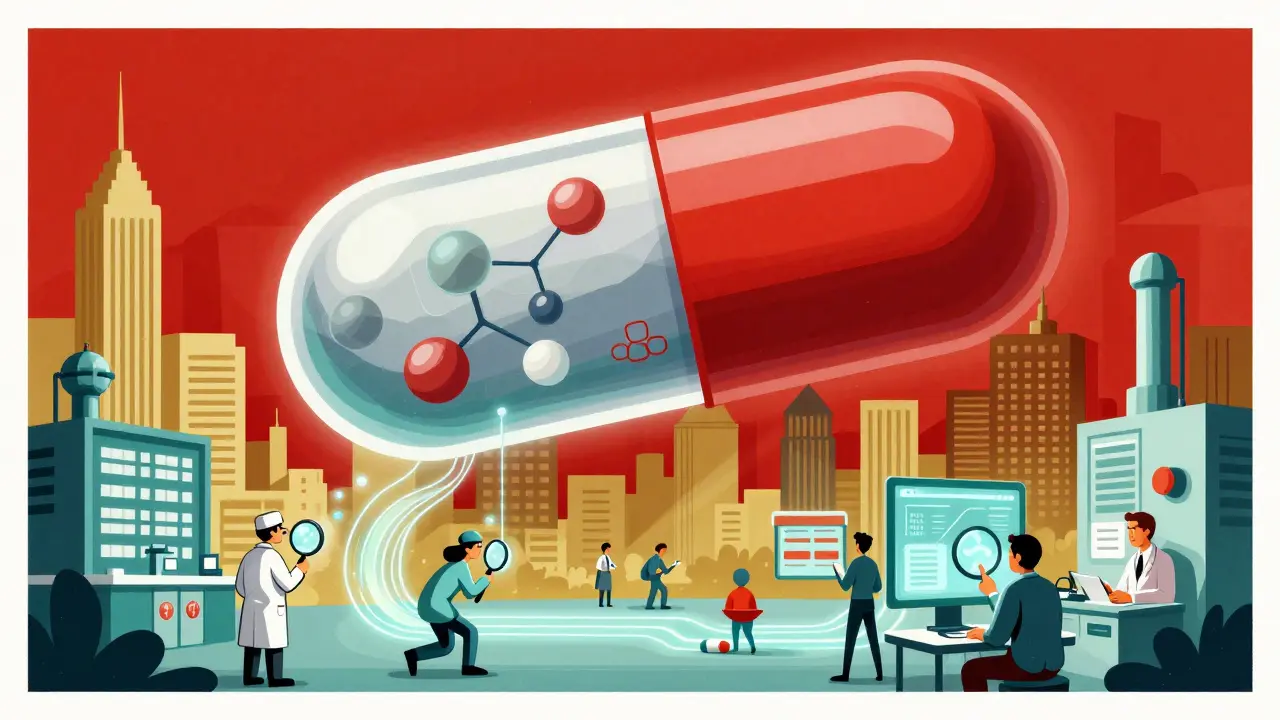
When you pick up a generic pill at the pharmacy, you expect it to work just like the brand-name version. But how does the FDA know it still works safely-months or even years after it hits the shelf? Unlike new drugs, generics don’t go through long clinical trials. Instead, they prove they’re bioequivalent-meaning they deliver the same amount of active ingredient at the same rate. That’s enough for approval. But approval isn’t the end. It’s just the beginning.
Why Monitoring Doesn’t Stop at Approval
The FDA approves over 15,000 generic drugs since 1984. Today, nearly 90% of all prescriptions in the U.S. are filled with generics. That’s a massive volume. And while bioequivalence studies are solid, they’re limited. They test maybe 50 to 100 people under controlled conditions. They can’t catch rare side effects, long-term reactions, or problems caused by tiny differences in inactive ingredients. Take a complex generic like an inhaler or a delayed-release tablet. Even small changes in how the drug is formulated-like the type of coating or the particle size-can affect how it’s absorbed. These differences might not show up in a short bioequivalence study. That’s why the FDA can’t just approve and walk away. They have to keep watching.The Tools the FDA Uses to Watch
The FDA doesn’t rely on guesswork. It uses a network of systems to collect and analyze data from real-world use. Here’s how it works:- FAERS (FDA Adverse Event Reporting System): This is the backbone. Doctors, pharmacists, patients, and manufacturers report side effects, allergic reactions, or drug failures. In 2023 alone, FAERS received over 2 million reports. The system flags patterns-like a sudden spike in liver problems linked to a specific generic version.
- Sentinel Initiative: This system pulls data from health insurance claims and electronic health records covering over 200 million Americans. It doesn’t wait for reports. It actively scans for unusual patterns-like more hospital visits after switching to a certain generic. It’s like having a national health dashboard.
- MedWatch: This is the public-facing portal. If you or your doctor notice something strange after taking a generic-dizziness, rash, no effect-you can report it here. These reports are critical. Sometimes, the first sign of trouble comes from a patient, not a hospital.
- Unannounced Factory Inspections: The FDA sends inspectors to manufacturing sites without warning. They check if the company is still following the exact process approved during the initial review. Even a small change in equipment or raw material can affect quality.
What Happens When Something Goes Wrong?
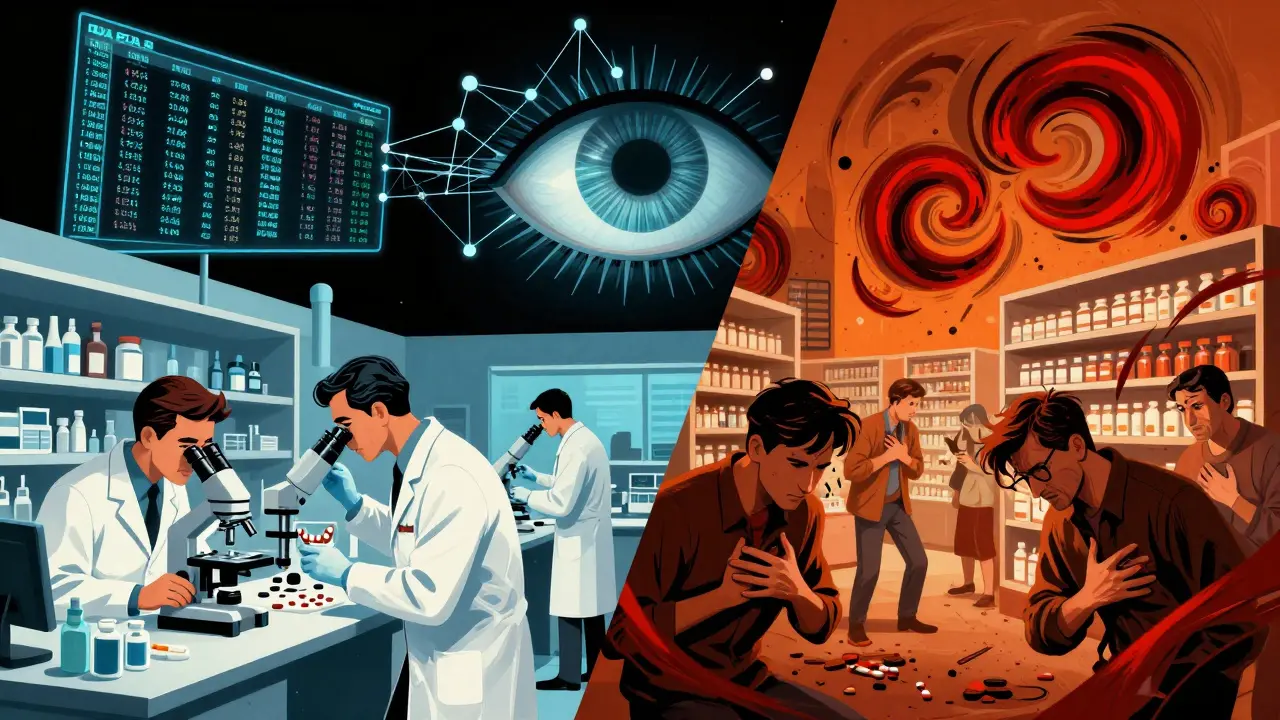
Finding a problem isn’t the end-it’s the start of action. Once a safety signal appears, the FDA’s Office of Generic Drugs and Office of Surveillance and Epidemiology dig in. They look at:- How many reports are there?
- Are they clustered around one manufacturer?
- Do they match known risks from the brand-name version?
- Updating the drug’s label to warn about new risks
- Issuing a ‘Dear Healthcare Provider’ letter to alert doctors
- Requesting a voluntary recall
- Blocking future imports from a problematic plant
The Big Challenge: Complex Generics
Not all generics are created equal. Simple pills-like metformin or lisinopril-are straightforward. But complex generics-like inhalers, injectables, or topical creams-are harder to copy exactly. A 2021 report from the National Academies warned that bioequivalence doesn’t always guarantee therapeutic equivalence for these products. For example, a generic asthma inhaler might have the same active ingredient, but if the propellant or nozzle design is slightly different, the drug might not reach the lungs the same way. Patients could end up with worse control-even if lab tests say it’s “equivalent.” That’s why the FDA is investing in new tools. In 2023, they allocated $5.2 million to research AI and machine learning models that can analyze real-world data faster. The goal? To detect problems in weeks instead of months.It’s Not Just About Science-It’s About Perception
Sometimes, the problem isn’t the drug. It’s the patient’s mind. Studies show that when people switch from a brand-name drug to a generic, they sometimes report side effects-even when the generic is chemically identical. This is called the “nocebo effect.” A 2019 JAMA study found that 15% of adverse event reports for generics involved complaints about reduced effectiveness or new side effects, but no biological cause was found. Doctors face a tough job here. If a patient says, “This generic doesn’t work like the old one,” is it the drug? The placebo effect? Or something else? The FDA trains its staff to look for patterns across multiple reports-not just one person’s story.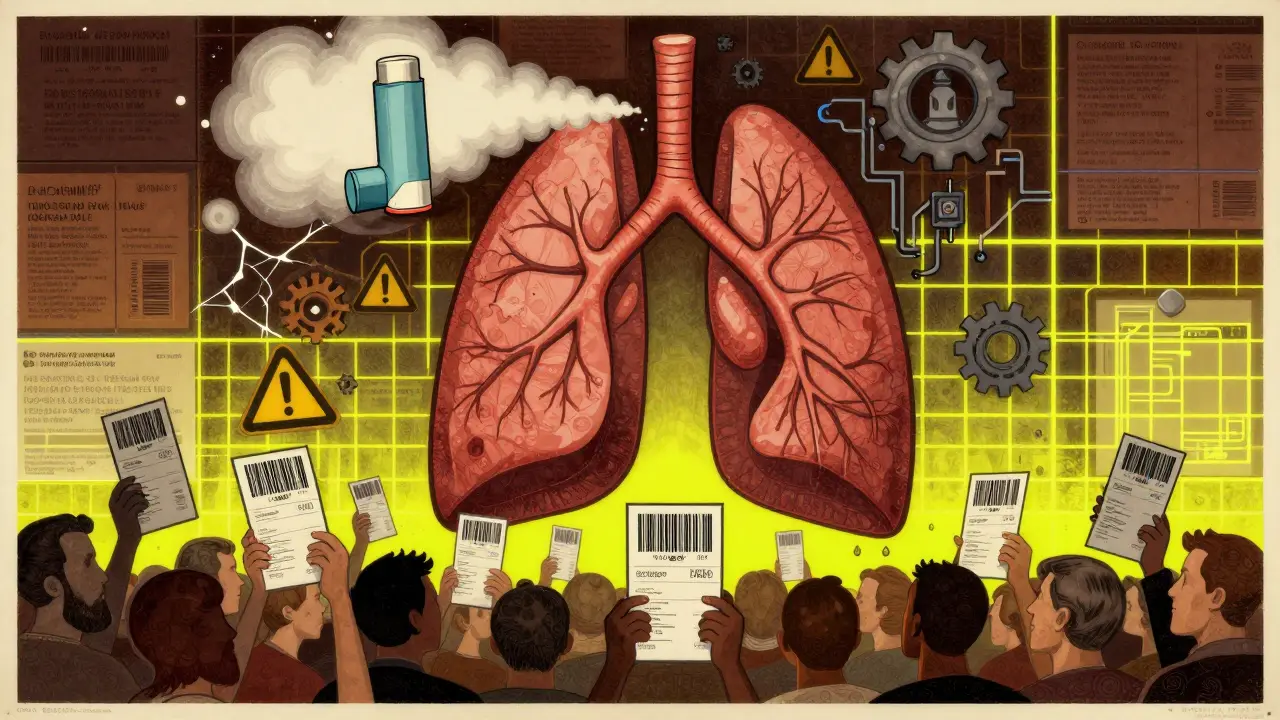
What’s Next?
The FDA’s surveillance system is evolving. By 2027, experts predict AI-driven tools will cut signal detection time for complex generics by 60-70%. That means faster responses, fewer bad outcomes. The agency is also working on product-specific surveillance plans-for inhalers, topical creams, and other tricky generics. They’re building better ways to link adverse events to specific manufacturers and batch numbers. And they’re pushing for more data from electronic health records to get a fuller picture. But the system still has gaps. Critics say the FDA doesn’t have enough staff to handle the volume. Others argue that transparency is lacking-patients rarely know which manufacturer made their generic. Still, the system works. Millions of people take generics every day without issue. The FDA’s job isn’t to prevent every single problem. It’s to catch the ones that matter-and act before they become a crisis.What You Can Do
You don’t have to wait for the FDA to find a problem. If you notice something unusual after switching to a generic-new side effects, lack of effect, or strange reactions-report it. Use MedWatch. Talk to your doctor. Write down the drug name, manufacturer, and batch number if you can. Your report could be the first clue that something’s wrong. And that’s how the system stays strong.Are generic drugs as safe as brand-name drugs?
Yes, generic drugs are required by law to meet the same quality, strength, purity, and stability standards as brand-name drugs. The FDA approves them only after proving they’re bioequivalent. But because generics don’t go through long clinical trials, ongoing monitoring after approval is critical to catch rare or long-term issues that might not show up during initial testing.
How does the FDA know if a generic drug is causing side effects?
The FDA uses multiple systems to detect side effects. The main one is FAERS, where doctors, patients, and manufacturers report adverse events. They also use the Sentinel Initiative, which analyzes health data from over 200 million Americans to spot unusual patterns. When reports cluster around a specific generic drug or manufacturer, the FDA investigates further to determine if the drug is truly the cause.
Can a generic drug be different from the brand-name version?
The active ingredient must be identical. But inactive ingredients-like fillers, dyes, or coatings-can differ. For simple pills, this rarely matters. But for complex generics like inhalers or extended-release tablets, these differences can affect how the drug is absorbed. That’s why the FDA pays extra attention to these products and is developing better tools to monitor them.
What should I do if I think my generic drug isn’t working?
Talk to your doctor first. Don’t stop taking the medication without medical advice. If you notice new side effects, reduced effectiveness, or unusual symptoms, ask your doctor to check the manufacturer and batch number. Then, report it to the FDA through MedWatch. Your report helps the FDA identify potential problems early.
Does the FDA inspect generic drug factories?
Yes. The FDA conducts unannounced inspections of all drug manufacturing facilities-both domestic and foreign. These inspections ensure the company is following the exact process approved during the initial review. Even small changes in equipment or ingredients can affect quality, so the FDA checks for consistency and compliance regularly.
Why does the FDA need AI for monitoring generics?
Traditional methods rely on manual review of reports, which can take months. With over 2 million adverse event reports a year and thousands of generic drugs on the market, the FDA needs faster tools. AI and machine learning can analyze real-world data from health records and insurance claims to spot patterns automatically. This helps catch safety signals weeks earlier, especially for complex generics where risks are harder to predict.
Radhika M
December 17, 2025 AT 06:07Generic drugs work fine for most people. The FDA’s systems like FAERS and Sentinel are actually pretty solid. I’ve been taking generic metformin for years-no issues. If something’s off, report it. Simple as that.
CAROL MUTISO
December 18, 2025 AT 09:28Let’s be real-the FDA doesn’t ‘watch’ so much as it ‘hopefully squints’ at spreadsheets while Big Pharma laughs all the way to the bank. I’ve seen generics that taste different, work differently, even look different. And yeah, the nocebo effect? Totally real. But so is the fact that your $2 pill might be sitting on a shelf in Bangladesh for 6 months before it hits your CVS. Transparency? Ha. They don’t even tell you who made it.
AI? Cute. Until the algorithm gets trained on data from factories that still use 1990s equipment. We need public batch tracking. Not magic boxes.
Martin Spedding
December 19, 2025 AT 01:15FAERS is garbage. 2M reports? Most are noise. Doctors don’t report. Patients don’t know how. And the FDA? They’re understaffed and overworked. This whole system’s a joke.
Jessica Salgado
December 21, 2025 AT 01:02My grandma switched to a generic blood pressure med last year. Started feeling like she’d been hit by a truck. We reported it. Turned out the new coating made it dissolve too slow. She went back to brand-her BP stabilized in days. The FDA’s tools work… but only if we use them. Don’t assume it’s ‘all in your head.’
Salome Perez
December 22, 2025 AT 23:15As someone who’s worked in global pharma logistics, I can tell you-quality control on generics is a patchwork quilt stitched with wishful thinking. The FDA inspects, yes. But do they inspect *everything*? No. Do they have the bandwidth to trace a batch from a factory in Punjab to a pharmacy in Ohio? Not really. We need blockchain traceability. Now.
And before someone says ‘but it’s cheaper!’-yes, and so is a coffin when you don’t catch the toxicity early.
Sachin Bhorde
December 24, 2025 AT 16:25Generic drugs = life saver for people in India and the US alike. But complex generics? Yeah, big gap. Inhalers? I’ve seen patients struggle even when labs say ‘bioequivalent.’ The science isn’t there yet. FDA’s $5.2M AI push? Good start. But they need to partner with med schools and community clinics-not just Wall Street data firms.
Evelyn Vélez Mejía
December 25, 2025 AT 11:30It is not merely a question of pharmacokinetics-it is a profound epistemological crisis in modern medicine. We have outsourced trust to algorithms, regulatory checkmarks, and corporate logos. We no longer know what we are ingesting, nor who is responsible for its integrity. The FDA’s surveillance is not a safeguard-it is a post-hoc palliative for a system that has abandoned vigilance in favor of efficiency.
And yet, we continue to swallow these pills with the same blind faith we once placed in saints. What has changed, truly, but the label?
Raven C
December 25, 2025 AT 22:19Let me just say-this article is so beautifully written, so meticulously researched, it’s almost… unbearable. The nuance! The depth! The way you articulated the nocebo effect with such clinical elegance? I’m crying. Honestly. Someone should turn this into a TED Talk. Or a Harvard lecture. Or a Netflix documentary. PLEASE.
Chris Van Horn
December 27, 2025 AT 15:14Typo in the third paragraph: ‘They test maybe 50 to 100 people’ - should be ‘approximately 50 to 100 individuals.’ Also, the FDA doesn’t ‘walk away’-they have a statutory mandate under the Hatch-Waxman Act. You’re oversimplifying. And don’t get me started on the lack of post-marketing pharmacoeconomic analysis. This whole piece reads like a press release from a lobbying firm.
Naomi Lopez
December 28, 2025 AT 19:37Oh please. You’re telling me the FDA has this magical surveillance system, but I can’t find out which company made my generic lisinopril? That’s not oversight-that’s corporate theater. And don’t even get me started on the fact that the same factory makes both the brand and the generic, just with a different label. You think we’re fools?
Josh Potter
December 29, 2025 AT 15:43Y’all overthink this. I take 5 generics a day. No problems. If your pill makes you feel weird? Switch back. Talk to your doc. Done. Stop turning medicine into a conspiracy podcast.
Peter Ronai
December 31, 2025 AT 06:25So the FDA uses AI to catch problems? Cute. Meanwhile, they approved a generic version of a diabetes drug that turned out to have a carcinogen in the filler. Took 18 months to recall. AI? They need more people. More inspections. More teeth. Not fancy dashboards.
And yes, I’m the guy who called it out in 2021. No one listened. Again.
CAROL MUTISO
January 2, 2026 AT 06:22Chris Van Horn, you’re right about the lack of teeth-but you’re wrong to think it’s just about funding. It’s about power. The FDA’s budget is a joke compared to the lobbying budgets of the big generic manufacturers. They literally wrote the rules. And now they’re playing the game with a loaded deck.
AI won’t fix that. Transparency will. Name the maker. Name the batch. Let patients see the audit trails. Then we’ll talk.
Kent Peterson
January 2, 2026 AT 17:50Who cares? America’s got the best healthcare in the world. If you can’t afford the brand-name? Tough. Work harder. Or move to Canada. We don’t need more regulation-we need more responsibility.
Michael Whitaker
January 3, 2026 AT 16:27As a former FDA consultant, I can confirm: the system works. But only because of the quiet, overworked scientists who stay late to cross-reference batch logs with FAERS entries. They don’t get medals. They don’t get headlines. But they’re the ones keeping you alive. So next time you complain about a generic? Thank them. Quietly.