
 Jan, 22 2026
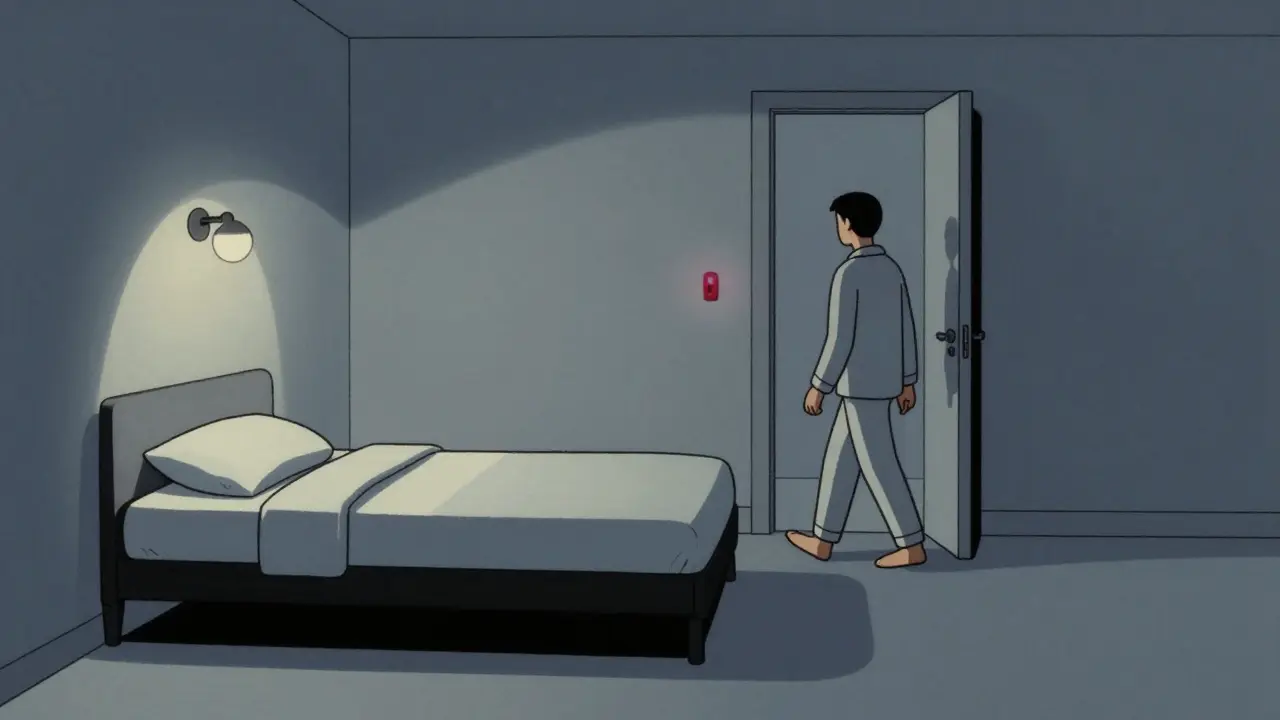
Imagine waking up in the hallway, barefoot, with no memory of how you got there. Or worse - finding yourself outside, in the cold, with no idea what happened. For people with parasomnias like sleepwalking, night terrors, or confusional arousals, these aren’t nightmares. They’re real, dangerous events that happen every night. And they’re more common than you think. About 10% of children and 2.5% of adults experience these episodes regularly. The risk isn’t just confusion - it’s injury. Falls, cuts, burns, even jumping out of windows. Emergency rooms see around 8,000 parasomnia-related injuries each year in the U.S. alone.
Why Your Bedroom Could Be a Hazard Zone
Most people don’t think of their bedroom as dangerous. But for someone with parasomnia, it’s a minefield. A nightstand within reach? That’s a sharp corner waiting to be hit. An area rug? A perfect trip hazard. A second-floor window? It doesn’t matter if it’s locked - a sleepwalker won’t know the difference. Even a loose electrical cord can become a deadly snare. The truth is, safety isn’t about stopping the episode. You can’t wake someone out of a sleepwalking episode without risking a violent reaction. In fact, 97% of sleep specialists say sudden waking increases the chance of aggression or panic. So the real solution? Make the room safe enough that no matter what happens, they won’t get hurt.Lower the Bed - Eliminate the Fall Risk
The most effective single change you can make? Lower the bed to the floor. Standard beds are 18 to 24 inches high. That’s enough to break a bone if someone tumbles out during a sleepwalking episode. MetroHealth Medical Center’s 2020 study showed that dropping the bed to near-floor level cuts fall-related injuries by 92%. You don’t need a fancy bed frame. Remove the legs. Use a low-profile foundation. Or even sleep on a thick mattress directly on the floor with a padded border. The goal isn’t comfort - it’s survival. If they roll off, they land on something soft, not concrete or hardwood. This simple change alone has prevented countless ER visits.Block the Exit - Door Alarms and Locked Windows
Sleepwalkers don’t know where they’re going. They might head for the kitchen, the garage, or outside. That’s why door alarms are non-negotiable. The Sleep Guardian Pro and similar medical-grade devices trigger with just a whisper of movement - 0.5 decibels of sound. They alert caregivers within 0.8 seconds of the person leaving the room. Kaiser Permanente’s trials found these alarms detect 98.7% of sleepwalking exits. Don’t rely on cheap alarms from Amazon. Budget models under $100 trigger false alarms 3.2 times a night - enough to make you ignore them. Medical-grade units average less than 0.4 false alarms per night. That reliability saves lives. Windows are another silent killer. If you live upstairs, install secondary locks that require a 10-pound force to open. That’s enough to stop a sleepwalker but still allows firefighters to break in if needed. The Child Neurology Foundation confirms these locks prevent 95% of window-related incidents. Glass isn’t the enemy - lack of control is.Clear the Room - No Furniture, No Rugs, No Cords
Remove everything within a six-foot radius of the bed. That means nightstands, dressers, chairs, lamps, and especially area rugs. Tripping over a rug during a sleepwalk isn’t a stumble - it’s a head-first fall. Electrical cords? They look harmless until someone trips and pulls a lamp down on their face. The Whitney Sleep Center tracked a 63% drop in injury rates after families removed all non-essential furniture. Keep only what’s absolutely necessary. A single, wall-mounted nightlight is fine. A phone charger? Put it in the hallway. Every object in the room is a potential weapon.Pad the Walls - Cushion the Impact
Even with a low bed and cleared space, someone can still stumble into a wall. That’s where foam padding comes in. Install 2-inch thick, high-density foam along all walls within three feet of the bed. Cleveland Clinic’s biomechanical tests showed this reduces impact injuries by 85% compared to carpet. You don’t need to cover the whole room. Just the area where movement is most likely. Choose neutral colors - white, gray, beige - to avoid visual stimulation that might trigger arousal. Some families even let kids pick the color. Involving children in the process reduces fear and increases cooperation. One parent told me, “My son helped choose the padding. Now he says it’s his ‘safe zone.’”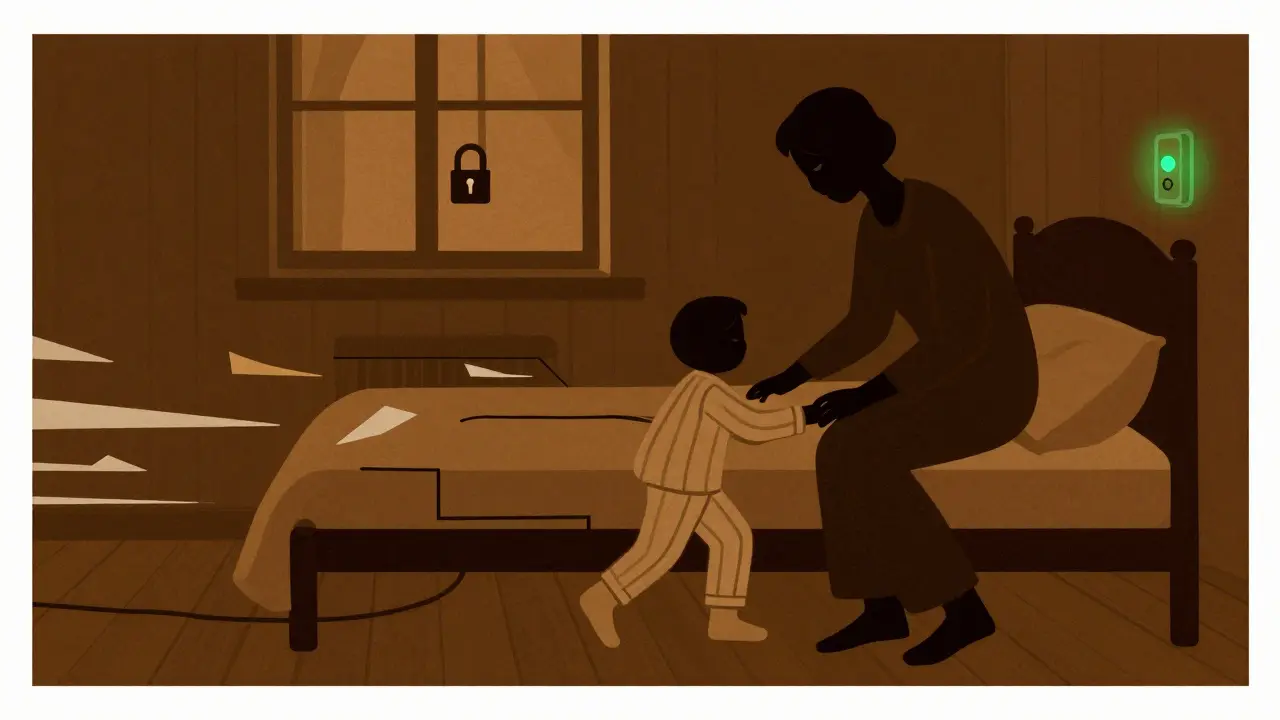
Use a Sleeping Bag - Limit Movement
This sounds strange, but it works. Instead of loose sheets and blankets, sleep in a full-length sleeping bag with armholes. MetroHealth’s 2019 trial found this reduced sleepwalking distance by 73%. Why? It restricts movement. A person can’t kick off covers or flail their arms wildly. They’re contained. It doesn’t feel like a prison - it feels like being wrapped in a warm hug. Many adults report sleeping more soundly, too. If you’re uncomfortable with a full sleeping bag, try a body pillow or a weighted blanket. The goal is to reduce the freedom to move. Less movement means less chance of wandering.Sleep on the Ground Floor - The Simplest Fix
If you have a multi-story home, move the bedroom downstairs. Period. The National Sleep Foundation analyzed over 1,200 injury reports from 2018 to 2022. Their conclusion? 92% of serious injuries happened in upper-level bedrooms. Falls down stairs, out of second-floor windows, into bathtubs - all preventable by sleeping on the ground floor. It’s not ideal for everyone. But if someone has a history of injury or frequent episodes, this isn’t a luxury - it’s medical necessity. Think of it like putting a child in a car seat. You don’t ask if it’s convenient. You do it because the risk is too high.Fix Your Sleep Habits - Reduce Episodes at the Source
Safety modifications help, but they’re not a cure. To reduce how often episodes happen, fix your sleep hygiene.- Stick to the same sleep schedule - no more than 30 minutes variation in bedtime or wake time. The American Academy of Sleep Medicine found this cuts episode frequency by 42% in adults and 57% in kids.
- Avoid screens for 2 hours before bed. Blue light disrupts deep sleep. The Integrative Psych Center saw a 33% drop in arousal frequency after eliminating phones, tablets, and TVs from the bedroom.
- No caffeine after 2 p.m. and no alcohol within 4 hours of bed. Alcohol might make you sleepy, but it fragments sleep and triggers parasomnias. Cleveland Clinic’s 2023 data showed a 28-point drop on the Parasomnia Severity Scale when these were avoided.
- Keep the room cool - between 60 and 67°F. Warm rooms increase night awakenings. University of Pittsburgh studies found this range reduces triggers by 29%.
- Do a 20-minute wind-down - deep breathing, progressive muscle relaxation. Duke Health’s CBT-I program showed a 37% reduction in episodes after patients practiced this nightly.
Don’t Wake Them - Redirect Gently
If you find someone sleepwalking, don’t shake them. Don’t yell. Don’t turn on the lights. That can trigger panic or aggression. Instead, use a calm, quiet voice - around 45 to 55 decibels - like you’re speaking to a sleeping baby. Gently guide them back to bed. The Whitney Sleep Center found this method successfully ends 82% of episodes without escalation. If you’re worried about them getting hurt before you can reach them, use a door alarm. That gives you time to respond safely.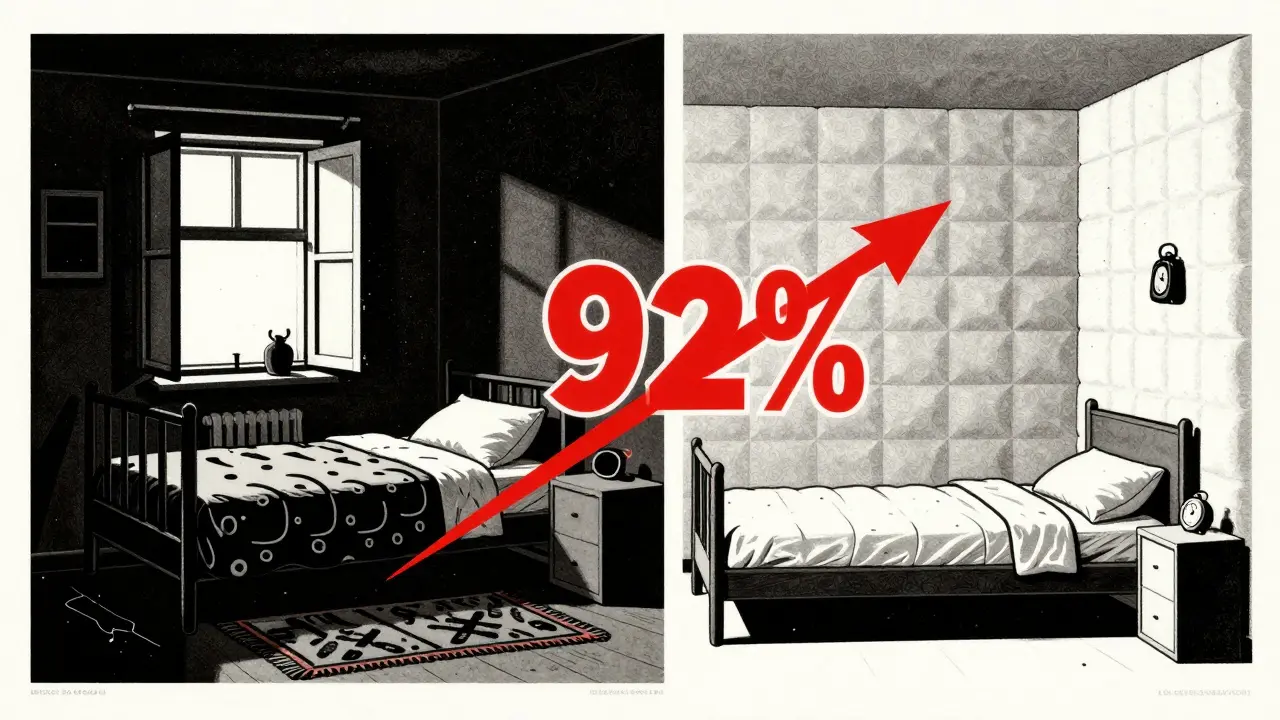
Scheduled Awakenings - A Proven Trick for Kids
For children who sleepwalk at the same time every night - say, 1:15 a.m. - try scheduled awakenings. Wake them up gently 15 to 30 minutes before their usual episode time. Keep them awake for 5 minutes, then let them go back to sleep. Do this every night for two weeks. It sounds simple, but it works. A 2019 study in Pediatrics showed this reduced non-REM parasomnias by 53% in children. The key? Keep a sleep diary for at least 14 nights to find the pattern. Don’t guess. Track it.Medication? Only as a Last Resort
For severe cases - especially those with repeated injuries - doctors may suggest medication. Clonazepam at 0.5 to 1.0 mg nightly reduces injury risk by 76%. But it carries a 32% risk of dependency over five years. That’s why it’s reserved for high-risk adults. For children, melatonin at 2 to 5 mg taken two hours before bed is safer. The Child Neurology Foundation’s trial with 317 kids showed a 41% reduction in episodes with no serious side effects. Always talk to a sleep specialist before starting anything.Test, Maintain, Repeat
All these changes mean nothing if the alarms die or the foam peels off. Set a weekly reminder to test every device: door alarms, bed sensors, motion detectors. Duke Health’s data shows weekly testing keeps reliability at 99.2%. Monthly testing? It drops to 87%. Replace batteries every six months. Check for frayed wires. Clean sensors. Treat this like checking your smoke alarms. Your life depends on it.It’s Not Overkill - It’s Survival
Some people think these changes are extreme. “Why do I need foam on the walls? Why can’t I just keep an eye on them?” Because you can’t. Not all the time. Sleepwalkers don’t scream. They don’t cry. They just walk. And they can do it fast. In one documented case, a man walked 200 yards, crossed a busy road, and climbed a fence - all in under 90 seconds, with no memory of it. This isn’t about being paranoid. It’s about being prepared. Every modification you make is a shield. A door alarm isn’t just a gadget - it’s a lifeline. A low bed isn’t a design choice - it’s a safety net. And the cost? Most families spend between $250 and $1,200. That’s less than a month’s rent. Many insurers now cover at least half of medically necessary modifications. Check with your provider. You might be surprised.What Comes Next?
The future of parasomnia safety is already here. AI-powered systems in clinical trials at the Cleveland Clinic can now predict an episode 90 seconds before it starts with 89% accuracy. These systems use motion sensors and sleep patterns to detect the micro-signals that come before a sleepwalk. In another few years, they’ll be available for home use. But right now? You don’t need AI. You need action. Lower the bed. Install the alarm. Clear the floor. Pad the walls. Stick to the schedule. These aren’t suggestions. They’re the difference between a safe night and a hospital visit. You can’t control sleep. But you can control the room. And that’s enough to keep someone safe.Can parasomnia be cured?
Parasomnia isn’t always curable, but it’s often manageable. Many children outgrow sleepwalking by adolescence. In adults, episodes often decrease with better sleep habits, stress reduction, and consistent routines. For some, medication or behavioral therapy helps. But the goal isn’t always to stop the episodes - it’s to prevent injury during them.
Are bed alarms worth the cost?
Yes - if they’re medical-grade. Cheap alarms under $100 trigger false alarms 3+ times a night, making them useless. Medical-grade systems like the Sleep Guardian Pro cost $200-$400 but have a 97% detection rate and fewer than 0.4 false alarms per night. For families with frequent episodes, the peace of mind and injury prevention make them essential.
Should I wake someone during a sleepwalking episode?
No. Abruptly waking a sleepwalker can cause confusion, aggression, or even violent reactions. Instead, gently guide them back to bed using a calm voice. Keep the lights dim and avoid sudden movements. Most episodes end on their own within a few minutes.
Can alcohol make parasomnia worse?
Yes. Alcohol fragments sleep and increases the chance of deep sleep disruptions, which trigger parasomnias. Cleveland Clinic data shows avoiding alcohol within 4 hours of bedtime reduces episode severity by 28 points on the Parasomnia Severity Scale. Even one drink can be enough to trigger an episode in susceptible people.
Is it safe to sleep on the floor?
Yes - and it’s often recommended for high-risk cases. Sleeping on a thick, high-density foam mattress on the floor reduces fall injuries by 92%. Use a mattress designed for floor use, and add a padded border around the sleeping area to prevent bumping into walls. Many families report better sleep quality after making the switch.
How long does it take to see results from safety changes?
Injury reduction is often immediate. Families report feeling safer within days of installing alarms or lowering the bed. Episode frequency may take longer - 2 to 4 weeks - to improve with sleep hygiene changes. Consistency matters more than speed. Stick with the routine for at least a month before judging effectiveness.
Does insurance cover parasomnia safety equipment?
Many major insurers now cover 50% or more of medically necessary modifications, especially if a doctor provides a letter of medical necessity. This includes bed alarms, floor padding, and even structural changes like moving a bedroom downstairs. Check your policy or call your provider - you may be eligible for reimbursement.
Stacy Thomes
January 23, 2026 AT 17:35This changed my life. My son used to sleepwalk into the kitchen and knock over a glass of water every night. We lowered the bed, put up a door alarm, and now he sleeps like a angel. No more 3 a.m. panic calls. I cried the first morning we didn’t hear a crash. Thank you for this.
dana torgersen
January 24, 2026 AT 12:02so... like... i just read this... and i’m... overwhelmed...? like, why is my bedroom a death trap?? i mean, i didn’t even know sleepwalking could be this... dangerous?? like, i thought it was just, you know, walking around in pajamas?? but nooo... it’s like, a silent horror movie... and i’m the main character who didn’t know the script??
Janet King
January 25, 2026 AT 01:46These recommendations are evidence-based and clinically sound. Lowering the bed, installing medical-grade door alarms, and eliminating trip hazards are not suggestions-they are standard-of-care interventions for recurrent parasomnias. Families should consult a board-certified sleep specialist before implementation to ensure proper risk stratification and monitoring.
Vanessa Barber
January 25, 2026 AT 15:47Yeah, but what if you just... don’t care? Like, I’ve seen people sleepwalk. They’re fine. They just bump into stuff. I’m not putting foam on my walls because my cousin once walked to the fridge at 2 a.m.
charley lopez
January 26, 2026 AT 10:35The biomechanical data presented on fall dynamics and impact attenuation is robust. However, the generalizability of the 92% injury reduction metric is contingent upon sample homogeneity in the MetroHealth cohort. External validity may be compromised in populations with comorbid mobility disorders or cognitive impairment. Further longitudinal studies are warranted.
Susannah Green
January 27, 2026 AT 19:28My mom did the sleeping bag thing for my brother-he was 14 and used to climb out the window. It worked. He said it felt like being hugged. We still use it. Also, DO NOT use cheap alarms. We bought one off Amazon-it went off every time the cat walked by. We cried. Then we bought the Sleep Guardian. Worth every penny.
Oladeji Omobolaji
January 29, 2026 AT 02:59In Nigeria, we don’t have beds. We sleep on mats on the floor. No alarms. No foam. Just family watching. Maybe the real answer is community, not gadgets?
Sallie Jane Barnes
January 30, 2026 AT 15:51Thank you for writing this with such care. I’m a therapist who works with trauma survivors who experience night terrors. These modifications aren’t just practical-they’re deeply compassionate. You’ve given families permission to prioritize safety without shame.
Andrew Smirnykh
February 1, 2026 AT 12:27Interesting how Western medicine focuses so heavily on environmental control. In some cultures, parasomnias are seen as spiritual messages. I wonder if integrating ritual or ancestral practices could complement these safety measures without dismissing medical reality.
Laura Rice
February 1, 2026 AT 18:35my cousin’s kid sleepwalks and they put a gate at the stairs. it’s not perfect but it’s better than nothing. also, they let the kid pick the color of the wall padding. now he calls it his ‘dragon cave’ and refuses to sleep anywhere else. i cried. this is so human.
Kerry Evans
February 3, 2026 AT 01:39Everyone’s acting like this is groundbreaking. I’ve been doing this since 2012. You’re all late to the party. Also, melatonin for kids? Please. I’ve seen kids on 10mg. You’re just drugging them to sleep. Wake up and fix their sleep schedule. That’s the real fix.
Kerry Moore
February 4, 2026 AT 13:09I appreciate the depth of this post. My daughter has confusional arousals, and we’ve implemented all these changes over the past year. The door alarm was the most life-changing. We now sleep through the night. I’m grateful for the data and the compassion in this writing.
Sue Stone
February 5, 2026 AT 22:25My husband sleepwalks. We got the foam padding. It’s weird at first, but now it’s just… normal. Like, I don’t even think about it anymore. That’s the goal, right? Not to fix him. To keep him safe.