 May, 19 2026
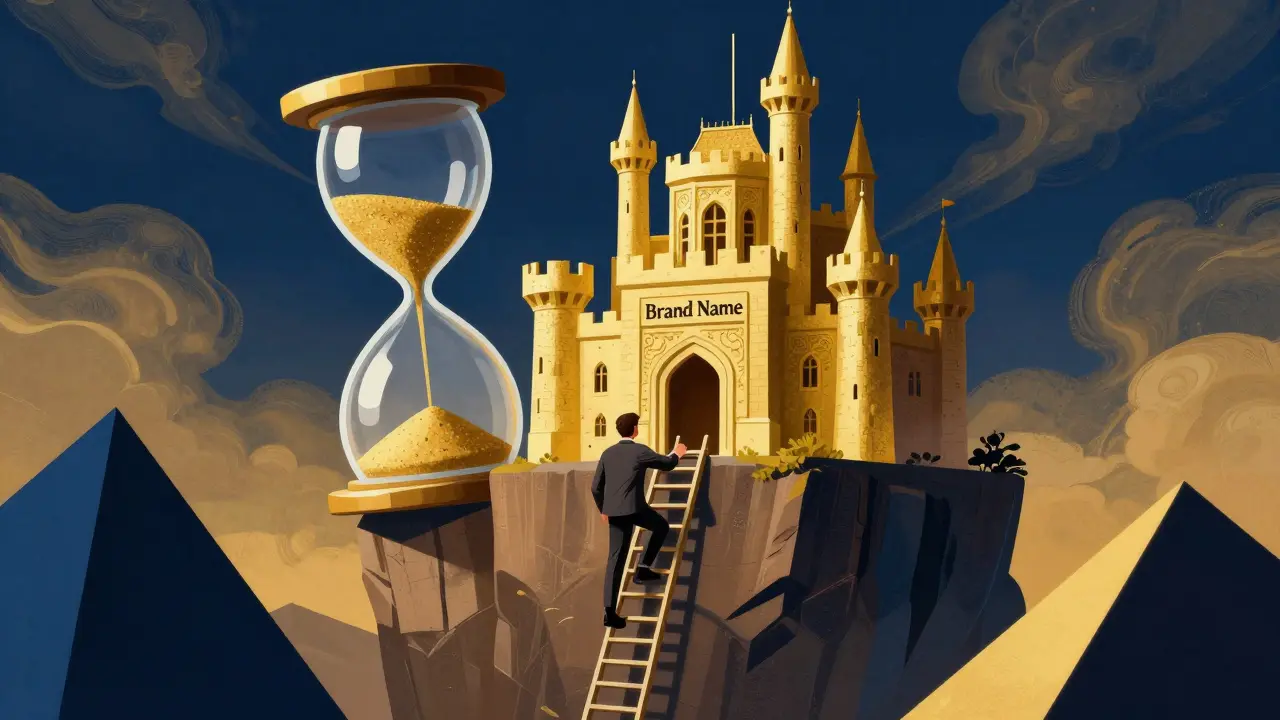
When a blockbuster drug loses its patent protection, everyone expects prices to drop. But what actually happens is far more complex than a simple free-for-all. The generic drug market doesn't open like a floodgate; it operates on a strict, sequential entry model governed by the Hatch-Waxman Act of 1984. This legislation created a system where the first generic competitor to successfully challenge a brand-name drug's patent gets a head start-specifically, 180 days of marketing exclusivity. During this window, they are the only game in town. But once that clock runs out, or if certain legal thresholds are met, the door swings wide open for subsequent competitors. Understanding how these later entrants navigate this crowded field reveals why some drugs see price crashes while others remain expensive, and why shortages often spike just when competition should be highest.
The 180-Day Exclusivity Window: A High-Stakes Head Start
The first generic manufacturer doesn't just get approval; they earn a temporary monopoly. Under the Hatch-Waxman framework, this 180-day exclusivity period begins when the generic is first marketed or when a court rules that the brand's patent is invalid or not infringed. This isn't a minor perk-it's a financial lifeline. Challenging a patent costs between $5 million and $10 million in litigation fees alone. Without this exclusivity, no company would take the risk.
During these six months, the first generic captures 70% to 80% of the market share. They can charge premium prices, typically ranging from 70% to 90% of the original brand price. According to the FDA's 2022 report on generic competition, with just one generic competitor, average prices hover around 83% of the brand cost. It’s a lucrative window, but it’s also fragile. Brand-name companies know this, and they have developed sophisticated strategies to disrupt it before the exclusivity period even ends.
- Market Share: First generic holds 70-80% during exclusivity.
- Pricing: Prices average 70-90% of brand name cost.
- Cost Recovery: Allows recoupment of $5-10 million in litigation costs.
The Authorized Generic Trap: Brands Fighting Back
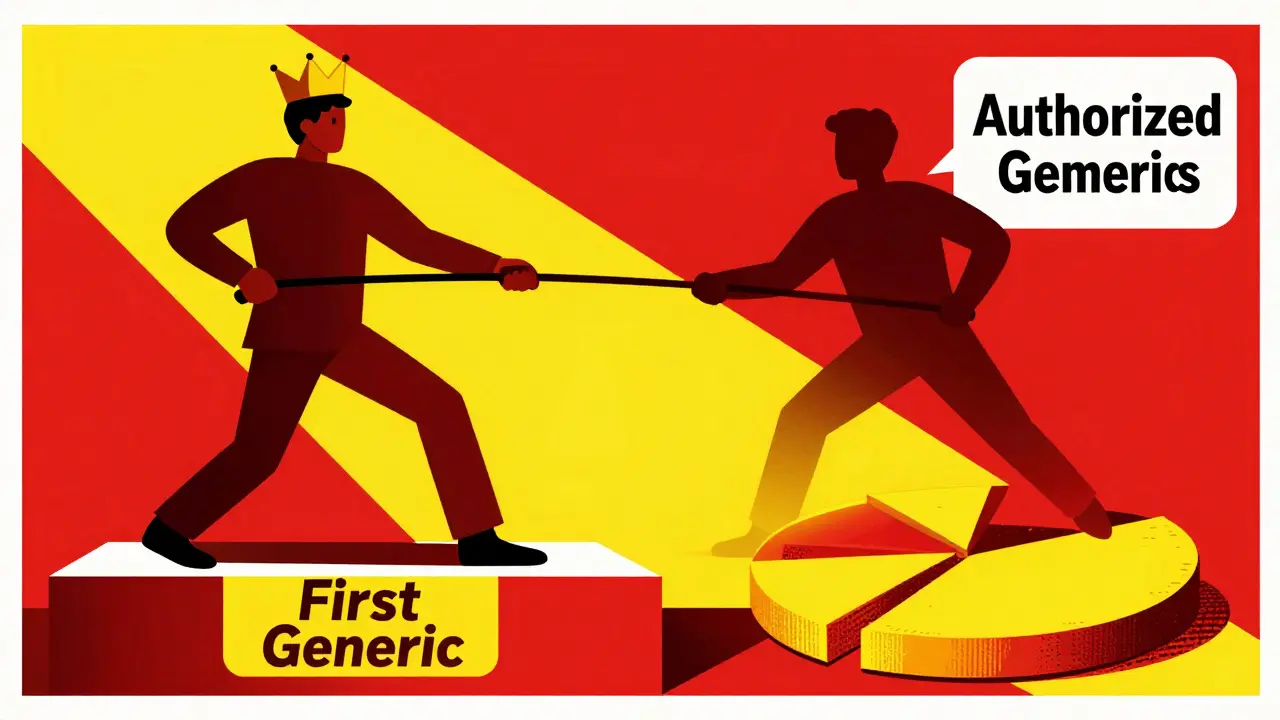
You might think the brand-name company sits back and watches their profits vanish. In reality, they often fight fire with fire using an authorized generic (AG). An AG is a generic version of a brand drug produced by the brand company itself-or through a subsidiary-and sold under a different label. This allows the brand to technically comply with generic competition requirements while keeping revenue within their own ecosystem.
Data from Health Affairs shows that between 2010 and 2019, there were 854 authorized generic launches. About three-fourths of these launched after traditional generic competition began, and roughly 70% entered during the first generic's 180-day exclusivity period. The impact is immediate and severe. When a brand launches an AG during this critical window, the first generic's market share drops from the typical 70-80% down to 40-50%. Their revenue can plummet by 30% to 40%.
A stark example occurred in the $2.4 billion Januvia (sitagliptin) market. When the first generic entered in December 2019, Merck launched an authorized generic through a subsidiary on the exact same day. Within six months, the authorized generic captured 32% of the market share, significantly denting the first generic's potential earnings. In high-value drug markets, 65% of brands use this tactic to maintain cash flow while waiting for the broader competitive wave.
Price Erosion: The Steep Drop After Entry
Once the 180-day exclusivity expires and multiple competitors enter, the pricing landscape changes dramatically. This is Phase 2 of the generic market lifecycle, characterized by rapid price erosion. The Commonwealth Fund’s analysis indicates that each additional generic manufacturer typically reduces prices by 10% to 15%. However, the steepest declines don't happen linearly-they occur between the second and third entrants, where prices can drop by 25% to 30% in a short span.
| Number of Generic Competitors | Average Price as % of Brand | Price Impact |
|---|---|---|
| 1 Competitor | 83% | Moderate discount |
| 2 Competitors | 66% | Significant drop |
| 3 Competitors | 49% | Steepest decline (-25-30%) |
| 4 Competitors | 38% | Continued erosion |
| 5+ Competitors | ~17% | Price stabilization at floor |
Consider Crestor (rosuvastatin), a cardiovascular drug with a $2.1 billion annual market. Before generic entry, it cost $320 per month. Within 18 months of multiple generic entry in 2016, the price fell to $10 per month. By 2017, eight manufacturers were competing. This dramatic crash illustrates the "winner-take-all" dynamic that defines saturated generic markets.
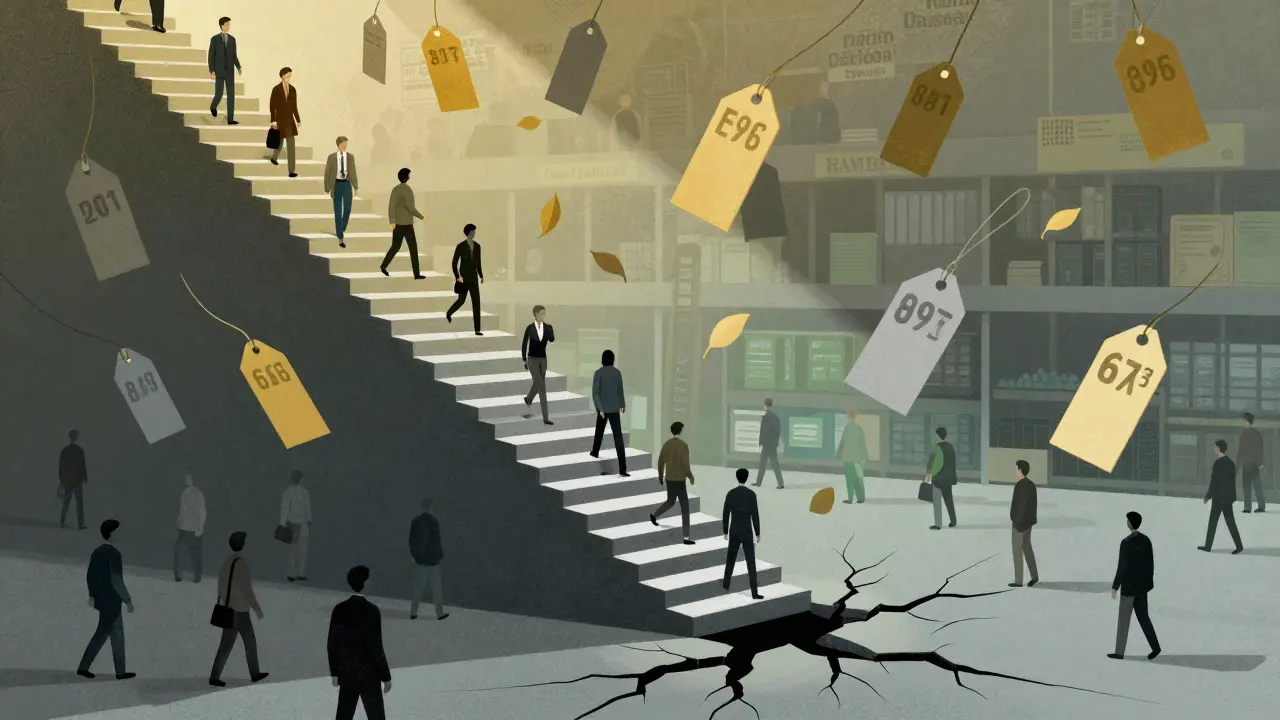
Strategic Timing and Regulatory Hurdles
Subsequent generic entrants don't just rush in blindly. They time their entries based on patent litigation outcomes, manufacturing capacity, and competitor actions. While first generics must conduct full bioequivalence studies and patent challenges, subsequent entrants can rely on the work already done by the pioneer. This reduces their development costs by 30% to 40%, according to ASPE’s 2021 analysis.
However, regulatory pathways still present hurdles. For complex generics, subsequent entrants may still need additional bioequivalence testing, which can add 6 to 12 months to their time-to-market. The CREATES Act of 2020 helped accelerate entry by requiring brand companies to provide necessary drug samples for testing. This reduced the average sample acquisition time from 18.7 months to just 4.3 months. Conversely, brand companies often file citizen petitions with the FDA to delay subsequent entrants. Between 2018 and 2022, the FTC documented 1,247 such petitions targeting products with one generic already approved, each delaying entry by an average of 8.3 months.
Distribution Wars: Winning the PBM Contract
Getting FDA approval is only half the battle. The real competition happens in distribution channels. Subsequent entrants face a fragmented landscape with 48 states having individual licensing requirements. More critically, they must negotiate with Pharmacy Benefit Managers (PBMs) and Group Purchasing Organizations (GPOs).
In 2022, AHIP reported that 68% of generic drug contracts used "winner-take-all" models. These contracts award 100% formulary placement to a single manufacturer. This creates a "second first-mover advantage," where the first generic to secure major PBM contracts captures 80% to 90% of the market share, regardless of who got FDA approval first. It takes subsequent entrants an average of 9 to 12 months to achieve formulary placement with major PBMs. During this lag, they capture only 5% to 10% of the market share despite being legally approved to sell.
GPOs also demand higher concessions from later entrants, asking for 30% to 40% price cuts compared to the 20% to 25% offered to the first generic. This squeezes margins further, forcing companies to compete purely on efficiency.
Market Instability and Shortages
This intense competition creates instability. The Commonwealth Fund reported that in 2022, 37% of generic drug markets experienced shortages within 18 months of multiple generic entry. Compare this to only 8% during the first generic's exclusivity period. Why? Excessive price volatility makes it difficult for manufacturers to maintain profitability. When prices hit the floor-often around 17% of the brand price-many companies exit the market.
The industry has seen significant consolidation. The number of active ANDA (Abbreviated New Drug Application) holders dropped from 142 in 2018 to 97 in 2022. The average number of competitors in multi-generic markets declined from 5.2 to 3.8 during this period. Furthermore, 62% of generic drug shortages involved products with three or more manufacturers, often due to quality issues at shared contract manufacturing organizations (CMOs). Subsequent entrants increasingly rely on CMOs (78% of later entrants vs. 45% of first entrants) to reduce capital investment, creating supply chain bottlenecks when those shared facilities face issues.
Biosimilars: A Different Competitive Dynamic
Not all follow-on products behave like small-molecule generics. Biosimilars, which are biological copies of complex drugs, operate differently. Development costs are much higher, ranging from $100 million to $250 million per product, and manufacturing is more complex. Consequently, price erosion is slower.
FDA data from 2023 shows that with two biosimilar competitors, prices average 70-75% of the reference product. With three, they drop to 60-65%, and with four or more, they stabilize at 50-55%. Unlike simple generics that can fall to 17% of brand prices, biosimilars rarely go below 50%. KPMG predicts that by 2027, 70% of simple generic markets will have five or more competitors with prices at 10-15% of brand levels, while complex generics and biosimilars will maintain fewer competitors (2-3) with prices remaining at 30-40% of brand levels.
Why do generic drug prices drop so sharply after the third entrant?
The steepest price decline occurs between the second and third entrants because the market shifts from a duopoly to a highly competitive oligopoly. Once three or more manufacturers are vying for the same "winner-take-all" PBM contracts, they engage in aggressive bidding wars. Prices drop by 25-30% in this phase as companies try to secure the exclusive formulary placement that guarantees volume.
What is an authorized generic, and how does it affect competition?
An authorized generic is a generic version of a brand drug produced by the brand company itself. It allows the brand to capture generic market share without losing control over the product. Launching an AG during the first generic's 180-day exclusivity period can reduce the first generic's market share from 70-80% to 40-50%, significantly impacting their revenue recovery.
How does the CREATES Act help subsequent generic entrants?
The CREATES Act requires brand-name drug companies to provide samples of their drugs to generic manufacturers for testing purposes. Before this act, acquiring samples could take nearly 19 months. Now, the average time is reduced to 4.3 months, accelerating the timeline for subsequent generics to complete bioequivalence studies and gain FDA approval.
Why are there more drug shortages after multiple generic entry?
Intense competition drives prices down to unsustainable levels (often 17% of brand price). Many manufacturers exit the market or cut corners on production quality. Additionally, reliance on shared contract manufacturing organizations (CMOs) creates single points of failure. If one CMO faces a quality issue, it affects multiple generic brands simultaneously, leading to widespread shortages.
Do biosimilars follow the same pricing patterns as small-molecule generics?
No. Biosimilars have higher development costs ($100-250 million) and more complex manufacturing requirements. As a result, fewer competitors enter the market, and price erosion is slower. Even with four or more competitors, biosimilar prices typically stabilize at 50-55% of the reference product price, whereas simple generics can fall to 17%.