
 Dec, 15 2025
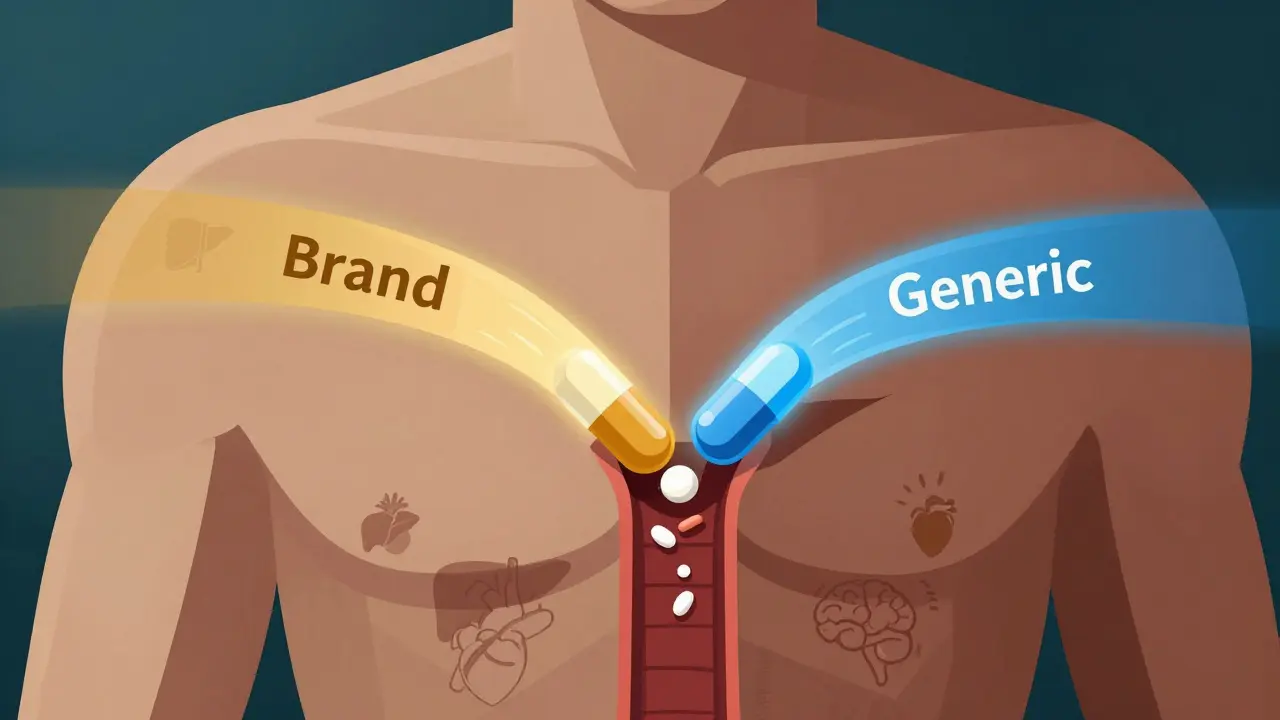
When two or more drugs are combined into a single pill or formulation, the goal is simple: better results with fewer pills. But behind that simplicity lies a complex challenge - making sure different versions of the same combination work the same way in real patients. This is where therapeutic equivalence comes in. It’s not just about matching active ingredients. It’s about ensuring that when you switch from a brand-name combo like Advair to a generic version, the patient gets the same benefit, the same safety, and the same risk level - no surprises.
What Therapeutic Equivalence Really Means
Therapeutic equivalence isn’t a marketing term. It’s a scientific and regulatory standard defined by the U.S. Food and Drug Administration (FDA). For two drug products to be considered therapeutically equivalent, they must meet three strict criteria: they must have the same active ingredients, in the same amounts, delivered in the same dosage form (like tablet or inhaler), and by the same route (oral, injected, inhaled, etc.). They also need to meet the same quality and purity standards. If they do, the FDA assigns them an 'A' rating in the Orange Book - the official list of approved drug products with therapeutic equivalence evaluations. This system was created to help pharmacists and doctors confidently substitute cheaper generic versions for expensive brand-name drugs. Over 14,000 drug products have been evaluated, and 95% of them carry an 'A' rating. That means for most single-drug prescriptions, switching to a generic is safe and effective. But combination products? They’re trickier.Why Combination Products Are Different
A combination product isn’t just two pills smashed together. It’s a single unit where the interaction between the drugs matters. Take tramadol and acetaminophen. Tramadol works on opioid receptors; acetaminophen reduces pain through different pathways. Together, they produce a stronger effect than either drug alone - what’s called synergy. But if you switch to a generic version with slightly different inactive ingredients, the absorption rate of one component might change. That throws off the balance. The patient might get too much tramadol and feel dizzy, or not enough acetaminophen and still be in pain. The FDA’s TE code system helps track this. An 'A' rating means the product is therapeutically equivalent to the brand. But a 'B' rating? That’s a red flag. It means there’s uncertainty - maybe the generic doesn’t absorb the same way, or the formulation changes how the drugs interact. For combination products, even small differences in fillers or coatings can alter how quickly the drugs enter the bloodstream. And when you’re dealing with drugs that have a narrow therapeutic index - like warfarin, levothyroxine, or phenytoin - those small changes can be dangerous.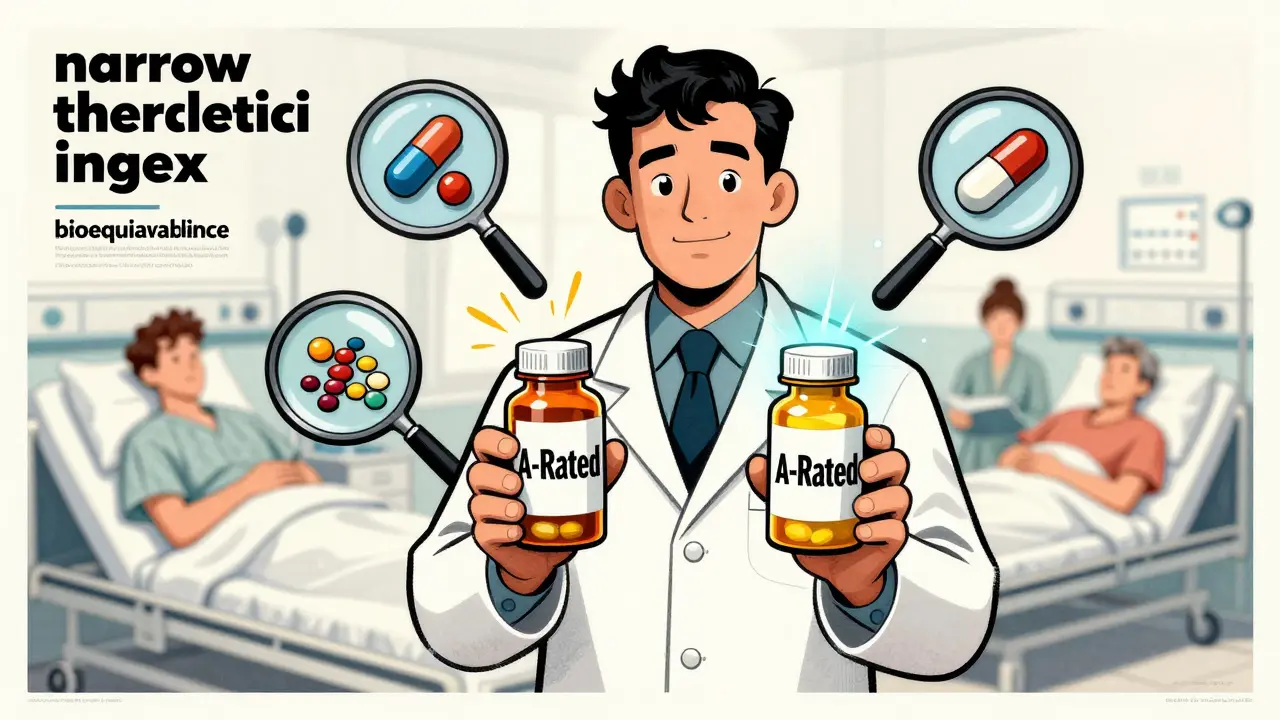
Narrow Therapeutic Index Drugs: The Hidden Risk
Some drugs work only within a tiny window between effective and toxic. A 10% change in blood level can mean the difference between control and crisis. That’s why the FDA requires stricter bioequivalence standards for these drugs: 90-111% instead of the usual 80-125%. When these drugs are part of a combination, the risk multiplies. A 2018 study found that 12% of patients switching between different generic versions of levothyroxine - even though all were rated 'A' - experienced changes in thyroid hormone levels that required dose adjustments. Some had palpitations. Others felt exhausted. These weren’t errors in prescribing. They were errors in assuming that 'therapeutically equivalent' meant 'identical in every way.' The same issue shows up in cardiovascular combos. Amlodipine/benazepril is a common blood pressure combo. One pharmacist reported three dose-related errors in six months just from switching between different generic brands. Why? Because even though the active ingredients matched, the release profiles didn’t. One version released the benazepril faster. The patient’s blood pressure dropped too sharply in the morning.How to Manage Dose Equivalence in Practice
There’s no magic formula for dose equivalence in combinations - especially when the drugs have different mechanisms and potencies. For example, sirolimus and topotecan work on different cell pathways. One reduces vascular proliferation by 69.8%; the other by 88.9%. To match their combined effect, you need a mathematical model: beq(a) = CBγ(1+CAa)−1, where γ is the ratio of their individual efficacies. That’s not something a pharmacist can calculate on the fly. So what can you do? Start with the basics:- Check the FDA Orange Book for the TE code. If it’s 'A', you’re on solid ground - but don’t stop there.
- Confirm the exact strength. A 5/10 mg combo isn’t interchangeable with a 10/20 mg combo, even if the ratio is the same.
- Look at the manufacturer. Different companies use different inactive ingredients. One might use croscarmellose sodium; another uses sodium starch glycolate. These can affect how fast the drug dissolves.
- For high-risk patients - elderly, kidney-impaired, on multiple meds - avoid switching unless absolutely necessary.

Sarthak Jain
December 15, 2025 AT 04:39man i’ve seen so many patients get screwed by generic combos, especially the blood pressure ones. one guy switched to a cheaper amlodipine/benazepril and ended up in the ER with a systolic of 88. turned out the generic had a different coating-slowed down the benazepril release. docs just blamed him for ‘not taking it right.’
Jonny Moran
December 15, 2025 AT 04:48really appreciate this breakdown. in the states we treat generics like they’re all the same, but the science says otherwise. i’ve had to explain to patients why we don’t switch their combo meds without checking the manufacturer. it’s not about cost-it’s about safety.
Daniel Wevik
December 16, 2025 AT 14:24the orange book is a start but it’s not enough. bioequivalence testing is done on healthy volunteers, not elderly patients on 7 meds. the 80-125% window is a joke for narrow therapeutic index combos. we need tiered ratings-A, A+, A++-based on real-world outcomes, not just lab data.
Rich Robertson
December 16, 2025 AT 14:29my pharmacy started tracking every combo switch with a 72-hour follow-up. we’ve cut errors by 70%. simple stuff: barcode scans, patient alerts, and a note in the chart saying ‘switched from X to Y-watch for [symptom].’ no fancy math needed. just discipline.
Dwayne hiers
December 17, 2025 AT 17:58the equation beq(a) = CBγ(1+CAa)−1 is oversimplified. it assumes linear pharmacokinetics, but most combo drugs have nonlinear absorption, especially with CYP interactions. we need population PK modeling, not static formulas. the FDA’s 2023 draft guidance is a step forward, but it still ignores inter-individual variability.
Daniel Thompson
December 18, 2025 AT 03:05you’re all missing the point. this is just corporate cost-cutting disguised as innovation. pharmaceutical companies manipulate inactive ingredients to bypass bioequivalence tests. the FDA is complicit. they’re letting generics pass that are chemically identical but pharmacologically different. this isn’t science-it’s a rigged system.
Natalie Koeber
December 19, 2025 AT 03:45they’re hiding the truth. the real reason they allow these swaps? the big pharma lobby paid off the FDA. i’ve seen the leaked emails. they know some generics cause arrhythmias and thyroid crashes. they just don’t care as long as the stock price goes up. #PharmaCoverUp
Thomas Anderson
December 20, 2025 AT 02:58just check the maker. if it’s the same company as the brand, you’re probably fine. if it’s some random name you’ve never heard of? ask your pharmacist. don’t just take the first generic they hand you.
Wade Mercer
December 20, 2025 AT 17:00if you can’t afford the brand, you shouldn’t be on the med at all. people need to stop expecting miracles. cheap meds mean cheap outcomes. this isn’t a tech problem-it’s a moral one.