
 Apr, 22 2026
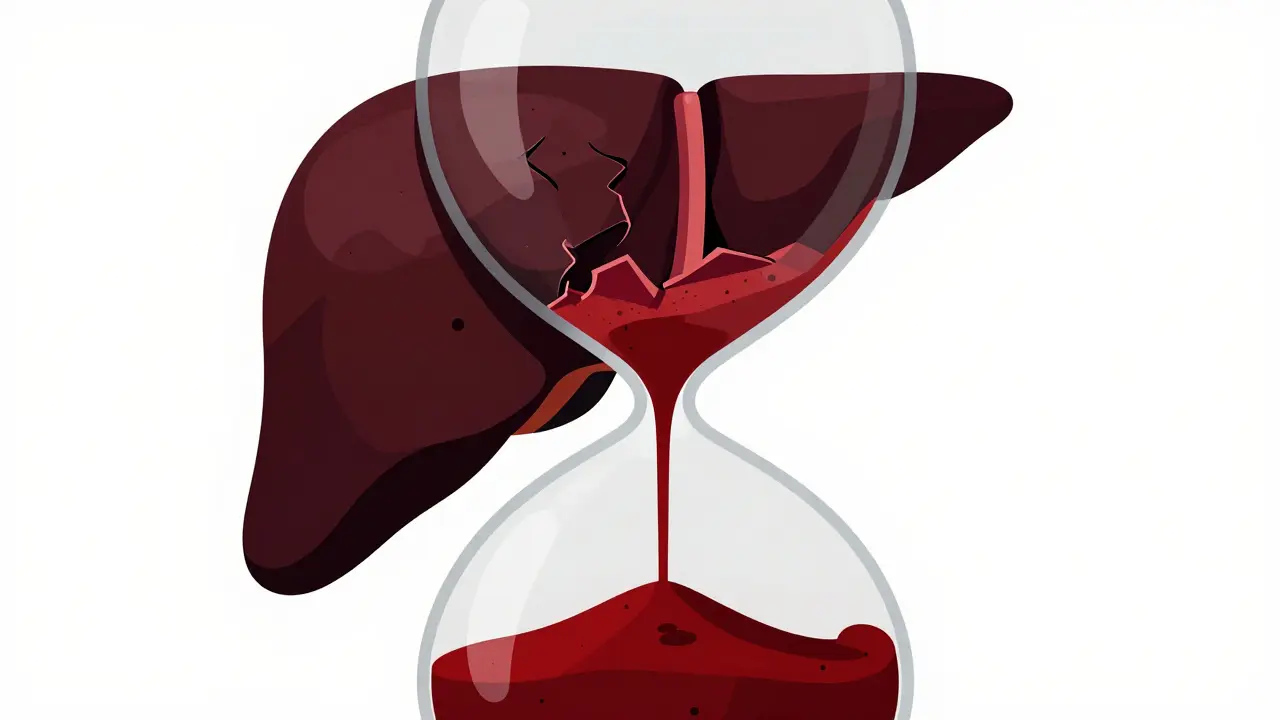
Imagine your liver is like a complex filter system for your body. When that filter completely breaks down due to end-stage liver disease, you aren't just looking at a health problem-you're looking at a ticking clock. For many, Liver Transplantation is a surgical procedure where a diseased liver is replaced with a healthy one from a deceased or living donor . It is currently the only curative treatment for those facing irreversible liver failure. While the idea of major surgery is daunting, the results are often life-changing, with about 85% of patients surviving the first year and 70% reaching the five-year mark.
Who is Eligible for a Transplant?
Getting on the waiting list isn't as simple as getting a doctor's referral. It involves a grueling 3-to-6-month evaluation process with roughly 15 to 20 appointments. You'll undergo everything from cardiac stress tests to psychiatric evaluations. The goal is to ensure you can survive the surgery and actually follow the strict post-op rules.
The most critical number you'll hear is your MELD score is the Model for End-Stage Liver Disease, a numerical scale from 6 to 40 used to determine a patient's urgency for a transplant . A score of 6 means you're less ill, while a 40 indicates you're critically ill and need a liver immediately. This score is calculated using blood tests to predict your survival probability over the next three months.
If you have liver cancer, the rules change. Specifically, patients with Hepatocellular Carcinoma (HCC) must usually meet the Milan criteria, which means having a single tumor 5 cm or smaller, or up to three tumors all under 3 cm, with no blood vessel invasion. If your cancer has spread (metastasis) or you're actively using drugs or alcohol, you'll likely be deemed ineligible.
There is also a psychosocial side to eligibility. You can't just be physically fit; you need a stable home and a strong support system. Transplant teams use social workers and addiction specialists to make sure you won't struggle with the lifelong commitment to medication. For those with alcoholic liver disease, the "6-month sobriety rule" is a common hurdle, though some experts argue that 3 months of abstinence can yield similar long-term survival rates.
Living Donors vs. Deceased Donors
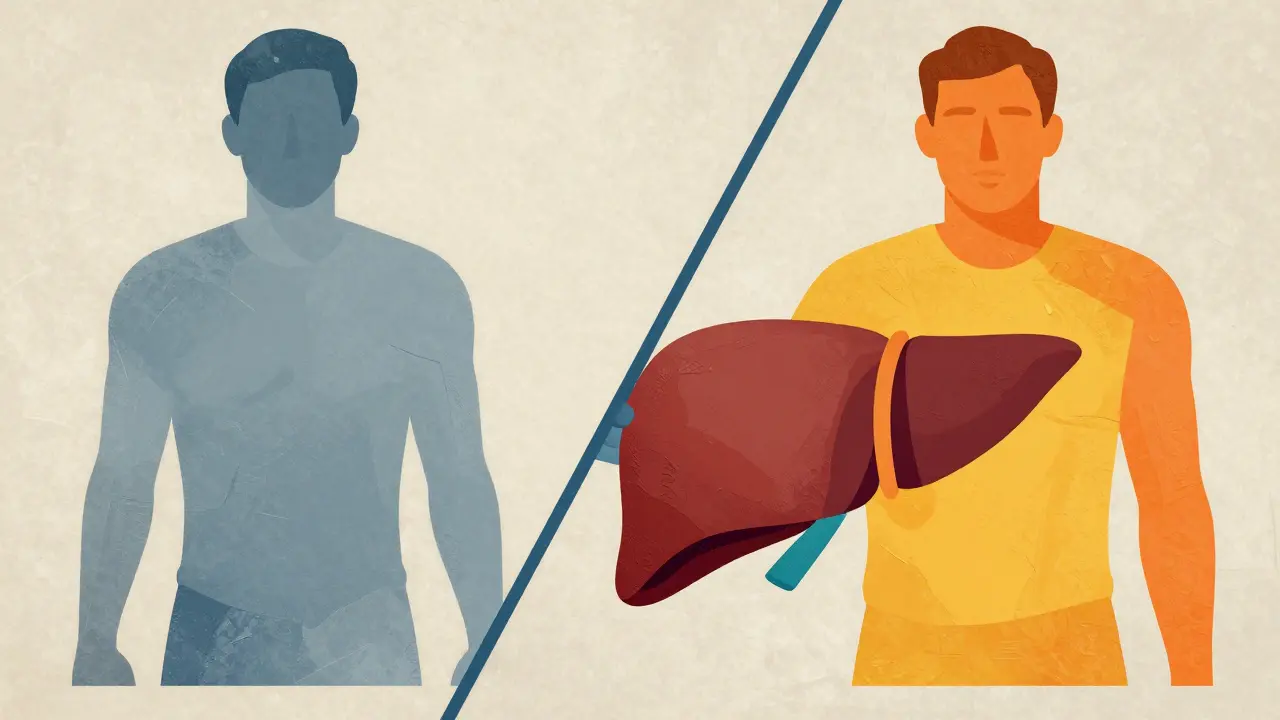
You have two paths to a new liver: a deceased donor (someone who passed away) or a living donor (someone who gives a piece of their own liver). The biggest advantage of a living donor is time. While a deceased donor wait can average 12 months for high-MELD patients, a living donor transplant can happen in as little as 3 months.
However, living donation isn't for everyone. Donors generally need to be between 18 and 55 years old with a BMI under 30. The surgical team checks two main numbers: the graft-to-recipient weight ratio must be at least 0.8%, and the donor must keep at least 35% of their own liver volume to ensure they recover safely. Surgeons typically remove 55-70% of the donor's right lobe for adults.
| Feature | Deceased Donor | Living Donor |
|---|---|---|
| Average Wait Time | ~12 Months | ~3 Months |
| Donor Risk | N/A | 0.2% Mortality Risk |
| Biliary Complications | 15-25% | Lower (usually) |
| Availability | Dependent on Registry | Dependent on Eligible Donor |
The Surgery: What Actually Happens?
A liver transplant is a marathon, usually lasting between 6 and 12 hours. Most surgeons today use the "piggyback technique," which preserves the patient's own inferior vena cava. This makes the surgery slightly safer and more stable for the patient's hemodynamics.
The operation happens in three main phases:
- Hepatectomy: The surgeons carefully remove your diseased liver.
- Anhepatic Phase: This is the window where you have no functioning liver in your body. It's a critical time where the team manages your blood pressure and chemistry.
- Implantation: The donor liver is sewn into place, and blood flow is restored.
Recovery starts in the ICU for about 5 to 7 days, and most people spend a total of 14 to 21 days in the hospital. For the living donor, recovery is a different story-they typically need 6 to 8 weeks to get back to full strength.
Managing the New Liver: Immunosuppression
Your body is designed to attack foreign invaders. Since the new liver comes from someone else, your immune system will try to destroy it. This is where Immunosuppression Therapy is the use of medications to suppress the immune system to prevent the body from rejecting a transplanted organ comes in. This isn't a temporary fix; it's a lifelong commitment.
Most patients start with a "triple therapy" regimen:
- Tacrolimus: The heavy hitter. Doctors aim for specific "trough levels" in the blood to keep the liver safe without poisoning the kidneys.
- Mycophenolate Mofetil: Usually taken twice daily to further dampen the immune response.
- Prednisone: A steroid used early on but often tapered off over three months.
Modern medicine is moving toward "steroid-sparing" protocols. By cutting out prednisone after the first month, doctors have seen the risk of post-transplant diabetes drop from 28% down to 17%. However, these drugs aren't without side effects. Tacrolimus can cause kidney damage (nephrotoxicity) in about 35% of patients over five years, while mycophenolate often leads to stomach issues for about 30% of users.

The Long-Term Commitment and Pitfalls
The surgery is the easy part; the real work begins after you leave the hospital. For the first year, you'll be in and out of the lab. You'll have weekly blood tests for three months, then biweekly, then monthly. By year two, you're usually down to quarterly checks.
You have to become an expert in your own care. A 95% medication compliance rate is the gold standard for success. If you miss doses, you risk acute rejection. You also need to know the warning signs of rejection or infection: a fever over 100.4°F, yellowing of the skin (jaundice), or dark urine. If you see these, you don't wait for your next appointment-you call your coordinator immediately.
Financially, it's a heavy lift. Annual medication costs can range from $25,000 to $30,000. This is why having a dedicated transplant coordinator is such a game-changer. Data shows that centers with these specialists have higher one-year survival rates (87% vs 82%) because they help patients navigate the insurance and pharmacy nightmares.
What's Next for Liver Transplants?
The field is moving fast. We're seeing the rise of portable liver perfusion devices, like the Liver Assist, which can keep a donor liver viable for 24 hours instead of the traditional 12. This gives surgeons more time to get the organ to the patient and allows them to use "marginal" livers that might have been discarded in the past.
There is also exciting research into "operational tolerance." Some pediatric patients are being treated with regulatory T-cell therapy, allowing a small percentage to actually stop taking immunosuppressants entirely by year five. While we aren't there yet for most adults, it shows that one day, a transplant might not require a lifetime of drugs.
How long is the typical wait for a liver transplant?
It varies wildly by region and urgency. In the US, MELD 25-30 patients in the Midwest might wait 8 months, while those in California could wait 18 months. Living donor transplants are much faster, often taking around 3 months.
What is the MELD score and why does it matter?
The Model for End-Stage Liver Disease (MELD) is a scoring system from 6 to 40 based on lab tests. It determines your priority on the waiting list; the higher your score, the more urgent your need and the higher your priority for the next available organ.
Can I stop taking immunosuppressants once the liver is working?
Generally, no. Immunosuppressants are a lifelong requirement. Stopping them without medical supervision almost always leads to organ rejection, which can be fatal. Only a very small number of pediatric patients in clinical trials have successfully weaned off these drugs.
What are the main risks for a living donor?
Living donors face a 0.2% mortality risk and a 20-30% complication rate. However, the liver has an incredible ability to regenerate, and most donors fully recover within 6 to 8 weeks.
What are the signs that my new liver is rejecting?
You should watch for a fever over 100.4°F, jaundice (yellowing of the eyes or skin), dark urine, or a sudden increase in abdominal swelling. These symptoms require immediate contact with your transplant team.
Carol Yang
April 22, 2026 AT 13:59This is honestly such a hopeful look at how far medicine has come. It's wild that living donation is even a thing now! :)
Daniel Runion
April 23, 2026 AT 16:55Oh, please!!! The MELD score is far from a perfect science!!! It's just a crude tool... completely ignoring the nuance of individual patient resilience!!! Absolutely ridiculous!!!
Vijay AGarwal
April 24, 2026 AT 13:07The anhepatic phase is truly the most terrifying window of the entire operation! It is a moment of pure surgical adrenaline where the patient is essentially without a liver, and the anesthesia team must fight tooth and nail to keep the hemodynamics stable! One slip and it is a catastrophe!
Brittney Prince
April 26, 2026 AT 01:07Sure, the 'science' says 85% survive, but they don't tell you about the big pharma kickbacks for those immunosuppressants. 30k a year? Yeah, they're just keeping you hooked on the drugs to keep the profits rolling in. Wake up people.
Ben Jima
April 26, 2026 AT 23:28It is important to emphasize that the 6-month sobriety rule is not meant to be punitive, but rather to ensure that the new organ is not immediately jeopardized by a relapse. Adherence to the post-operative regimen is the single most significant factor in long-term graft survival.
Nila Sawyer
April 28, 2026 AT 06:09Wow, just imagine the bravery of a living donor giving a piece of themselves to save another person, it is just the most beautiful act of selflessness I can imagine! 💖 Sending so much love and positive energy to everyone currently on a waiting list, please just keep holding on because there are so many amazing doctors working tirelessly to get you a second chance at life and I truly believe that everything will work out for the best if we just stay positive and support each other through this journey! ✨🌟
Nikita Shabanov
April 29, 2026 AT 08:30The graft-to-recipient weight ratio is the technical cornerstone here. If the liver is too small, you get 'small-for-size syndrome,' which leads to immediate dysfunction. It is a precise calculation that cannot be overlooked.
sachin singh
April 30, 2026 AT 09:22The prospect of regulatory T-cell therapy is quite promising for the future of transplant medicine.
Sharyl Foster
May 2, 2026 AT 02:09Living donors are basically just a shortcut for people who can't wait. Also, the 'piggyback technique' is overrated; some surgeons still prefer the traditional approach because it provides better access in certain anatomical anomalies. Just saying.
Michael Deane
May 2, 2026 AT 22:20Our US hospitals are the best in the world and if you're getting this done anywhere else you're just gambling with your life because we have the best tech and the best surgeons and the most advanced perfusion devices that leave every other country in the dust, honestly it's a joke that people even consider going abroad for this stuff when we've got the gold standard right here!
James Harrison
May 2, 2026 AT 22:41It's a strange thought, carrying a piece of another human being inside you for the rest of your life. It changes your whole perspective on what 'self' even means.
William Zhigaylo
May 3, 2026 AT 00:54The sheer incompetence of those who ignore their medication schedules is staggering. To jeopardize a scarce, life-saving organ through laziness is not just a medical failure, but a moral bankruptcy of the highest order. It is absolutely abhorrent.
Nicole Antunes
May 3, 2026 AT 07:08Having a transplant coordinator is truly an indispensable resource for patients. They act as the bridge between the complex medical requirements and the administrative hurdles of insurance. (^_^) It makes a world of difference in the recovery process.
Saptatshi Biswas
May 3, 2026 AT 17:04The disparity in wait times between the Midwest and California is a glaring indictment of the systemic failures in organ distribution! It is a tragedy that a patient's survival depends on their zip code while the medical bureaucracy fumbles with regional registries! Absolutely pathetic!