
 Feb, 16 2026
Licorice Root Risk Calculator
How much licorice do you consume?
Many people take licorice root as a natural remedy for digestion, coughs, or stress. But if you're on blood pressure medication, this common supplement could be quietly sabotaging your treatment - and you might not even realize it.
What’s Really in Licorice Root?
Licorice root isn’t just a flavoring for candy. The real stuff comes from the plant Glycyrrhiza glabra, and its main active ingredient is glycyrrhizin. This compound is about 50 times sweeter than sugar, which is why it’s used in teas, candies, and herbal supplements. But here’s the catch: glycyrrhizin acts like a hormone in your body, mimicking aldosterone - the hormone that tells your kidneys to hold onto salt and water.
That sounds harmless, right? But when your body holds onto too much salt and water, your blood volume goes up. And when your blood volume increases, so does your blood pressure. This is exactly what you’re trying to avoid if you’re taking medication for hypertension.
Studies show that consuming more than 100 mg of glycyrrhizin daily for two weeks can trigger noticeable changes. In one 2015 study, people with high blood pressure saw their systolic pressure spike by up to 30 mmHg - enough to push someone from controlled to dangerously high levels.
How It Breaks Your Blood Pressure Meds
It doesn’t matter if you’re on lisinopril, losartan, amlodipine, or spironolactone. Licorice root can interfere with all of them - but in different ways.
- ACE inhibitors (like lisinopril): These work by relaxing blood vessels and reducing fluid buildup. Licorice does the opposite - it increases fluid. One 2006 study found licorice cut their effectiveness by 30-50%.
- ARBs (like losartan): These block the effects of a hormone that tightens blood vessels. Licorice bypasses this by directly increasing sodium retention. A 2014 case series showed a 25% drop in medication effectiveness.
- Calcium channel blockers (like amlodipine): These relax artery walls. Licorice raises blood volume, forcing your heart to work harder. A 2018 study found blood pressure control dropped by 15-20%.
- Potassium-sparing diuretics (like spironolactone): This is the worst combo. Spironolactone helps you keep potassium and get rid of extra fluid. Licorice does the exact opposite: it drains potassium and holds onto fluid. A 2020 case report showed complete loss of effect within 7-10 days.
The mechanism? Glycyrrhizin breaks down into glycyrrhetic acid, which blocks an enzyme called 11β-HSD2. Normally, this enzyme protects your body from too much cortisol - but when it’s blocked, cortisol acts like aldosterone. The result? Salt retention, low potassium, and high blood pressure.
Real People, Real Consequences
You don’t have to guess whether this is a real risk. People are being hospitalized because of it.
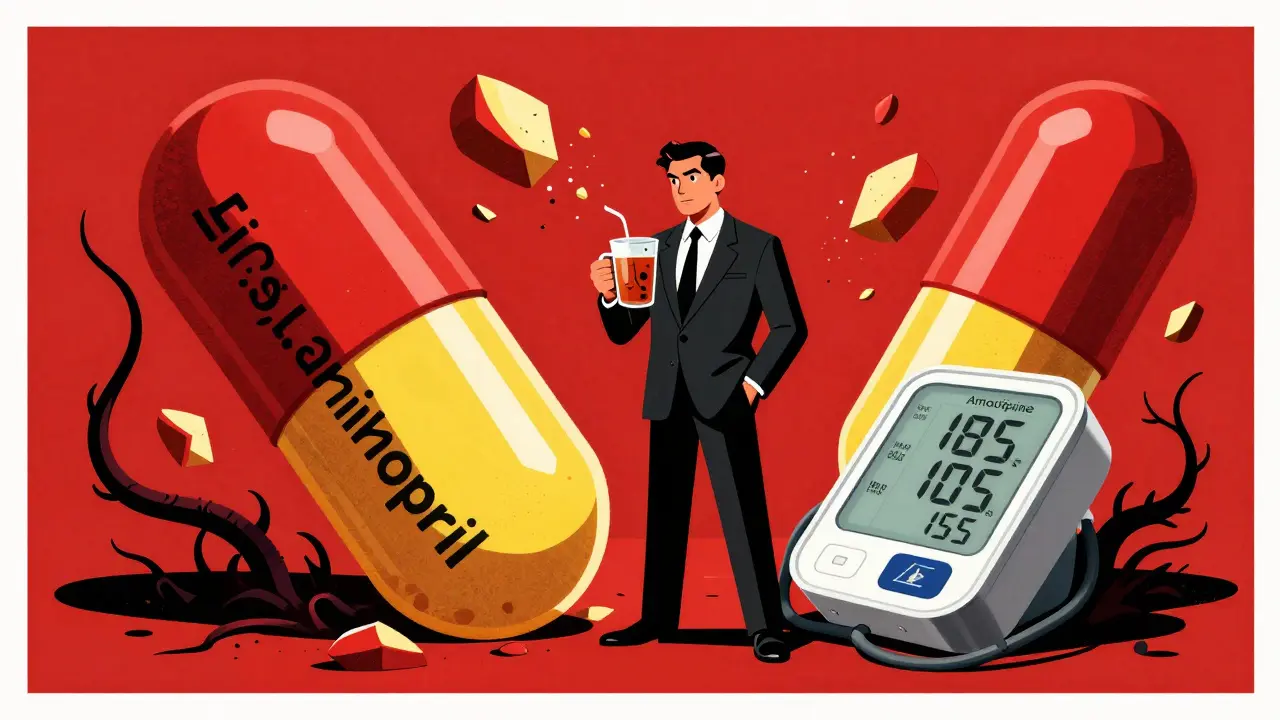
A 68-year-old man in the U.S. was doing fine on lisinopril - his blood pressure was steady at 130/80. After drinking licorice tea daily for 10 days, his pressure jumped to 185/105. He ended up in the ER.
Another Reddit user, on amlodipine, didn’t realize the black licorice candy they ate every day had real licorice root. Their systolic pressure rose 22 points over two weeks. Their doctor found out only after checking their supplement use.
In New Zealand, a 55-year-old man on fludrocortisone (a steroid that affects blood pressure) developed panic attacks and a blood pressure of 210/115 after starting licorice. He needed emergency care.
On PatientsLikeMe, 92% of 84 posts about licorice and blood pressure meds described worsening symptoms. Seventeen of them required ER visits.
Not All Licorice Is the Same
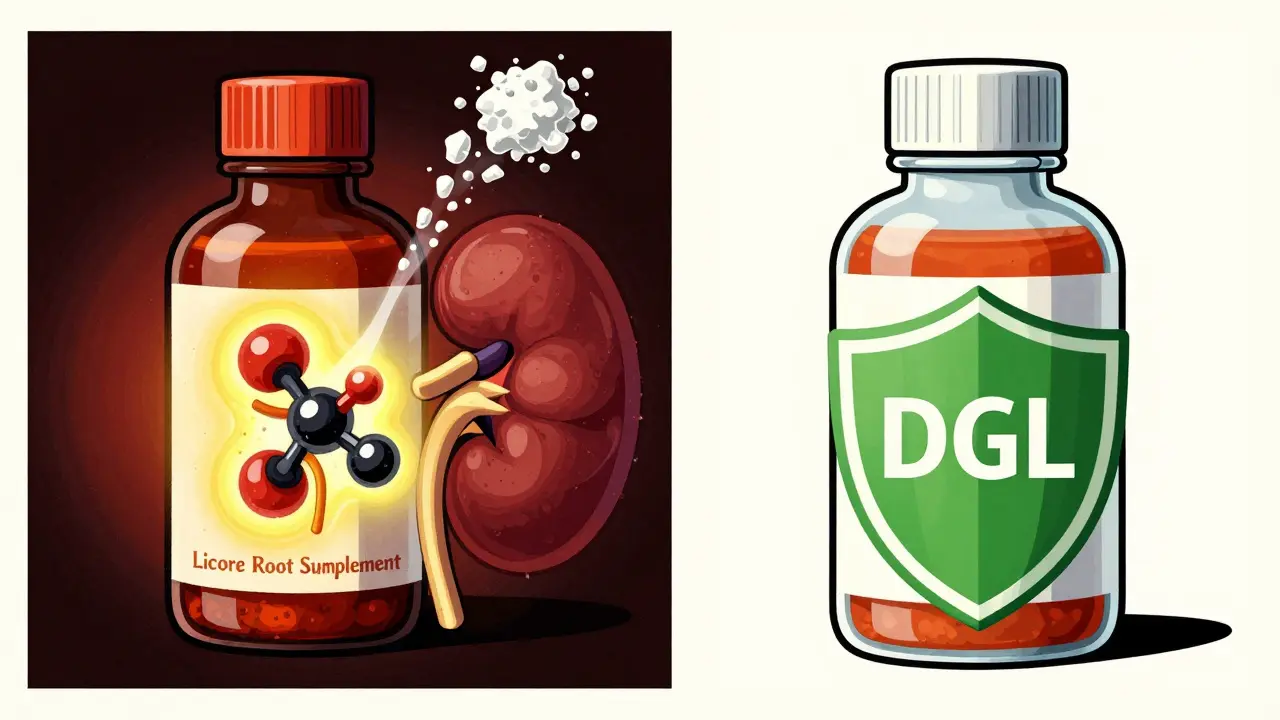
Here’s where things get tricky: most licorice-flavored candy in the U.S. doesn’t contain licorice root at all. About 95% use anise oil - which tastes similar but has zero glycyrrhizin.
So how do you know if you’re at risk? Check the ingredient list.
- If it says “Glycyrrhiza glabra” or “licorice extract” - avoid it.
- If it says “anise oil,” “fennel,” or “natural flavor” - you’re likely safe.
But here’s the problem: supplements don’t always label glycyrrhizin content clearly. A 2021 survey found only 37% of licorice supplement labels warn about blood pressure interactions. Some products contain up to 10 times more glycyrrhizin than others, even if they look identical on the shelf.
And it’s not just candy. Licorice root is in herbal laxatives (30% of them), traditional Chinese medicine formulas (25%), cough syrups, and even some tobacco products. If you’re on blood pressure meds, assume anything labeled “licorice” is a potential risk.
What About Deglycyrrhizinated Licorice (DGL)?
There’s a version called DGL - deglycyrrhizinated licorice. This is licorice with the glycyrrhizin removed. It’s often sold for stomach issues like acid reflux or ulcers.
DGL contains less than 1% glycyrrhizin. That’s not enough to affect blood pressure. If you need licorice for digestive support and you’re on antihypertensives, DGL is your safest bet. Just make sure the label says “deglycyrrhizinated” - not just “licorice.”

What Should You Do?
If you’re on blood pressure medication, here’s your action plan:
- Stop all licorice root products. This includes teas, candies, supplements, and herbal remedies.
- Check every label. Look for “Glycyrrhiza glabra” or “licorice extract.” If you see it, don’t use it.
- Ask your pharmacist. They can check your supplements and over-the-counter products for hidden licorice.
- Get your potassium checked. Low potassium is one of the first signs of licorice interference. Normal range is 3.5-5.0 mmol/L. If it drops below 3.0, that’s dangerous.
- Monitor your blood pressure. If you’ve been using licorice, track your numbers daily for two weeks after stopping. You may see improvement.
The American Heart Association recommends that people on blood pressure meds avoid all glycyrrhizin-containing products. Even small amounts can add up over time. A daily cup of licorice tea? A few pieces of candy? That’s enough to cause problems.
Why Don’t More People Know About This?
Licorice root is classified as “Generally Recognized As Safe” (GRAS) by the FDA - but that’s only for flavoring, not medicinal use. There’s no requirement for manufacturers to list glycyrrhizin content on supplements. The European Union requires warning labels if a product contains more than 10 mg of glycyrrhizin per serving. The U.S. doesn’t.
And because licorice root is sold as a supplement, it’s not subject to the same testing as prescription drugs. That means you’re left to figure it out on your own.
Doctors don’t always ask about herbal supplements. Patients don’t always think to mention them. But this interaction is real, predictable, and dangerous.
The Bottom Line
Licorice root isn’t harmless. For people on blood pressure medication, it’s a silent saboteur. It doesn’t just reduce effectiveness - it can reverse progress and lead to emergency situations.
If you’re taking any medication for high blood pressure, skip licorice root completely. Even if you’ve been using it for years without issues, your body changes over time. What was safe last year might not be safe today.
There are safer ways to support digestion, reduce inflammation, or soothe a cough. Talk to your doctor or pharmacist about alternatives. Your blood pressure - and your health - depend on it.
Agnes Miller
February 18, 2026 AT 09:32Haley DeWitt
February 18, 2026 AT 23:12John Haberstroh
February 19, 2026 AT 07:53Carrie Schluckbier
February 21, 2026 AT 02:37guy greenfeld
February 22, 2026 AT 23:02Steph Carr
February 23, 2026 AT 09:22Brenda K. Wolfgram Moore
February 23, 2026 AT 22:26Liam Earney
February 25, 2026 AT 22:24Sam Pearlman
February 27, 2026 AT 00:31Adam Short
February 28, 2026 AT 18:34