
 Feb, 3 2026
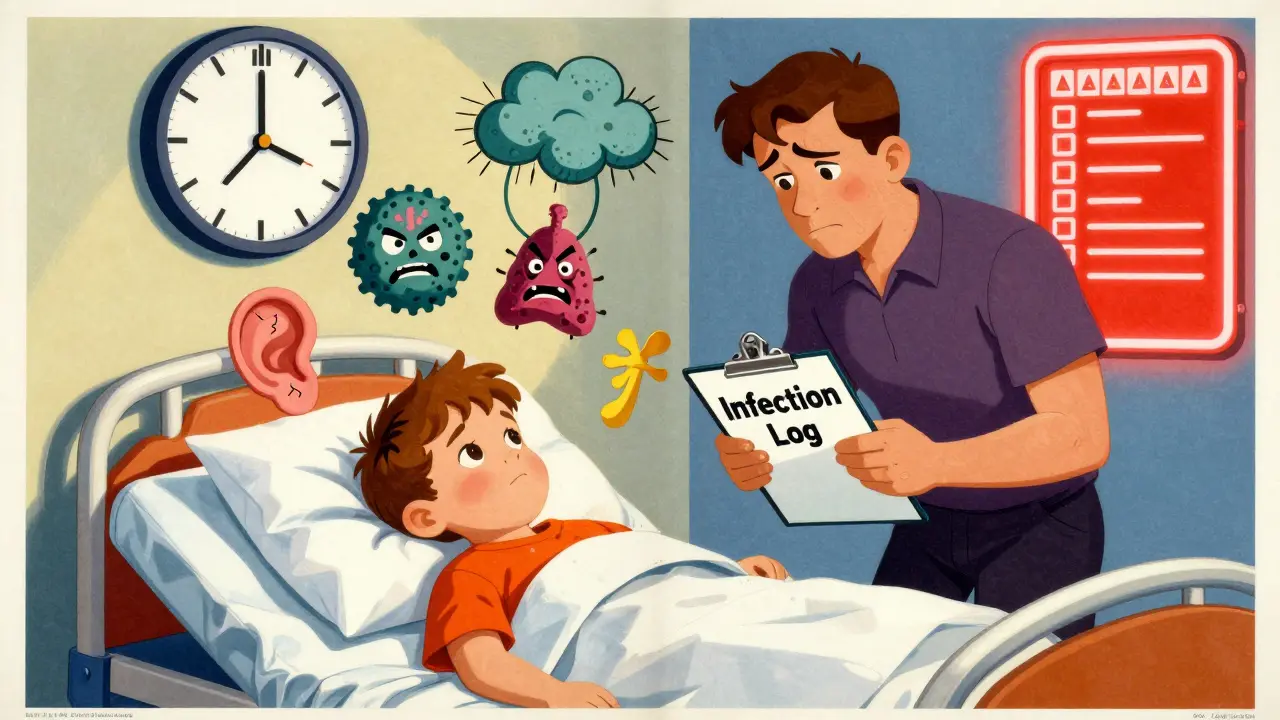
When a child keeps getting sick-ear infections, pneumonia, sinus infections-it’s easy to brush it off as just part of growing up. But if the infections are too frequent, too severe, or don’t respond to treatment, it could be something more serious. Immunodeficiency isn’t rare. In fact, over 450 types have been identified, and about 1 in every 1,200 people in the U.S. lives with one. Many go undiagnosed for years because the signs are mistaken for normal childhood illnesses. The truth? There’s a clear line between common infections and red flags that demand a deeper look.
What Counts as Too Many Infections?
Healthy kids get sick. A preschooler might have six to twelve colds a year. That’s normal. But when the pattern crosses into specific thresholds, it’s no longer just bad luck. The American Academy of Family Physicians and the Royal Australian College of General Practitioners agree on key warning signs:
- Four or more ear infections in one year
- Two or more serious sinus infections in one year
- Two or more pneumonias in one year
- Deep skin or organ abscesses that keep coming back
- Oral thrush that lasts past age one
- Infections that don’t clear up after two months of antibiotics
- Need for intravenous antibiotics to treat infections
- Two or more deep-seated infections like septicemia or meningitis
- Failure to gain weight or grow normally
- A family history of immune problems
These aren’t arbitrary numbers. They’re based on decades of clinical data. A child with recurrent pneumonia and no other explanation? That’s not just a bad winter. It could be an underlying immune defect.
Physical Clues Your Doctor Might Miss
It’s not just about how often someone gets sick-it’s also about what the body shows. During a physical exam, certain signs can point straight to immunodeficiency:
- Absent or very small tonsils and lymph nodes-seen in 78% of severe combined immunodeficiency (SCID) cases
- Red, spider-like blood vessels on the skin (telangiectasias)-present in 95% of children with ataxia-telangiectasia
- Chronic fungal infections in the mouth or skin-especially if they don’t respond to antifungal creams
- Growth below the 5th percentile for age-linked to failure to thrive in over 60% of undiagnosed PID cases
These aren’t vague symptoms. They’re specific, measurable, and well-documented. A child with persistent thrush after age one? That’s not normal. It’s a red flag for antibody deficiency with 89% specificity. If you’ve seen a child with this and dismissed it as a passing yeast issue, you might have missed a critical diagnosis.
The Blood Test That Changes Everything
Before jumping to expensive genetic tests, start with basic labs. The first step is a complete blood count (CBC) with manual differential. In kids over one year, a lymphocyte count under 1,500 cells/μL raises suspicion. In infants under one, under 3,000 is a concern.
Next: immunoglobulins. IgG, IgA, and IgM levels change dramatically with age. At three months, normal IgG is around 243 mg/dL. By age five, it’s 700-1,600 mg/dL. Many doctors miss this. A child with an IgG of 420 mg/dL at age eight might be told it’s normal-because 400 is the adult cutoff. But for an 8-year-old, that’s dangerously low. Age-adjusted ranges matter. Ignoring them leads to misdiagnosis.
Then comes flow cytometry. This test looks at the types of white blood cells: CD3+ T cells, CD19+ B cells, CD56+ NK cells. A CD3 count under 1,000 cells/μL in a child over two years suggests T-cell deficiency. It’s not just about numbers-it’s about balance.

Testing Immunity: The Vaccine Challenge
Measuring immunoglobulin levels alone isn’t enough. You need to know if the body can make antibodies when challenged. That’s where vaccine testing comes in.
After giving a tetanus or diphtheria shot, check IgG levels 4-6 weeks later. A protective level is above 0.1 IU/mL. For pneumococcal vaccine (the polysaccharide version), check at 4-8 weeks-protective is above 1.3 μg/mL. If the response is weak or absent, that’s a clear sign of antibody deficiency.
This is the gold standard. A 2020 study in the Annals of Internal Medicine found that 22% of patients were started on lifelong immunoglobulin infusions without ever confirming they couldn’t make their own antibodies. That’s unnecessary, expensive, and risky.
What It’s Not: Ruling Out Other Causes
Not every recurrent infection is due to immunodeficiency. In fact, up to 43% of cases have other explanations. That’s why skipping this step leads to false diagnoses.
- Cystic fibrosis causes recurrent lung infections. A sweat test can rule it out.
- Chronic sinusitis from nasal polyps or deviated septum mimics immune problems.
- Inhaled foreign bodies-like a peanut or toy part-cause recurrent pneumonia in one lung. Chest X-rays often miss this.
- Autoimmune diseases, cancer, or medications like steroids can lower antibody levels.
Dr. Charlotte Cunningham-Rundles, a leading expert, says up to 30% of patients diagnosed with CVID actually have a secondary cause. You can’t treat an immune deficiency if the real problem is a tumor or a drug. That’s why a full workup includes screening for these.
When to Skip the Tests
Transient hypogammaglobulinemia of infancy (THI) is common. About 2-5% of babies have low IgG levels between 3 and 6 months. It usually fixes itself by age two. But too many doctors treat it like CVID. They start infusions. They order expensive tests. They cause stress and expense for no reason.
Key difference: THI kids are otherwise healthy. They grow normally. They don’t get deep infections. They don’t have thrush past infancy. If a baby under 18 months has low IgG but no red flags, watch and wait. Recheck at age two.
What’s New in Diagnosis
Genetic testing has changed the game. In 2023, the FDA approved next-generation panels that screen 484 immune-related genes. These find mutations in 35% of suspected cases-up from 18% with older methods. The cost? Around $2,450. It’s not cheap, but it cuts years off the diagnostic journey.
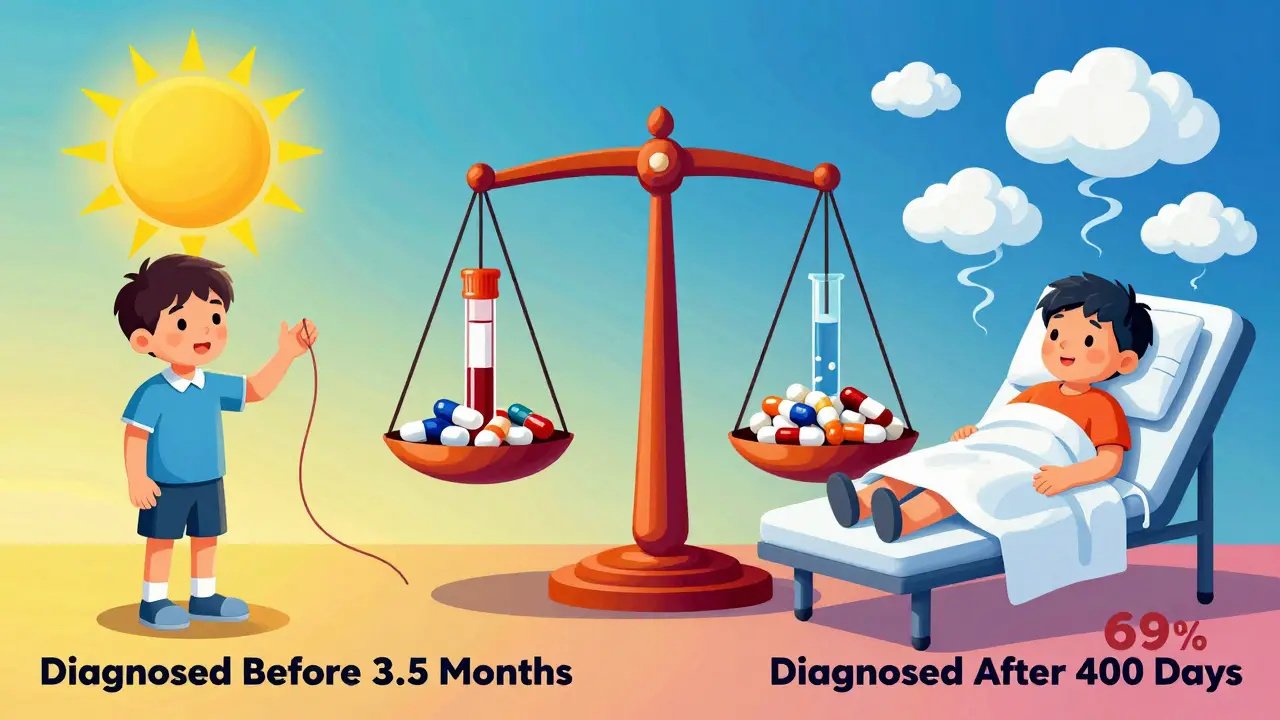
Right now, the average time from first symptoms to diagnosis is 112 days if you follow a structured pathway. Without it? Over 400 days. That’s more than a year of infections, hospital visits, and missed school.
By 2028, experts predict whole exome sequencing will be the first test for suspected immunodeficiency in developed countries. It won’t replace labs-but it will confirm what they suspect.
Why This Matters
Early diagnosis saves lives. In SCID, the survival rate jumps from 69% to 94% if diagnosed before 3.5 months of age. That’s because a bone marrow transplant works best when the child hasn’t been ravaged by infections. Same with CVID-starting IgG replacement before lung damage sets in can prevent lifelong disability.
And it’s not just kids. Adults get immunodeficiencies too. CVID is the most common in adults, making up 68% of antibody deficiency cases. Many are diagnosed in their 30s or 40s after years of being told they have "chronic bronchitis" or "allergies."
Every missed diagnosis means more infections, more antibiotics, more hospital stays, and more long-term damage. But with the right questions and the right tests, you can cut that timeline in half.
What You Can Do
If you’re a parent, track infections. Keep a log: type, frequency, duration, treatment, response. If your child hits even two of the red flags, ask for a referral to an immunologist. Don’t wait for your pediatrician to bring it up.
If you’re a clinician, don’t rely on adult reference ranges for kids. Use age-adjusted norms. Order functional antibody testing before starting IVIG. Rule out cystic fibrosis and foreign bodies before labeling it as PID.
And if you’re in a low-resource setting? The WHO is pushing to make lymphocyte flow cytometry a tier-1 test even in clinics with limited equipment. Change is coming-but it won’t reach everyone without awareness.
What are the top three red flags for immunodeficiency in children?
The top three red flags are: (1) Two or more pneumonias in one year, (2) Oral thrush lasting past age one, and (3) Needing intravenous antibiotics to clear infections. These are the most specific indicators of underlying immune failure and should trigger immediate evaluation.
Can adults have primary immunodeficiency?
Yes. Many adults are diagnosed with primary immunodeficiency in their 30s, 40s, or even later. Common Variable Immunodeficiency (CVID) is the most frequent type in adults. Symptoms like recurrent sinus infections, pneumonia, or chronic diarrhea that don’t respond to standard treatment should prompt immune testing-even in older patients.
Is a low IgG level always a sign of immunodeficiency?
No. IgG levels vary by age. A level of 420 mg/dL might be normal for a 12-year-old but dangerously low for a 6-year-old. Always use age-adjusted reference ranges. Transient low IgG in infants under 18 months (THI) is common and usually resolves without treatment.
Why do some doctors miss immunodeficiency?
Many rely on adult lab ranges for children, don’t order functional antibody tests, or mistake secondary causes like cystic fibrosis or medication side effects for immune defects. Also, 68% of primary care providers say they struggle to interpret age-specific immunoglobulin levels. Lack of access to immunology specialists adds to the delay.
How long does it take to get a diagnosis?
With a structured workup, diagnosis takes about 112 days on average. Without it-just waiting for symptoms to pile up-it can take over 400 days. Early referral to an immunologist cuts this time dramatically. The 10 Warning Signs campaign has helped reduce delays from 9.2 years to 2.1 years in some studies.
Shelby Price
February 4, 2026 AT 17:33My nephew had thrush past age one and kept getting pneumonia. We thought it was just bad luck-turns out he had CVID. This post nailed it. So many parents don’t know what to look for.
Katherine Urbahn
February 6, 2026 AT 09:15It is absolutely imperative, as a responsible caregiver, to recognize that recurrent infections-particularly when they exceed the established clinical thresholds-are not merely "bad luck," but rather, a clear and unequivocal indicator of potential immunodeficiency. Failure to act upon these red flags constitutes a dereliction of duty, and I am frankly astonished that more physicians do not adhere to these guidelines with greater rigor.
Joy Johnston
February 8, 2026 AT 07:29As a pediatric nurse, I’ve seen this too many times. Parents get told "it’s just growing up"-but when a kid’s getting IV antibiotics for ear infections? That’s not normal. I always push for the CBC and IgG levels. Age-adjusted ranges are non-negotiable. If your doc doesn’t know them, find a new one.
pradnya paramita
February 9, 2026 AT 14:47Flow cytometry for CD3/CD19/CD56 subsets is the cornerstone of primary immunodeficiency (PID) workup. In resource-limited settings, even basic lymphocyte gating by flow can detect T-cell deficiencies with >85% sensitivity. The WHO’s tier-1 recommendation is pragmatic. Without it, SCID remains a silent killer in low-income regions.
Keith Harris
February 10, 2026 AT 23:47Oh please. You act like these "red flags" are some sacred scripture. My kid had three ear infections last year and he’s a healthy little beast. You’re pathologizing childhood. Next you’ll say a fever means your kid has leukemia. People are terrified of germs now. It’s ridiculous.
Geri Rogers
February 12, 2026 AT 02:28OMG YES. I had thrush until I was 3 and my mom was told "it’s just yeast." We didn’t find out I had CVID until I was 14. I missed two years of school. Please, if you’re reading this and your kid has ANY of these signs-go to an immunologist. Don’t wait. Don’t listen to the "it’ll pass" people. 💪❤️
Roshan Gudhe
February 13, 2026 AT 17:55It’s curious how we treat immune function as a binary-either you’re fine or you’re broken. But immunity is a spectrum, a dance of balance between exposure, genetics, and environment. Perhaps the real question isn’t whether a child has immunodeficiency-but whether our environment has become too sterile, too anxious, too quick to label normal resilience as pathology.
Jesse Naidoo
February 14, 2026 AT 12:23Wait-so if my kid gets sick a lot, I’m supposed to panic and start asking for blood tests? What if I can’t afford it? What if my doctor doesn’t take me seriously? You people act like this is all just about checking boxes, but real life isn’t a textbook. My daughter’s been sick since she was 6 months old and we’re drowning in bills. No one helps.
Rachel Kipps
February 16, 2026 AT 07:34i had no idea about the age adjusted ranges for igg… my son was told his levels were "fine" at 420 but he was only 6… i’m going to take this to his doctor tomorrow. thank you for sharing this. i think i missed a lot of signs…
Jamillah Rodriguez
February 18, 2026 AT 04:57Ugh. Another "you’re not parenting right" post. I get it, you’re all experts now. But my kid gets sick because he’s in daycare. That’s not immunodeficiency, that’s life. Stop scaring parents into ordering $2,500 genetic tests because you read one article.
Harriot Rockey
February 19, 2026 AT 23:53Thank you for writing this with so much clarity. 💙 I’m a mom of a child with CVID and I’ve been screaming into the void for years. So many doctors still use adult ranges. So many kids are misdiagnosed. You just gave me hope that someone else gets it. ❤️
Janice Williams
February 21, 2026 AT 01:16This is dangerously oversimplified. You present immunodeficiency as a binary diagnosis when in reality, the clinical overlap with environmental factors, nutritional deficiencies, and even psychological stress is profound. To reduce complex immunological states to a checklist is not only unscientific-it’s ethically irresponsible. The rise in pediatric immune disorders correlates strongly with the overuse of antibiotics and processed diets. Blame the system, not the child.