
 Jan, 4 2026
When you have a severe drug allergy, a simple piece of jewelry can save your life. It’s not just a fashion accessory-it’s your voice when you can’t speak. Imagine being rushed to the ER after a reaction, unconscious, unable to say, “Don’t give me penicillin.” Without a medical alert bracelet, that message gets lost. But with one? Emergency teams know instantly. That’s the power of wearing the right medical ID for drug allergies.
What a Medical Alert Bracelet Actually Does
A medical alert bracelet isn’t just engraved with your name. It’s a life-saving tool designed for one purpose: to tell first responders exactly what you’re allergic to, right when every second counts. According to the American College of Allergy, Asthma, and Immunology (ACAAI), wearing one is now standard care for anyone with a history of anaphylaxis from drugs. The data backs this up: over 95% of emergency medical staff check for medical ID jewelry during a crisis, and nearly all look first at the wrist. The most common and effective format? A bracelet. Why? Because it’s visible during routine medical checks-when nurses check your pulse, when paramedics start IVs, when doctors assess trauma. A necklace can be hidden under a shirt. A bracelet? It’s always on display.What to Engrave on Your Medical Alert Bracelet
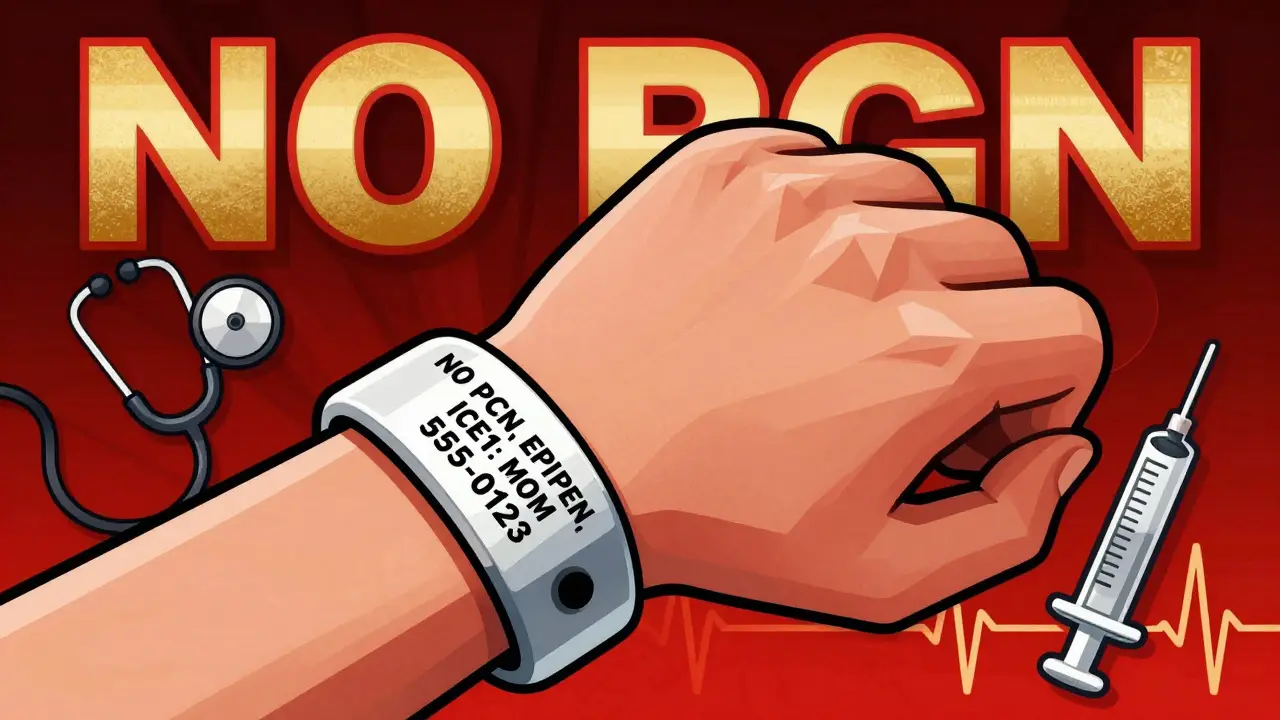
Space is limited. You can’t write a novel. But you can write enough to prevent a deadly mistake. Here’s what experts say must be on the front of your bracelet:- Your primary drug allergy-use standard abbreviations: NO PCN for penicillin, ALGYS: CEPHALOSPORIN for cephalosporins, ALGYS: MORPHINE for opioid allergies.
- If you carry an epinephrine auto-injector: EPI PEN or EPI-PEN.
- Any other critical allergies: sulfa drugs, NSAIDs, or contrast dye.
- Your name-so responders know who they’re treating.
- Two emergency contacts labeled ICE (In Case of Emergency): ICE1: 555-0123, ICE2: 555-0145.
A real example from a verified user: “CEPHALOSPORIN ALGYS, EPI PEN, ICE1: MOM 555-0123, ICE2: SIS 555-0145”. That’s 50 characters. Clear. Actionable. Life-saving.
Avoid long phrases like “Allergic to penicillin and related antibiotics.” First responders don’t have time to interpret. They need code. Use abbreviations everyone in emergency medicine recognizes. NKDA (no known drug allergies) is only for people with zero allergies. If you have even one, don’t use it.
Choosing the Right Material and Fit
Not all bracelets are created equal. You need something durable, hypoallergenic, and comfortable enough to wear 24/7.- Surgical stainless steel is the gold standard. It’s tough, doesn’t rust, and rarely causes reactions.
- Titanium is lighter and even less likely to irritate skin-great if you have sensitive skin.
- Medical-grade silicone is a newer option. It’s flexible, water-resistant, and ideal for active people. Some now include NFC chips that store digital health records.
Avoid plastic, rubber, or cheap metals. They can crack, fade, or cause skin irritation-exactly what you’re trying to avoid. The bracelet should be 6 to 8 inches long and 0.5 to 1.25 inches wide. Too thin? The engraving gets unreadable. Too thick? It catches on things.
Fit matters. It shouldn’t be so tight it cuts off circulation, but not loose enough to slide off. You should be able to slip a finger under it. If you’re unsure, most reputable brands offer sizing guides or free exchanges.
Where to Wear It-and Why
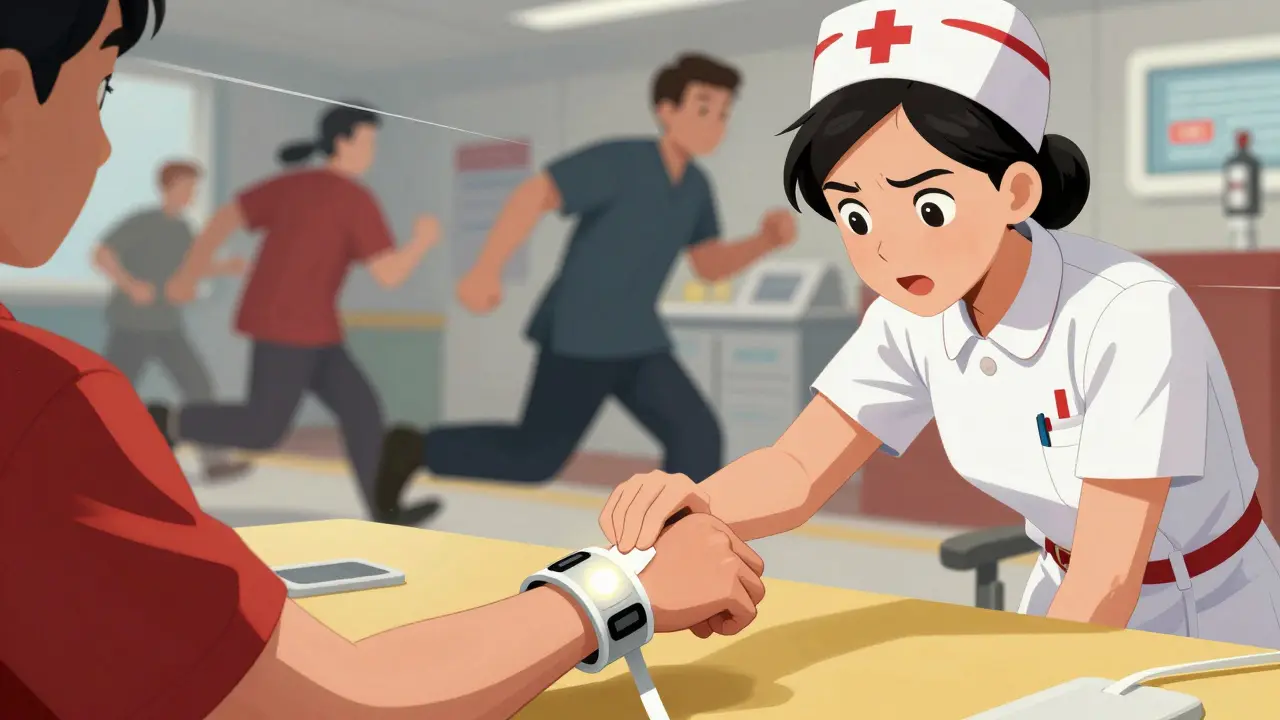
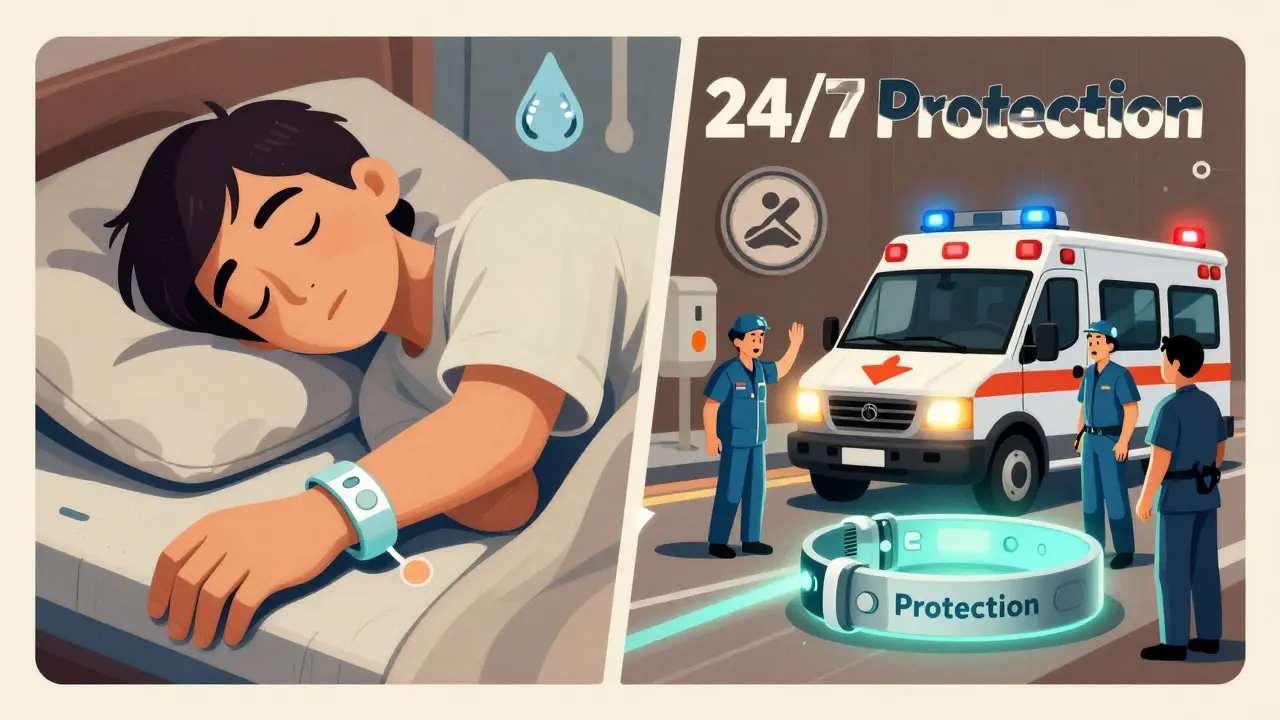
Wear it on your dominant wrist. Why? Emergency staff check the wrist first. Studies show 95% of responders look at the wrist before the neck. If you’re right-handed, wear it on your right wrist. Left-handed? Left wrist. It’s instinctive for medical teams. If you prefer a necklace, wear it high on your chest-above your shirt collar, not tucked under it. But again, bracelets win in detection speed. A 2023 survey of ER staff found they checked for bracelets 20% faster than necklaces. And wear it always. Not just when you’re going to the hospital. Not just when you’re traveling. Every day. Even while showering, sleeping, or exercising. The MedicAlert Foundation’s data shows 92% of users adapt within 10 days. After a month, most forget they’re wearing it-and that’s the point.Why Digital Isn’t Enough
You might think: “I have my allergies saved in my iPhone Health app. That’s enough.” It’s not. Emergency responders don’t have time to unlock your phone. If you’re unconscious, your phone might be in your pocket, broken, or dead. Power outages happen. Ambulances don’t have Wi-Fi. A 2023 study from Kaiser Permanente showed a patient with a digital profile still received a wrong drug-because the ER team didn’t know how to access it. Physical ID doesn’t need batteries. It doesn’t need a signal. It doesn’t need a password. It’s always there. And while digital features like QR codes and NFC chips are growing (and great as backups), they’re supplements-not replacements. The market is shifting: 87% of people with severe drug allergies still choose physical ID. That’s not because they’re old-fashioned. It’s because it works.Common Mistakes People Make
Even with good intentions, people mess up. Here’s what not to do:- Using non-standard abbreviations. “Allergic to amoxicillin” is fine-but “ALGY: AMOX” isn’t recognized by most ERs. Use NO PCN or ALGYS: AMOX instead.
- Forgetting to update it. If you develop a new allergy, replace your bracelet. 33% of emergency errors come from outdated IDs.
- Wearing it on the wrong wrist. If you’re right-handed and wear it on your left, some responders miss it.
- Choosing style over function. A cute charm bracelet with tiny letters? It’s useless. Engraving must be bold, clear, and large enough to read from 12 inches away.
Also, don’t rely on a medical alert card in your wallet. It’s easy to lose, forget, or leave at home. Your bracelet? It’s always on you.
Real Stories That Prove It Works
A 42-year-old man in Ohio went to the ER with low blood sugar. He was confused, mumbling. His bracelet read: “ALGYS: CEPHALOSPORIN, EPI PEN, ICE1: WIFE 555-0111”. The ER team saw it, avoided giving him a cephalosporin antibiotic (which he was allergic to), and treated his hypoglycemia safely. Another user, u/EpiPenSurvivor on Reddit, was unconscious during an appendectomy. The surgical team almost gave him penicillin. His bracelet said “NO PCN, EPI PEN, ALGYS: SULFA”. A nurse noticed it. The surgery went on without incident. These aren’t rare cases. They’re everyday miracles.How to Get One
You don’t need a prescription. You can buy one online from trusted brands like MedicAlert Foundation, American Medical ID, or Lauren’s Hope. Prices range from $20 to $60. Most include free engraving and lifetime replacement if the bracelet wears out. Look for FDA Class I medical device certification. That means the materials meet safety standards for skin contact. Avoid random Etsy sellers unless they specify medical-grade materials and standardized engraving. Some insurance plans cover medical ID costs if you have a documented anaphylaxis history. Call your provider and ask: “Do you cover medical alert jewelry for severe drug allergies?”Final Checklist: Is Your Medical Alert Ready?
Before you wear it, run through this:- Is your primary drug allergy clearly written in standard abbreviations? (e.g., NO PCN, ALGYS: MORPHINE)
- Is “EPI PEN” included if you carry one?
- Are two ICE contacts listed?
- Is your name on it?
- Is the engraving bold, large, and readable?
- Is the material hypoallergenic? (surgical steel, titanium, or medical silicone)
- Do you wear it every day-even when sleeping or showering?
- Have you updated it in the last 6 months?
If you answered yes to all, you’re covered. If not? Fix it now. Your life depends on it.
Can I use a medical alert necklace instead of a bracelet?
Yes, but a bracelet is preferred. Emergency responders check the wrist first-95% look there before the neck. A necklace can be hidden under clothing, delaying critical identification. If you choose a necklace, wear it high on your chest, above your shirt collar, so it’s visible even when dressed.
What if I’m allergic to metal?
Choose a medical-grade silicone bracelet. These are hypoallergenic, flexible, and safe for sensitive skin. Brands like Lauren’s Hope and American Medical ID offer silicone bands with laser-engraved text that won’t fade. Some even include NFC chips for digital backup without metal contact.
Do I need to wear it while sleeping or showering?
Yes. Emergency reactions don’t wait for convenient times. Most people adapt within 7-10 days. After a month, you’ll barely notice it. Waterproof silicone and stainless steel are designed for daily wear-including showers, swimming, and sleep.
Can I just carry a card in my wallet?
No. Wallets get lost, left at home, or emptied after accidents. In a crisis, you may be unconscious, bleeding, or unable to reach your bag. A medical alert bracelet is always on your body-visible, immediate, and reliable.
How often should I update my medical alert bracelet?
Update it every 6 months or whenever your allergies change. If you develop a new reaction to a drug, replace your bracelet immediately. Outdated information causes 33% of medical errors involving medical IDs. Don’t wait until it’s too late.
John Ross
January 6, 2026 AT 00:51Let’s cut through the fluff-this isn’t about fashion, it’s about survival. If you’re allergic to penicillin and don’t have NO PCN engraved on your wrist, you’re playing Russian roulette with your life. ER docs don’t have time to decode your ‘personalized’ messages. They need standardized abbreviations: ALGYS: CEPHALOSPORIN, EPI PEN, ICE1: MOM. Anything else is just noise. And don’t even get me started on those ‘cute’ charm bracelets with micro-engraving-useless. If you can’t read it from 12 inches away, it’s not medical ID, it’s jewelry.
Medical-grade silicone? Perfect for the active crowd. Titanium? Even better if you’re sensitive. But avoid cheap metals-they cause reactions, which defeats the whole purpose. And yes, wear it 24/7. Even while showering. Even while sleeping. The MedicAlert Foundation’s data shows 92% adapt within 10 days. After that, you forget it’s there-and that’s exactly how it should be.
Don’t rely on your iPhone Health app. If you’re unconscious, your phone is dead, locked, or in your pocket. Ambulances don’t have Wi-Fi. Power outages happen. A physical ID doesn’t need batteries. It doesn’t need a password. It’s always there. Period.
And if you think a wallet card is enough? You’re delusional. Wallets get lost, emptied, stolen, or left at home. Your bracelet? It’s on your body. Always. That’s the difference between life and a coroner’s report.
Clint Moser
January 7, 2026 AT 19:57ok so i just read this and im like… wait… are we sure this isnt all a big pharma scam?? like why do they want us to wear these things? maybe its so they can track us?? i heard the new silicone ones have nfc chips that send ur data to the cloud?? and what if the engraving gets worn off? then ur just a walking target??
also why do they always say ‘NO PCN’? what if its not penicillin? what if its the fillers? the preservatives? the damn packaging?? they never talk about that. its all so sus. and who made the rules anyway? some board of doctors in a basement??
Ashley Viñas
January 9, 2026 AT 01:56Oh honey, I’m so proud of you for even considering this. Truly. But let’s be real-most people don’t even know what ‘ALGYS’ means, let alone why they should wear it. I’ve seen so many people with these bracelets… and half of them have ‘NO ALLERGIES’ engraved. Which is worse than nothing. At least if you’re silent, you’re not misleading.
And don’t get me started on those ‘fashion’ medical IDs with rhinestones. Sweetie, if your bracelet looks like it belongs in a mall kiosk, it’s not saving your life-it’s making it harder. Engraving must be bold. No cursive. No glitter. No ‘I ❤️ Penicillin’ nonsense.
And yes, you must wear it while sleeping. While showering. While having sex. Because anaphylaxis doesn’t care if you’re in bed or on a date. If you’re not wearing it 24/7, you’re not serious about survival. And if you’re not serious, you’re not just risking your life-you’re risking the lives of the people trying to save you.
Brendan F. Cochran
January 11, 2026 AT 01:18Look, I’m all for personal responsibility, but this whole medical ID thing is just another way the government and Big Pharma are controlling us. Who says we need these bracelets? Why not just make doctors smarter? Why not train them to ask questions? Why do we have to carry around a metal tag like we’re dogs?
And don’t even get me started on the cost. $60 for a bracelet? That’s a ripoff. My cousin got one from Etsy for $12 and it’s fine. Plus, I don’t trust these ‘FDA-certified’ labels-most of that stuff is just marketing. We’re being sold fear. And it’s not even American-made.
Also, why do they always say ‘EPI PEN’? It’s EpiPen. One word. Stop messing up the brand name. That’s the kind of detail that gets you killed in the ER. And if you’re right-handed, wear it on the right wrist. Lefties? You’re on your own.
Ethan Purser
January 12, 2026 AT 10:36I’ve been thinking… this bracelet isn’t just about allergies. It’s a symbol. A silent scream in a world that doesn’t listen. Every time you put it on, you’re saying: ‘I am not invisible. I am not a statistic. I am not a risk to be managed.’
When you wear it, you’re not just protecting yourself-you’re forcing society to acknowledge that bodies like ours are not mistakes. That our survival is not an afterthought. That emergency medicine should be built around us, not the other way around.
And yet… we’re told to adapt. To wear it. To engrave it. To be perfect. But who designed the system that makes this necessary in the first place? Why do we need to beg for the right to live without being poisoned by the very things meant to heal us?
This bracelet? It’s not just metal. It’s a monument. To every person who died because no one asked. Because no one looked. Because no one cared enough to learn.
I wear mine every day. Not because I’m scared. But because I refuse to be forgotten.
Doreen Pachificus
January 12, 2026 AT 14:03Interesting read. I’ve never worn one because I’ve never had a severe reaction-but I know someone who did. She had a penicillin reaction in college, ended up in ICU, and now she wears a titanium one. Says she forgets it’s there, which she thinks is the point.
Curious-do people ever get confused if the bracelet says ‘EPI PEN’ but they carry a different brand? Like Adrenaclick or Auvi-Q? Does that cause issues? Or is ‘EPI PEN’ just the universal term now?
Roshan Aryal
January 13, 2026 AT 10:22You Americans are obsessed with plastic solutions to biological problems. A bracelet? Really? In India, we have a system called ‘Medical Alert Tag’-it’s a small card in the wallet, laminated, with a QR code linked to a government database. No metal, no plastic waste, no overpriced jewelry. And it’s free. Why are you buying expensive metal tags when digital solutions exist?
Also, why assume everyone is right-handed? What about left-handers? Are you just ignoring half the population? This is cultural arrogance disguised as medical advice. And don’t even get me started on the ‘FDA-certified’ nonsense. Most of these companies are private corporations selling fear. You’re being manipulated.
Catherine HARDY
January 15, 2026 AT 03:20I read this and I’m terrified. What if the bracelet breaks? What if it falls off? What if someone steals it and uses it to impersonate me? What if the engraving fades and the ER team thinks I’m allergic to something I’m not? What if they misread ‘NO PCN’ as ‘NO PCN’ and think I’m saying ‘No, please don’t’ instead of ‘No penicillin’? What if they’re just tired and don’t look?
And what if I’m allergic to the metal? Then I’m stuck between dying from the drug or dying from the bracelet? What if the silicone one melts in the sun? What if the NFC chip gets hacked? What if the ER doesn’t have a scanner?
I don’t trust any of this. Not one bit. I think they’re all lying to us. We’re being programmed to wear these things so they can track us. I’m not wearing one. I’m not participating.
Uzoamaka Nwankpa
January 16, 2026 AT 08:24This is beautiful. I’ve never had a drug allergy, but my cousin did. She passed away in a Nigerian hospital because no one asked. No one looked. No one knew. I cried for days.
Now I tell everyone I know: wear the bracelet. Even if you think you’re fine. Even if you think it’s silly. Even if you think it won’t happen to you. It happened to her. And now I carry her story in my heart.
Don’t wait until it’s too late. Don’t wait until you’re unconscious. Don’t wait until someone else has to explain your life to strangers.
Wear it. For her. For me. For you.
Akshaya Gandra _ Student - EastCaryMS
January 17, 2026 AT 09:54wait so if i have an allergy to sulfa drugs should i write ‘ALGYS: SULFA’ or ‘NO SULFA’? i saw both in the article and im confused. also is ‘ICE’ the only way to label contacts? can i write ‘EMERGENCY CONTACT’ instead? and what if my mom’s number is 8 digits? will it fit? plz help i dont want to mess this up
Aaron Mercado
January 17, 2026 AT 23:33STOP. STOP. STOP.
You people are missing the point. This isn’t about ‘standard abbreviations.’ This is about CONTROL. Who decided ‘NO PCN’ is the right way? Who decided ‘EPI PEN’ is acceptable? Who decided we can’t write ‘ALLERGIC TO PENICILLIN’ in plain English? This is linguistic tyranny.
And why do we have to pay $60 for this? Why can’t the government just make a national database? Why are we outsourcing our safety to corporations like MedicAlert? This is capitalism exploiting fear.
And don’t even get me started on the ‘wear it 24/7’ nonsense. What if I’m in a sauna? What if I’m swimming? What if I’m in prison? What if I’m a monk? What if I’m a Muslim woman who doesn’t wear jewelry? Who are they to tell me how to live?
I’m not wearing it. And I’m not ashamed.
Siobhan Goggin
January 19, 2026 AT 06:24This is such an important post. I’m so glad someone took the time to lay this out clearly. I’ve been wearing my stainless steel bracelet for seven years now. I didn’t think I’d need it-until I had that one reaction after a dental procedure. The nurse saw it, paused, and called the allergist before giving me anything. That’s the power of this. Simple. Silent. Lifesaving.
Don’t overthink it. Get one. Wear it. Update it. And if you know someone with allergies-tell them. Don’t wait for them to find this on their own.
Vikram Sujay
January 20, 2026 AT 02:59While the practical guidance provided is sound and evidence-based, one must also consider the broader sociological implications of medicalization of identity. The imposition of standardized linguistic protocols-such as ‘NO PCN’ or ‘ALGYS’-reflects a systemic reduction of complex medical histories into binary, machine-readable symbols. This may enhance efficiency in acute settings, yet it simultaneously erases nuance: polypharmacy, cross-reactivity, and individual tolerance thresholds are rendered invisible.
Moreover, the cultural assumption that physical wearables are universally appropriate may marginalize populations with religious, aesthetic, or bodily autonomy objections. A truly inclusive approach would offer alternatives: digital integration with interoperable health records, wearable patches with biometric alerts, or even institutional protocols mandating universal allergy screening upon admission-regardless of visible ID.
Let us not mistake convenience for compassion.
Jay Tejada
January 20, 2026 AT 15:57Man, I used to think this was overkill… until my buddy got almost given cefazolin after his anaphylaxis. He had the bracelet. Nurse saw it. Saved his life.
Now I wear mine. Even when I’m drunk. Even when I’m at the gym. Even when I’m in the shower. It’s just… part of me now. Like a ring or a watch.
Also, yeah, the ‘EPI PEN’ thing? Doesn’t matter if it’s Adrenaclick. They all know what it means. Don’t overthink it.
John Ross
January 21, 2026 AT 05:11^This. Exactly. I’ve seen too many people waste time arguing about ‘EPI PEN’ vs ‘EpiPen’ or ‘NO PCN’ vs ‘ALLERGIC TO PENICILLIN’. In the ER, they don’t care about your grammar. They care that you’re not dying. If they see ‘EPI PEN’ on your wrist, they grab the auto-injector. If they see ‘NO PCN’, they avoid penicillin. That’s it.
Stop overcomplicating. Get the right info on there. Wear it. Live. And if you’re still debating whether you need it? You’re already one reaction away from regret.