
 Dec, 19 2025
Every time you pick up a new prescription, you’re holding a safety document-not just a receipt. The tiny print on that label holds the key to avoiding dangerous mistakes. If the prescriber’s name doesn’t match your doctor, or the pharmacy’s contact number is wrong, you could be taking the wrong medicine, at the wrong dose, or from the wrong source. And it happens more often than you think. In 2023, over 1.3 million people in the U.S. were injured because of medication errors, and 12% of those were tied to incorrect prescriber or pharmacy details on the label.
What to Look for on Your Prescription Label
Your prescription label isn’t just a formality. It’s a legal document with specific requirements. By law, every label must include:- The full name of the prescriber (the doctor, nurse practitioner, or dentist who wrote the prescription)
- The prescriber’s National Provider Identifier (NPI) number
- The pharmacy’s full legal name, address, and phone number
- The prescription number (this is how the pharmacy tracks your refill)
- The name of the pharmacist who filled it (required in 42 states)
- A clear phone number to call with questions
These aren’t suggestions. They’re rules enforced by the FDA and state pharmacy boards. If any of these are missing, the label doesn’t meet federal standards. And if the prescriber’s name is misspelled or the pharmacy address is wrong, that’s not a typo-it’s a red flag.
Check the Prescriber Name First
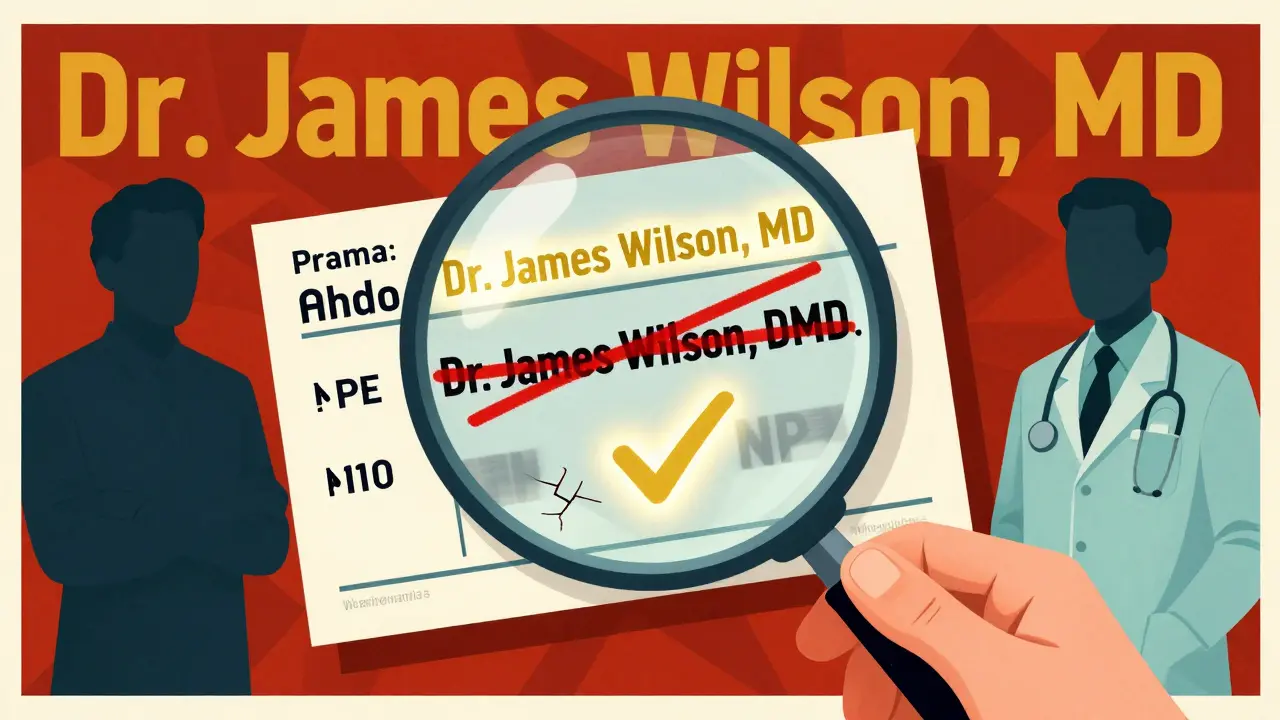
Start here: Who prescribed this? Look at the name printed on the label. Does it match the provider you saw? Maybe you visited a cardiologist last week for high blood pressure, but the label says “Dr. James Wilson” when your cardiologist is “Dr. James Wilson, MD.” Sounds the same, right? But if the prescriber is listed as “Dr. James Wilson, DMD” (a dentist), that’s a problem. Dentists don’t prescribe heart medications unless they’re also licensed as physicians.A 2023 report from the Institute for Safe Medication Practices found that 42% of label errors were simple misspellings-like “Dr. L. Smith” instead of “Dr. L. Smyth.” Another 28% involved the wrong specialty. One patient in Ohio received a Schedule II opioid prescribed by a dentist but labeled under their primary care doctor’s name. That mix-up could have led to dangerous drug interactions. You don’t need to be a medical expert to spot this. Just compare the name on the label to the name on your appointment confirmation or billing statement.
Verify the Pharmacy Information
Next, check the pharmacy details. Is the name exactly how it’s printed on your insurance card or the app you use? Some mail-order pharmacies use different legal names than their branded storefronts. For example, “Express Scripts Pharmacy” might show up as “Caremark Pharmacy, Inc.” on the label. That’s normal. But if the phone number doesn’t match the one you called to schedule the refill, stop. Don’t take the pills.Also, look for the pharmacy’s physical address. If it’s a local CVS or Walgreens, the address should be familiar. If it’s a mail-order pharmacy you didn’t order from, that’s a warning. In 2023, the FDA issued a safety alert about counterfeit medications shipped from unlicensed pharmacies disguised as legitimate ones. The label looked real-correct logos, correct names-but the phone number was a voicemail system that never answered.
When to Verify: Three Critical Moments
Don’t wait until you’re about to swallow the pill. Verify at three key times:- When you first receive the medication. Open the bag right there at the counter. Ask the pharmacist, “Can you confirm the prescriber and pharmacy details?” Most will gladly walk you through it.
- Before your first dose. Even if everything looked right at pickup, recheck it at home. Fatigue, stress, or distractions can make you miss small details.
- When you refill. Prescriptions can get mixed up in the system. One patient in Florida refilled her diabetes medication three times before noticing the prescriber had changed from her endocrinologist to a dermatologist. The pharmacy had auto-filled the wrong provider from their database.
The FDA recommends spending 60 to 90 seconds on each label check. That’s less time than it takes to scroll through your phone. But it could save your life.
Why Physical Labels Still Beat Apps
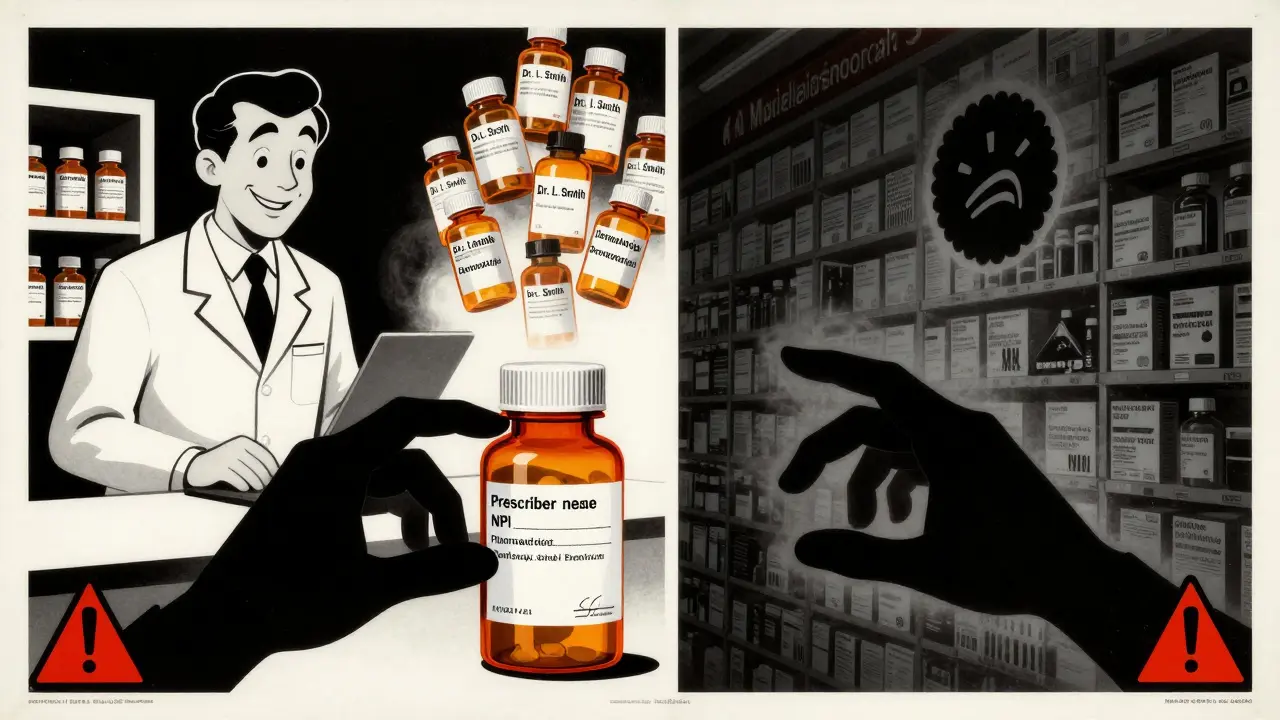
You might think, “I have the pharmacy app. Why bother reading the label?” But here’s the truth: in a 2023 study published in the Journal of the American Pharmacists Association, physical label verification had a 2.1% error rate. Pharmacy apps? 7.2%. Why? Apps can glitch. They can pull data from the wrong patient profile. They can show outdated information. A paper label doesn’t crash. It doesn’t update automatically without your knowledge. It’s a snapshot of what was actually filled.That’s not to say apps are useless. They’re great for tracking refills and setting reminders. But they shouldn’t replace your eyes on the label. Think of the app as a helper, not your safety net.
Common Problems and How to Fix Them
Not every label is easy to read. Here are the top issues patients face-and how to handle them:- Small font size. If you’re over 65, 37% of labels are too small to read without help. Most pharmacies keep free magnifiers at the counter. Ask for one.
- Hard-to-spell names. If the prescriber’s name looks weird-like “Dr. Mchael Chen”-ask the pharmacist to spell it. They’re trained to do this. Don’t be shy.
- Electronic prescription errors. Around 18% of label mistakes come from e-prescriptions where the system auto-fills the wrong provider. This happens when two doctors in the same practice have similar names. Always double-check.
- Specialty pharmacy labels. These are used for complex drugs like cancer treatments or rare disease meds. They’re more likely to have errors-23% higher than community pharmacies. If you’re getting a specialty med, bring a family member to help verify.
What to Do If Something’s Wrong
If you spot a mismatch-wrong name, wrong pharmacy, wrong number-don’t take the pills. Don’t wait. Don’t assume it’s “just a mistake.” Call the pharmacy immediately. Ask to speak to the pharmacist on duty. Say: “I’m verifying my prescription label and the prescriber name doesn’t match who I saw. Can you confirm this was filled correctly?”If they say, “It’s fine,” ask for a supervisor. If they can’t explain it, go to another pharmacy. You have the right to a safe, accurate prescription. Most chain pharmacies will refill your prescription at no extra cost if they made the error.
Document everything. Take a photo of the label. Write down the date, time, and who you spoke with. If you suspect fraud or a serious error, report it to the FDA’s MedWatch program. You don’t need to prove it-just report it. That data helps fix systemic problems.
Keep a Personal Medication Record
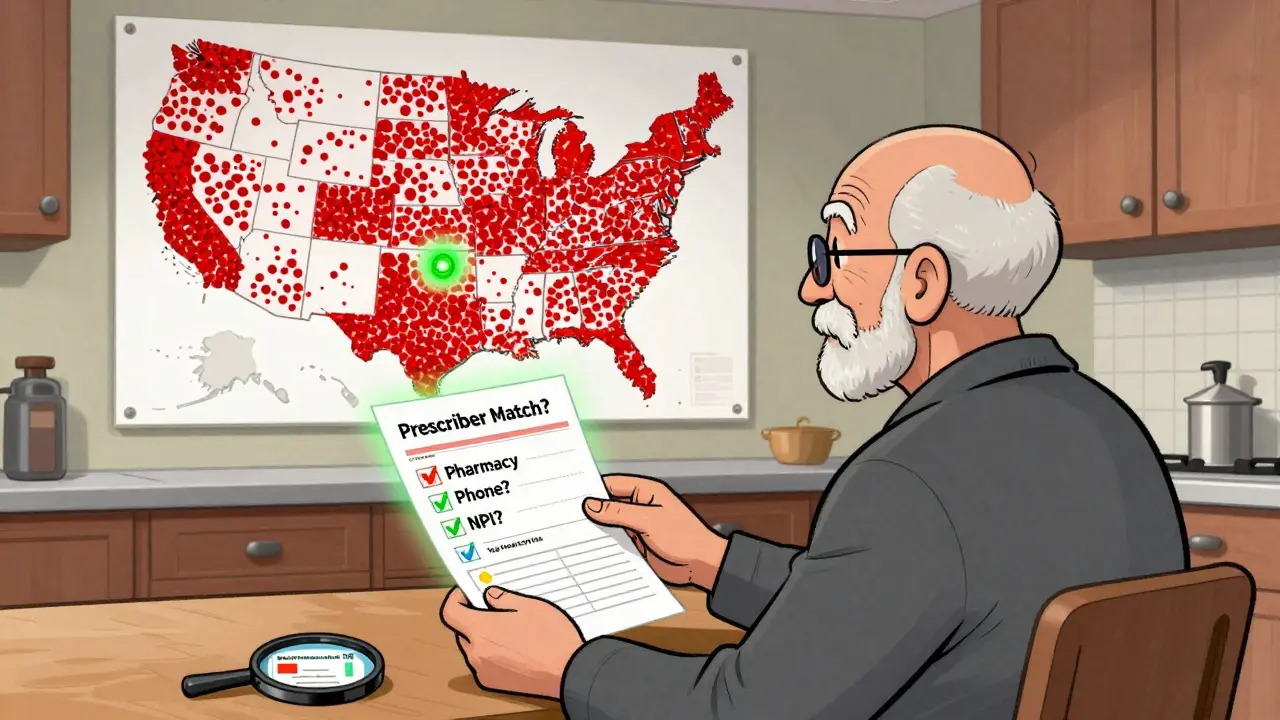
The best way to catch errors? Know what you’re supposed to be taking. Create a simple list: drug name, dose, prescriber, pharmacy, and reason for use. Update it every time you get a new prescription.Most major pharmacies-CVS, Walgreens, Kaiser, and others-offer free digital medication records through their apps. You can print it out or save it on your phone. Use it to cross-check every label. If your record says “Metformin 500mg, Dr. Patel, CVS,” but the label says “Dr. Lee, Walgreens,” you’ve caught a problem before it hurts you.
Patients who keep a personal record report 27% fewer medication errors and 31% higher adherence to their treatment plans, according to PatientPoint’s 2023 survey.
Why This Matters More Than You Think
This isn’t just about avoiding a bad reaction. It’s about trust in the system. When you verify your label, you’re not being difficult-you’re doing your job as a patient. The FDA says prescriber verification reduces medication errors by 32%. That’s not a small number. That’s thousands of preventable hospitalizations and deaths each year.And it’s not just about you. If you catch an error, you might prevent it from happening to someone else. One patient in New York noticed her label had her neighbor’s name on it. She called the pharmacy. They found a batch of 17 mislabeled prescriptions. That’s what verification looks like in action.
What’s Changing in 2025
The FDA is testing QR codes on labels that link to verified digital records. Early results show a 19% improvement in accuracy. But they’re clear: technology supports, it doesn’t replace. The 2024-2027 FDA strategic plan aims to get 75% of U.S. adults verifying their labels by 2027. Right now, it’s 62%. You’re part of that number. Make sure you’re on the right side of it.Medication safety isn’t something you hand over to a pharmacist. It’s something you own. Every label you check is a step toward safer care-for you, and for everyone else who takes medicine.
What if the prescriber name on my label is misspelled?
A misspelled prescriber name is a red flag. Even one letter wrong can mean the prescription was filled for the wrong provider. Call the pharmacy immediately and ask them to confirm the correct name and NPI number. If they can’t verify it, do not take the medication. Report the error to the pharmacy’s manager and consider filing a report with the FDA’s MedWatch program. These errors are common-42% of label mistakes involve misspelled names-and they’re preventable.
Can I trust the pharmacy app instead of reading the label?
No. Pharmacy apps have a 7.2% error rate compared to just 2.1% for physical label verification. Apps can pull data from the wrong patient profile, show outdated info, or glitch entirely. The label is a printed record of what was actually dispensed. Use the app for reminders and refill tracking, but always check the physical label before taking any pill.
Why does the pharmacy name on my label look different from the one I ordered from?
Mail-order pharmacies often use their legal corporate name on labels, not their branded name. For example, “Express Scripts Pharmacy” might appear as “Caremark Pharmacy, Inc.” This is normal. But if the address or phone number doesn’t match what you expect, or if you didn’t order from that company, it’s a warning. Always verify the pharmacy’s contact info matches your insurance or order confirmation.
What should I do if I realize I took medication with the wrong prescriber info?
Stop taking the medication immediately. Call your doctor and the pharmacy to report the issue. If you’ve already taken the pill, call Poison Control at 1-800-222-1222 or seek emergency care if you feel unwell. Document the label details and file a report with the FDA’s MedWatch program. Even if nothing bad happened, reporting helps track patterns and prevent future errors.
Are independent pharmacies more accurate than big chains?
Yes, according to Consumer Reports’ 2023 survey, independent pharmacies scored 4.2/5 for label clarity, while large chains averaged 3.7/5. Independent pharmacies often have fewer prescriptions to process and more time to double-check labels. But accuracy rates for both are still high-CVS and Walgreens maintain 98.7% accuracy. The key isn’t which pharmacy you use-it’s whether you verify the label every time.
Is it safe to take medication if the pharmacist’s name is missing from the label?
In 8 states, the pharmacist’s name isn’t required by law. But in 42 states, it is. If you’re in a state where it’s required and the name is missing, contact the pharmacy. While this alone doesn’t mean the medication is wrong, it’s a sign the label may not have been fully reviewed. Ask to speak with a pharmacist to confirm the prescription was checked properly.
How can I help an elderly relative verify their labels?
Set up a weekly check-in. Use a magnifying glass-most pharmacies give them for free. Write down each medication’s name, prescriber, and pharmacy on a simple sheet. Compare it to the label each time they get a refill. Encourage them to call the pharmacy with questions instead of guessing. Many seniors don’t realize they have the right to ask for help. Your involvement can prevent a life-threatening mistake.
benchidelle rivera
December 21, 2025 AT 03:55Every time I pick up a prescription, I check the prescriber name like it’s a bank PIN. One wrong letter and I’m out the door. Last month, a pharmacy printed ‘Dr. R. Chen’ instead of ‘Dr. R. Cheon’ - same clinic, same building, different person. I didn’t take the pills. They refunded me and apologized. That’s not kindness - that’s basic accountability.
bhushan telavane
December 22, 2025 AT 03:41in india we dont even get labels sometimes. just a paper slip with scribbles. i once got a painkiller with no name on it - only a number. pharmacy guy said ‘oh this is for your back pain’ like it was a lottery ticket. no one checks here. no one cares. hope your system works better.
Vicki Belcher
December 23, 2025 AT 01:56This is the most important thing no one talks about. 🙌 I used to trust everything until my mom nearly took someone else’s blood pressure med because the label said ‘Dr. L. Smith’ instead of ‘Dr. L. Smyth’. We caught it because we wrote everything down. Please, please, please - keep a list. Your life isn’t a guessing game.
Alex Curran
December 24, 2025 AT 21:59Apps are garbage for verification. I had one show me my ex’s meds because of a glitch. The label had my name but his dosage. I called the pharmacy. They said ‘oh we’ll fix it in the system’. Fix it? It’s already in my body. Paper doesn’t lie. Period.
Dikshita Mehta
December 26, 2025 AT 15:18Small font on labels is a public health issue. My grandmother can’t read them without a magnifier. Pharmacies have them but never offer. She’s too polite to ask. We started printing enlarged copies for her. Simple fix. Why isn’t this standard?
James Stearns
December 27, 2025 AT 05:36It is frankly unacceptable that the average American patient must perform forensic-level verification on a legally mandated document. The entire system has abdicated its duty. We are not pharmacists. We are not regulators. We are patients. And yet we are forced to become compliance officers because the infrastructure has collapsed into incompetence.
Dominic Suyo
December 28, 2025 AT 23:09Oh wow, so now we’re supposed to be medical detectives? Great. Let me add ‘label auditor’ to my resume next to ‘overworked dad’. Meanwhile, the pharmacy’s EHR system is running on Windows XP and the pharmacist’s last name is spelled ‘Hawt’ on the sign. This isn’t safety - it’s a farce with extra steps.
Alisa Silvia Bila
December 30, 2025 AT 21:12My dad took a wrong pill once. Didn’t feel anything. Didn’t say anything. Just kept taking it. We found out weeks later. Don’t wait until you feel something. Check before you swallow. Always.
Chris porto
January 1, 2026 AT 08:43It’s funny how we treat medicine like it’s a vending machine. You press a button, out comes a pill. But it’s not. It’s a chain of human decisions - and humans make mistakes. The label is the only checkpoint we have left. Checking it isn’t paranoia. It’s humility. We’re not in control. The system isn’t perfect. So we check.
William Liu
January 2, 2026 AT 23:51I used to think this was overkill. Then my sister got the wrong chemo drug because the pharmacy mixed up two patients with the same last name. She’s fine now. But we don’t talk about it. We just check every label. Every time. No exceptions.
Aadil Munshi
January 4, 2026 AT 14:34Oh so now we’re all pharmacists? Congrats, you’ve been promoted to unpaid quality assurance. Meanwhile, the real problem is that pharmacies are understaffed, overworked, and still using 1990s software. Blaming the patient for not catching a typo made by a system that auto-fills ‘Dr. J. Smith’ instead of ‘Dr. J. Smyth’ is like blaming the driver for the car’s broken brakes. Fix the damn system.