
 Jan, 7 2026
Every year, the FDA issues over 1,200 safety alerts about drugs that could harm patients. Some are about contaminated pills. Others warn about dangerous side effects, unexpected interactions, or batches that were wrongly labeled. These aren’t hypothetical risks-they’re real, documented problems that have led to hospitalizations and deaths. The good news? You don’t have to wait for your doctor to tell you. You can get these alerts the moment they’re published-directly to your email. And it’s completely free.
What FDA Drug Safety Alerts Actually Cover
The FDA doesn’t just alert you about recalls. Their system covers three main types of safety information:
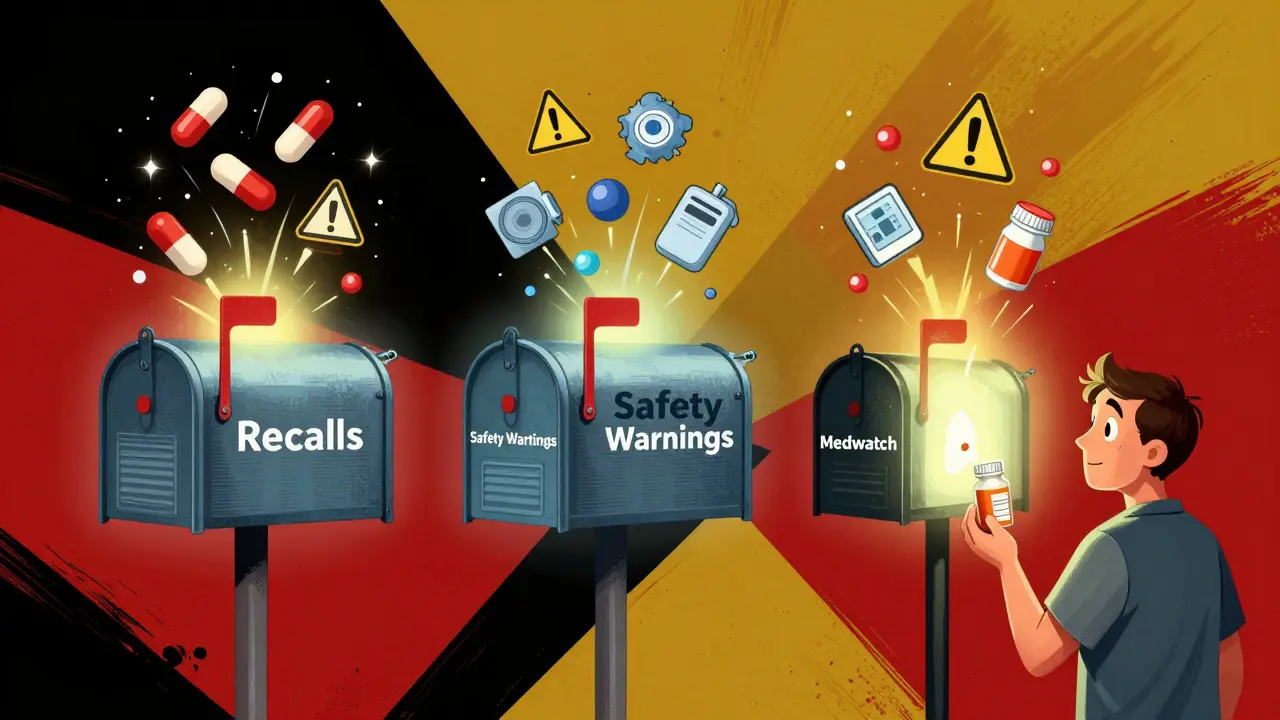
- Recalls: When a drug is pulled from shelves because it’s contaminated, mislabeled, or unsafe. Think of the 2018 valsartan recall-over 100,000 people got contaminated blood pressure pills. Alerts like this go out within hours.
- Drug Safety Communications: These are warnings about side effects that weren’t fully known before. For example, a new study might show that a common diabetes drug increases heart failure risk in older adults. This isn’t a recall-it’s a heads-up to adjust treatment.
- MedWatch Alerts: These include both recalls and safety updates, but they also cover medical devices, vaccines, and even cosmetics. If a glucose monitor gives wrong readings or a hand sanitizer contains methanol, you’ll get notified here.
Most people think these are the same thing. They’re not. Each system serves a different purpose. If you only sign up for one, you’re missing half the picture.
How to Subscribe: Three Simple Systems
You don’t need to be a pharmacist or a hospital administrator to use these. All you need is an email address. Here’s how to set them up.
1. Enforcement Report Subscription (For Recalls)
This is the system that tells you when a drug is officially recalled. Go to fda.gov/enforcement-report-subscription. Click "Subscribe." You’ll be asked to pick product categories. If you’re taking any prescription or over-the-counter medicine, select "Drugs." You can also pick "Medical Devices" if you use an insulin pump or hearing aid.
Here’s the smart part: you can add up to five custom keywords. Type in "insulin," "metformin," or "peanut" (if you’re allergic). Every time a recall includes those words, you’ll get an email. No more scrolling through 50 unrelated alerts to find the one that matters to you.
Choose daily or weekly delivery. Daily is better if you’re on multiple medications. Weekly works if you just want a summary.
2. Drug Safety Communications (For Safety Warnings)
This is where the FDA warns about newly discovered risks-not just recalls. Go to fda.gov/drugs/drug-safety-and-availability/drug-safety-communications. Scroll down and click "Sign up for email alerts." You’ll get a confirmation email. That’s it.
These alerts often come with detailed explanations. For example, a recent alert on a cholesterol drug didn’t just say "risk of muscle damage." It explained that the risk doubled in people over 70 who also took a specific antibiotic. That’s the kind of detail that helps you talk to your doctor.
3. MedWatch E-List (For Everything Else)
MedWatch is the FDA’s original safety alert system, launched in 1993. It’s still active and covers recalls, safety updates, and even reports from patients and doctors. Subscribe at fda.gov/medwatch-email-list.
It’s the broadest system. If you want to know about a faulty inhaler, a tainted supplement, or a vaccine batch with contamination, this is where you’ll see it first.
Pro tip: You can also follow @FDAMedWatch on Twitter. Alerts go out there within minutes of being posted. It’s not a replacement for email, but it’s a good backup.
Why Most People Miss the Real Value
A 2022 government report found that only 38% of healthcare professionals knew about all three systems. That’s a problem. Here’s why:
- Recalls ≠ Safety Warnings: A drug can be perfectly safe but still recalled because the bottle says "50 mg" when it’s really "100 mg." That’s an Enforcement Report alert. But if the drug causes liver damage in 1 out of 1,000 users-that’s a Drug Safety Communication. You need both.
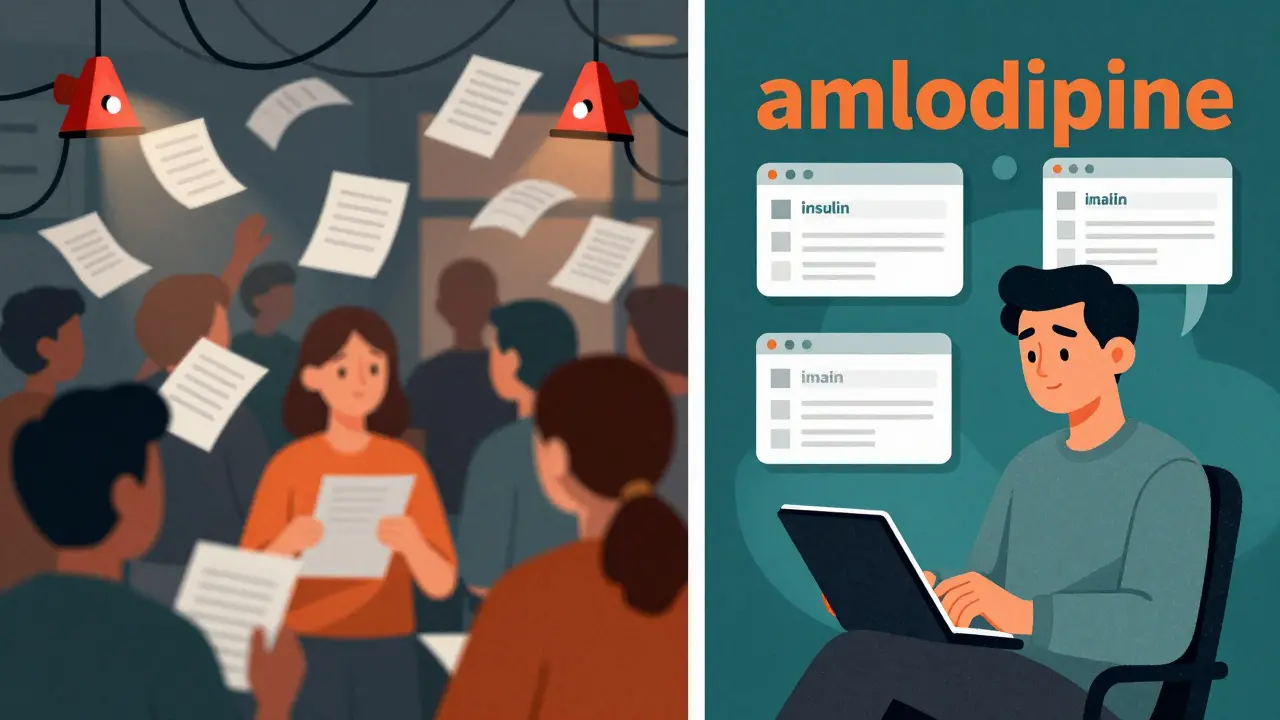
- Keyword filtering saves time: Without keywords, you’ll get alerts about recalled toothpaste, cough syrup, and bandages. If you only care about your blood pressure pill, set your keyword to "amlodipine" or "losartan." You’ll cut 80% of the noise.
- Timeliness matters: A 2023 study found FDA alerts go out in under 4.5 hours. Commercial services take over 8 hours. That difference can mean avoiding a dangerous interaction before you even take the next pill.
One pharmacist in Ohio told a Reddit thread she caught a recalled batch of metformin because her keyword alert popped up. Her pharmacy had just received the shipment. She quarantined it. No one took it. That’s the power of this system.
What the FDA Isn’t Doing (And What You Should Know)
The system works well-but it’s not perfect.
- No mobile app yet: As of early 2026, there’s no official FDA app for push notifications. You’ll only get emails or tweets. If you’re always on the go, that’s a gap.
- Alert fatigue is real: Many subscribers say they get too many emails. The FDA is testing machine learning to prioritize urgent alerts. That’s coming in 2025.
- Language barriers: Only 12% of alerts reach non-English speakers, even though 22% of the U.S. population speaks another language. Spanish-language alerts are scheduled for late 2025.
- No risk scoring: Commercial tools like First Databank can tell you your personal risk level based on your age, other meds, and health history. The FDA doesn’t do that. It gives facts-you decide what they mean.
That last point is important. The FDA doesn’t tell you what to do. It tells you what’s happening. You still need to talk to your doctor. But now you can walk into that appointment with hard facts, not just worry.
Who Should Subscribe (And Who Doesn’t Need To)
You don’t have to be a doctor to benefit. Here’s who should sign up:
- Patients on multiple medications: Especially if you take five or more pills a day. Drug interactions are the #1 cause of preventable hospitalizations in older adults.
- People with allergies: If you’re allergic to peanuts, shellfish, or sulfites, keyword alerts can catch contaminated supplements or medications.
- Caregivers: If you help an elderly parent or disabled family member manage meds, you’re the first line of defense.
- Pharmacists and nurses: You’re the last checkpoint before a patient takes a pill. This system is your safety net.
Who doesn’t need it? If you only take one OTC pain reliever once a week and never change your meds, you’re probably fine. But if you ever start a new prescription-sign up. It takes 90 seconds.
What’s Coming in 2025
The FDA is making big changes. By mid-2025, they plan to:
- Combine all three alert systems into one unified platform
- Launch a mobile app with push notifications
- Double the number of keywords you can set (from 5 to 10)
- Launch Spanish-language alerts
This isn’t just an upgrade-it’s a complete overhaul. The goal? Reduce alert fatigue and make sure the right person gets the right warning at the right time.
Until then, use the three systems as they are. Don’t wait for perfection. The risk of not subscribing is far greater than the hassle of signing up.
Quick Checklist: How to Get Started Today
- Go to fda.gov/enforcement-report-subscription and sign up for recalls. Pick "Drugs" and add your medication names as keywords.
- Go to fda.gov/drugs/drug-safety-and-availability/drug-safety-communications and click "Sign up for email alerts."
- Go to fda.gov/medwatch-email-list and subscribe to the E-list.
- Follow @FDAMedWatch on Twitter for real-time updates.
- Check your spam folder if you don’t see a confirmation email within 10 minutes.
That’s it. Five minutes. Three emails. One life you might save.
Do I have to pay to get FDA drug safety alerts?
No. All FDA drug safety alert subscriptions are completely free. You only need an email address. There are no hidden fees, no premium tiers, and no trials. The system is funded by the U.S. government and designed to protect public health.
What’s the difference between MedWatch and Drug Safety Communications?
MedWatch covers recalls, safety alerts, and adverse event reports for drugs, devices, and cosmetics. Drug Safety Communications focus specifically on newly discovered risks with medications-like unexpected side effects or interactions. You need both. MedWatch tells you if a pill batch is contaminated. Drug Safety Communications tell you if the pill itself could harm you under certain conditions.
Can I get alerts in Spanish?
Not yet, but it’s coming. The FDA plans to launch Spanish-language versions of all three alert systems in Q3 2025. Until then, you can use browser translation tools like Google Translate on the FDA website, but signed-up email alerts will still be in English.
How often do I get alerts?
It depends on the system and your settings. The Enforcement Report lets you choose daily or weekly. Drug Safety Communications and MedWatch send alerts as soon as they’re issued-sometimes multiple times a week, sometimes none for weeks. If you use keywords, you’ll get far fewer emails. Most subscribers receive 2-5 alerts per month.
Will I get spam or marketing emails after subscribing?
No. The FDA does not sell or share email addresses. You will only receive official safety alerts from the U.S. Food and Drug Administration. There are no ads, no promotions, and no third-party messages. The system is strictly for public health.
What if I miss an alert? Can I see past ones?
Yes. All past Drug Safety Communications are archived on the FDA website at fda.gov/drugs/drug-safety-and-availability/drug-safety-communications. Enforcement Reports are searchable at fda.gov/safety/enforcement-reports. You can search by drug name, date, or recall number. It’s a free public database.
What to Do If You Get an Alert
Don’t panic. Don’t stop your medication unless instructed. Here’s what to do:
- Read the full alert-don’t just rely on the subject line. The FDA explains the risk, who’s affected, and what to do.
- Check your medicine. Look at the lot number on the bottle. Compare it to the one in the alert.
- Contact your pharmacist. They can tell you if your batch is affected and help you get a replacement.
- Call your doctor if the alert says to change your treatment. Don’t adjust doses or stop meds on your own.
- Report side effects. If you’ve had a bad reaction, file a report at MedWatch online. It helps the FDA track problems faster.
The goal isn’t to scare you. It’s to give you control. When you know what’s happening, you’re not just a patient-you’re a partner in your own care.
Patty Walters
January 8, 2026 AT 11:25i signed up for all three and honestly? life changed. got an alert about my metformin batch last month-turns out my pharmacy had just received it. i called them before i even took my next pill. saved me from a potential disaster. no hype, no fluff, just free info that actually matters.
Phil Kemling
January 8, 2026 AT 13:27it’s wild how we outsource our health to systems we don’t understand. the FDA doesn’t tell us what to do-but it gives us the facts. the real power isn’t in the alerts-it’s in learning to read them without fear. we’re conditioned to panic at the word ‘recall.’ but knowledge isn’t danger. ignorance is.
tali murah
January 8, 2026 AT 19:53Oh wow. A government agency actually does something useful? Who knew? I’m just shocked that it took a Reddit post to make me realize I’ve been trusting Big Pharma’s marketing over a free, federally-funded public safety system. My bad for assuming the FDA was just a bureaucratic paper-shuffler. Guess I’ll go sign up now, before my next pill kills me. Thanks, internet.
Diana Stoyanova
January 9, 2026 AT 12:54Y’ALL. I’m a 62-year-old grandma who takes 7 meds and I just signed up for all three systems. I did it while eating my oatmeal. Took 7 minutes. No tech skills needed. I told my daughter, my neighbor, my book club, and my mailman. Seriously-this is the kind of thing that saves lives, not just pills. My cousin died from a contaminated generic last year. If she’d known this existed… I’m crying. You need to do this. Not for you. For the people you love. Just click. It’s free. It’s real. It’s urgent.
Jenci Spradlin
January 9, 2026 AT 16:23you forgot to mention you can set keywords like 'lisinopril' or 'warfarin' to cut out the junk. i got 3 alerts last month-all about my exact meds. no more scrolling through recalls for cough syrup or baby formula. game changer. also, check your spam folder. i missed my first confirmation for 2 weeks because it went there. dumb but true.
Meghan Hammack
January 9, 2026 AT 16:37you’re not alone if this feels overwhelming. start with just one. pick the drug you’re most scared of. sign up for that one alert. that’s it. baby steps. you don’t have to do all three today. just one. then tomorrow, do another. you’re not failing-you’re protecting yourself. that’s huge.
RAJAT KD
January 10, 2026 AT 01:53Why are Americans so passive about their health? This system has existed for 30 years. You’re not too busy. You’re just lazy. Sign up. Now. Stop reading Reddit and do the one thing that could save your life.
Ian Long
January 10, 2026 AT 08:52Look, I get that some of these alerts feel like noise. But the one time you get a warning about your blood thinner? That’s not noise. That’s oxygen. I used to ignore them. Then my mom got hit by a recall. She didn’t know her meds were tainted. I wish I’d pushed her to sign up sooner. Don’t wait for the wake-up call. Do it now. Even if you think you’re fine.
Pooja Kumari
January 11, 2026 AT 23:25Okay but I’ve been getting 20+ emails a week from these and I’m starting to feel like I’m being stalked by the government. I unsubscribed from two and now I’m scared I’ll miss something. Like, what if I get a heart attack and it was because I didn’t know about a recall on my beta blocker? I can’t sleep anymore. I just check my inbox every 10 minutes. I feel so guilty. I know this is important but it’s also consuming me. Is anyone else like this? I just want to be safe without being haunted.