
 Dec, 28 2025
When you or a loved one is prescribed a new medication, understanding how to take it isn’t just helpful-it’s life-saving. But if English isn’t your first language, getting clear instructions from your pharmacist can feel impossible. You might nod along, afraid to admit you don’t understand. That’s exactly when mistakes happen. Medication counseling translator services exist to fix that gap-and by law, pharmacies must provide them for free.
Why You Need a Professional Interpreter for Medication Counseling
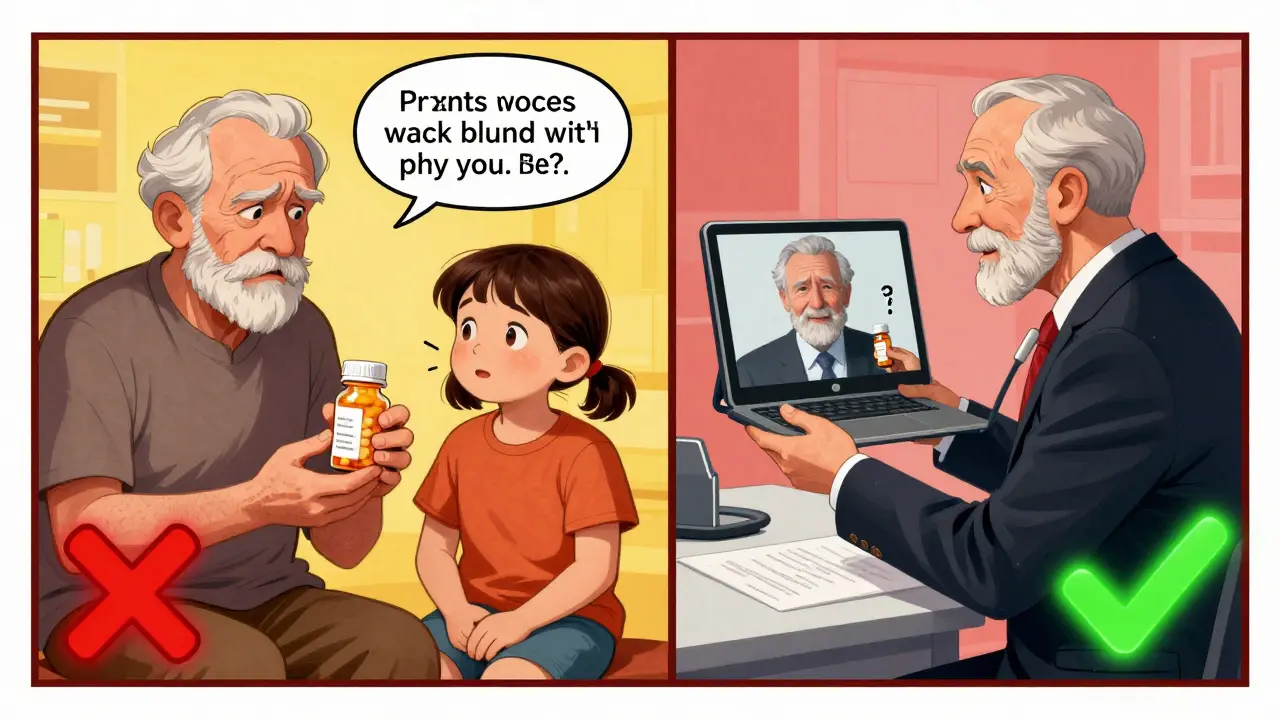
Using a family member, friend, or untrained staff member to interpret medication instructions is risky. A 2021 study in JAMA Pediatrics found that relying on untrained interpreters increases the chance of serious medication errors by 49%. That’s not a small risk. It’s the difference between taking one pill a day and accidentally taking four. Pharmacists are trained to explain things like: when to take the pill, what to avoid eating with it, side effects to watch for, and what to do if you miss a dose. But if those instructions get lost in translation-even slightly-you could end up in the ER. The University of California San Francisco found that Limited English Proficiency (LEP) patients experience medication errors at three times the rate of English speakers when no professional interpreter is used. Federal law doesn’t just recommend professional interpreters-it requires them. Section 1557 of the Affordable Care Act (2010) says any pharmacy or clinic that gets federal funding must provide language assistance at no cost to the patient. That includes pharmacies that accept Medicare, Medicaid, or any other government health program. You’re not asking for a favor. You’re exercising a legal right.How to Ask for a Translator-The Right Way
Don’t wait until the pharmacist starts reading the label. As soon as you walk up to the counter, say clearly: “I need a professional interpreter for my medication counseling.” Don’t say, “Can someone help me?” or “My daughter speaks English.” Those phrases leave room for refusal. Pharmacies are required to respond immediately. If they say they don’t have an interpreter on hand, ask for one of these three options:- Phone interpreting (they’ll dial a service like RxTran or LanguageLine)
- Video interpreting (a screen will show a live interpreter)
- On-site interpreter (available in larger pharmacies, especially in cities)
What to Expect During the Session
A good interpreter won’t just translate words-they’ll make sure you understand context. For example, if the label says “take with food,” the interpreter will explain what counts as food (a banana? a cup of coffee?). If the warning says “may cause dizziness,” they’ll tell you whether that means you shouldn’t drive, stand up quickly, or use machinery. The session should include:- Why you’re taking this medication
- Exact dosage and timing
- What to do if you miss a dose
- Side effects and when to call your doctor
- Drug interactions (with food, alcohol, or other meds)
- Storage instructions
Types of Interpreter Services Compared
Not all interpreter services are created equal. Here’s how the main options stack up:| Service Type | Cost per Minute | Best For | Limitations |
|---|---|---|---|
| Phone Interpreting | $2.50-$3.50 | Quick, urgent needs; rural areas | No visual cues; 32% of elderly patients get confused |
| Video Interpreting | $3.00-$5.00 | Complex counseling; visual signs like pill shapes | Requires stable internet; 28% of sessions face tech issues |
| On-Site Interpreter | $45-$75 per hour | High-risk meds (e.g., insulin, blood thinners) | Only available in large urban pharmacies |
Most chain pharmacies use phone or video services. On-site interpreters are rare outside big hospitals or major cities. But video interpreting is growing fast-65% of healthcare facilities now use it, according to CMS data from 2023. It’s the best balance of cost, speed, and clarity.
What Makes an Interpreter Qualified?
Not every bilingual person is qualified to interpret medical instructions. The American Translators Association requires certified medical interpreters to:- Complete at least 40 hours of specialized training
- Pass a national certification exam
- Undergo continuing education every two years
What’s New in 2025
As of January 1, 2025, federal rules now ban the use of AI tools like Google Translate or ChatGPT for printing instructions on prescription labels or patient handouts-even if they seem accurate. Human review is mandatory. This change came after several cases where AI mistranslated “take with food” as “take after meals only,” leading patients to skip doses. Also in 2025, the Centers for Medicare & Medicaid Services (CMS) increased reimbursement for interpreter services for children in low-income families-from 50% to 75% federal matching. That means more pharmacies will invest in better services because they can get paid back more. California is expanding its translated SIGs to include Tagalog and Arabic, with pilot programs rolling out in Los Angeles County. That’s important because 22% of LEP patients there speak languages not covered by the current five translations.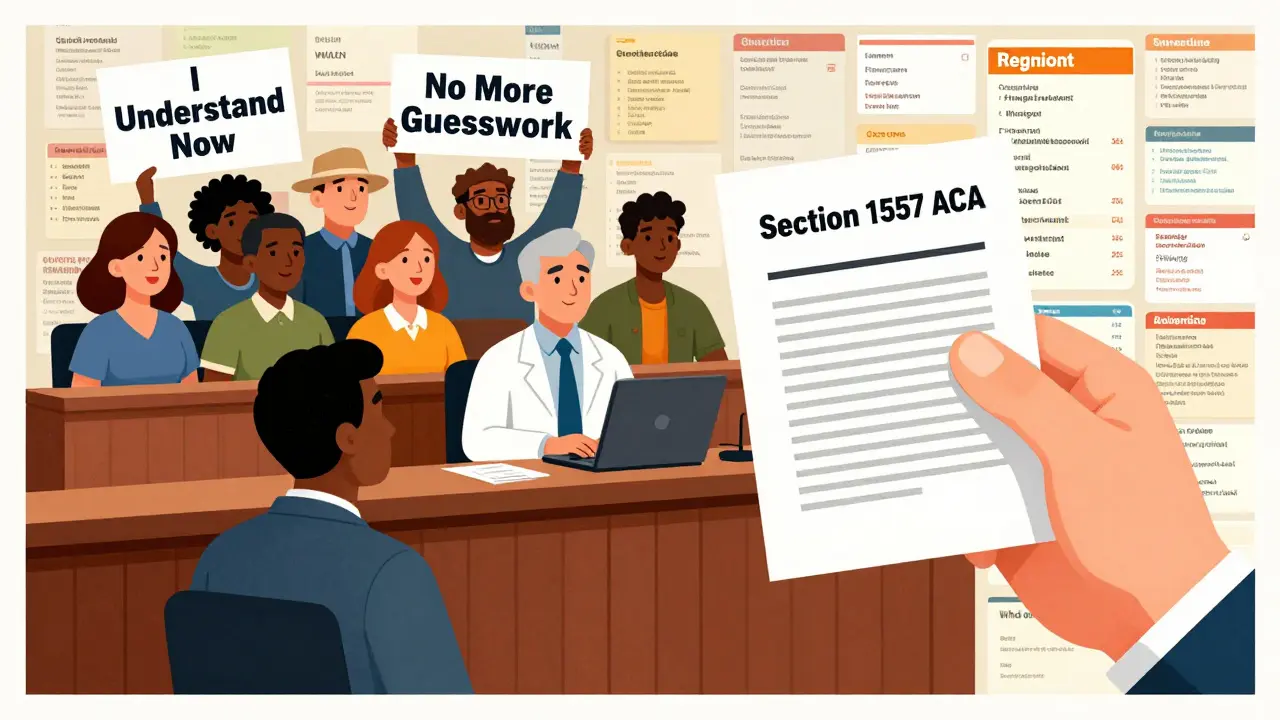
What to Do If You’re Refused Service
If a pharmacy refuses to provide an interpreter:- Ask to speak to the manager. State clearly: “I’m requesting a professional interpreter under Section 1557 of the Affordable Care Act.”
- If they still refuse, take note of the date, time, location, and names of staff involved.
- File a complaint at HHS.gov/ocr. You can do this anonymously.
- Call your state’s pharmacy board. In California, it’s the Board of Pharmacy; other states have similar offices.
How Pharmacies Are Supposed to Track This
Pharmacists are required to document every interpreter request using a billing code: T-1013. This code is used alongside the regular medical visit code. It’s how pharmacies get reimbursed for interpreter services. Documentation must include:- The language requested
- How the interpreter was provided (phone, video, in-person)
- Duration of the session
- Confirmation that the interpreter was qualified
Final Tip: Know Your Rights Before You Go
Before picking up your prescription, prepare. Know your language. Know your rights. And don’t be afraid to speak up. You’re not being difficult. You’re being smart. Medication errors are one of the leading causes of preventable hospital visits. And for LEP patients, language barriers are the biggest factor. The system is designed to protect you. Use it. Demand it. If you don’t, someone else might pay the price.Can I use my child as an interpreter for my medication counseling?
No. Federal law prohibits pharmacies from using family members or children as interpreters for medication counseling. Even if your child speaks English well, they’re not trained in medical terms like “hypotension,” “contraindication,” or “adverse reaction.” Studies show using untrained family members increases medication errors by 49%. Always request a certified professional interpreter.
Do I have to pay for a translator at the pharmacy?
No. By law, pharmacies that accept federal funding-including those that take Medicare or Medicaid-must provide interpreter services at no cost to you. This includes phone, video, or in-person interpreters. If a pharmacy tries to charge you, it’s a violation of the Affordable Care Act. Report it to HHS.
What if the interpreter doesn’t explain things clearly?
Ask them to repeat it. Say: “Can you explain that again in simpler terms?” or “Can you show me what this pill looks like?” If they refuse or seem unsure, ask to speak to the pharmacist and request a different interpreter. You have the right to understand your medication. If the service is consistently poor, file a complaint with your state pharmacy board.
Are there translated labels available in my language?
It depends on your state and pharmacy. In California, prescription labels include directions in Spanish, Chinese, Korean, Russian, and Vietnamese. Other states may have fewer translations. Some pharmacies use services like RxTran to print pre-approved translations directly onto labels. Ask the pharmacist: “Do you have a printed version of these instructions in [your language]?” If they say no, request a live interpreter instead.
Can I request an interpreter before I even pick up my prescription?
Yes. Many pharmacies let you request an interpreter when you call in your prescription or pick it up online. When you order, say: “I need a professional interpreter when I come to pick this up.” Some even let you select your language on their website. Planning ahead helps avoid delays and ensures you get the right service.
What languages are covered by law?
The law doesn’t limit coverage to specific languages. If you speak any language other than English and need help, the pharmacy must provide an interpreter. While some states like California prioritize translations for the most common languages (Spanish, Chinese, etc.), federal law requires services for all languages, including less common ones like Somali, Hmong, or Arabic. Don’t assume your language isn’t supported-ask.
Is AI translation allowed for prescription labels now?
No. As of January 1, 2025, federal rules ban the use of AI tools like Google Translate or ChatGPT for printing instructions on prescription labels or patient handouts. Even if the translation looks correct, it must be reviewed and approved by a human medical interpreter. This change was made after several cases of dangerous mistranslations.
Emma Duquemin
December 30, 2025 AT 02:16This post literally gave me chills. I remember my abuela nearly ending up in the ER because the pharmacist just handed her a pill bottle in English and said, 'You'll figure it out.' She didn't speak a word of English, and I was 12. We didn't know we had rights. This isn't just about language-it's about dignity. I'm sharing this with every family member who's ever been told 'it's fine, just take it.' No more 'fine.' No more silence.
Kevin Lopez
December 31, 2025 AT 11:35Section 1557 mandates LEP accommodations under Title VI of the Civil Rights Act. Non-compliance constitutes disparate impact discrimination. Pharmacies using untrained interpreters violate 45 CFR 92.2. Period.
Duncan Careless
December 31, 2025 AT 14:12bloody brilliant post. honestly, i had no idea pharmacies were legally bound to do this. i always thought it was a 'nice-to-have.' turns out it's a bloody right. i'll be printing this out and taping it to my local chemist's door. cheers mate.
Samar Khan
December 31, 2025 AT 16:45OMG I cried reading this 🥹 My mom almost died because they gave her the wrong dose and she didn’t understand ‘take with food’ meant ‘not on an empty stomach’ 😭 Please, if you’re reading this, don’t be shy. Demand your interpreter. Your life matters 💪❤️
Russell Thomas
December 31, 2025 AT 23:41Oh wow, so now we’re giving out free interpreters but I still have to wait 45 minutes for my blood pressure med? Sounds like a fancy perk for people who can’t speak English. Meanwhile, I’m here with my 10 prescriptions, no interpreter, and no one cares. This feels like performative compliance with a side of bureaucracy.
Joe Kwon
January 1, 2026 AT 09:01Great breakdown. I work in a rural pharmacy and we use VideoInterp by LanguageLine-it’s been a game-changer. Even my elderly patients who hate tech now ask for it. The key is training staff to offer it proactively, not wait for patients to ask. Also, T-1013 billing is underutilized. If you're a provider, start using it. It funds the service.
Henriette Barrows
January 3, 2026 AT 01:32I’ve been a nurse for 18 years and I’ve seen too many patients nodding along like they get it… then they show up in the ER three days later. This is the kind of info that saves lives. I’m printing copies for every clinic I work with. Thank you for writing this like a human, not a legal document.
Alex Ronald
January 4, 2026 AT 12:55One thing the article doesn’t mention: many pharmacies don’t know their own policies. If you ask for an interpreter and they say ‘we don’t have one,’ ask for the compliance officer. Most don’t even have one on staff. Push. It’s worth it.
Nisha Marwaha
January 4, 2026 AT 23:49As a certified medical interpreter for Hindi and Punjabi, I can confirm: most 'bilingual' staff don’t know terms like 'anticoagulant' or 'therapeutic window.' They translate 'take with food' as 'eat something.' That’s not enough. We need more certification programs in community colleges. This isn’t just translation-it’s clinical communication.
Tamar Dunlop
January 5, 2026 AT 15:03As a Canadian pharmacist who has worked with Indigenous communities and immigrant populations, I must say: this is precisely the kind of advocacy that should be universal. The principle of equity in healthcare access is not American-it is human. The fact that this is legally mandated in the U.S. is a model for the world. Bravo.
Sharleen Luciano
January 6, 2026 AT 14:56Let’s be real-this is just another example of bureaucratic overreach disguised as compassion. People should learn English. If they can’t, maybe they shouldn’t be managing complex medication regimens. The cost of these services is passed on to everyone else. This isn’t empowerment-it’s dependency.
Jim Rice
January 8, 2026 AT 02:42Yeah, right. And I’m sure the pharmacist is just waiting to be sued if they don’t call a translator for someone who says ‘I speak Spanish’ but actually just knows ‘gracias’ and ‘donde esta el baño.’ This is a joke. We’re turning healthcare into a language quiz.
Teresa Rodriguez leon
January 8, 2026 AT 12:10My sister took her diabetic meds wrong because she thought 'once daily' meant 'when I remember.' She ended up in the hospital. This post? It’s the reason I’m not letting anyone else go through that. No more silence. No more pretending.