
 Jan, 20 2026
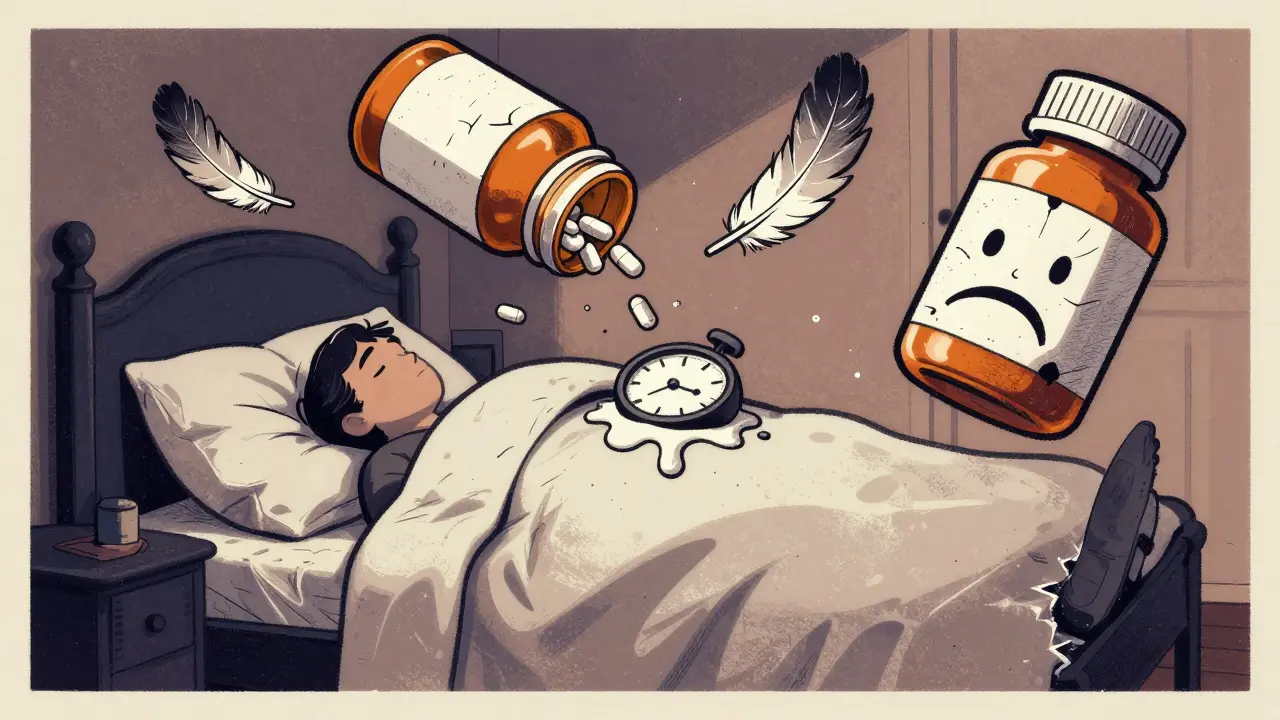
Depression doesn’t just make you feel down-it makes you forget to take your pills
Imagine taking blood pressure medicine every day because your doctor told you it could save your life. Then, one morning, you don’t feel like getting out of bed. The thought of sorting through five different pills feels overwhelming. You tell yourself you’ll do it tomorrow. But tomorrow becomes the next day, and the next. This isn’t laziness. It’s depression quietly sabotaging your health.
Studies show people with depression are up to 2.3 times more likely to skip their medications than those without it. This isn’t rare. It happens across conditions: heart failure, diabetes, asthma, even antidepressants themselves. And it’s not just about forgetting. Depression changes how you think, feel, and act-right down to whether you swallow that pill.
What does poor adherence actually look like?
It’s not always obvious. Someone might say they’re taking their meds, but they’re not. The Morisky Medication Adherence Scale (MMAS-8) is the gold standard for spotting this. A score below 6 means you’re non-adherent. Between 6 and 7.9? Moderate adherence. Only a score of 8 means you’re truly on track.
In one study of 83 patients with depression, just 6% hit that perfect score. Nearly 40% were non-adherent. Another 54% were only halfway there. That’s not a fluke. That’s the pattern.
And the signs aren’t hidden. You’ll see:
- Pills piling up in the bottle
- Missed refill dates
- Patients saying, “I feel worse since I started this,” even when lab results show improvement
- Sudden drops in follow-up appointments
These aren’t just random mistakes. They’re signals.
Depression doesn’t just cause forgetfulness-it rewires your brain
People often think non-adherence is about being disorganized. But depression attacks the parts of your brain that handle focus, memory, and decision-making. You don’t forget because you’re careless. You forget because your brain can’t hold the plan.
Dr. Elena Pizzolorusso, lead author of a major NIH review, says depression creates cognitive barriers: trouble concentrating, slowed thinking, and poor judgment. Taking multiple meds at different times? That’s a complex task. Depression makes it feel impossible.
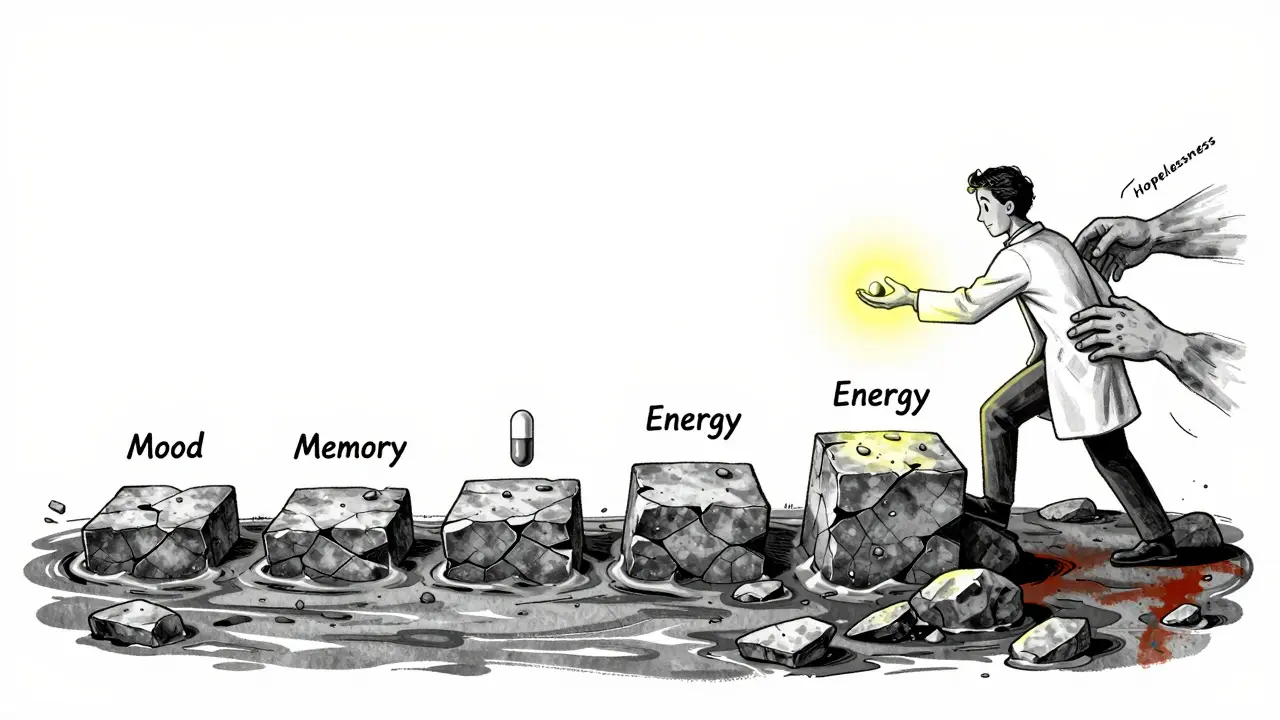
And it’s not just memory. Hopelessness plays a big role. If you believe nothing will help, why take the pill? Why bother? The energy to manage your health vanishes. That’s not defiance. It’s exhaustion.
Side effects hit harder when you’re depressed
Everyone gets side effects. Dry mouth. Drowsiness. Weight gain. But if you’re depressed, your brain amplifies them.
Research from Spain found non-adherent patients reported significantly more severe side effects-even when the actual physical reaction was the same as in adherent patients. Depression turns a mild headache into a reason to quit. A little nausea becomes proof the drug is wrong for you.
Take antidepressants themselves. In Turkey, 83% of patients on SSRIs like sertraline or escitalopram stopped taking them. Why? Fatigue, low libido, dry mouth, loss of appetite. These are common. But in someone with depression, they feel like proof the treatment is failing.
And here’s the cruel twist: stopping antidepressants often makes depression worse. But by then, the damage is done.
How to spot it before it’s too late
You don’t need to be a doctor to notice the warning signs. Here’s what to look for:
- PHQ-9 score of 10 or higher-this means moderate to severe depression. Every 5-point increase on this scale correlates with a 23% drop in adherence.
- Missed doses in the first two weeks-if someone skips more than 20% of doses early on, they’re 4.7 times more likely to have treatment failure.
- Complaints about side effects-especially if they’re exaggerated or sudden.
- Changes in routine-sleeping all day, skipping meals, not answering calls or texts.
- Self-reported guilt-“I know I should take them, but I just can’t.” That’s depression talking.
Combining the PHQ-9 with the MMAS-8 boosts accuracy by 37%. You’re not guessing. You’re measuring.
What works: Real strategies that help
Simple reminders don’t fix this. You need structure.
The American Heart Association now recommends screening all heart failure patients with the two-question PHQ-2 at every visit. If it’s positive, follow up with the full PHQ-9. Then pair it with the MMAS-8. That’s not optional anymore-it’s standard.
Some clinics use “side effect mapping.” Patients track daily: mood, side effects, and whether they took their meds. Patterns emerge. Maybe they skip pills on days they feel most tired. Or avoid taking them before social events because of drowsiness. That’s data. That’s actionable.
One study in Spain, called MAPDep, involved both patients and doctors in weekly check-ins about adherence. Over a year, adherence jumped by 28.5%. Not because they gave more pills. Because they listened.
It’s not about compliance-it’s about connection
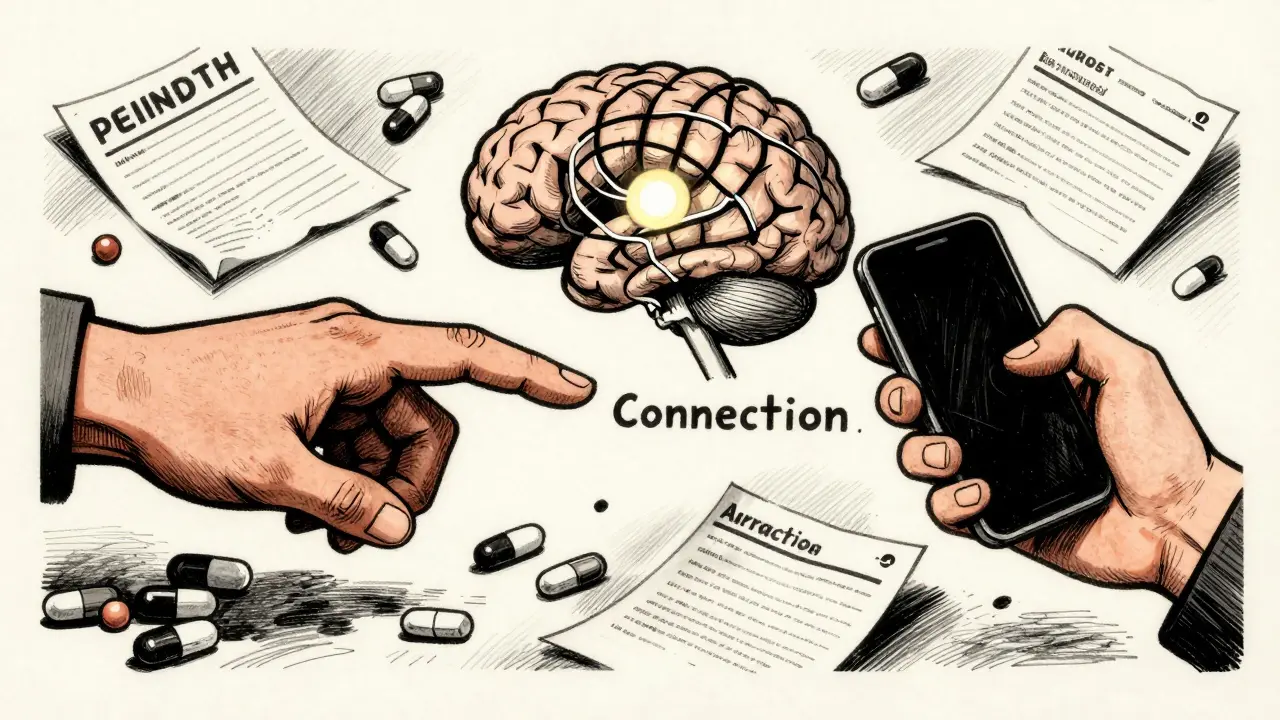
Blaming patients for not taking their meds doesn’t work. Calling them non-compliant is outdated. Depression isn’t a choice. It’s a medical condition that hijacks motivation, memory, and meaning.
What works is asking: “What’s making it hard?” instead of “Why aren’t you taking it?”
Some people need pill organizers. Others need fewer pills. Some need someone to call them every morning. A lot need to know their feelings are valid-and that their doctor isn’t judging them for struggling.
Depression doesn’t make people lazy. It makes them feel powerless. The goal isn’t to force adherence. It’s to rebuild agency. One pill at a time.
What’s next: Tech and hope
New tools are emerging. Smartphone apps that track mood and medication intake together can predict missed doses 72 hours in advance-with 82% accuracy. That’s not sci-fi. It’s happening now.
Neuroimaging studies show specific brain activity patterns linked to both depression and adherence. In the future, doctors might use brain scans to predict who’s at risk-not to label, but to intervene early.
The World Health Organization has committed $15 million to build global protocols for recognizing this link by 2025. That means this isn’t just a Western issue. It’s a human one.
You’re not alone in this
If you’re taking meds and feeling too drained to keep up, it’s not your fault. If you’re a caregiver watching someone you love stop their treatment, it’s not stubbornness. It’s depression.
The science is clear: depression and medication adherence are deeply linked. But so are solutions. Recognition is the first step. Compassion is the second. And together, they can bring someone back to health-one pill, one conversation, one day at a time.
Brenda King
January 21, 2026 AT 08:48And yes, I cried reading this. Thank you for naming it.<3
Keith Helm
January 21, 2026 AT 21:35Daphne Mallari - Tolentino
January 23, 2026 AT 06:25Neil Ellis
January 23, 2026 AT 22:39Chiraghuddin Qureshi
January 25, 2026 AT 00:00Ryan Riesterer
January 25, 2026 AT 10:36Liberty C
January 25, 2026 AT 12:24shivani acharya
January 25, 2026 AT 16:52