
 Dec, 23 2025
Every time you pick up a prescription, there’s a small piece of paper stuck to the bottle or box that holds everything you need to know to take your medicine safely. But if you’ve ever stared at it, confused by tiny print and strange abbreviations, you’re not alone. About 79% of people misinterpret at least one part of their prescription label, according to NIH research. That’s not just confusing-it’s dangerous. A wrong dose, a missed instruction, or a misunderstood time frame can lead to side effects, hospital visits, or even worse. The good news? You don’t need a medical degree to read it. You just need to know what to look for.
Start with Your Name
The very first thing you should check is your name. It’s printed right at the top, usually in bold. Make sure it’s spelled exactly right and matches your ID. This isn’t just a formality. Pharmacies fill hundreds of prescriptions a day. A mix-up between two people with similar names-like “John Smith” and “Jon Smith”-can happen. Taking someone else’s medicine, even by accident, can be life-threatening. If your name is wrong, don’t take the pills. Call the pharmacy right away.Know the Medication Name-Brand and Generic
You’ll see two names for your drug. One is the brand name-like “Lipitor.” The other is the generic name-“atorvastatin.” Both are listed, often with the generic name first. In the U.S., the brand name is usually bigger or more prominent, but the generic name is the actual chemical. It’s important to know both because your doctor might switch you from brand to generic to save money. The medicine works the same way, but the pill might look different. If your pill looks nothing like the last time you filled this prescription, check the name and strength. Don’t assume it’s the same just because the bottle says the same thing.Check the Strength and Dosage
The strength tells you how much medicine is in each pill, drop, or scoop. It might say “20 mg” or “500 mg.” That number matters. Taking two 20 mg pills when you’re supposed to take one 40 mg pill is the same-but if you think you’re taking 20 mg and you actually took 40 mg, you’ve doubled your dose. That’s a common mistake. Always compare the strength on your label to what your doctor told you. If you’re unsure, ask your pharmacist: “Is this the same strength as last time?”Understand the Instructions
This is where most people get tripped up. The instructions say things like “Take one tablet by mouth twice daily.” Sounds simple, right? But “twice daily” doesn’t mean every 12 hours for everyone. Some people think it means morning and night. Others think it means every 8 hours. The NIH found that 23% of people with low health literacy think “twice daily” means “every two hours.” That’s a serious error. Instead of guessing, ask: “Should I take this with food? At breakfast and dinner? Or 12 hours apart?” Write it down. Use your phone to set alarms if you need to. If the label says “as needed,” know exactly what that means-like “take only if you have pain over 6/10,” not “whenever I feel a little off.”Look for Auxiliary Labels
Those little stickers on the bottle? They’re not decoration. They’re warnings. “Take with food” protects your stomach. “Avoid alcohol” prevents dangerous interactions. “Refrigerate” keeps the medicine from breaking down. “May cause drowsiness” means don’t drive. “Shake well” ensures you get the right dose. These labels are there because the medicine behaves differently under certain conditions. Ignore them, and you’re not just wasting your medicine-you could be hurting yourself. If you see one you don’t understand, ask the pharmacist to explain it before you leave.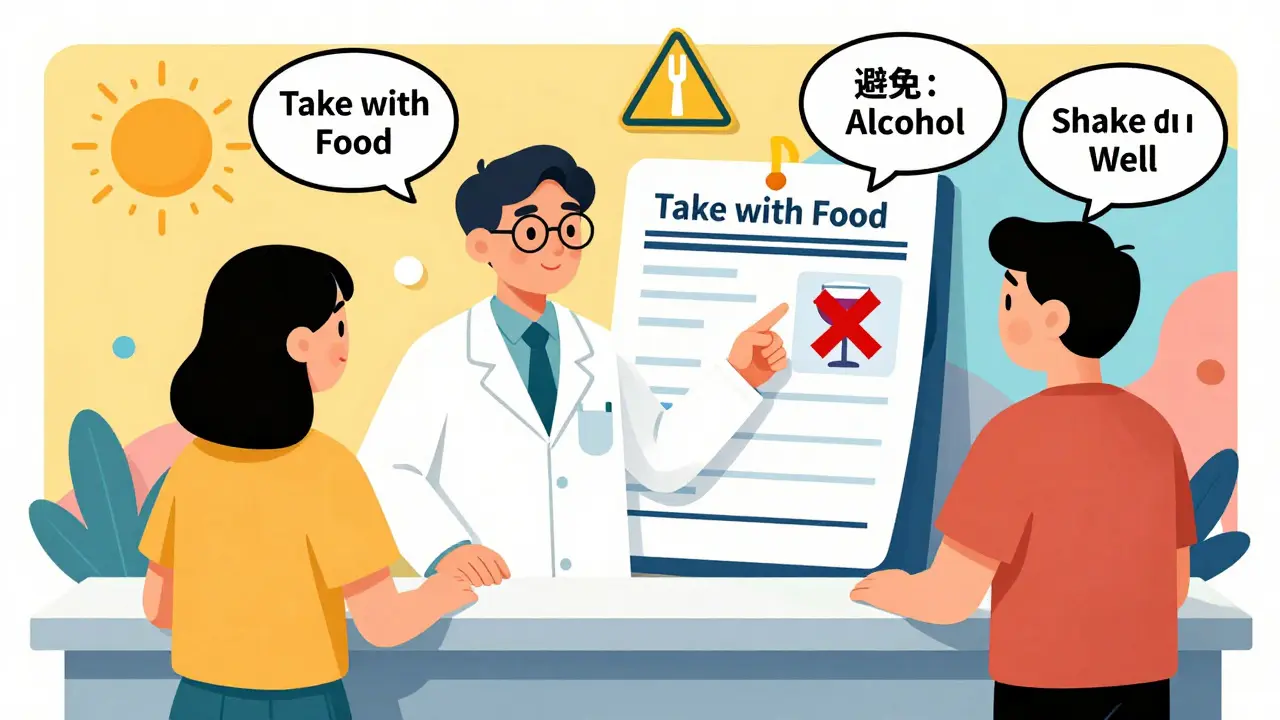
Find the Expiration Date
Every prescription has a discard date-usually one year from when it was filled. That’s not the same as the manufacturer’s expiration date. The pharmacy sets this date based on how long the medicine stays stable after being opened or mixed. After that date, the drug might not work as well. Taking expired medicine is risky. Antibiotics, for example, can become ineffective, letting infections grow stronger. Painkillers might lose potency. Don’t take anything past its discard date. If you’re not sure, throw it out. Most pharmacies offer free disposal bins for old meds.Know the Refill Info
The label will say how many refills you’re allowed. It might say “Refills: 3” or “No refills.” That’s your limit. Once you’ve used them all, you need a new prescription from your doctor. Don’t assume you can just walk in and get more. If you’re running low and there are no refills left, call your doctor’s office-not the pharmacy. They’ll need to review your progress before authorizing another supply. Skipping this step can lead to missed doses or dangerous gaps in treatment.Find the Pharmacy’s Contact Info
The label will have the pharmacy’s name, phone number, and sometimes a website or app link. Save that number in your phone. Don’t wait until you’re confused or sick to find it. If you have questions-about side effects, interactions with other meds, or how to take it-call them. Pharmacists are trained to explain labels. They see hundreds of prescriptions every day. They’ve heard every question before. There’s no such thing as a dumb question when it comes to your health.What About the Prescription Number and ID Codes?
You’ll see a number labeled “Rx#.” That’s your prescription number. It’s how the pharmacy finds your record when you call for refills. You don’t need to memorize it, but keep it handy. There’s also a Drug Identification Number (DIN) in Canada or a National Drug Code (NDC) in the U.S. These are barcode-like codes used by pharmacies and insurers to track the exact drug. You don’t need to understand them, but if you’re ever asked for them (like when calling insurance), you’ll know where to find them.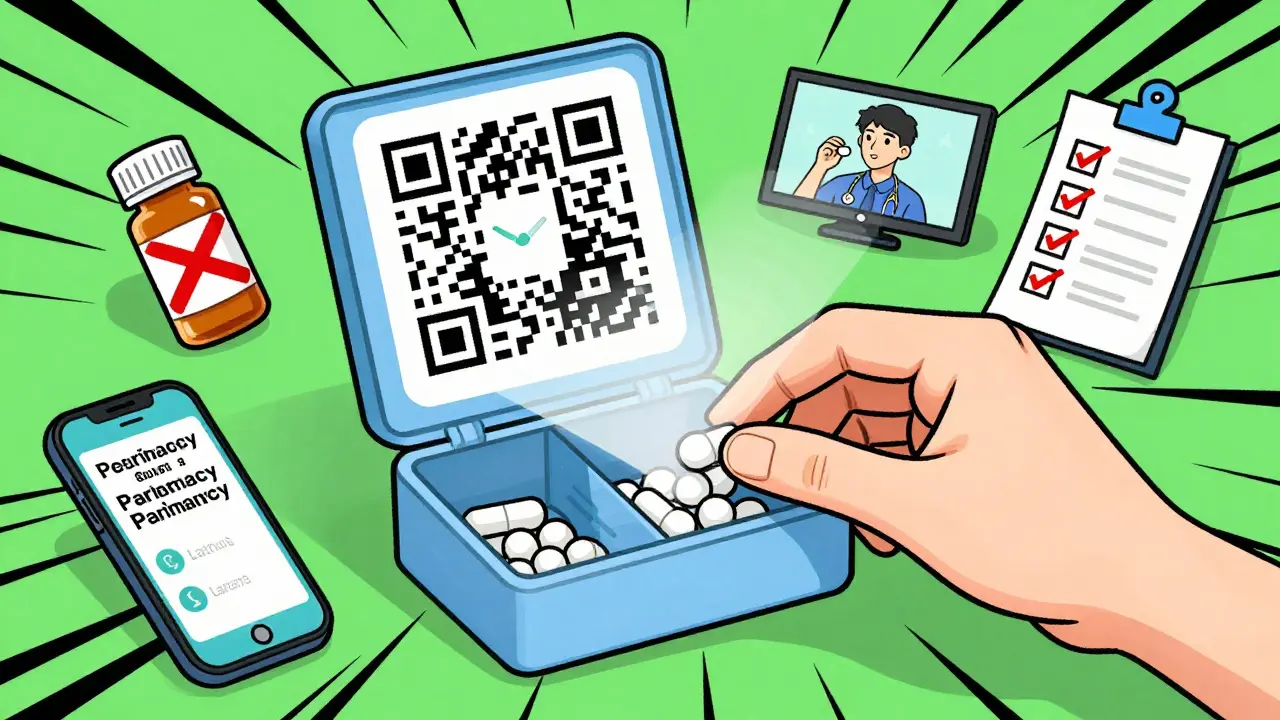
What to Do If Something Doesn’t Add Up
If any part of the label feels off-your name is wrong, the pill looks different, the dose seems too high, or the instructions are unclear-don’t take it. Don’t guess. Don’t hope it’s fine. Call the pharmacy. Ask to speak to the pharmacist directly. If they’re busy, wait. It’s worth it. You have the right to understand your medicine. If you still feel unsure, ask your doctor to explain it in writing. You can also ask for a printed handout or a video explanation. Many pharmacies now offer QR codes on labels that link to short videos showing how to take the medicine. In trials, these videos cut misinterpretation by 40%.Make It a Habit
Reading your label isn’t a one-time thing. Do it every time you get a new prescription-even if it’s the same medicine. Pills can change. Dosages can be adjusted. Instructions can be updated. Spend two minutes. Ask one question. Write one note. That’s all it takes to avoid a mistake that could land you in the hospital. People who check their labels carefully have 28% higher adherence rates, according to the Pharmacy Quality Alliance. That means they’re more likely to get better, faster.Final Tip: Bring a Buddy
If you’re new to a medication, or if you’re managing multiple prescriptions, take someone with you to the pharmacy. A spouse, adult child, or friend can help you listen, remember, and ask questions you might forget. It’s not a sign of weakness-it’s smart. Medicine is complicated. You shouldn’t have to figure it out alone.What if I can’t read the small print on my prescription label?
Most pharmacies offer large-print labels or audio instructions upon request. Call ahead and ask. Some pharmacies also provide magnifiers or apps that scan the label and read it aloud. If you have trouble reading, don’t guess-ask for help. Your safety matters more than pride.
Can I take my medicine with coffee or alcohol?
It depends on the medicine. Some drugs interact with caffeine or alcohol, making side effects worse or reducing effectiveness. The label will warn you if you should avoid alcohol. If it doesn’t say, ask your pharmacist. Don’t assume it’s safe just because it’s not listed. For example, certain antibiotics, painkillers, and antidepressants can have dangerous reactions with alcohol.
Why does my pill look different this time?
Generic drugs look different from brand names and even from other generics. Color, shape, and size vary by manufacturer. What matters is the name and strength. Check the label: if the generic name and dosage match your prescription, it’s correct. If you’re unsure, call the pharmacy to confirm. Never refuse a refill just because it looks different.
What if I miss a dose?
It depends on the medicine. For most, if you miss a dose and it’s been less than 4 hours, take it right away. If it’s been longer, skip it and take the next dose at the regular time. Never double up unless your doctor says so. For some drugs, like blood thinners or insulin, missing a dose can be dangerous. Always check the label or call your pharmacist for specific instructions.
How do I know if my medicine is expired?
Look for the discard date on the label-it’s usually printed near the bottom. This is the date the pharmacy says the medicine is no longer safe or effective. Don’t rely on the manufacturer’s expiration date printed on the box. That’s for unopened, sealed containers. Once opened, the pharmacy’s discard date applies. If you’re unsure, throw it out. Most pharmacies have drop-off bins for expired meds.
Blow Job
December 25, 2025 AT 02:05Just read my last prescription label for the first time and realized I’d been taking my blood pressure med at 3 a.m. because I thought ‘twice daily’ meant ‘whenever I wake up.’ Holy crap. Thanks for this.
Rachel Cericola
December 26, 2025 AT 11:57God, I wish someone had handed me this guide five years ago when I was on seven different meds and convinced the pharmacist I was fine because ‘I’ve been taking this forever.’ I didn’t even know the little ‘shake well’ sticker meant my liquid antibiotic would separate into sludge if I didn’t. I took it straight from the bottle like juice and got sick for a week. Pharmacists aren’t just cashiers-they’re lifesavers. Always ask. Always double-check. And if you’re on antibiotics, never skip a dose just because you feel better. That’s how superbugs happen. I learned the hard way. Now I take photos of every label, write notes in my phone, and read the damn auxiliary stickers like they’re treasure maps. You think it’s boring? It’s not. It’s survival.
Dan Gaytan
December 28, 2025 AT 03:57YES. This. 🙌 I always take my mom to the pharmacy now. She’s 72 and refuses to ask questions ‘because she doesn’t want to bother anyone.’ Last month she almost took her thyroid med with grapefruit juice because she didn’t see the warning. I caught it in time. Seriously, bring a buddy. Even if it’s just your dog. At least someone’s listening.
Usha Sundar
December 29, 2025 AT 06:11My pill looks different. I’m not taking it. End of story.
Chris Buchanan
December 29, 2025 AT 06:47So let me get this straight-you’re telling me I don’t need a PhD to not die from my own medicine? Shocking. Next you’ll tell me I should read the manual before I assemble IKEA furniture.
claire davies
December 30, 2025 AT 15:28I’m British and I’ve had to explain this to so many Americans who think ‘generic’ means ‘cheap knockoff.’ Nope. Atorvastatin is atorvastatin. It’s the same molecule, same effect, same science-just without the fancy logo and the price tag of a small car. I once had a pharmacist laugh when I asked if the blue pill was ‘the real one.’ He said, ‘Ma’am, if it says atorvastatin 20mg, it’s the real one. The brand just has better marketing.’ I’ve never looked at a pill the same way since. Also-yes, shake the bottle. I learned that one the hard way after a week of feeling dizzy because I was only getting half the dose. The pharmacy didn’t tell me. I had to Google it. Don’t be like me.
Wilton Holliday
December 30, 2025 AT 22:28Love this. Seriously. I started using the QR code on my insulin label last month-watched the 90-second video on how to inject it properly. I didn’t even know I was holding the pen wrong. My A1C dropped half a point. Small things matter. Take the photo. Save the label. Ask the question. You’re not being annoying-you’re being smart.
Jeffrey Frye
January 1, 2026 AT 10:07lol so now we’re supposed to trust pharmacists? you know they get paid per script right? they want you to refill early. they dont care if you die as long as the script clears. also that ‘discard date’? total scam. my insulin expired in 2018 and it still works fine. the pharma companies just want you to buy new ones. dont be a sheep.
Christine Détraz
January 2, 2026 AT 06:19I used to roll my eyes at all this ‘read your label’ stuff until I saw my grandma take her blood thinner with a glass of grapefruit juice because the label said ‘take with food’ and she thought juice counted. She ended up in the ER with a bleed. Now I print out a checklist for every new med and tape it to the fridge. ‘Name? Strength? Time? Food? Alcohol? Shake?’ It’s not paranoia. It’s love. And honestly? If you’re not doing this, you’re gambling with your body. And nobody deserves to lose that bet.
Joseph Manuel
January 2, 2026 AT 21:54While the intent of this article is commendable, the empirical basis for the 79% misinterpretation statistic is questionable. The NIH study referenced (presumably from 2017) employed a convenience sample of urban primary care patients with low health literacy, which introduces significant selection bias. Furthermore, the operationalization of ‘misinterpretation’ conflates minor semantic misunderstandings (e.g., ‘twice daily’ vs. ‘every 12 hours’) with clinically significant errors, inflating the perceived risk. A more rigorous meta-analysis by the Journal of General Internal Medicine (2021) suggests a more accurate figure of 32% for clinically relevant misinterpretations. The advice is sound, but the framing is alarmist and lacks methodological nuance.
bharath vinay
January 4, 2026 AT 07:31They don't want you to read the label. They want you confused. That's why the print is so small. That's why the codes are so complicated. That's why they use Latin abbreviations. This is all part of the pharmaceutical-industrial complex. They profit from you taking the wrong dose. They profit from your hospital visits. They profit from your death. The real solution? Stop taking pills. Eat turmeric. Drink lemon water. The system doesn't want you to know that.
Andrea Di Candia
January 4, 2026 AT 22:38It’s wild how something so simple-reading a label-can feel overwhelming when you’re tired, scared, or overwhelmed by a new diagnosis. But the fact that you’re even reading this? That’s already you being your own advocate. You don’t have to be perfect. You don’t have to memorize everything. Just pause. Breathe. Look at the name. Look at the number. Ask one question. That’s enough. You’re not failing. You’re learning. And that’s how you win.