
 Mar, 24 2026
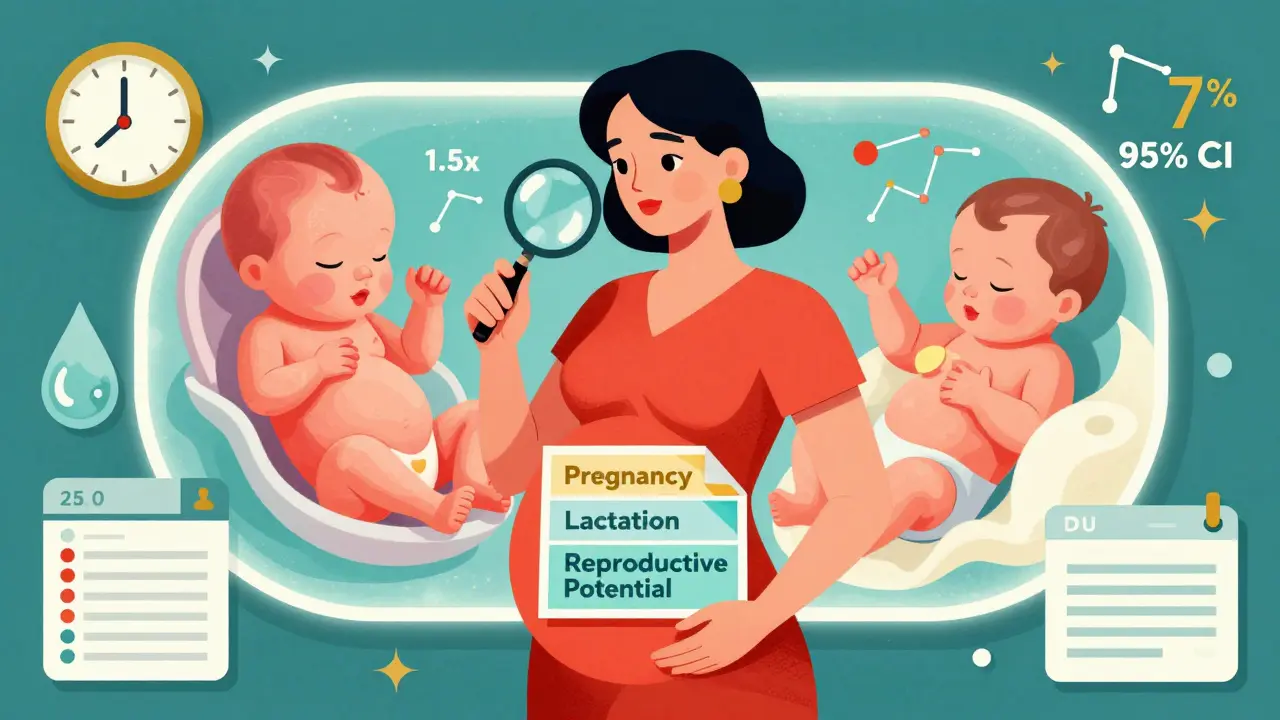
When you're pregnant or breastfeeding, even a simple prescription can feel overwhelming. You want to know: Is this drug safe? What are the real risks? The old system-letters like A, B, C, D, and X-was easy to remember but dangerously misleading. Today, drug labels for pregnancy and breastfeeding have changed completely. The FDA’s Pregnancy and Lactation Labeling Rule (PLLR), fully in effect since 2020, replaced those simple letters with detailed, evidence-based narratives. If you're a patient, a caregiver, or even a healthcare provider, understanding this new format is no longer optional. It’s essential.
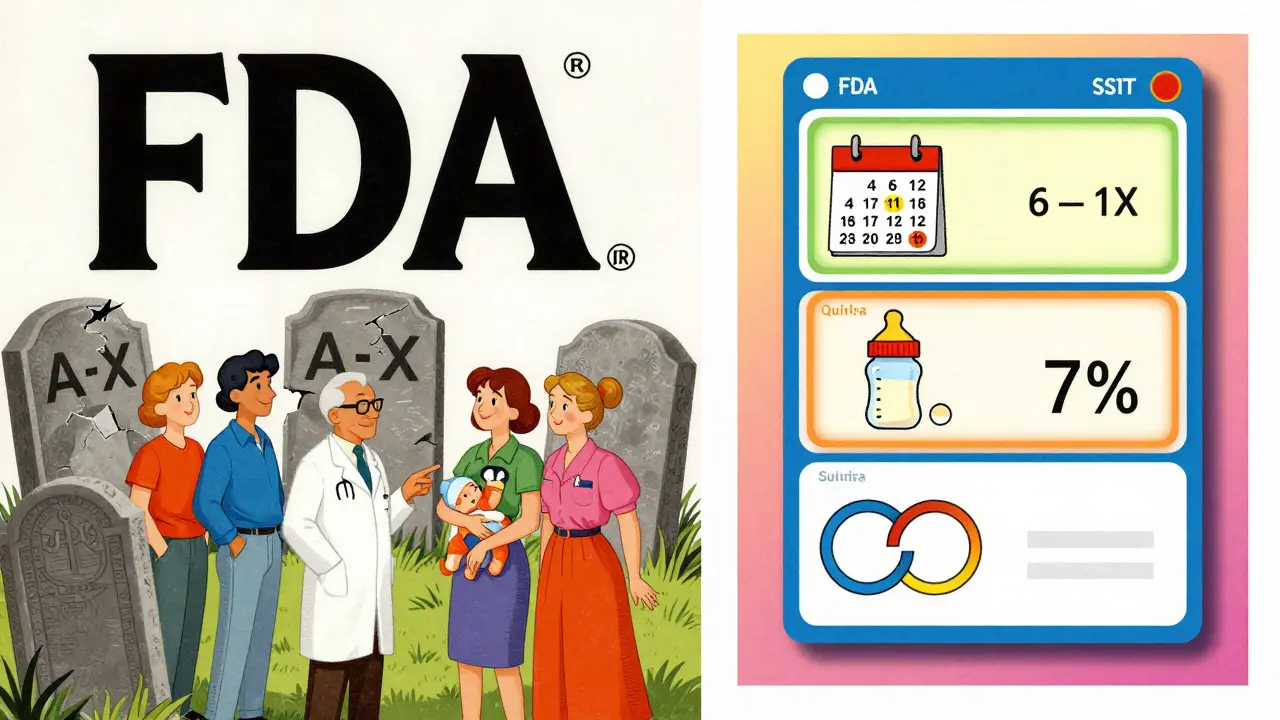
Why the Old Letter System Failed
For decades, drug labels used five letters to summarize pregnancy risk:
- A: Safe in humans
- B: Animal studies show no risk, but human data is limited
- C: Risk can't be ruled out
- D: Evidence of human risk
- X: Contraindicated-don’t use
But here’s the problem: these letters weren’t rankings. They were categories-and most people treated them like grades. A “C” didn’t mean “moderate risk.” It meant “insufficient data.” Yet, 70% of all prescription drugs were labeled “C,” making it meaningless. A 2017 FDA study found that 68% of patients and providers misinterpreted the letters as a safety scale. That’s dangerous. A drug labeled “C” could be harmless-or it could cause severe birth defects. Without context, you’re guessing.
The New System: Three Sections, One Goal
Since June 30, 2015, all new and updated drug labels follow the PLLR. The goal? Give you real numbers, real data, and real context. Instead of a letter, you now get three clear subsections under Section 8:
- 8.1 Pregnancy
- 8.2 Lactation
- 8.3 Females and Males of Reproductive Potential
Each one follows the same structure: Risk Summary, Clinical Considerations, and Data. Let’s break them down.
Pregnancy (8.1): What You Need to Know
Forget “C” or “D.” The new label tells you:
- Background risk: Every pregnancy carries a 3% risk of major birth defects and a 10-20% risk of miscarriage. This is your baseline.
- Drug-specific risk: “Exposure to this drug is associated with a 1.5-fold increased risk of neural tube defects.” That means if the background risk is 3%, the drug raises it to about 4.5%-not 15%, not 50%.
- Timing matters: “Increased risk observed only with first-trimester exposure.” That’s critical. Some drugs are only risky during specific weeks.
- Registry info: Is there a pregnancy registry tracking outcomes? If yes, you can join. As of 2023, 47 active registries exist for drugs like antiseizure meds, antidepressants, and biologics.
Example: A label might say, “In a prospective cohort of 1,200 pregnancies, maternal use of [Drug] during weeks 6-12 was associated with a 2.1-fold increased risk of cleft lip (95% CI: 1.3-3.4).” That’s precise. It tells you when, how much, and how sure they are.
Lactation (8.2): Breastfeeding and Medication
Many mothers stop breastfeeding because they fear their meds will harm their baby. The new label fixes that.
- Drug levels in milk: “Infant exposure is estimated at 7% of the maternal weight-adjusted dose.” That’s not zero-but it’s low.
- Infant effects: “No adverse effects reported in 150 breastfed infants.” Or: “Mild drowsiness observed in 2 of 40 infants.”
- Timing of dosing: “Peak milk concentration occurs 1-2 hours after oral dose. Consider feeding just before dosing.”
Before PLLR, most labels just said “Use with caution.” Now, you get numbers. If a drug shows less than 10% infant exposure, and no reported side effects, it’s often safe. You don’t need to stop breastfeeding.
Females and Males of Reproductive Potential (8.3)
This section is often overlooked-but it matters. It tells you:
- Do you need a pregnancy test before starting this drug?
- What kind of contraception is recommended? (And what’s the failure rate?)
- Is there a risk of infertility? How long does it last?
For example, some acne drugs or cancer treatments require two forms of contraception with a combined failure rate under 1%. Others may require a negative pregnancy test 24 hours before each dose. This isn’t bureaucracy-it’s prevention.
How to Actually Use This Info
Reading the label is just step one. Here’s how to make sense of it:
- Start with the Risk Summary. What’s the background risk? What’s the drug’s added risk? Is it relative or absolute? A “2-fold increase” sounds scary-but if the baseline is 1%, now it’s 2%. That’s still low.
- Check the timing. Is the risk only in the first trimester? Or does it persist? Some drugs are safe after week 12.
- Look at the data. Was this studied in 50 people? Or 1,200? Was it a randomized trial or just case reports? Bigger studies = more reliable.
- Don’t ignore Clinical Considerations. These are your action steps: “Monitor fetal growth every 4 weeks.” “Avoid breastfeeding for 4 hours after dose.” “Consider alternative if used after 28 weeks.”
Many clinicians use tools like MotherToBaby or TERIS to interpret labels. These are free, evidence-based services staffed by specialists. If your doctor says “I’m not sure,” ask if they’ve checked one.
Common Misunderstandings
Even with better labels, mistakes happen.
- Mistake: “It says ‘increased risk’-so I shouldn’t take it.” Truth: Increased doesn’t mean dangerous. If your condition is life-threatening (like epilepsy or depression), the risk of *not* treating may be higher than the drug’s risk.
- Mistake: “I’m breastfeeding, so I can’t take anything.” Truth: Over 90% of medications have low or negligible transfer into breast milk. Many are safe.
- Mistake: “I took this before I knew I was pregnant-my baby will be harmed.” Truth: Most drugs don’t cause harm in early pregnancy. The label will say if exposure before week 6 is risky. Often, it’s not.
What’s Changing Now?
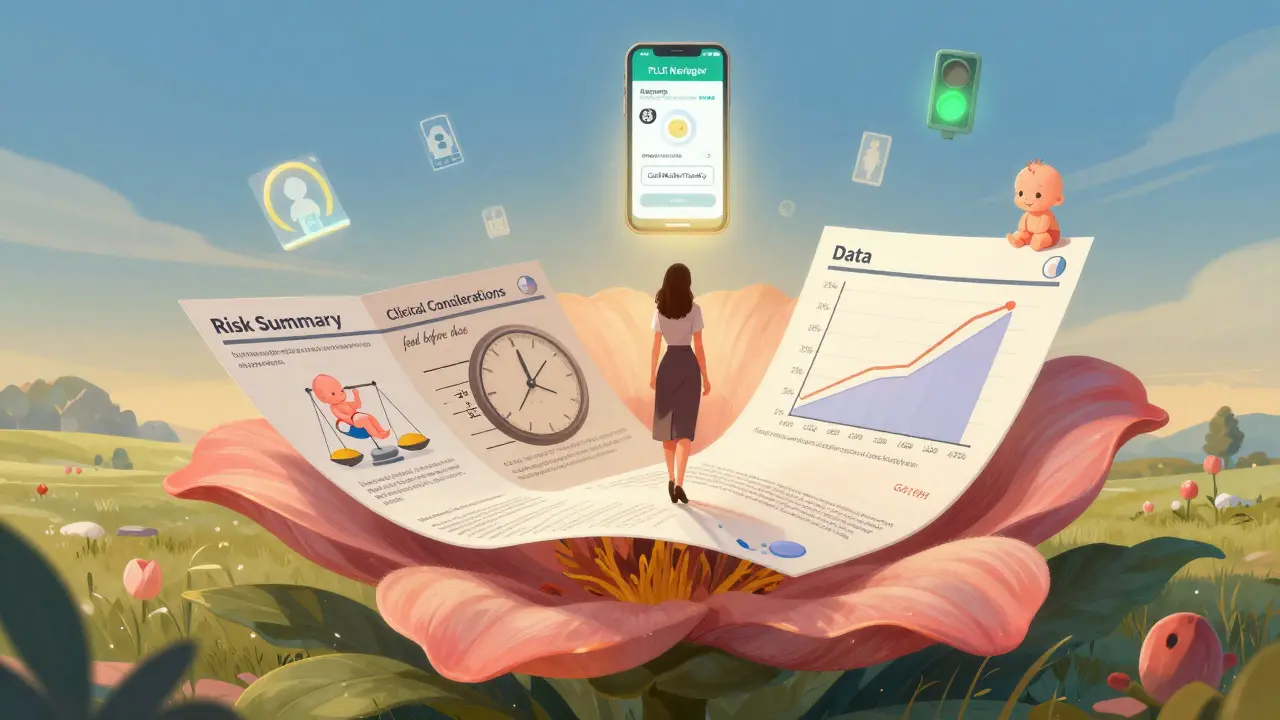
The FDA isn’t done. In 2023, they proposed adding visual risk icons to labels-like traffic lights (green/yellow/red)-to help quick decisions. By 2025, they plan to update 100% of pregnancy-related labels. New drugs must now include detailed lactation pharmacokinetic data. And registries are getting better: over 25,000 pregnancies were tracked in 2022, up from 5,000 in 2014.
Still, gaps remain. A 2023 government report found that 63% of psychiatric drug labels lack specific gestational timing. And only 15% of registry participants are Black or Hispanic-even though they make up 30% of U.S. pregnancies. Better data is coming, but you shouldn’t wait for it.
What to Do Next
If you’re pregnant or breastfeeding and prescribed a medication:
- Ask for the updated FDA label. It’s now in the drug’s prescribing information (PI) or package insert.
- Use the PLLR Navigator app (free, from FDA) to search drug labels by name.
- Call MotherToBaby at 1-866-626-6847. They’ll explain the label in plain language-no charge.
- Don’t stop a medication without talking to your provider. Untreated conditions like high blood pressure, diabetes, or depression carry higher risks than most drugs.
The goal isn’t to avoid all risk. It’s to make informed choices. With the new labeling system, you have more information than ever before. Use it.
What do the new pregnancy drug labels replace?
The new labels replace the outdated letter categories (A, B, C, D, X) that were used since 1979. These letters were often misinterpreted as safety grades, when they were meant to reflect the type of available data. The current system uses detailed narrative sections under Pregnancy (8.1), Lactation (8.2), and Reproductive Potential (8.3), providing specific risk numbers, timing details, and clinical guidance.
How do I find the updated drug label for my medication?
Look for the FDA-approved prescribing information (PI) or package insert that comes with your prescription. Most are available online through the FDA’s Drugs@FDA database or the manufacturer’s website. You can also use the free FDA PLLR Navigator app to search by drug name. Pharmacists can also provide the current label upon request.
Are all drugs updated to the new labeling system?
As of 2023, about 78% of prescription drugs in the U.S. market have been updated under the Pregnancy and Lactation Labeling Rule. All new drugs approved after June 30, 2015, use the new format. Older drugs were required to update by December 2020. If your medication was approved before 2015 and hasn’t been relabeled, ask your provider or pharmacist if the label has been updated.
Is it safe to breastfeed while taking medication?
Yes, in most cases. The new lactation section (8.2) provides specific data on how much of the drug passes into breast milk-often less than 10% of the maternal dose-and whether any effects have been observed in infants. Many commonly used medications, including antidepressants, blood pressure drugs, and antibiotics, are considered safe with minimal infant exposure. Always check the label and consult a specialist if unsure.
What should I do if I took a medication before knowing I was pregnant?
Don’t panic. Most medications do not cause birth defects, especially if taken before week 6 of pregnancy, when most organs haven’t started forming. The new label will specify if exposure during early pregnancy carries risk. If you’re concerned, contact MotherToBaby or your OB/GYN. They can assess your specific drug, timing, and dosage. In most cases, the risk is very low.
Why do some labels say ‘risk cannot be ruled out’?
This phrase means there isn’t enough human data to confirm safety or risk. It’s not the same as saying ‘it’s dangerous.’ Before PLLR, this was labeled ‘C’-a category that applied to 70% of drugs. Now, the label explains why data is limited: small studies, lack of controls, or no registry participation. It doesn’t mean you shouldn’t take the drug-it means you and your provider need to weigh the known benefits against uncertain risks.
Chris Crosson
March 26, 2026 AT 04:36Caroline Bonner
March 27, 2026 AT 21:18winnipeg whitegloves
March 27, 2026 AT 22:47Linda Foster
March 28, 2026 AT 04:46Korn Deno
March 29, 2026 AT 13:14Stephen Alabi
March 30, 2026 AT 13:15Pat Fur
March 30, 2026 AT 14:55Anil Arekar
March 31, 2026 AT 04:56Donna Fogelsong
April 2, 2026 AT 04:00Sean Bechtelheimer
April 2, 2026 AT 22:33rebecca klady
April 3, 2026 AT 17:16Namrata Goyal
April 5, 2026 AT 16:33Alex Arcilla
April 7, 2026 AT 05:57Blessing Ogboso
April 8, 2026 AT 08:48