
 Mar, 18 2026
Every time you pick up a new prescription, you get a small booklet with it - the medication guide. Most people glance at it, tuck it in the drawer, and forget about it. But hidden in those pages are life-saving details about overdose risks and what to do if things go wrong. If you or someone you care about takes medications like opioids, benzodiazepines, or certain antidepressants, knowing how to read this guide could make all the difference.
Where to Find the Overdose Warning Section
Medication guides don’t bury their warnings. They follow a strict format set by the FDA. Look for three key sections: Boxed Warning, Warnings and Precautions, and Overdosage.
The Boxed Warning is the most serious alert the FDA requires. It’s printed in a black border at the top of the guide - hard to miss. If your medication has one, it means there’s a known risk of serious harm, including death from overdose. For example, opioid painkillers like oxycodone or fentanyl patches always carry this warning. It doesn’t just say "don’t take too much." It tells you exactly what can happen: slowed breathing, loss of consciousness, and death if not treated fast.
Beneath that, the Warnings and Precautions section explains who is at higher risk. It might say things like:
- "Risk of overdose is higher in people with breathing problems."
- "Avoid alcohol while taking this medication."
- "Do not use if you have liver disease."
These aren’t general suggestions. They’re based on clinical data. If you have sleep apnea, COPD, or a history of substance use, this section is telling you your body handles the drug differently. Ignoring it increases your overdose risk.
Understanding the Overdosage Section
This is where the guide gets specific. The Overdosage section doesn’t just say "take less." It gives numbers. For example:
- "Single doses greater than 40 mg of oxycodone may be fatal."
- "Ingestion of more than 5 mg of alprazolam may cause severe sedation."
These aren’t guesses. They’re based on real overdose cases reported to poison control centers. The guide also lists symptoms you should watch for:
- Extreme drowsiness or inability to wake up
- Shallow or slow breathing
- Blue lips or fingernails
- Slow heartbeat
- Loss of consciousness
If you see these signs in yourself or someone else - don’t wait. Call emergency services immediately.
Locating the Antidote Information
Not all overdoses are the same. And not all antidotes are listed the same way. The guide will tell you if there’s a specific reversal agent.
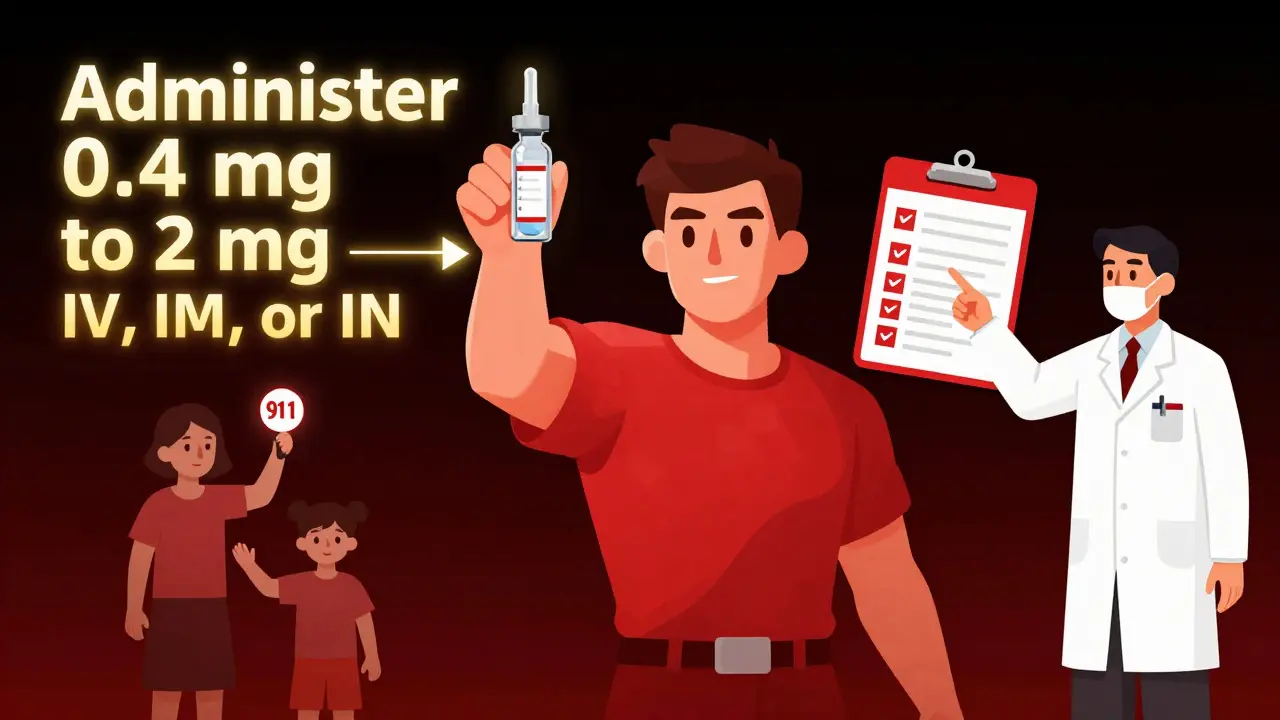
For opioids, it will clearly state: "Naloxone is an opioid antagonist that may reverse respiratory depression." It might even say how much to use: "Administer 0.4 mg to 2 mg IV, IM, or IN, repeat as needed." This is critical. If you have naloxone at home, this section tells you whether it will work and how to use it.
For benzodiazepines like Xanax or Valium, the guide may say: "Flumazenil may be used in a hospital setting." That means you won’t find flumazenil at the pharmacy - it’s only given by medical staff. Knowing this saves time in an emergency. You won’t waste energy searching for a drug that isn’t available to you.
Some medications, like certain antidepressants (SSRIs or SNRIs), don’t have a direct antidote. But the guide will warn you about serotonin syndrome - a dangerous reaction from too much. Symptoms include high fever, muscle stiffness, confusion, and rapid heart rate. If you see this, you need to go to the ER - no home fix exists.
What the Guide Won’t Tell You (But You Need to Know)
Medication guides are precise, but they’re not complete. They won’t say:
- "Don’t take this with your neighbor’s leftover pills."
- "Your painkiller might be stronger than you think."
- "Mixing this with sleep aids can kill you."
That’s because they’re written for one drug at a time. You have to connect the dots yourself.
For example, if you take oxycodone for pain and also take a sleep aid like zolpidem, the guide for each drug might say: "Avoid alcohol." But neither mentions the other drug. That’s dangerous. Both drugs slow breathing. Together, they can stop it. The FDA doesn’t test every combination - you have to.
Ask your pharmacist: "If I take this with my other meds, is there a hidden risk?" They’re trained to spot these overlaps. And if you’re on three or more medications that affect your central nervous system - stop guessing. Get a medication review.
How to Use This Info Before an Emergency
Don’t wait for a crisis. Do this now:
- Find your medication guide. If you lost it, download it from the drugmaker’s website or ask your pharmacy for a copy.
- Underline the Boxed Warning. Highlight the overdose symptoms.
- Write down the antidote - if there is one - and keep it on your phone.
- Give a copy to a family member or roommate. Tell them: "If I can’t wake up, call 911 and give them this info."
- Check your guide every time you refill. Doses change. Warnings update.
Many people don’t realize that overdose risk isn’t about being "addicted." It’s about chemistry. Even someone taking their exact dose can overdose if they drink alcohol, get sick, or take another drug that interacts with it. The guide tells you when that line gets crossed.
Why This Matters More Than You Think
In the UK, over 1,000 people die each year from drug-related overdoses. Most of them were taking prescribed medication. Not because they were using too much - but because they didn’t know the risks.
Medication guides exist because these deaths are preventable. You don’t need to be an expert. You just need to know where to look.
If you’re on long-term pain medication, anxiety treatment, or sleep aids - you’re at risk. Not because you’re careless. But because these drugs are powerful. And the guide? It’s your roadmap to staying safe.
Can I rely on the warning label on the pill bottle instead of the medication guide?
No. The pill bottle label only gives basic info: name, dose, and frequency. It doesn’t include overdose symptoms, antidotes, or serious risk factors like liver disease or breathing problems. The medication guide is the only document that contains full safety details approved by the FDA. Always read the guide - not just the label.
What if my medication guide doesn’t mention naloxone?
If you’re taking an opioid - even a low-dose one - you should still have naloxone available. Some older guides don’t list it because they weren’t updated after FDA requirements changed. Check the drug’s official website or ask your pharmacist. If you’re at risk for overdose (even slightly), having naloxone on hand is a smart precaution. It’s now available without a prescription in the UK.
Can I use the medication guide to tell if my dose is too high?
Not directly. The guide tells you the maximum safe dose, but not what’s right for you. Your dose is based on your weight, age, other medications, and health conditions. If you feel unusually sleepy, confused, or have trouble breathing - don’t assume it’s "normal." Call your doctor. The guide helps you recognize danger - not adjust your dose.
Are medication guides the same for generic and brand-name drugs?
Yes. By law, generic drugs must have the same safety information as their brand-name counterparts. The active ingredient is identical, so the overdose risks and antidotes are the same. You can use the brand-name guide if you lost the generic one - the information will match.
What should I do if I find a mistake in my medication guide?
Contact the drug manufacturer directly - their contact info is usually on the last page. Also, tell your pharmacist and prescribing doctor. The FDA requires manufacturers to update guides when new safety data emerges. If something looks wrong, it might be outdated. Never ignore a discrepancy - especially if it involves overdose risks.
Laura Gabel
March 18, 2026 AT 20:09Jeremy Van Veelen
March 19, 2026 AT 05:15Kyle Young
March 20, 2026 AT 11:53Kendrick Heyward
March 20, 2026 AT 20:24lawanna major
March 22, 2026 AT 19:28Ayan Khan
March 24, 2026 AT 00:26Emily Hager
March 24, 2026 AT 14:38Melissa Starks
March 26, 2026 AT 06:10Lauren Volpi
March 26, 2026 AT 22:49Kal Lambert
March 28, 2026 AT 12:17