
 Jan, 28 2026
Why Medication Adherence Crashes During Life Changes
When your life shifts-whether you’re moving cities, starting a new job, going through a breakup, or dealing with a family crisis-your medication routine doesn’t pause. But yours does. And that’s where things go wrong.
Research shows that medication adherence drops by an average of 32% during major life transitions. In some cases, it plummets by 40% within the first two weeks. That’s not just inconvenient-it’s dangerous. For people managing diabetes, heart disease, or mental health conditions, missing doses can mean hospital visits, complications, or even life-threatening events.
It’s not laziness. It’s not lack of willpower. It’s a brain under stress. When your environment changes, your routines break, and your emotional bandwidth shrinks, taking a pill becomes one of the first things to slip. And most healthcare systems don’t ask about it.
The Three Lists That Save Your Routine
Here’s what actually works: stop trying to control everything. Start focusing on what you can.
A 2023 analysis from Supportive Care found that during transitions, people waste energy on things they can’t change-like a new boss’s schedule, a delayed move-in date, or a partner’s emotional withdrawal. That mental exhaustion directly hurts adherence.
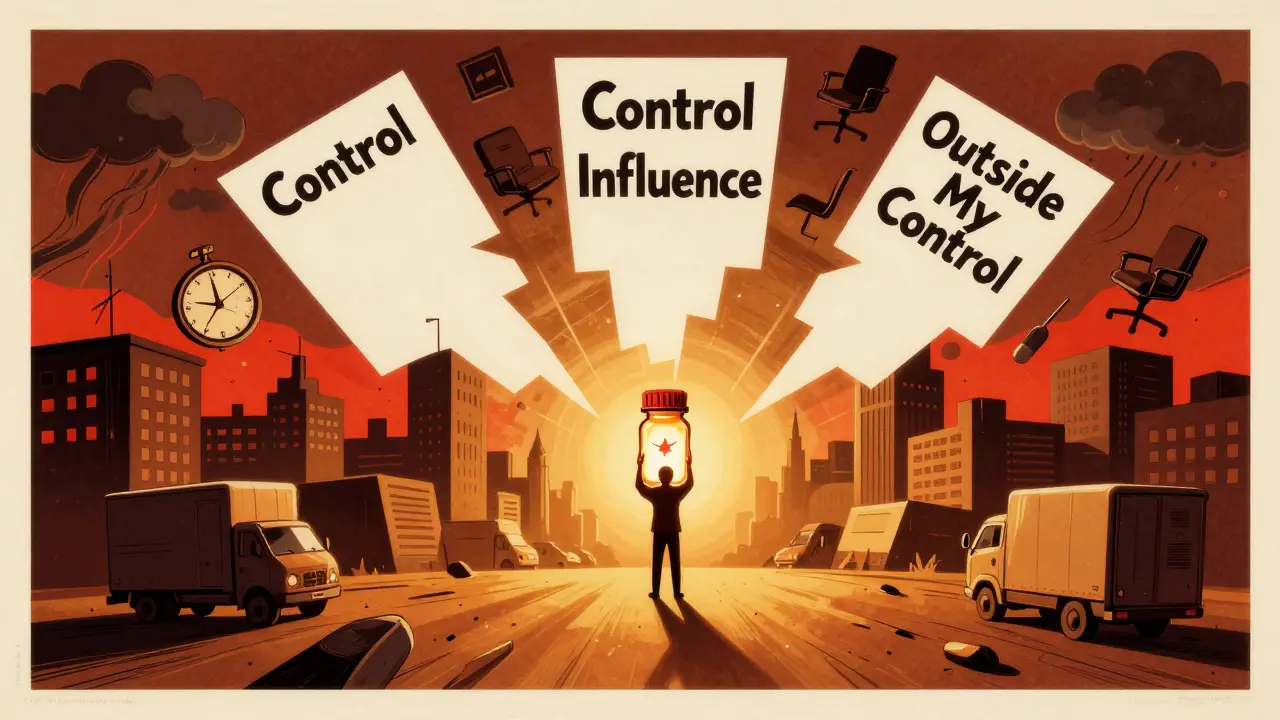
Instead, make three lists:
- Things you can control directly (27.3% of concerns): When you take your pill, where you store it, who reminds you.
- Things you can influence (43.8%): Talking to your doctor about adjusting timing, asking a friend to check in, switching to a pharmacy near your new home.
- Things outside your control (28.9%): Traffic delays, your employer’s policy on sick days, weather.
Move your energy from the third list to the first two. That shift alone improves adherence by 22.7%. You’re not fixing the chaos-you’re building a stable core inside it.
Anchor Routines: 3-5 Daily Habits That Keep You Grounded
You don’t need a perfect schedule. You need anchors.
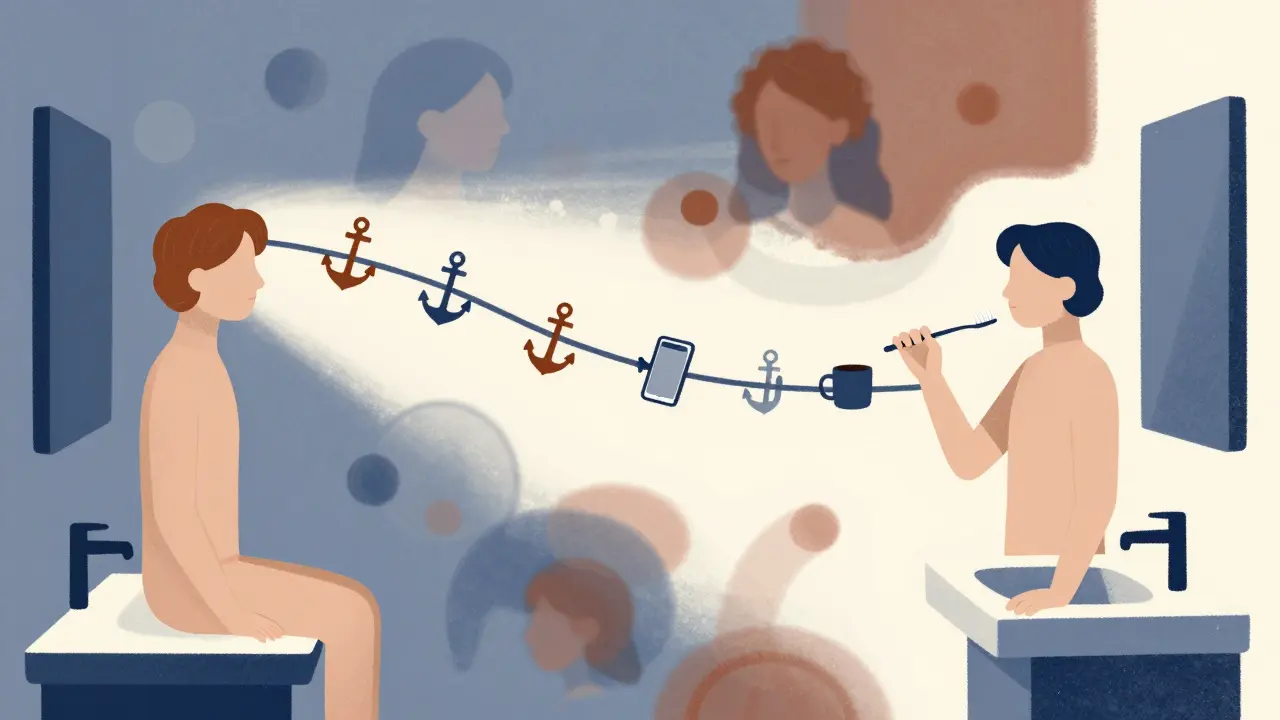
Studies from the Journal of Personality and Social Psychology show that keeping just 3 to 5 daily activities consistent during transitions reduces psychological distress by 23% and boosts medication adherence by over 31%. These aren’t rigid time blocks-they’re touchpoints.
Examples:
- Taking your morning pill right after brushing your teeth.
- Putting your evening meds next to your favorite coffee mug.
- Setting a silent phone alarm at the same time you make your bed.
These don’t have to be at the same hour. They just need to be linked to something you already do every day. That’s called habit stacking. It works because your brain doesn’t have to remember-it just reacts.
Try this: Pick one anchor you already have. Attach one medication task to it. Do it for 7 days. That’s it. No apps. No complicated charts. Just one solid link.
Why Reminder Apps Fail During Transitions (And What Works Better)
Most people turn to pill reminder apps when things get messy. And most of them quit using them within a month during transitions.
Why? Because generic apps assume your life stays the same. They send a notification at 8 a.m. But what if you’re on a plane? What if you’re sleeping in a stranger’s guest room? What if your phone died?
Research from the Journal of Medical Internet Research found that during stable times, reminder apps improve adherence by 22.8%. During transitions? That number drops to 8.3%.
What works better? Tools designed for change.
Apps like TransitionAdhere and LifeShiftRx let you map out scenarios: “I’m moving next week,” “I start a new shift on Monday,” “My partner is out of town.” They adjust reminders, suggest backup plans, and even generate printable checklists for your new environment.
They have a 4.2/5 rating. Generic apps? 3.5/5. The difference isn’t bells and whistles-it’s understanding that your life is unstable, and your tool should be too.
The Power of Saying No (And How It Keeps You Healthy)
One of the biggest hidden reasons people stop taking meds during transitions? They say yes to too much.
People who successfully maintain adherence during life changes are 3.2 times more likely to say “no” to non-essential commitments. That’s not selfish. It’s survival.
When you’re relocating, you don’t need to host a housewarming party. When you’re grieving, you don’t need to attend every family gathering. When you’re starting a new job, you don’t need to volunteer for every committee.
Protect your health routine like you’d protect your sleep. Set boundaries early. Tell people: “I’m going through a big change right now, and I need to keep my health routine simple.” Most will understand.
And if they don’t? That’s not your problem. Your health is.
Therapy That Actually Helps: Acceptance and Commitment Therapy (ACT)
Most people think adherence is about remembering pills. It’s not. It’s about staying committed when everything feels like it’s falling apart.
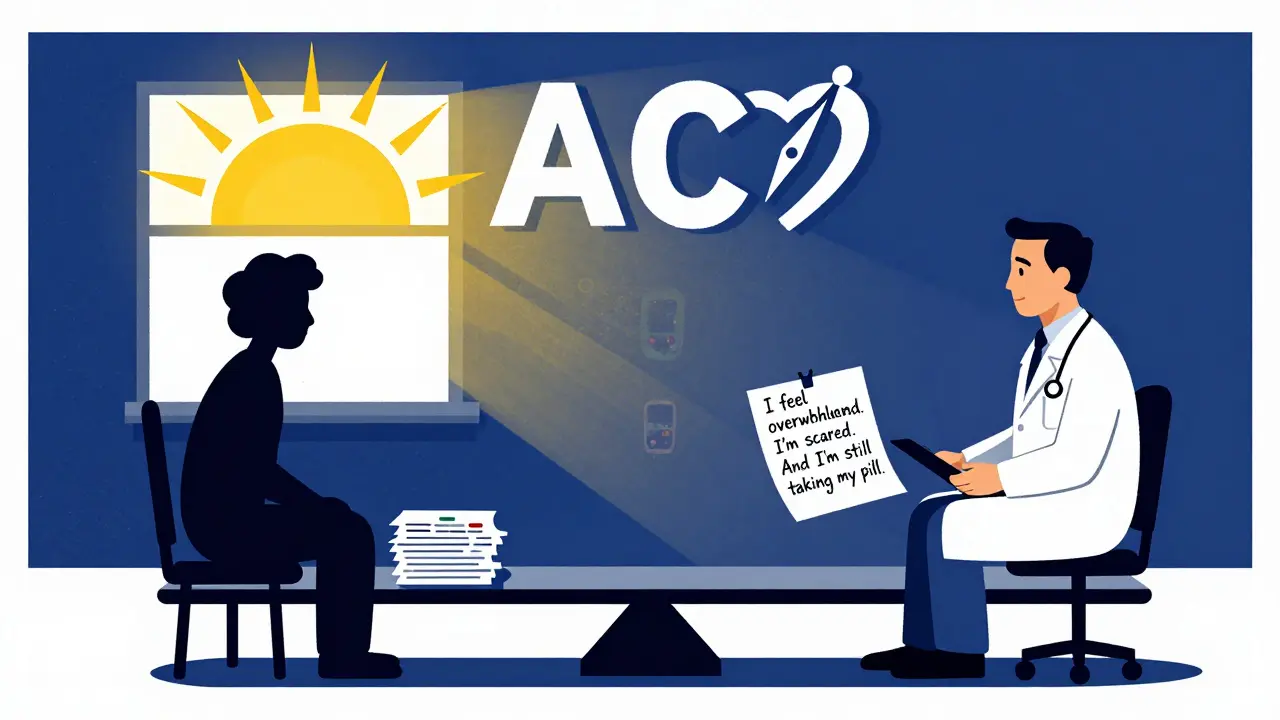
Acceptance and Commitment Therapy (ACT) is a form of psychological support that teaches you to accept discomfort without letting it derail your values. In a 2022 JAMA Internal Medicine trial, ACT improved medication adherence by 48.6% during transitions-far outperforming standard counseling or simple education.
How it works:
- You identify what matters most to you-being present for your kids, staying independent, avoiding hospital stays.
- You accept that stress, fear, and chaos are part of the transition.
- You choose to take your medication anyway-not because you have to, but because it aligns with who you want to be.
This isn’t positive thinking. It’s real thinking. It’s saying: “I feel overwhelmed. I’m scared. And I’m still taking my pill.”
If your doctor doesn’t mention ACT, ask for it. It’s not a luxury. It’s a proven tool.
What Your Doctor Should Be Asking (But Probably Isn’t)
In June 2023, the American College of Physicians urged all providers to screen for upcoming life transitions during routine visits. Yet, most still don’t.
Here’s what you need to hear: “Are you going through any big changes in the next few months?”
That’s it. That simple question opens the door to a transition-specific plan. And if your doctor doesn’t ask, ask them.
Be ready with answers:
- “I’m moving in two weeks.”
- “My shift schedule is changing.”
- “I’m separating from my partner.”
Then ask: “Can we adjust my medication plan to fit this?”
Doctors can help you switch to once-daily doses, get prescriptions delivered, or set up a refill reminder system tied to your new location. But they won’t unless you tell them.
Real Stories: What Actually Helped
On Reddit’s r/ChronicIllness, users shared their wins and failures.
One person, u/MedAdherenceWarrior, said: “When I started my new job, I broke my medication routine into tiny steps with my doctor. First, I found a pharmacy near my office. Then I set a calendar alert labeled ‘Pill Time’ that popped up during my lunch break. Within a month, I was at 94% adherence.”
Another, u/TransitionStruggles, shared: “After my divorce, I stopped taking my meds for three months. No one asked. I felt invisible. I wish someone had said, ‘This is going to be hard. Let’s plan for it.’”
The difference? Preparation. Support. A plan made for real life-not perfect life.
What to Do Right Now
You don’t need to fix everything today. But you can start with one thing.
- Look at your calendar. What major change is coming in the next 60 days? Moving? Job change? Relationship shift?
- Write down your three daily anchors. What do you already do every day? Tie one pill to one of those actions.
- Call your pharmacy. Ask if they offer delivery or automated refill reminders. Do it today.
- Text someone you trust: “I’m going through a big change. Can you check in on me in two weeks?”
- Ask your doctor: “Are there any changes we should make to my plan because of what’s coming?”
That’s it. Five small steps. No app needed. No miracle cure. Just a plan made for the messy, unpredictable reality of life.
Why This Matters More Than You Think
Non-adherence during transitions isn’t just a personal problem. It’s a systemic one.
The U.S. spends $100-300 billion a year on preventable hospitalizations linked to missed medications. The American Hospital Association reports that 68% of chronic disease failures happen within three months of a life change.
But here’s the good news: when you get adherence right during transitions, hospital readmissions drop by up to 24%. Costs go down. Quality of life goes up.
You’re not just taking a pill. You’re protecting your future. And that’s worth a little extra effort-even when everything else feels like it’s spinning.
Laia Freeman
January 29, 2026 AT 14:16Megan Brooks
January 31, 2026 AT 14:05Doug Gray
February 1, 2026 AT 14:33LOUIS YOUANES
February 3, 2026 AT 01:26Jasneet Minhas
February 4, 2026 AT 19:12Eli In
February 5, 2026 AT 09:04Sheryl Dhlamini
February 5, 2026 AT 12:57Kristie Horst
February 5, 2026 AT 23:30Andy Steenberge
February 7, 2026 AT 15:14rajaneesh s rajan
February 7, 2026 AT 22:32paul walker
February 9, 2026 AT 03:58Alex Flores Gomez
February 9, 2026 AT 06:01