
 Dec, 25 2025
Smoking & Medication Dose Adjustment Calculator
How Smoking Affects Your Medications
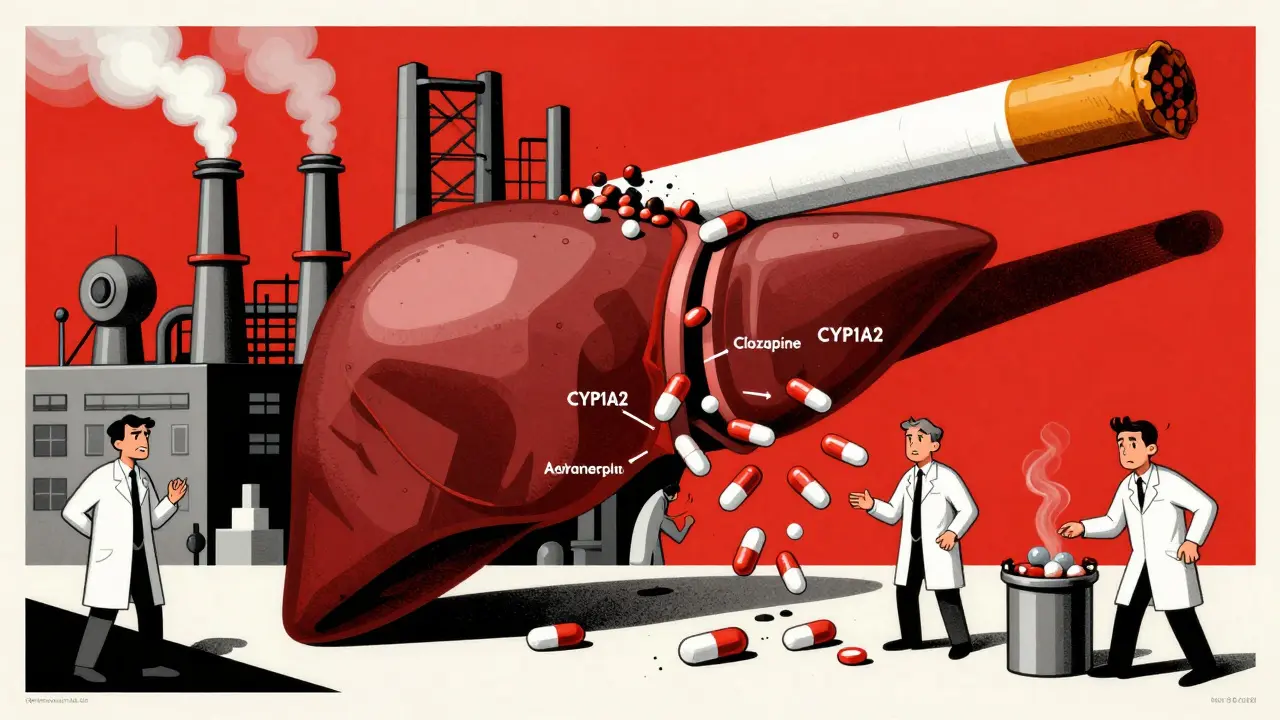
Tobacco smoke increases liver enzymes (especially CYP1A2) that break down medications faster. Smokers often need higher doses of certain drugs. When you quit smoking, these enzymes decrease, potentially causing toxicity if doses aren't adjusted.
Enter your information and click "Calculate Dose Adjustment" to see recommended dose adjustments.
When you smoke, you’re not just exposing your lungs to tar and nicotine-you’re changing how your body processes medications. This isn’t a theoretical concern. It’s a daily reality for millions of people taking drugs like theophylline, clozapine, or even common painkillers. The reason? Tobacco smoke turns on powerful enzymes in your liver that break down medications faster than normal. If you don’t know this, you could be taking a drug that’s barely working-or, worse, suddenly overdose when you quit smoking.
What Happens in Your Liver When You Smoke?
Tobacco smoke contains chemicals called polycyclic aromatic hydrocarbons (PAHs). These don’t just damage cells-they send a signal to your liver to produce more of certain enzymes, especially CYP1A2. This enzyme is one of the main tools your body uses to break down drugs. When it’s overworked, medications get cleared out too quickly. That means less of the drug stays in your bloodstream, so it doesn’t work as well. Studies show that smokers have 30-50% higher CYP1A2 activity than non-smokers. That’s not a small difference. For drugs with a narrow safety window-where the difference between a therapeutic dose and a toxic one is tiny-this can be dangerous. The same thing happens with CYP2E1 and some UGT enzymes, but CYP1A2 is the biggest player. It doesn’t happen overnight. It takes about two weeks of regular smoking for enzyme levels to peak. And once you stop? Your body doesn’t forget. Enzyme activity starts dropping within 72 hours, and by two to four weeks, it’s back to normal. That’s why quitting smoking can be just as risky as starting it-if your medication dose hasn’t been adjusted.Which Medications Are Most Affected?
Not all drugs are impacted equally. Some are barely touched. Others? They’re completely thrown off balance. Here are the big ones:- Theophylline (used for asthma and COPD): Smokers clear it 58-100% faster. Their half-life drops from 8 hours to just 3. That’s why many smokers need double the dose. When they quit, levels spike-sometimes into toxic range. Hospitals see this all the time: patients admitted for seizures or heart rhythm problems after quitting smoking, with theophylline levels three times higher than normal.
- Clozapine (an antipsychotic): Smokers need up to 50% more of this drug to get the same effect. A 2023 FDA review found 147 cases of clozapine toxicity after smoking cessation, with 89% happening within two weeks of quitting. One patient went from stable on 400 mg to having seizures at 250 mg after quitting.
- Olanzapine: Clearance increases by 98% in smokers. Serum levels drop by 12%. That means someone might feel fine on their dose while smoking-then suddenly feel dizzy or sedated after quitting.
- Duloxetine: Used for depression and nerve pain. Smokers metabolize it faster. If they quit, they may experience nausea, dizziness, or even serotonin syndrome if the dose isn’t lowered.
- Acetaminophen (Tylenol): Smokers break it down faster via CYP2E1. But here’s the twist: that same pathway produces a toxic byproduct. So while they may need more to feel pain relief, they’re also at higher risk of liver damage if they take too much.
- Methadone: A 15% increase in clearance means smokers may need slightly higher doses. When they quit, withdrawal symptoms can worsen-not because of addiction, but because the drug is now staying in their system longer.
On the flip side, drugs like sertraline, fluoxetine, or propranolol (metabolized by CYP2D6) barely change. So if your doctor tells you smoking doesn’t affect your antidepressant, they might be right-but only if you’re not taking one of the few that rely on CYP1A2.
What Happens When You Quit Smoking?
This is where things get dangerous-and often overlooked. Most patients and even many doctors assume that once you stop smoking, your body returns to normal. But they forget: your medications didn’t change. The same dose that kept your drug levels stable while smoking now becomes too much. The result? Toxicity. A 2022 survey in the Journal of General Internal Medicine found that only 37% of doctors check smoking status before prescribing theophylline. That’s shocking. In one Reddit thread, a pharmacist shared: “Had a patient hospitalized for theophylline toxicity 10 days after quitting smoking-levels went from subtherapeutic to toxic without dose change.” Same thing happens with antidiabetics. Pioglitazone (used for type 2 diabetes) is partly broken down by CYP1A2. Smokers need 20-30% more. When they quit, their blood sugar crashes. One user on DiabetesDaily.com wrote: “My A1C dropped from 7.8% to 5.9% two weeks after quitting smoking. My doctor didn’t warn me this could happen.” That’s not luck-it’s a side effect of enzyme reversal.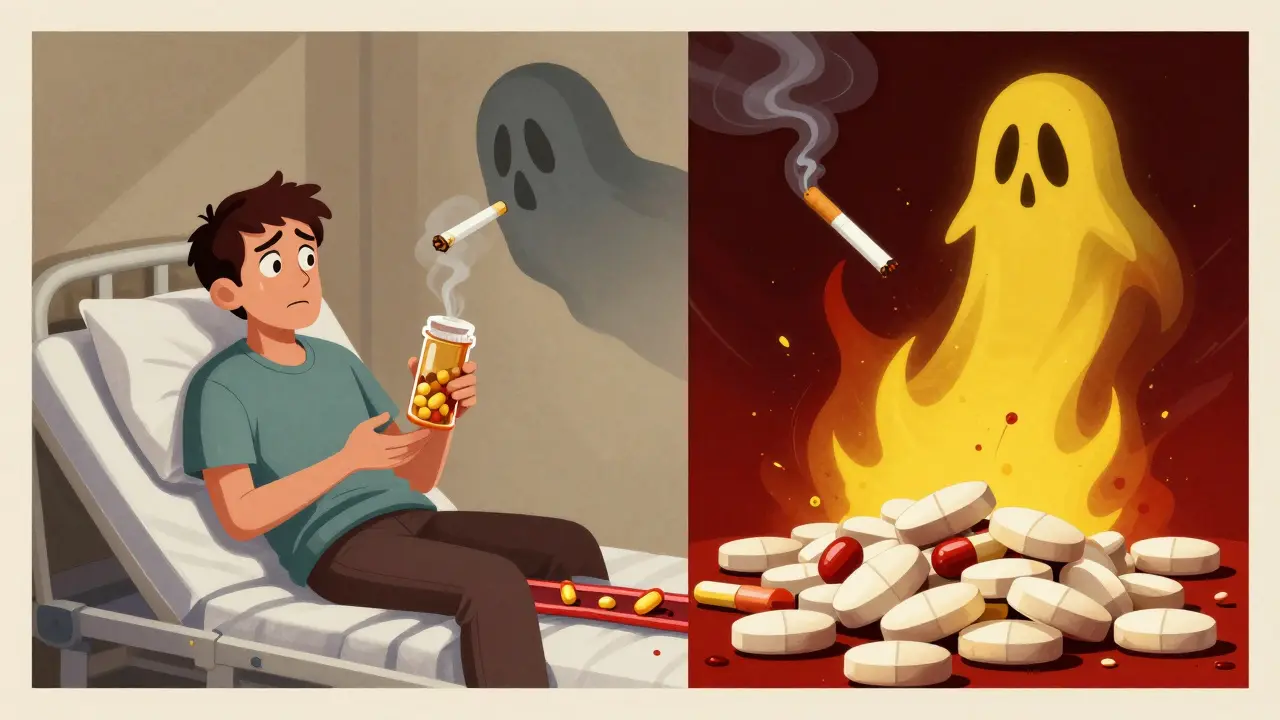
How Doctors Should Manage This
The solution isn’t to tell people to stop smoking-it’s to treat smoking status like a vital sign. The NHS Specialist Pharmacy Service and UCSF both recommend a clear protocol:- Always ask how many cigarettes a day the patient smokes. Don’t just say “yes” or “no.”
- For new smokers: Monitor drug levels weekly for 2-3 weeks. Increase dose gradually if needed.
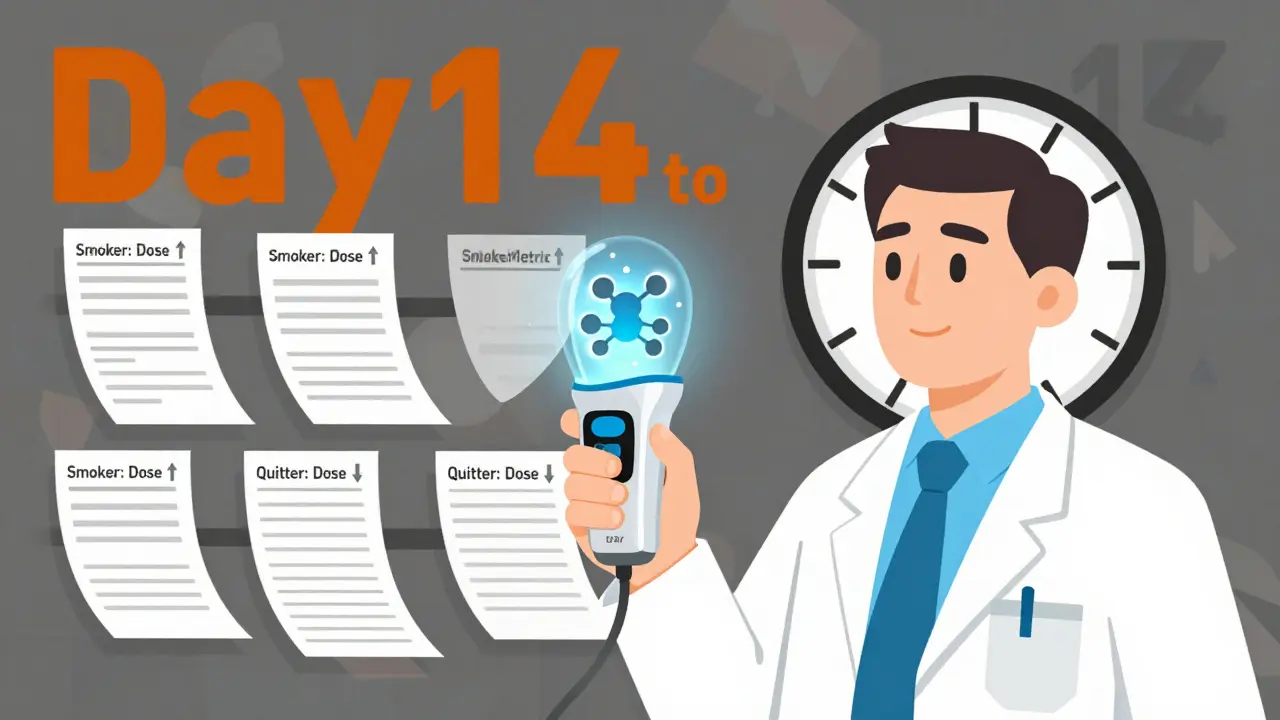
- For those quitting: Reduce doses of affected drugs by 25-50% within 3-7 days of quitting. The most critical window is days 3-14.
- Use tools: The UCSF calculator adjusts doses based on cigarettes per day and time since last cigarette. It’s validated against real pharmacokinetic data.
Some hospitals now require smoking status to be documented in electronic health records. Institutions that did this saw a 42% drop in adverse drug events tied to smoking changes.
What You Should Do
If you smoke and take any of these medications:- Ask your doctor: “Is my medication affected by smoking?”
- If you’re planning to quit, ask: “Do I need to change my dose?”
- Don’t assume your doctor knows. Bring up smoking-even if you think it’s irrelevant.
- Keep track of symptoms: Dizziness, nausea, confusion, or unusual fatigue after quitting could mean your drug levels are too high.
- Don’t stop your meds without talking to your provider. Adjusting dose is safer than stopping.
If you’re a smoker and your medication seems less effective, don’t just take more. It might not be your body’s fault-it’s your enzymes.
What’s New in 2025?
The science is moving fast. In March 2023, the FDA approved a new test called SmokeMetrix®-a simple breath test that measures how fast you metabolize caffeine to estimate your CYP1A2 activity. It’s 94% accurate compared to lab tests. No blood draw needed. The NIH is running a $12.7 million study tracking 5,000 patients through smoking cessation to build personalized dosing algorithms. Early results show that combining your CYP1A2 gene type with your smoking history can predict 37% of needed dose changes. The European Medicines Agency now requires all new antipsychotics to include specific dosing guidance for smokers and recent quitters. And the WHO is pushing for smoking status to be added to every national electronic health record by 2027.Why This Matters More Than You Think
About 34 million adults in the U.S. smoke. One in five people with schizophrenia smokes. One in four COPD patients does. One in five diabetics does. These are the exact people who are on the most affected medications. The American Pharmacists Association says failure to address this interaction is the most common preventable cause of medication-related hospitalizations among smokers. The cost? $2.3 billion a year in the U.S. alone. This isn’t about judging smoking. It’s about making sure your medicine works the way it’s supposed to-whether you smoke or not.Does smoking make all medications less effective?
No. Only medications metabolized by enzymes that smoking induces-mainly CYP1A2, CYP2E1, and some UGTs. Common drugs like statins, most antibiotics, and many blood pressure pills aren’t affected. But the big ones-like theophylline, clozapine, and olanzapine-are. Always check with your pharmacist or doctor.
How long after quitting smoking should I wait before adjusting my medication?
Don’t wait. Start adjusting within 3-7 days of quitting. Enzyme activity drops quickly, and drug levels can rise dangerously by day 10. Waiting until you feel side effects is too late. Talk to your provider before you quit so you have a plan.
Can I just stop smoking to make my meds work better?
Not without adjusting your dose. Stopping smoking makes your body break down drugs slower, which can cause toxic buildup. For example, your clozapine or theophylline dose that worked while smoking could become dangerous after you quit. The goal isn’t to stop smoking to improve meds-it’s to adjust meds to match your smoking status.
Is there a test to know if smoking is affecting my drug levels?
Yes. A simple caffeine breath test called SmokeMetrix® measures how fast your body clears caffeine, which directly reflects CYP1A2 activity. It’s FDA-approved and available in many clinics. Your doctor can order it if you’re on a high-risk medication.
What if I only smoke a few cigarettes a day?
Even light smoking (1-5 cigarettes/day) can induce enzyme activity. The effect isn’t all-or-nothing. Studies show measurable changes in CYP1A2 after just 3 cigarettes daily. Don’t assume you’re safe just because you don’t smoke heavily.
Are nicotine patches or gum safe with my medications?
Yes. Nicotine replacement therapies (patches, gum, lozenges) don’t contain the PAHs that induce enzymes. They won’t affect your drug metabolism the way smoking does. So if you’re using them to quit, your enzyme levels will still return to normal-just like if you quit cold turkey.
Sophia Daniels
December 27, 2025 AT 06:40Nikki Brown
December 27, 2025 AT 18:33Peter sullen
December 28, 2025 AT 13:54Steven Destiny
December 29, 2025 AT 19:10Fabio Raphael
December 30, 2025 AT 08:18Amy Lesleighter (Wales)
December 31, 2025 AT 16:56Becky Baker
December 31, 2025 AT 23:05Rajni Jain
January 2, 2026 AT 00:39Natasha Sandra
January 3, 2026 AT 18:45Erwin Asilom
January 4, 2026 AT 13:40Sumler Luu
January 4, 2026 AT 17:35sakshi nagpal
January 6, 2026 AT 10:36Sandeep Jain
January 6, 2026 AT 15:22