
 Dec, 1 2025
Before generic drugs were common, most Americans paid full price for every pill. Today, over 90% of prescriptions filled in the U.S. are for generic medicines. That shift didn’t happen by accident. It took nearly 200 years of laws, scandals, and policy battles to get here.
The First Steps: Standardizing Medicine in the 1800s
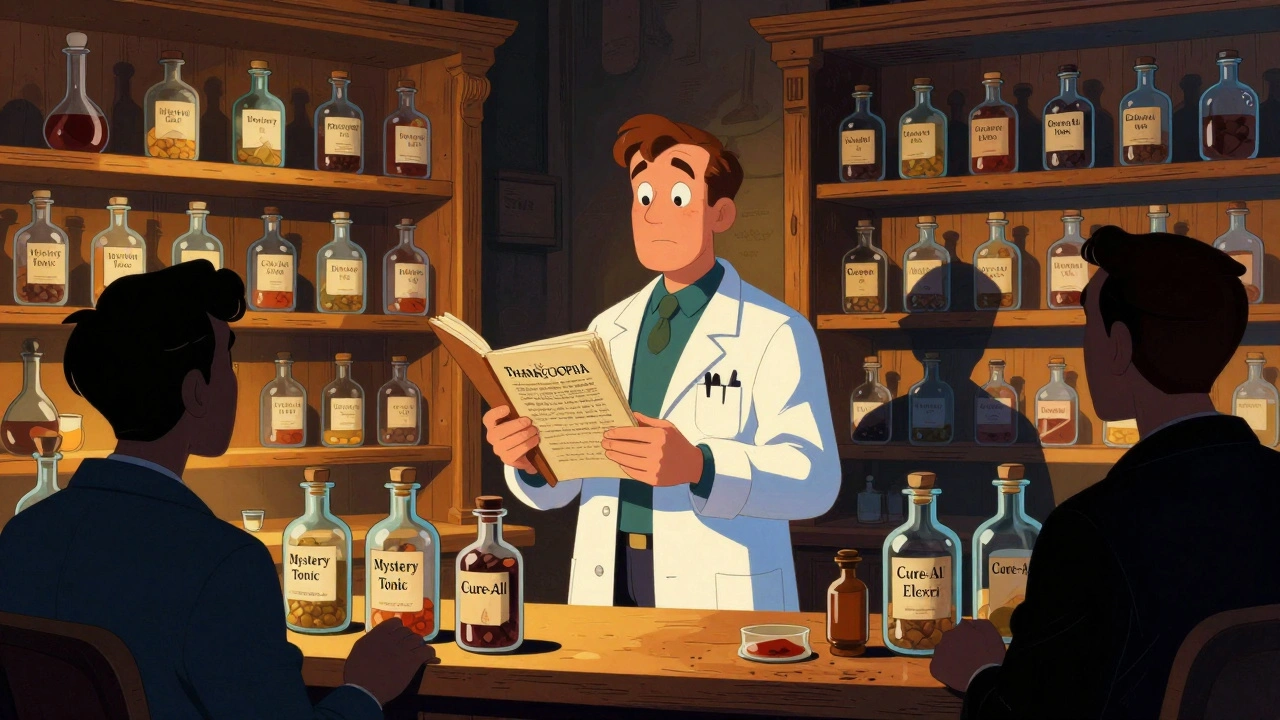
The story starts long before modern pharmaceutical companies existed. In 1820, eleven doctors met in Washington, D.C., and created the first U.S. Pharmacopeia - a list of approved drugs and their standards. Back then, medicines were mixed by hand, often with unknown ingredients. Some were harmless; others were deadly. This first compendium was a quiet revolution: it said, here’s what a real drug should look like. By 1848, Congress passed the Drug Importation Act. It gave U.S. Customs the power to stop bad drugs from overseas. That was the first time the federal government stepped in to protect patients from unsafe products. In 1888, the American Pharmaceutical Association published the National Formulary, another attempt to stop counterfeit drugs from flooding the market. These weren’t laws that punished fraud - they were tools to define what good medicine looked like.The Elixir Sulfanilamide Tragedy and the Birth of Real Regulation
In 1937, a pharmaceutical company marketed a new antibiotic called Elixir Sulfanilamide. It wasn’t tested for safety. The solvent? Diethylene glycol - the same poison used in antifreeze. More than 100 people died, mostly children. The public outcry was immediate. Congress responded in 1938 with the Federal Food, Drug, and Cosmetic Act (FDCA). This law changed everything. For the first time, drugmakers had to prove their products were safe before selling them. The FDA, which had existed since 1906 under weaker rules, finally got real power. No more guessing. No more dead children. Safety became non-negotiable.Prescriptions Only: The 1951 Durham-Humphrey Amendment
Before 1951, you could walk into a drugstore and buy almost anything - even powerful sedatives or antibiotics - without a doctor’s note. The Durham-Humphrey Amendment changed that. It created the clear divide between prescription and over-the-counter drugs. If a drug was too risky to use without supervision, it required a prescription. This wasn’t just about safety. It was about control. It made doctors the gatekeepers of medicine. And it set the stage for the next big problem: how to keep drug prices from spiraling out of control.The Kefauver-Harris Amendments: Proving That Drugs Actually Work
In the early 1960s, the thalidomide scandal rocked Europe. The drug caused severe birth defects. In the U.S., it was kept off the market thanks to a cautious FDA reviewer, Frances Kelsey. But it was clear: safety alone wasn’t enough. Drugs had to work. In 1962, Congress passed the Kefauver-Harris Drug Amendments. Now, every new drug had to prove both safety and effectiveness. And here’s the twist: the law didn’t just apply to new drugs. All drugs approved between 1938 and 1962 had to go back and prove they worked. Thousands of drugs were pulled from shelves because they couldn’t meet the new standard. This was the foundation for everything that followed. If a drug was going to be sold, it had to be tested. And if it was going to be generic, it had to match the original - exactly.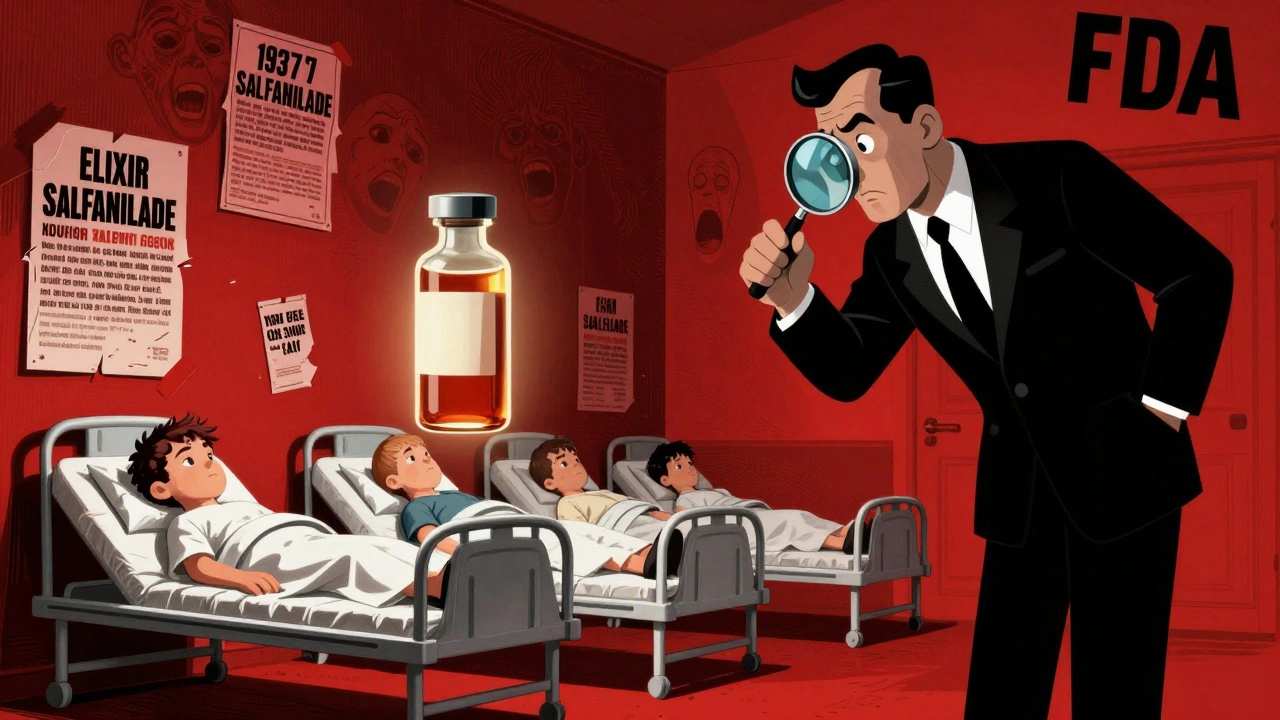
The Real Turning Point: The Hatch-Waxman Act of 1984
By 1984, only 19% of prescriptions were for generic drugs. Brand-name companies held tight to patents and kept prices high. Generic manufacturers had to run full clinical trials - the same expensive tests as the original maker. That made generics too costly to produce. The Hatch-Waxman Act changed that forever. It created the Abbreviated New Drug Application (ANDA). Generic companies no longer had to prove safety and effectiveness from scratch. They only had to show their version was bioequivalent - meaning it released the same amount of medicine into the body at the same rate as the brand-name drug. It also gave brand-name companies a limited patent extension - up to five years - to make up for time lost during FDA review. In return, generic companies got a 180-day window to be the first to market after a patent expired. That first-mover advantage made generics profitable. This wasn’t a free-for-all. It was a balance: protect innovation, but allow competition. And it worked. Within a decade, generic use jumped from 19% to over 50%. Today, it’s 90.5%.How Much Money Have Generics Saved?
The numbers are staggering. In 2021 alone, generic drugs saved the U.S. healthcare system $373 billion. Over the past decade, that total hits $3.7 trillion. The Congressional Budget Office found that generics cut prescription costs by 80% to 85% compared to brand-name drugs. And yet, generics make up only 23.4% of total drug spending. That’s because they’re so cheap. A 30-day supply of generic lisinopril might cost $4. The brand-name version? $150. A generic statin? $10. The brand? $300. This isn’t theoretical. It’s why millions of Americans can afford their heart medication, diabetes pills, or antibiotics. Without generics, many would skip doses - or skip treatment entirely.Problems in the System: Shortages, Price Spikes, and Supply Chains
But the system isn’t perfect. Between 2018 and 2022, the FDA recorded 1,234 drug shortages. Two-thirds of them involved generic drugs. Why? Because many generic manufacturers operate on razor-thin margins. If the price drops a little, or if a factory fails inspection, production stops. And then there’s price gouging. Between 2013 and 2017, the price of 15% of generic drugs jumped more than 100%. Some of these were old, well-established drugs - like doxycycline or chlorpromazine. No new patents. No new science. Just market manipulation. A few companies controlled the supply. When one shut down production, others raised prices. The FDA has been trying to fix this. Since 2012, the Generic Drug User Fee Amendments (GDUFA) have cut review times from 30 months to 10 months. Approval rates jumped from 45% to 95%. But the system still depends on factories in China and India. About 80% of active pharmaceutical ingredients come from overseas. A single factory shutdown in India can ripple across the entire U.S. supply chain.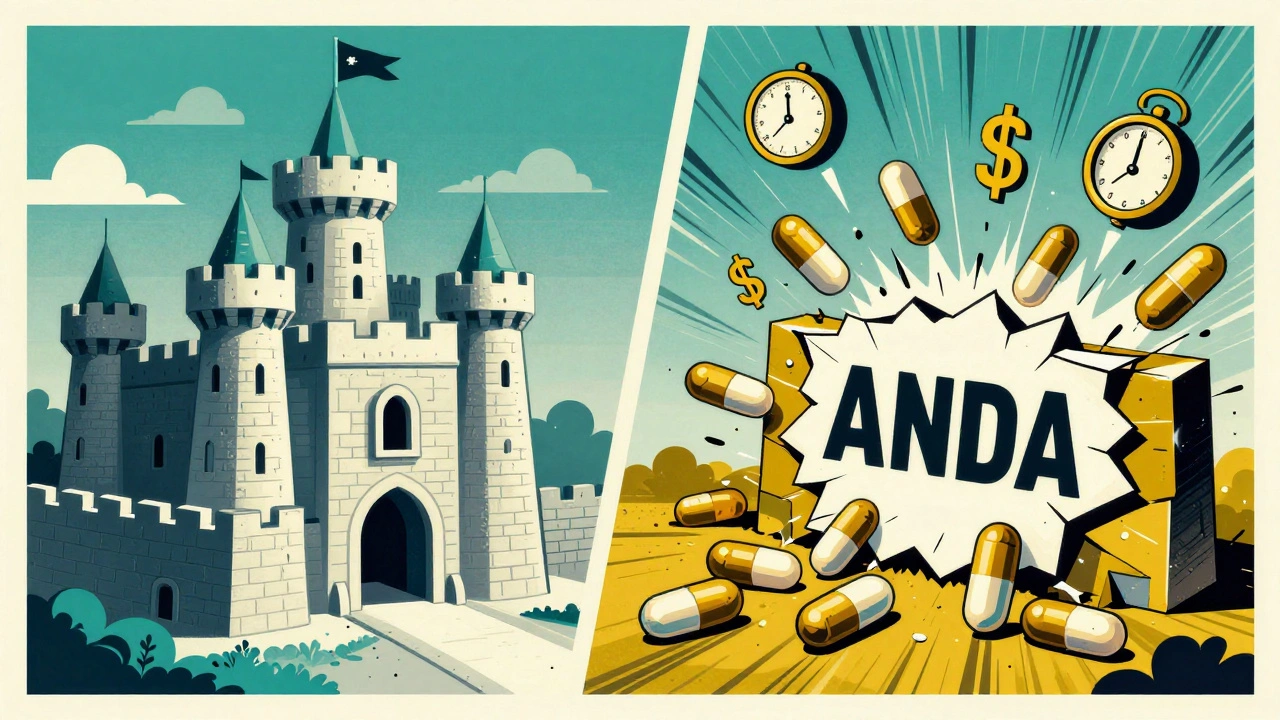
The CREATES Act and the Fight Against Delay Tactics
Brand-name companies don’t always wait for patents to expire. They use legal tricks to delay generics. One common tactic: refusing to sell samples of their drug to generic makers. Without those samples, generic companies can’t test bioequivalence. In 2019, Congress passed the CREATES Act. It lets the FDA step in when brand-name companies block access to samples. As of December 2022, the FDA had taken 27 enforcement actions under this law. It’s not a silver bullet - but it’s a tool.What’s Next? Biosimilars and the Future of Generic Drugs
The next frontier isn’t small-molecule generics anymore. It’s biosimilars - cheaper versions of complex biologic drugs like Humira or Enbrel. These aren’t pills. They’re made from living cells. That makes them harder to copy. The first biosimilar was approved in 2015. Since then, the FDA has approved dozens. But adoption has been slow. Doctors are cautious. Patients are unfamiliar. Prices haven’t dropped as much as hoped. Still, the pattern is clear. Once a drug’s patent expires, competition follows. And when competition arrives, prices fall. Generics proved that. Biosimilars will too.Why This History Matters Today
The history of generic drugs isn’t just about pills and patents. It’s about access. It’s about who gets to live and who doesn’t. The laws we passed - from the 1820 Pharmacopeia to the 2019 CREATES Act - weren’t written by drug companies. They were written because people got sick. People died. And the public demanded change. Today, the system works better than ever. But it’s fragile. It depends on oversight. It depends on transparency. It depends on regulators who won’t back down. If you’ve ever filled a prescription for a $4 generic, you’re living the result of over 200 years of reform. Don’t take it for granted. The next battle is already starting.Are generic drugs as safe as brand-name drugs?
Yes. The FDA requires generic drugs to have the same active ingredients, strength, dosage form, and route of administration as the brand-name version. They must also meet the same strict standards for purity, potency, and quality. Generic drugs are tested for bioequivalence - meaning they work the same way in the body. Millions of people take generics every day without issue.
Why are generic drugs so much cheaper?
Generic manufacturers don’t have to repeat expensive clinical trials. Thanks to the Hatch-Waxman Act, they only need to prove their drug is bioequivalent to the brand-name version. That cuts development costs dramatically. Also, once multiple companies make the same generic, competition drives prices down. Brand-name drugs have no competition until their patent expires.
Do generic drugs take longer to work?
No. Bioequivalence means the generic releases the same amount of medicine into your bloodstream at the same rate as the brand-name drug. Studies show no meaningful difference in how quickly they work. Any perceived delay is usually psychological - not physical.
Why do some generic drugs have different colors or shapes?
By law, generics can’t look exactly like the brand-name drug - that would be trademark infringement. So they use different colors, shapes, or markings. But the active ingredient, dose, and effect are identical. The differences are only in inactive ingredients like dyes or fillers, which don’t affect how the drug works.
What causes drug shortages with generics?
Many generic drugs are made by just one or two manufacturers. If a factory fails inspection, has a supply issue, or decides it’s not profitable anymore, production stops. The FDA reports that 65% of drug shortages involve generics. Low profit margins, complex manufacturing, and reliance on overseas suppliers make these drugs vulnerable to disruptions.
Can a generic drug be recalled?
Yes. Generic drugs are held to the same quality standards as brand-name drugs. If contamination, labeling errors, or manufacturing defects are found, the FDA can order a recall. Between 2018 and 2022, over 100 generic drugs were recalled for issues like impurities or mislabeling. The system isn’t perfect - but it’s the same system that applies to all drugs.
Is it true that some generic drugs are made in the same factories as brand-name drugs?
Yes. Many brand-name companies also make generic versions of their own drugs. Others contract manufacturing to the same facilities. The FDA inspects all of them equally. The difference isn’t the factory - it’s the label. A pill made in the same plant can be sold as brand-name or generic depending on the packaging and pricing.
Jack Dao
December 2, 2025 AT 02:46Wow, another one of those ‘history is boring’ essays that somehow makes me want to cry. I mean, sure, generics saved $3.7 trillion - but did anyone ask the guy who lost his job when the factory in Indiana shut down because they couldn’t compete with Indian labs making pills for 2 cents? 😒
dave nevogt
December 2, 2025 AT 16:49It’s fascinating how we’ve constructed a system where the moral imperative of access to medicine became codified through legal compromise rather than ethical clarity. The FDA didn’t become powerful because we cared about people - we became powerful because people died, and death forced institutions to act. The real tragedy isn’t the price of lisinopril - it’s that we needed 100 children to die before we decided safety was non-negotiable. We still haven’t learned that lesson when it comes to housing, food, or mental health. We wait for bodies. Always bodies.
Arun kumar
December 3, 2025 AT 06:27in india we make most of these generics n its crazy how cheap they are. one box of metformin cost me 12 rupees like $0.14. but the quality? sometimes its good sometimes its like chewing plastic. still better than no medicine at all lol
Zed theMartian
December 4, 2025 AT 18:30Let me guess - someone just got a $4 generic prescription and now thinks capitalism is fixed. Wake up. The system didn’t change. It just got better at hiding the exploitation. The same corporations that made Elixir Sulfanilamide now own the patents on biosimilars. They’re not giving you freedom - they’re giving you a slightly less expensive cage. And the FDA? Still asleep at the wheel while 80% of active ingredients come from countries with zero transparency. This isn’t progress. It’s theater.
Ella van Rij
December 5, 2025 AT 20:46sooo… you’re telling me the reason my blood pressure med costs $4 is because some guy in 1984 decided to let companies skip a few hundred million in testing? and we’re supposed to be *grateful*? 🙄 i mean, i’ll take the $4, but don’t act like this is a moral victory. it’s just capitalism with a Band-Aid.
ATUL BHARDWAJ
December 6, 2025 AT 06:24Generics save lives. Simple. No drama. No politics. Just pills that work. India makes them. America uses them. Everyone wins. Except the ones who profit from fear.
Steve World Shopping
December 7, 2025 AT 07:31The structural inefficiencies in the pharmaceutical supply chain are a direct consequence of regulatory arbitrage and suboptimal capital allocation. The Hatch-Waxman Act created a pseudo-competitive equilibrium, but the oligopolistic consolidation of API manufacturing - particularly in the Indo-Pacific region - introduces systemic fragility. We’re not just dependent on foreign production; we’re institutionally hostage to it.
Rebecca M.
December 7, 2025 AT 13:37OMG I just got my generic Adderall refill and I swear it made me feel like a zombie. Like… was this even the same drug? I’m pretty sure the brand name gave me focus. This one just made me stare at the wall for 45 minutes. Who even tests these things?? 🤡
Lynn Steiner
December 9, 2025 AT 04:29My dad died because he couldn’t afford his chemo. The generic was ‘approved’ but the pharmacy said it was ‘backordered’ for 3 months. Meanwhile, the brand name cost $12,000 a month. So yeah. I hate this system. I hate that people think ‘well at least we have generics’ like that fixes anything. It doesn’t. It just makes us feel better while we watch people die slower.
Alicia Marks
December 10, 2025 AT 09:35Thank you for writing this. It’s easy to take $4 meds for granted - but this history? It’s a reminder that change is possible when people refuse to stay silent. Keep fighting. We’re all better because of it. 💪
Paul Keller
December 11, 2025 AT 14:45One must consider the macroeconomic implications of the Hatch-Waxman Act not merely as a legislative milestone but as a paradigmatic shift in the relationship between intellectual property and public health. The creation of the ANDA pathway fundamentally reconfigured the incentive structure of pharmaceutical innovation - reducing redundant clinical expenditure while preserving market exclusivity for innovators. This equilibrium, though imperfect, represents one of the few successful attempts in modern regulatory history to reconcile private profit with collective welfare. The current vulnerabilities - supply chain fragility, oligopolistic pricing - are not failures of the framework, but rather symptoms of its underfunded enforcement apparatus. The solution lies not in dismantling the system, but in strengthening the oversight mechanisms that sustain its integrity.
Shannara Jenkins
December 12, 2025 AT 09:17My grandma takes 7 generics. She says they all taste different but they all do the job. She doesn’t care about the brand - she just wants to feel okay. And honestly? That’s all that matters.
Elizabeth Grace
December 13, 2025 AT 17:04I used to think generics were sketchy until I started taking them for anxiety meds. Same pill. Same effect. My therapist didn’t even notice. Now I buy them in bulk. Save $200/month. And yeah, I still roll my eyes at the color differences - but honestly? I’m just glad I can breathe.