
 Jan, 6 2026
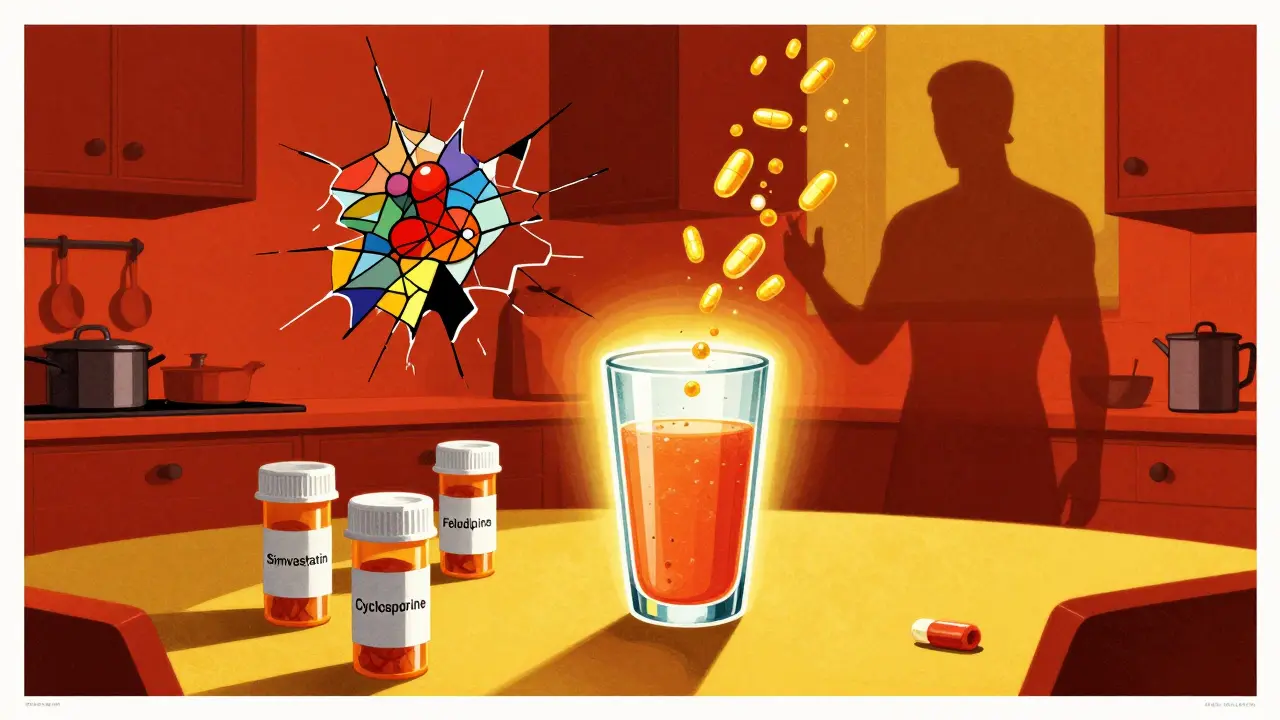
One glass of grapefruit juice in the morning might seem like a healthy choice-until it turns dangerous. For people taking certain medications, that refreshing citrus drink can trigger a hidden chemical war inside the body, leading to toxic drug levels, organ damage, or even death. This isn’t a myth or a warning from an overcautious doctor. It’s a well-documented, clinically proven interaction that affects tens of millions of people worldwide.
How Grapefruit Juice Changes How Your Body Handles Medication
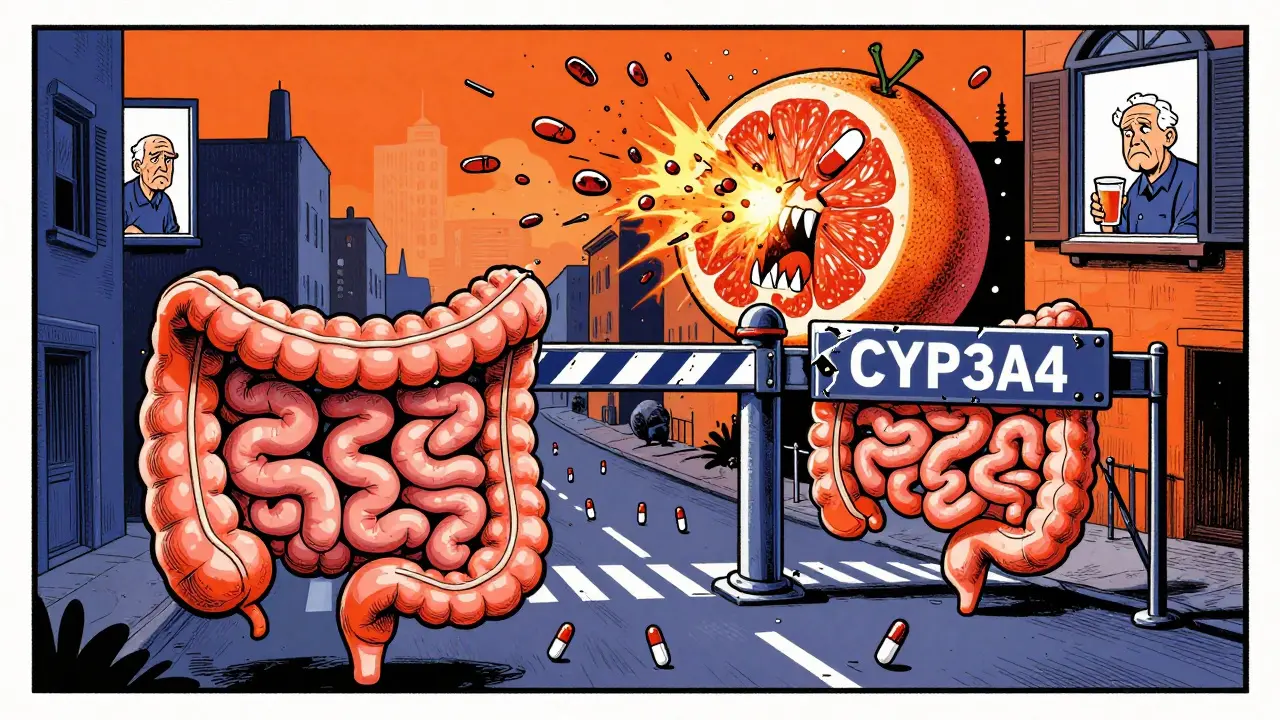
What makes grapefruit juice so different from orange or apple juice? It’s not the sugar or the vitamin C. It’s a group of natural chemicals called furanocoumarins, mainly bergamottin and 6',7'-dihydroxybergamottin. These compounds don’t just flavor your juice-they shut down a key enzyme in your gut called CYP3A4.
This enzyme normally breaks down about half of all prescription drugs as they pass through your intestines before entering your bloodstream. Think of it like a security checkpoint. Without CYP3A4 doing its job, drugs slip through untouched, flooding your system with far more than intended. A single 200ml glass of grapefruit juice can boost the blood levels of some medications by 300% to 800%. That’s not a small bump-it’s a medical emergency waiting to happen.
The effect lasts longer than you might think. Once CYP3A4 is blocked, your body needs about 72 hours to make new enzymes. So even if you drink grapefruit juice at breakfast and take your pill at night, the damage is already done. And it doesn’t matter if it’s fresh, frozen, or from concentrate-all forms contain enough furanocoumarins to cause trouble.
Which Medications Are at Risk?
Not every drug reacts this way. But if your medication is processed by CYP3A4, grapefruit juice can turn it into a time bomb. Here are the most common and dangerous categories:
- Statins (cholesterol drugs): Simvastatin and lovastatin are especially risky. One study showed a 330% spike in blood levels after grapefruit juice. That raises the chance of severe muscle damage (rhabdomyolysis), which can lead to kidney failure. Atorvastatin carries a moderate risk, while pravastatin, rosuvastatin, and fluvastatin are safe.
- Calcium channel blockers (blood pressure meds): Felodipine and nifedipine can cause dangerous drops in blood pressure or irregular heart rhythms. Amlodipine, however, is unaffected.
- Benzodiazepines (anxiety/sleep meds): Oral midazolam can spike by 515%, leading to extreme drowsiness, slowed breathing, or coma.
- Immunosuppressants: Cyclosporine and tacrolimus-used after organ transplants-can reach toxic levels, damaging kidneys or nerves.
- Antiarrhythmics: Amiodarone levels can rise 80%, increasing the risk of fatal heart rhythm problems.
- Anticoagulants: Rivaroxaban and apixaban show mixed data, but many doctors advise caution.
The U.S. FDA lists 21 high-risk medications that must carry grapefruit interaction warnings on their labels. These include Zocor (simvastatin), Plendil (felodipine), and Neoral (cyclosporine). But here’s the catch: many more drugs interact quietly, without any label warning.
Why Some People Are More at Risk Than Others
Not everyone who drinks grapefruit juice and takes medication ends up in the hospital. Why? Because people vary wildly in how much CYP3A4 their guts produce. Some have naturally high levels-meaning grapefruit juice can send their drug levels through the roof. Others have low levels, so the effect is mild or even invisible.
Studies show that the same 200ml of grapefruit juice can cause a 0% to 800% increase in drug levels across different people. Age matters too. Older adults are more vulnerable because they’re more likely to be on multiple medications, have reduced liver or kidney function, and may not realize grapefruit juice is the culprit.
Genetics also play a role. Researchers have found that people with a specific CYP3A4 gene variant (CYP3A4*22) are more sensitive to the interaction. This is why some pharmacists now recommend genetic testing for patients on high-risk drugs-though it’s still not routine.
What About Other Citrus Fruits?
Not all citrus is dangerous. Regular oranges, tangerines, and clementines are safe. But Seville oranges (used in marmalade) and pomelos contain the same furanocoumarins as grapefruit. So if you’re on a risky medication, skip the marmalade on your toast.
Limes and lemons? Generally low risk. They have tiny amounts of furanocoumarins, and studies haven’t shown clinically significant interactions. But if you’re unsure, stick to water or apple juice.
What Happens When You Ignore the Warning?
Real consequences aren’t theoretical. Between 2000 and 2019, the European Medicines Agency recorded 12 deaths linked to grapefruit-drug interactions. Most involved elderly patients on statins or blood pressure meds. In one case, a 78-year-old man took simvastatin daily and drank grapefruit juice every morning. He developed severe muscle pain and kidney failure within weeks. He didn’t survive.
Even non-fatal reactions are serious. One study found that 47% of patients on high-risk medications kept drinking grapefruit juice even after being warned. Among those over 65, the non-compliance rate jumped to 63%. Many didn’t realize the juice was the problem-or thought “a little won’t hurt.”
Doctors and pharmacists are catching on. In 2023, the American Geriatrics Society added grapefruit interactions to its Beers Criteria-the official list of potentially unsafe drugs for older adults. Electronic health records now include over 120 automated alerts for grapefruit-drug combinations. Still, only 37% of pharmacists consistently counsel patients about it.
What Should You Do?
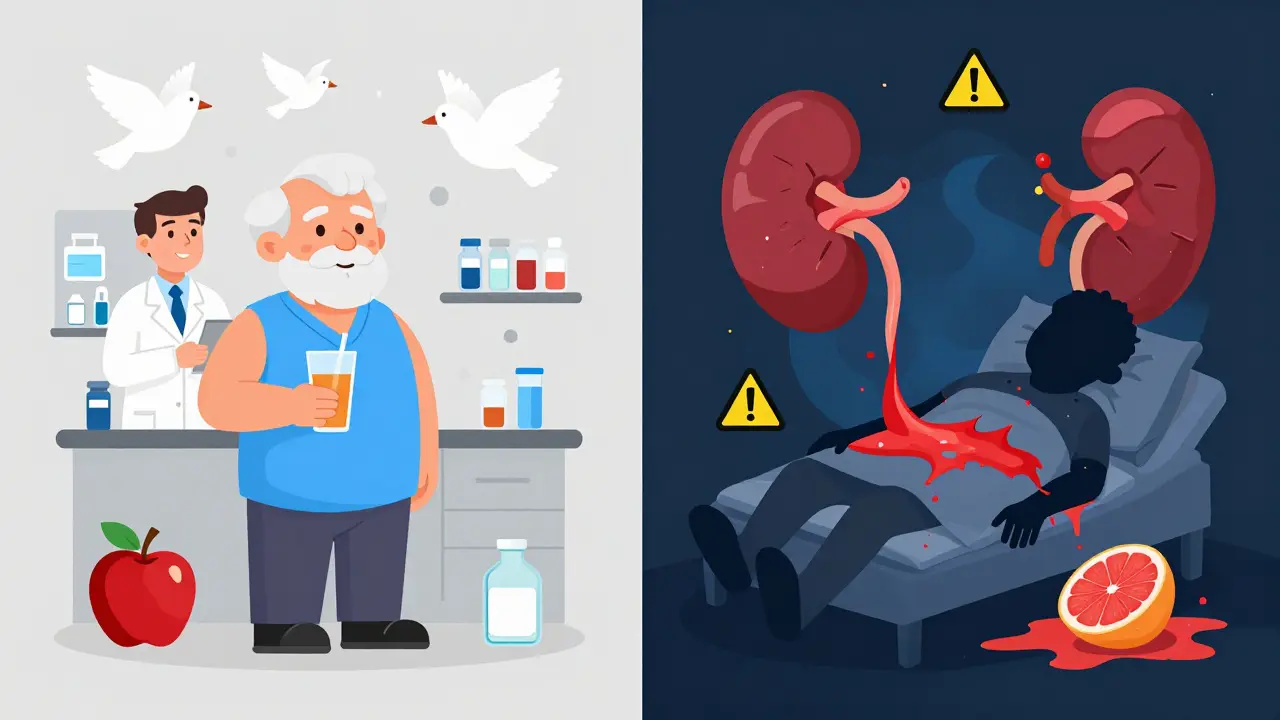
If you take any prescription medication, ask your pharmacist: “Is grapefruit juice safe with this?” Don’t assume it’s fine. Don’t rely on the label-many high-risk drugs still don’t have warnings.
If your medication is affected:
- Avoid all grapefruit, Seville oranges, and pomelos-no exceptions.
- Don’t try to space it out. Waiting 4 or 12 hours won’t help. The enzyme shutdown lasts 3 days.
- Switch to a safer alternative if possible. For example, switch from simvastatin to pravastatin or rosuvastatin.
- Check your other medications too. Some blood thinners, antidepressants, and painkillers may also interact.
If you’ve been drinking grapefruit juice and suddenly feel dizzy, nauseous, weak, or have dark urine, stop the juice immediately and contact your doctor. These could be signs of drug toxicity.
The Future: Safer Grapefruit and Better Warnings
Science is fighting back. Researchers at the University of Florida are using CRISPR gene editing to create furanocoumarin-free grapefruit. Early trials show promise. If successful, this could be the first time we’ve engineered a fruit to be safer for medication users.
The FDA is also pushing for clearer labeling. As of 2024, new guidance requires drugmakers to include grapefruit warnings on all high-risk medications-even those not yet flagged. Patient education programs are expanding, with the American Pharmacists Association helping over 14,000 people switch to safer alternatives since 2020.
But until then, the safest rule remains: if your medication has any known interaction with grapefruit, don’t take the risk. One glass isn’t worth your life.
Can I drink grapefruit juice if I take my medication at night?
No. Grapefruit juice blocks the CYP3A4 enzyme in your gut for up to 72 hours. Even if you drink it in the morning and take your pill at night, the enzyme is still shut down. The timing doesn’t matter-only the presence of the juice does.
Is grapefruit juice safe with over-the-counter drugs?
Some are. But not all. Antihistamines like fexofenadine (Allegra) are affected differently-grapefruit juice can actually lower their levels, making them less effective. Pain relievers like ibuprofen are generally safe, but always check the label or ask a pharmacist before mixing.
Does grapefruit juice interact with supplements?
Yes. Some herbal supplements, like St. John’s Wort and high-dose vitamin C, can interact with CYP3A4. While not as strong as prescription drugs, combining them with grapefruit juice may still increase risks. Always disclose all supplements to your pharmacist.
What if I accidentally drank grapefruit juice with my medication?
If it was a one-time mistake and you feel fine, monitor yourself for side effects like dizziness, muscle pain, nausea, or irregular heartbeat. Call your doctor if symptoms develop. Don’t panic, but don’t ignore it either. Avoid grapefruit juice completely going forward.
Are there any medications that grapefruit juice makes safer?
No. There are no approved or safe therapeutic uses for grapefruit juice to enhance drug effects. While researchers are studying whether the mechanism could help deliver certain cancer drugs more effectively, this is still experimental. Never use grapefruit juice to boost medication strength.
If you're on a medication that interacts with grapefruit juice, your best move is simple: replace it with a safe alternative. Talk to your doctor or pharmacist. There’s almost always another option that won’t put your health at risk.
Katrina Morris
January 7, 2026 AT 15:38My grandma drinks grapefruit juice every morning with her blood pressure med and swears she’s fine. I showed her this article and she just shrugged and said, ‘Doc never said nothin’ about it.’ Guess some folks need to learn the hard way.
Adam Gainski
January 8, 2026 AT 13:38This is one of those posts that should be mandatory reading for anyone over 50 on meds. I’m a pharmacist and I still get patients who say, ‘But I’ve been drinking it for years!’ The enzyme thing is wild-it’s not just about timing, it’s about permanent gut changes for days. Seriously, if you’re on statins or blood pressure meds, just switch to apple juice. No drama, no risk.
Mina Murray
January 9, 2026 AT 21:53Wait till you hear this-the FDA knew about this for 20 years but didn’t force labels on half the drugs because Big Pharma didn’t want to scare people off. Same thing happened with opioids. This isn’t science, it’s corporate cover-up. They’d rather you die quietly than lose a billion in sales.
Vince Nairn
January 11, 2026 AT 02:06So let me get this straight-we’re telling people to give up a delicious, healthy fruit because some drugs are poorly designed? Why don’t we just make better meds instead of banning citrus? Also, I’ve had grapefruit with my simvastatin for 8 years. Still standing. Coincidence? Maybe. But I’m not giving up my breakfast.
Christine Joy Chicano
January 12, 2026 AT 16:59I’ve been researching this for my thesis on pharmacokinetics and the CYP3A4 enzyme is one of the most fascinating and terrifying things in human metabolism. It’s not just grapefruit-it’s the fact that our bodies evolved to break down plant toxins, and now we’re poisoning ourselves with modern pharmaceuticals that bypass those defenses. The irony is almost poetic.
Emma Addison Thomas
January 12, 2026 AT 18:58Interesting how this varies by culture. In the UK, we’re taught from childhood that ‘natural’ doesn’t mean ‘safe’. My mum used to say, ‘If it can kill you, it’s probably in the garden.’ Grapefruit juice? Just don’t. Simple. No need for CRISPR or warnings-just common sense.
Aparna karwande
January 14, 2026 AT 00:01Americans think they can eat anything and still be healthy. You drink poison, you get sick. End of story. In India, we know better-our grandmothers brewed herbal teas for decades without mixing them with foreign drugs. You don’t mix medicine with fruit. You don’t mix tradition with capitalism. This is why your healthcare system is broken.
Kamlesh Chauhan
January 15, 2026 AT 06:24Ugh another one of these ‘doctors know everything’ posts. I’ve been on statins for 10 years and I drink grapefruit juice every day. I feel great. If you’re scared, just take less medicine. Problem solved. Also why do you even care? Just let people live.
Jonathan Larson
January 17, 2026 AT 00:55The scientific rigor of this post is exemplary. The distinction between furanocoumarin-containing citrus varieties, the pharmacokinetic implications of CYP3A4 inhibition, and the longitudinal duration of enzyme suppression are all accurately delineated. What is most concerning is not the biochemical interaction, but the systemic failure of patient education. The FDA’s delayed labeling mandates and the low rate of pharmacist counseling reflect a broader institutional neglect of pharmacovigilance in primary care. Until we treat drug-food interactions with the same urgency as drug-drug interactions, preventable adverse events will persist as a silent epidemic.
Anthony Capunong
January 17, 2026 AT 21:20So you’re telling me I can’t have my morning grapefruit juice because some lazy American can’t follow basic instructions? We don’t need more warnings-we need better people. This isn’t a medical issue, it’s a cultural one. You want safety? Stop being stupid. And stop blaming the fruit.