
 Dec, 11 2025
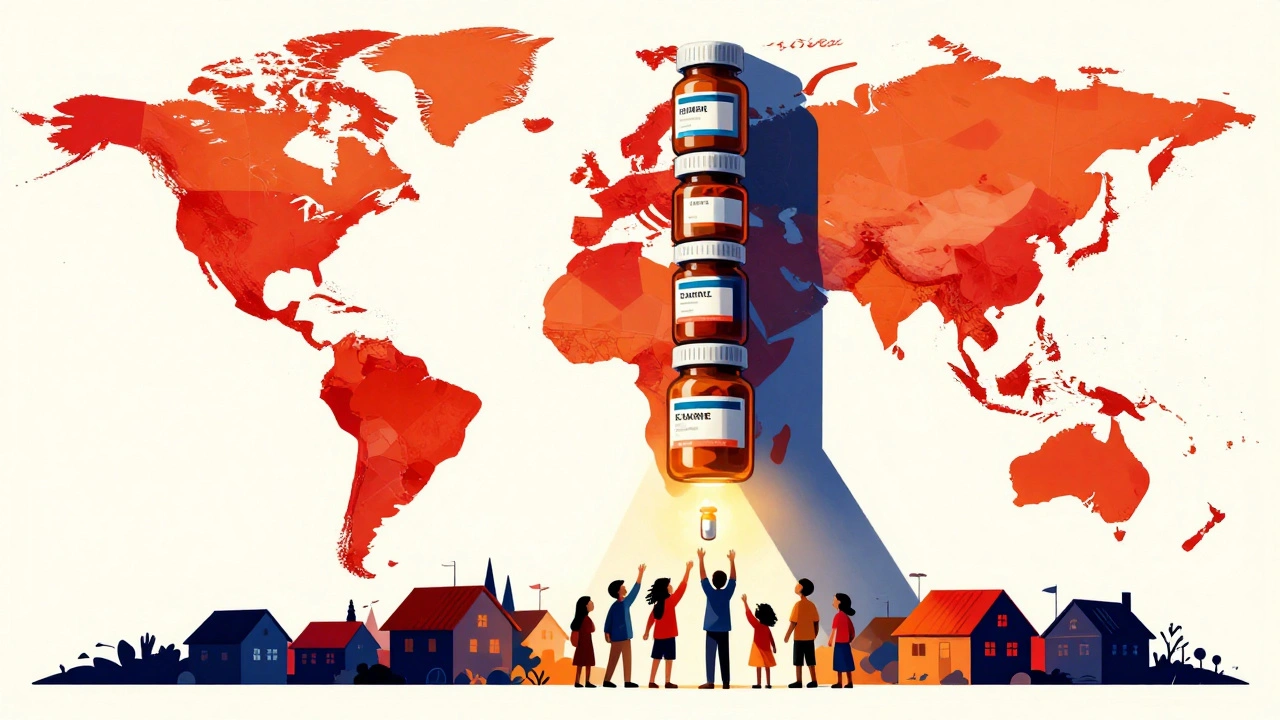
Imagine needing a life-saving drug, but it costs more than your monthly salary. For over 2 billion people around the world, this isn’t a hypothetical scenario-it’s daily reality. In low-income countries, the gap between what medicines exist and what people can actually afford is wider than ever. Yet there’s a simple, proven solution: generic drugs. These are identical in active ingredients to brand-name medications but cost up to 80% less. They’ve already turned the tide on HIV, tuberculosis, and malaria. But why, in 2025, are they still out of reach for so many?
What Generics Actually Are-and Why They Matter
Generic drugs aren’t cheap knockoffs. They’re exact copies of branded medications, approved by health authorities after proving they work the same way in the body. The same active ingredient. Same dosage. Same effect. The only difference? No marketing, no patent, no premium price. In the U.S., 9 out of 10 prescriptions are filled with generics. In low-income countries? Only 1 in 20. That’s not because they’re unsafe. It’s because the system isn’t built to make them accessible. The World Health Organization (WHO) lists 216 essential medicines that every health system should have on hand. Almost all of them now come in generic form. For example, the antiretroviral drug tenofovir, which keeps HIV under control, costs $300 a year as a brand-name drug. The generic version? Around $25. That’s not a small saving-it’s the difference between a person living or dying.Why Generics Haven’t Taken Off in Poorer Countries
It’s not a lack of supply. Companies like Cipla, Hikma, and Sun Pharma have been producing high-quality generics for decades. The problem is everything else. Tariffs, taxes, import delays, and weak regulatory systems all pile up. In some African countries, a box of generic antibiotics can take months to clear customs-and by then, the price has doubled just from storage and handling fees. Even when medicines arrive, many patients still don’t get them. Nearly 90% of people in low-income countries pay for medicine out of pocket. That means if you’re a farmer in rural Malawi and your child has malaria, you don’t go to a clinic-you go to the nearest shop. And if the cheapest generic treatment costs the equivalent of three days’ wages, you might skip it. That’s not ignorance. That’s survival.The Myth of Quality: Why People Don’t Trust Generics
There’s a deep-rooted belief in many places that if a drug is cheap, it must be bad. This isn’t just misinformation-it’s a legacy of bad experiences. In the early 2000s, counterfeit malaria drugs flooded markets in Southeast Asia and West Africa. People died. Trust shattered. Even today, unbranded generics (the cheapest, no-logo versions) make up just 5% of the pharmaceutical market in low-income countries. In the U.S., they’re 85%. Why? Because in wealthier nations, regulators enforce strict quality controls. In many low-income countries, they don’t have the staff, the labs, or the funding to do the same. That’s changing slowly. Organizations like the WHO’s Prequalification Programme now certify generic manufacturers that meet international standards. If a company passes, its drugs can be bought by UN agencies and global health funds. But that only helps patients who get care through NGOs or government programs. For the rest? They’re still gambling with their health.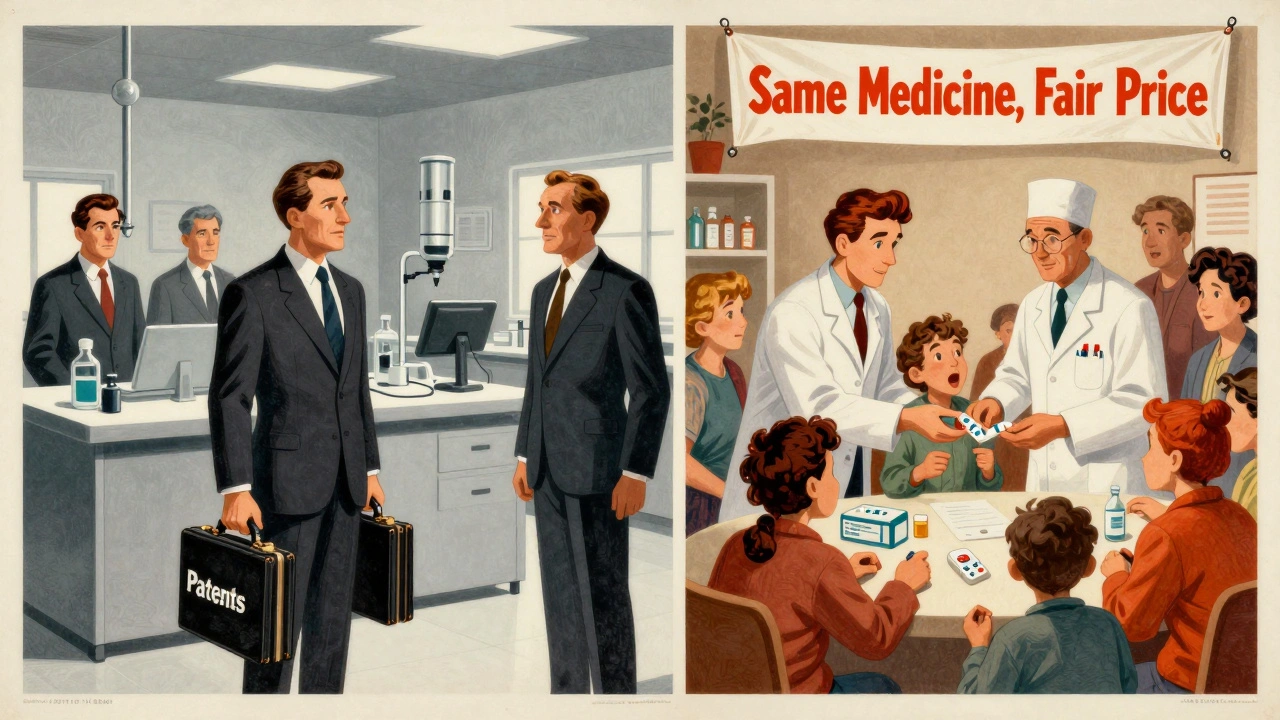
Who’s Making Generics Work-and Who’s Not
Some companies are doing the right thing. Cipla, based in India, has supplied over 90% of the world’s pediatric HIV drugs for years. Hikma in Jordan sells generic antibiotics for pennies in African markets. These aren’t charity cases-they’re smart business. They cut margins, scale volume, and build long-term trust. But most big pharmaceutical companies aren’t. A 2024 report from the Access to Medicine Foundation looked at five major generic producers and found they had clear plans to expand access to only 41 out of 102 essential off-patent drugs. Even worse, almost none of their strategies considered whether patients could actually afford the medicine-even if it was already cheap. If you’re paying $5 for a drug but earn $2 a day, you still can’t buy it. Profit-driven models ignore that reality. Meanwhile, companies like Novartis and Pfizer have “inclusive business models” that reach all 48 low-income countries. But here’s the catch: they rarely say how many people actually get the drugs. Transparency is missing. Without data, you can’t fix what’s broken.How Countries Are Trying to Fix the System
The solutions aren’t complicated. They just require political will. - **Cut taxes and tariffs** on generic medicines. In Nigeria, a 10% import tax on essential drugs adds hundreds of dollars to a year’s supply of insulin. Remove it, and you save lives. - **Speed up drug approvals**. In some countries, it takes three years to approve a generic drug. In Canada? Three months. Why? Because regulators are underfunded and understaffed. - **Use bulk purchasing**. When governments buy medicines together-like the African Union’s African Medicines Agency-they get better prices. Kenya and Rwanda now supply generics to neighboring countries at half the cost. - **Train local manufacturers**. Ethiopia and Senegal are building their own generic drug factories. Not to replace imports-but to make sure they’re never held hostage by global supply chains again.What’s Holding Back Real Change?
The biggest barrier isn’t science. It’s money. Governments in low-income countries spend, on average, less than $30 per person per year on health. The WHO recommends $86. In 2022, only 23 of 54 African countries met the 2001 Abuja Declaration pledge to spend at least 15% of their national budgets on health. Most spent less than 5%. That means clinics run out of medicine. Pharmacies stay empty. Patients wait. And when they finally get to a pharmacy, the cheapest option is still too expensive. Supply chains are broken too. A generic drug might be made in India, shipped to a port in Ghana, sit in a warehouse for months because the roads are bad, then get sold at a markup by a middleman who’s never seen a WHO quality standard. It’s not corruption-it’s neglect.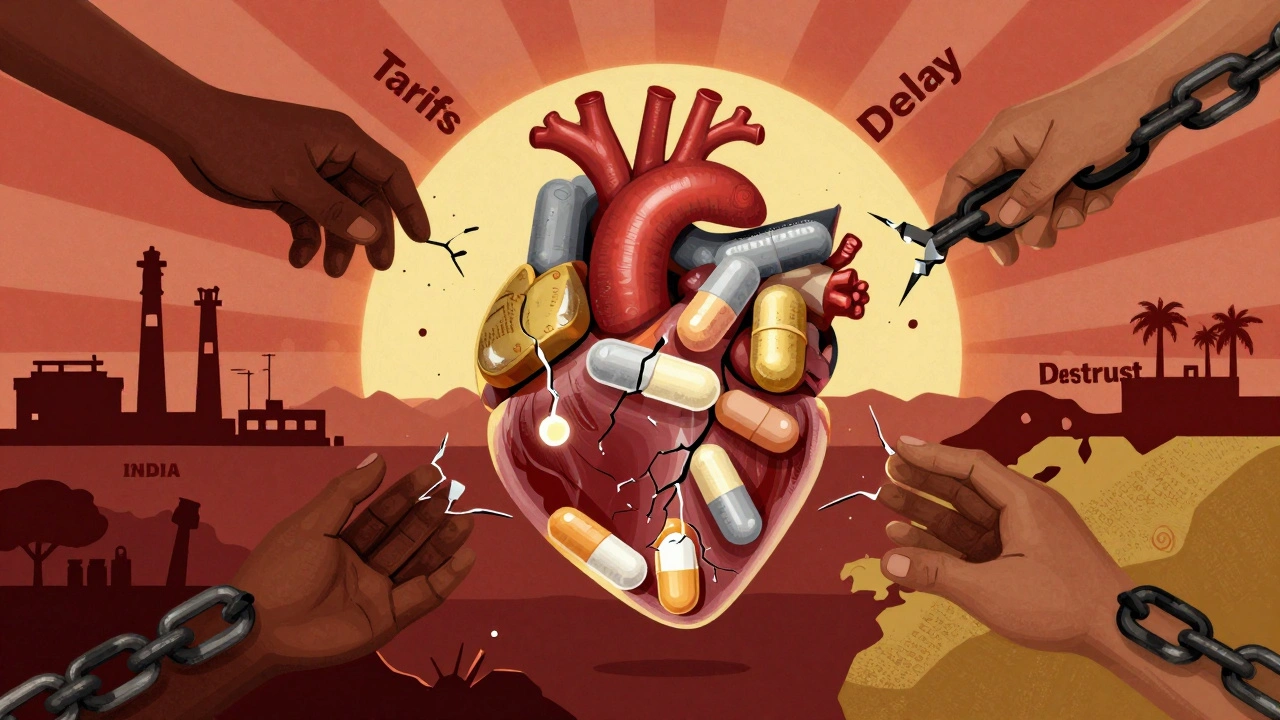
Willie Onst
December 11, 2025 AT 19:33It’s wild to think that a pill costing $25 can keep someone alive while the same pill in the US costs $300. We’re not talking about magic here-we’re talking about capitalism prioritizing profit over people. And yet, we act surprised when people die because they can’t afford to live. We built the system this way. We chose this.
Ronan Lansbury
December 12, 2025 AT 07:30Let’s be real-generics are just a Trojan horse. Big pharma lets them through so they can control the supply chain later. Once the market’s hooked, they buy up the generic makers, raise prices under a new brand, and call it ‘innovation.’ You think this is about access? Nah. It’s about consolidation.
Jennifer Taylor
December 13, 2025 AT 10:30OMG I just cried reading this. Like… I had a friend in Kenya who got TB and the only medicine they had was a generic from India but the pharmacy owner charged him 3x because he ‘didn’t look like he could afford it’?? Like what??? Why are people so evil?? I’m so mad right now I can’t even. 💔😭
Shelby Ume
December 14, 2025 AT 13:17While the systemic inequities described here are undeniable, it is imperative to recognize that the ethical imperative to ensure equitable pharmaceutical access is not merely a policy issue-it is a human rights obligation under international law. The WHO’s Essential Medicines List exists precisely to codify this duty. The failure to implement it reflects not scarcity, but moral failure.
Jade Hovet
December 14, 2025 AT 20:16YASSS this is so true!! 💪 I work in global health and I can tell you-people think generics are sketchy but once you show them the WHO cert and the lab reports? They’re like ‘wait, this is the same as the fancy one??’ 😲 So simple. So obvious. Why is this still a thing?? 🤦♀️
nithin Kuntumadugu
December 15, 2025 AT 06:48Bro generics are just placebo with a different label. I saw a guy in Delhi take one for malaria and he died. The real drugs are made in Switzerland. This whole thing is a scam. 😒 #FakeMedicine #IndiaLies
John Fred
December 15, 2025 AT 18:38Think of generics as the MVP of global health. Same active ingredient, zero marketing overhead, max scalability. We’ve got the tech, the supply, the logistics-what’s missing is the will to deploy it at scale. We’re not limited by science. We’re limited by incentive structures. Fix that, and you fix the whole system. 🚀
Harriet Wollaston
December 17, 2025 AT 10:32I’ve met mothers in rural Guatemala who walk 5 hours to get a generic antibiotic for their kid. They don’t know what ‘patent’ means. They just know if they don’t get it, their child won’t eat again. We talk about systems, but real people are just trying to survive. We owe them better.
Lauren Scrima
December 19, 2025 AT 08:22Wow. So the solution is… to not be terrible? Groundbreaking. 🙃 I’m sure the CEOs are just crying in their penthouses right now.
sharon soila
December 21, 2025 AT 03:54Every human being deserves access to the medicine that keeps them alive. This is not a privilege. It is not charity. It is the most basic form of dignity. And yet, we act as if it is a favor granted by the wealthy. We must change our hearts before we change our policies.
nina nakamura
December 22, 2025 AT 19:42Everyone who says generics are safe is lying. They’re made in unregulated factories. People die. You think you’re helping? You’re just enabling a death sentence disguised as compassion. Stop pretending this is ethical.
Hamza Laassili
December 23, 2025 AT 05:09America makes the best medicine. Why are we giving it away to third-world countries? They don’t even know how to use it right. Let them figure it out. We got our own problems. 🇺🇸
Rawlson King
December 23, 2025 AT 17:29It’s not about access. It’s about dependency. If you give people cheap medicine, they stop building their own systems. You’re creating a permanent underclass that relies on foreign aid. This isn’t justice. It’s paternalism.
Constantine Vigderman
December 24, 2025 AT 06:37Wait-so if generics work so well, why aren’t we using them everywhere? Like… in the US? Why do I still pay $400 for my blood pressure med when it’s $20 in India? 🤔 Is it just because we’re lazy? Or is it because someone’s making bank off our ignorance? 😳
Cole Newman
December 25, 2025 AT 14:29You know what’s worse than no medicine? Medicine that’s cheap but doesn’t work because it’s been sitting in a warehouse for 6 months in 110 degree heat. You think people care about WHO certifications when their pills are turning to dust? Nope. They care if it works. And most of the time? It doesn’t.
Casey Mellish
December 25, 2025 AT 16:53Australia’s been importing generics from India for over a decade. Quality control? Strict. Logistics? Streamlined. Cost? A fraction. The only thing stopping other countries is political will. Not science. Not supply. Will. We’ve proven it’s possible. Now do it.
Tyrone Marshall
December 26, 2025 AT 16:40This isn’t just about drugs. It’s about how we value life. If we believe every life matters, then we build systems that reflect that. Generics are the tool. But the real work? It’s in the heart. Are we willing to see someone else’s pain as our own? If yes-then we start changing everything.