
 May, 4 2026
Pharmaceutical patents are expiring at an unprecedented rate. Between 2025 and 2030, branded drugs worth between $217 billion and $236 billion annually will lose their market exclusivity. This massive shift is not just a headline; it is the engine driving the generic drug market, which is projected to grow from approximately $488 billion in 2024 to over $700 billion by the early 2030s. For healthcare systems, patients, and investors, understanding these economic trends is critical. The question is no longer if generics will dominate, but how quickly they can replace expensive brand-name treatments while maintaining quality and supply stability.
The generic pharmaceutical industry has evolved significantly since its formal establishment following the 1984 Hatch-Waxman Act in the United States. Today, it is a global powerhouse that balances cost reduction with access to essential medications. As we move through 2026, several key factors-patent cliffs, regulatory shifts, and technological advancements-are reshaping this landscape. Let’s look at what the data tells us about where this market is headed.
The Numbers Behind the Growth
Market sizing varies depending on the analyst, but the consensus points toward robust expansion. Strategic Market Research valued the global generic drugs market at $386.1 billion in 2024, projecting it to reach $643.8 billion by 2030 with a compound annual growth rate (CAGR) of 6.8%. However, other firms offer different perspectives. Mordor Intelligence places the 2025 market size at $431.10 billion, expecting it to hit $530.32 billion by 2030 at a more conservative 4.23% CAGR. DrugPatentWatch triangulates these figures, suggesting a 2024 value between $488 billion and $491 billion, growing to $700-$800 billion by the early 2030s.
Why the variance? It comes down to assumptions about patent cliffs and regulatory environments. Some analysts factor in aggressive pricing pressures in markets like China, while others focus on volume increases in emerging economies. Regardless of the specific number, the trajectory is clear: the generic sector is expanding faster than many traditional healthcare segments. This growth is fueled by aging populations worldwide and the relentless pressure to control rising healthcare costs.
Regional Shifts: Where the Action Is
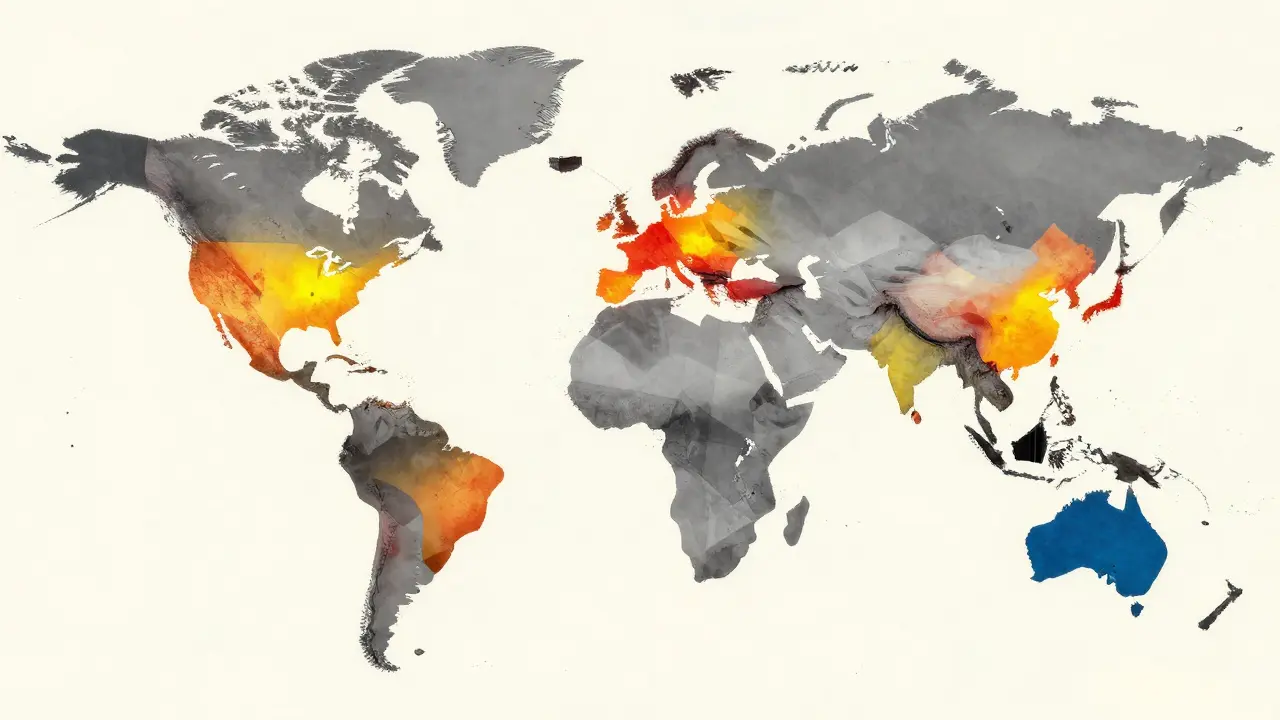
Growth is not uniform across the globe. Different regions are playing distinct roles in this economic puzzle. In Europe, Germany and the United Kingdom lead the pack due to established regulatory pathways and policies that actively promote generic utilization. These markets have matured, focusing on efficiency and cost containment within national health services.
Asia Pacific, however, is registering the highest growth rates. India and China are central to this surge. India alone supplies 20% of global generics volume and 60% of global vaccine demand. Its manufacturing capabilities make it a cornerstone of the global supply chain. Meanwhile, China’s volume-based procurement tenders are resetting global benchmark prices. While this creates pricing pressure for manufacturers, it also drives massive adoption of generics among China’s large patient population. With an 8.19% CAGR expected for Asia between 2025 and 2030, this region is becoming the primary growth engine for the industry.
In contrast, Latin America, the Middle East, and Africa (LAMEA) remain underdeveloped in terms of generic penetration. Countries like Brazil, Mexico, and South Africa are expanding their healthcare infrastructures and regulatory frameworks, but they still lag behind Asia and Europe. As these nations increase access to affordable medications, they represent a significant untapped opportunity for future expansion.
The Rise of Biosimilars
One of the most significant trends in the generic market is the rise of biosimilars, which are biological products highly similar to already approved reference biologics. Unlike small-molecule generics, biosimilars require complex manufacturing processes and rigorous comparability protocols. This complexity creates higher barriers to entry but also offers greater profit margins for those who succeed.
Biosimilars are projected to expand at a faster 8.20% CAGR through 2030 compared to traditional generics. The period between 2025 and 2027 marks a significant biologic patent cliff. High-revenue monoclonal antibodies such as ustekinumab and vedolizumab are beginning to lose exclusivity, unlocking a $25 billion oncology and immunology biosimilar opportunity by 2029. Regulatory bodies in the EU and Japan are streamlining approval processes, shortening development timelines and encouraging rapid payer uptake. Early movers who invest in pharmacovigilance infrastructure and secure dual-source manufacturing positions themselves to capture substantial market share before second-wave competitors enter.
Therapeutic Areas Driving Demand
Demand for generics is shifting based on disease prevalence and treatment needs. Oncology remains the most valuable therapy area into 2030, with forecasted sales exceeding $300 billion across all products. As patents expire on blockbuster cancer drugs, generic versions will play a crucial role in making these treatments accessible. Additionally, inflammatory diseases are gaining prominence, with drugs like Dupixent and Skyrizi expected to be among the top 10 drugs by 2030, signaling future generic opportunities in this space.
Diabetes and metabolic disorders are also major growth drivers. Health systems worldwide are confronting soaring prevalence of diabetes, hypertension, and obesity. Generic adoption helps moderate budgets while ensuring patients receive consistent care. Interestingly, the pipeline is shifting toward complex generics of GLP-1 agents such as liraglutide. Early entrants are tapping into underserved cash-pay segments, leveraging tech-enabled medication synchronization to improve refill persistence and adherence.

Manufacturing and Technology
The backbone of the generic market is manufacturing, and technology is transforming this sector. Robotic process automation is increasingly applied in production facilities, enhancing precision and reducing costs. In Southeast Asia, pooled-procurement pilots are awarding dual-source contracts to suppliers operating redundant validation sites. This incentivizes multinationals to localize fill-and-finish lines, strengthening regional supply chains and resilience.
Data-driven adherence tools are also becoming standard. By synchronizing medication refills and monitoring patient compliance, manufacturers can ensure steady demand and reduce waste. These technological integrations not only improve operational efficiency but also support better health outcomes, aligning commercial interests with public health goals.
| Analytic Firm | Base Year Value | Projected Value (by Year) | CAGR |
|---|---|---|---|
| Strategic Market Research | $386.1B (2024) | $643.8B (2030) | 6.8% |
| Mordor Intelligence | $431.1B (2025) | $530.3B (2030) | 4.23% |
| DrugPatentWatch | $488-$491B (2024) | $700-$800B (Early 2030s) | 5-8% |
| BCC Research | $435.3B (2023) | $655.8B (2028) | 8.5% |
Competitive Landscape and Challenges
The competitive environment is characterized by consolidation and regional specialization. Major players like Teva, Viatris (formerly Mylan), Sandoz (Novartis), and Amneal dominate the U.S. market, engaging in intense competition to capture market share. In India, the focus is on scale and export capability, supplying a significant portion of the world’s generics. China’s influence grows through its volume-based procurement system, which forces price reductions but guarantees high volumes.
However, challenges remain. Pricing pressures, particularly in markets with aggressive procurement models, can squeeze profitability. The increasing complexity of drugs coming off patent-from simple small molecules to complex biologics-requires significant investment in sophisticated manufacturing capabilities. This creates barriers to entry for smaller firms but rewards specialized players who can navigate regulatory hurdles and maintain quality standards.
At-risk sales, or drugs facing patent challenges, are expected to reach $100 billion in 2028. This indicates a volatile period where legal battles will determine market access. Successful navigation of these challenges will define the winners in the next decade of generic pharmaceuticals.
What is the projected size of the generic drug market by 2030?
Projections vary, but estimates range from $530 billion to over $700 billion by 2030. Strategic Market Research forecasts $643.8 billion, while DrugPatentWatch suggests a range of $700-$800 billion by the early 2030s, driven by patent expirations and increased global demand.
How do biosimilars differ from traditional generics?
Traditional generics are copies of small-molecule drugs with identical active ingredients. Biosimilars are highly similar to reference biological products, which are more complex to manufacture. They require rigorous comparability studies to demonstrate safety and efficacy, leading to higher development costs but also higher potential margins.
Which regions are leading the growth in generic drug markets?
The Asia Pacific region, particularly India and China, is experiencing the highest growth rates. India supplies 20% of global generics volume, while China’s volume-based procurement drives rapid adoption. Europe and North America remain mature markets focused on cost containment and regulatory efficiency.
What are the main challenges facing generic manufacturers?
Key challenges include pricing pressures from government procurement systems, the high cost of developing complex generics and biosimilars, and intense competition. Additionally, navigating patent litigation and regulatory approvals requires significant resources and expertise.
How does the patent cliff impact the generic market?
The patent cliff refers to the expiration of patents on blockbuster drugs, allowing generic competitors to enter the market. Between 2025 and 2030, $217-$236 billion in annual sales from branded drugs will lose exclusivity, creating massive opportunities for generic manufacturers to capture market share.