
 Jan, 26 2026
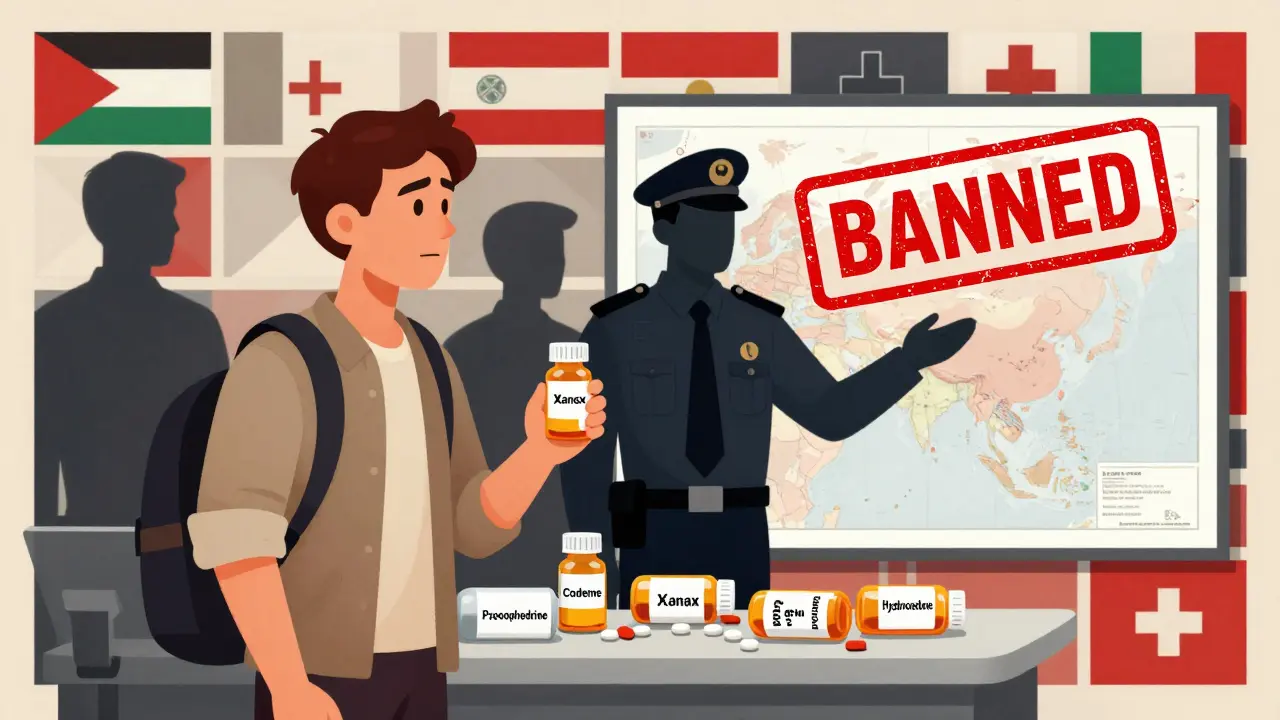
Running out of your medication while traveling isn’t just inconvenient-it can be dangerous. Imagine needing your anxiety pills in Japan, only to find they’re completely banned-even with a doctor’s note. Or landing in Dubai with your ADHD medication, only to have it confiscated at customs. These aren’t rare stories. In 2024, over 1,200 travelers faced delays or detention because of medication issues abroad. The truth? Finding medications abroad isn’t about luck. It’s about preparation.
Not All Medications Are Created Equal Around the World
What’s legal in the U.S. might be illegal in Thailand, Australia, or the UAE. Even common over-the-counter drugs can cause trouble. Pseudoephedrine, found in many cold medicines, is banned in Australia and the UAE because it’s used to make methamphetamine. Codeine is available without a prescription in Mexico, but you need special authorization in Australia. Hydrocodone? Totally illegal in Japan. And benzodiazepines like Xanax or Valium? Prohibited in Malaysia, even with a prescription. The World Health Organization says 80% of the world’s population lacks proper access to pain medication. That doesn’t mean you’ll find everything you need abroad. It means you can’t assume your medication is available-or legal-wherever you go. The same drug can be classified differently even in neighboring countries. One country might treat it as a controlled substance. Another might ban it entirely.What You Can and Can’t Bring Across Borders
If you’re carrying your own medication, there are hard rules. First, keep everything in its original packaging. That means the bottle with the pharmacy label, your name, the doctor’s name, dosage, and expiration date. TSA in the U.S. and most international airports require this. No pill organizers. No ziplock bags. Even if you’ve been traveling for years and never had an issue, customs officers don’t care about your track record. You’re generally allowed to bring a 90-day supply for personal use. That’s the rule in 142 countries. But Japan limits narcotics to 30 days. Singapore caps it at 14. If you’re bringing more than that, you need prior approval-often from the country’s health ministry. And don’t assume your doctor’s note is enough. Many countries require it to be notarized and translated into the local language. In non-English speaking countries, 62% of rejections happen because the paperwork wasn’t in the right language.How to Check Your Destination’s Rules (Before You Book Your Flight)
Don’t wait until you’re at the airport. Start 90 days before departure. Here’s how:- Go to your destination country’s embassy website. Look for a section on “Medications” or “Health Regulations.”
- Check the International Narcotics Control Board (INCB) database. It lists regulations for 68 countries as of October 2025. It’s not perfect, but it’s the most official source.
- Contact the embassy directly. Email or call them. Ask: “What are the rules for bringing [medication name] into your country?” Include the generic name and brand name.
- Don’t rely on Google. Travel blogs and Reddit threads can be helpful, but they’re not official. A post saying “I got my Xanax in Dubai” doesn’t mean it’s legal. One officer might let it slide. Another might arrest you.
Getting a Local Prescription Abroad
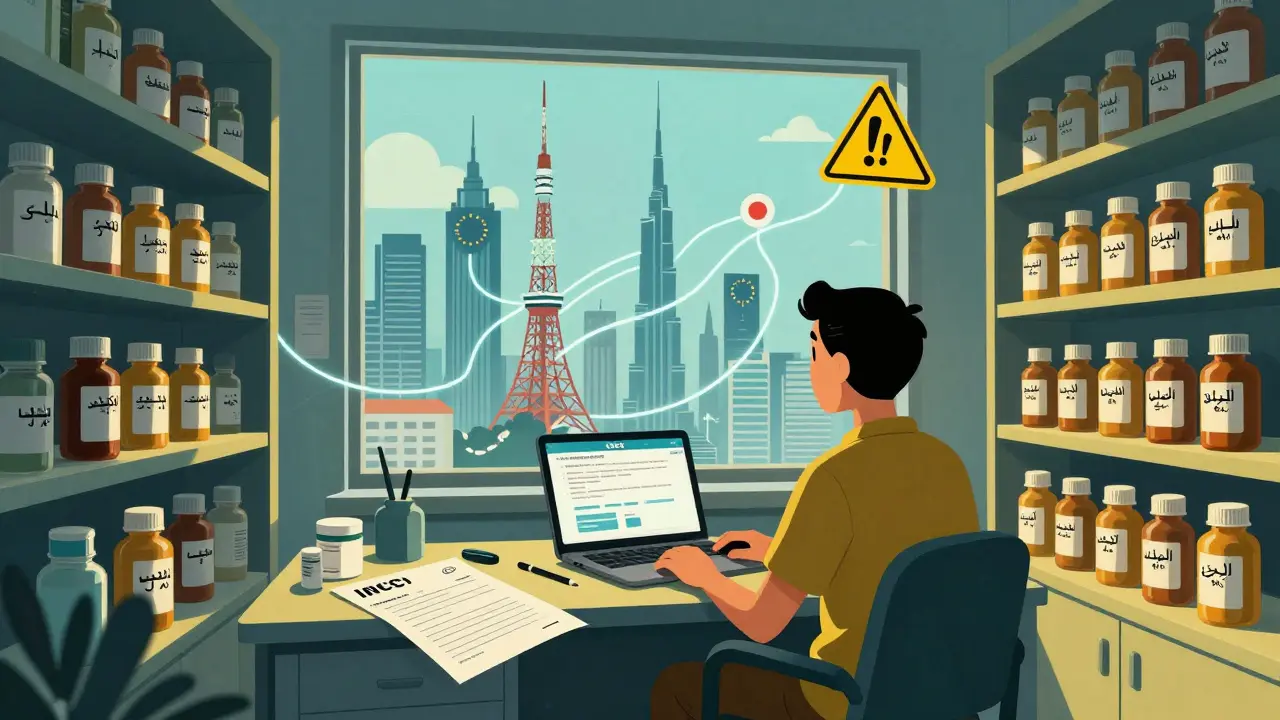
If you run out-or your meds get taken-you might need to get a new prescription locally. It’s possible, but it’s not easy. First, you need to find a doctor who’s willing to prescribe it. In many countries, only local doctors can write prescriptions. You can’t walk into a pharmacy with a U.S. script and expect them to fill it. Here’s how to do it:- Bring your original prescription, a copy of your diagnosis, and a letter from your doctor explaining your condition and medication needs. Include ICD-11 codes if you have them.
- Use services like IAMAT (International Association for Medical Assistance to Travellers). They have a network of 1,400 verified clinics in 90+ countries that understand international medication needs.
- Be prepared to pay out of pocket. Most local clinics won’t accept foreign insurance.
- For controlled substances, you may need to wait days or weeks for approval. In the UAE, even sleeping pills like zolpidem require pre-approval from the Ministry of Health.
The EU Advantage: One Prescription, 24 Countries
If you’re traveling within the European Union, you’re in the best situation in the world. The EU’s electronic prescription system works across 24 member states. If you have a digital prescription from Germany, you can walk into a pharmacy in France and get your sertraline filled within two hours. No translation. No notarization. Just your passport and the e-prescription. This system has a 98.7% success rate. It’s the only place in the world where medication access works this smoothly across borders. If you’re a resident of an EU country, make sure your doctor gives you an e-prescription before you leave. If you’re visiting the EU from outside, you still need to follow the 90-day rule and carry your original prescription.What to Do If Your Medication Gets Confiscated
It happens. A traveler in Sydney lost their ADHD meds in 2025. A student in Dubai had their anxiety pills seized. Here’s what to do:- Stay calm. Arguing or getting angry won’t help.
- Ask for a written receipt of what was taken. Get the officer’s name and badge number.
- Contact your country’s embassy immediately. They can’t get your meds back, but they can help you find a local doctor or connect you with support services.
- If you’re on a chronic medication like insulin or blood pressure pills, ask for emergency access. Most countries have emergency protocols for life-saving drugs.
Special Cases: ADHD, Pain, and Mental Health Medications
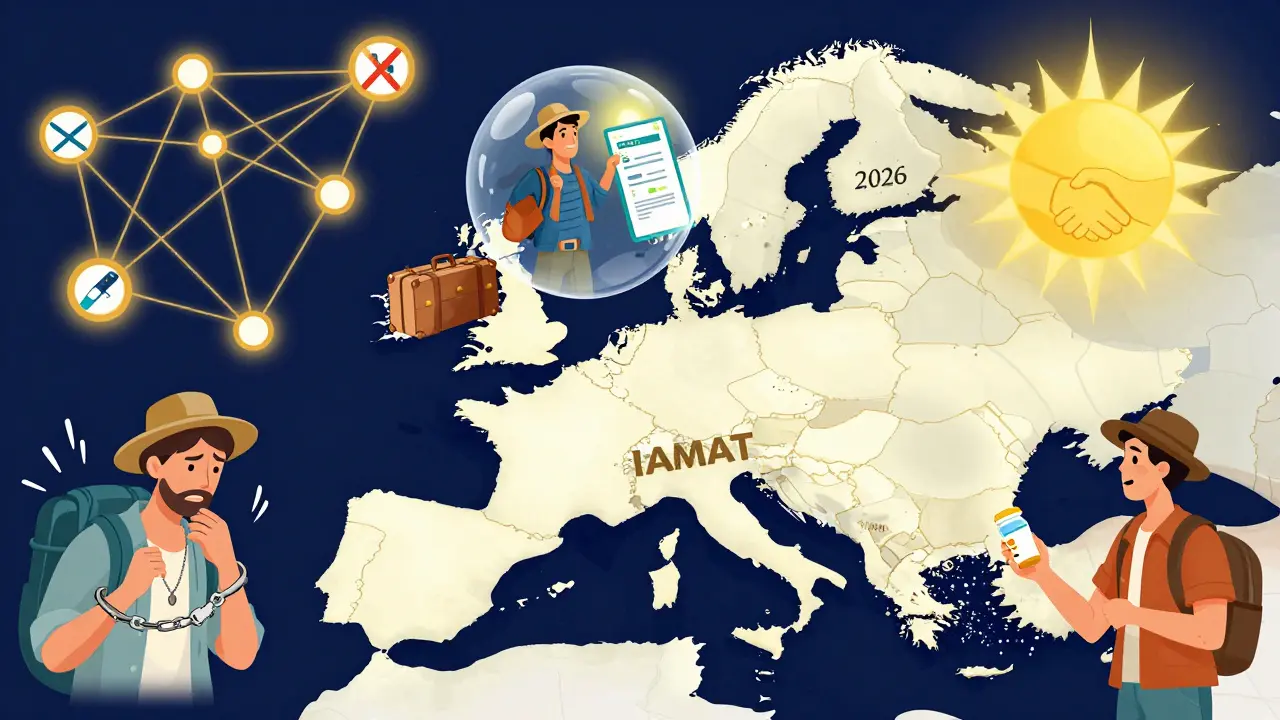
These are the hardest to manage abroad. ADHD stimulants like Adderall or Ritalin are Schedule II controlled substances in the U.S. In most of Europe, they’re either banned or require special permits. A 2025 MIUSA survey found 62% of American students studying in Europe struggled to get them. The solution? Start early. Apply for import permits through the destination country’s health authority. Some, like the UK, allow a 30-day supply with a prescription. Others, like Japan, don’t allow them at all. Pain medications like oxycodone or morphine? In low- and middle-income countries, they’re often unavailable. WHO reports 56% of these countries lack access to basic pain relief. If you need them, bring your own supply and plan ahead. Mental health meds like SSRIs or benzodiazepines? 43% of all medication-related travel incidents involve these. In the Middle East and Southeast Asia, they’re often treated like narcotics. Carry your doctor’s letter. Keep your prescription. And never, ever try to buy them on the street.What’s Changing in 2026
Good news: things are slowly improving. The WHO is rolling out a standardized international documentation template for controlled medications in 2026. This will make doctor’s letters more widely accepted. The U.S. Affordable and Safe Prescription Drug Importation Act of 2025 allows Americans to legally import a 90-day supply of medication from approved countries like Canada, the UK, and the EU. Phase 1 starts May 1, 2026. It won’t fix everything, but it gives travelers more options. Telemedicine for travelers is growing fast. By 2027, 37% more countries are expected to offer it. If you’re planning a long-term stay abroad, look into these services before you go.Top 5 Tips for Traveling With Medications
- Carry meds in original bottles with pharmacy labels. No exceptions.
- Bring two copies of your prescription-one with you, one left at home.
- Know the generic name of your medication. Brand names change by country.
- Check your destination’s rules 90 days before you leave.
- Use IAMAT or your embassy for help if something goes wrong.
Can I bring my prescription medication on a plane?
Yes, but only if it’s in its original container with the pharmacy label showing your name, the drug name, dosage, and your doctor’s information. The TSA and most international airports require this. You can bring more than 3.4 ounces of liquid medication if it’s medically necessary, but you must declare it at security. Never pack meds in checked luggage-they can get lost or exposed to extreme temperatures.
What if my medication is banned in the country I’m visiting?
If your medication is banned, you cannot bring it in-even with a prescription. Your only options are: 1) Switch to an alternative medication before you travel, 2) Get a local prescription after arrival (if possible), or 3) Cancel or reschedule your trip. Never try to smuggle it. The penalties can include fines, detention, or even jail time, especially with controlled substances.
Can I get a prescription filled abroad without a local doctor?
No. Pharmacies abroad won’t fill a foreign prescription unless it’s part of a recognized system like the EU’s e-prescription network. You must see a local doctor. Bring your medical records, original prescription, and a letter from your home doctor explaining your condition. Services like IAMAT can help you find doctors who understand international patients.
Are over-the-counter drugs safe to bring abroad?
Not always. Many OTC drugs contain ingredients that are controlled abroad. Pseudoephedrine (in Sudafed), codeine (in some cough syrups), and dextromethorphan (in Robitussin) are banned or restricted in countries like Australia, Japan, and the UAE. Always check the ingredients. If you’re unsure, leave it behind or ask your pharmacist for a safe alternative.
How do I know if a medication is safe to take in another country?
Start with the International Narcotics Control Board (INCB) database and your destination country’s embassy website. Then, consult your doctor and check the CDC Yellow Book or WHO guidelines. Don’t rely on travel forums. Real travelers share stories, but official sources give you the rules. When in doubt, assume it’s restricted and plan ahead.
Marian Gilan
January 26, 2026 AT 07:50Conor Murphy
January 27, 2026 AT 06:30Conor Flannelly
January 27, 2026 AT 06:39Patrick Merrell
January 27, 2026 AT 18:23Henry Jenkins
January 28, 2026 AT 08:05TONY ADAMS
January 28, 2026 AT 09:44George Rahn
January 29, 2026 AT 17:16Karen Droege
January 31, 2026 AT 10:57Napoleon Huere
February 1, 2026 AT 14:55Neil Thorogood
February 1, 2026 AT 22:16Jessica Knuteson
February 1, 2026 AT 22:21Ashley Porter
February 1, 2026 AT 22:24Peter Sharplin
February 2, 2026 AT 00:07