
 Jan, 18 2026
FDA Archive Finder Tool
Find the Right FDA Archive for Your Research
This tool helps you determine which FDA archive system to use based on your research needs.
Drugs include prescription medications. Devices include implants, monitors, and diagnostic equipment.
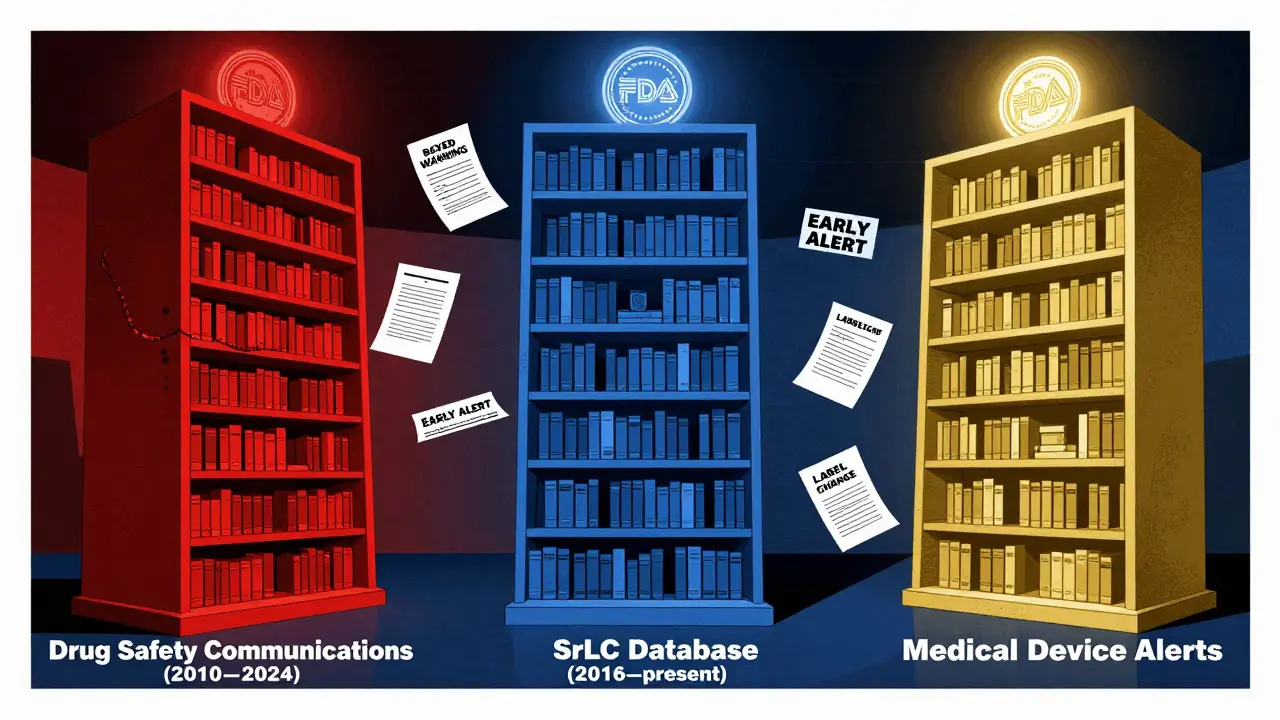
Note: Drug Safety Communications (DSCs) started in 2010. SrLC Database began in 2016.
Safety Alerts show official warnings. Label Changes show specific updates to drug labels.
The U.S. Food and Drug Administration (FDA) doesn’t just approve drugs and medical devices-it tracks what happens after they reach millions of patients. When something goes wrong, the FDA issues safety communications. These aren’t just press releases. They’re official, legally grounded alerts that change how doctors prescribe, how pharmacies dispense, and how patients understand risk. But what if you need to know what the FDA said about a drug five years ago? Or a device recall from 2018? That’s where the FDA Safety Communications Archive comes in.
What’s in the FDA Safety Communications Archive?
The archive isn’t one single database. It’s three interconnected systems, each with its own rules, timeframes, and purpose. Understanding the difference between them is the first step to finding what you need.The Drug Safety Communications (DSCs) are the most visible part of the archive. These are public alerts issued since 2010. Each one explains a safety concern-like a rare but serious side effect, a dangerous interaction, or a manufacturing flaw. The FDA archives older DSCs when they issue a newer one with updated info. So if you’re looking for warnings about a drug like rosiglitazone or varenicline, you’ll find the latest version, and the older ones are tucked away in year-by-year archives from 2010 to 2024.
Then there’s the Drug Safety-related Labeling Changes (SrLC) Database. This one is for researchers and professionals who need to see exactly how drug labels changed over time. Launched in January 2016, it tracks every update to the safety sections of prescription drug labels: BOXED WARNINGS, CONTRAINDICATIONS, WARNINGS AND PRECAUTIONS, ADVERSE REACTIONS, DRUG INTERACTIONS, and more. It doesn’t just say “the label changed.” It shows you the exact wording before and after. This is critical for understanding how the FDA’s understanding of a drug’s risks evolved.
For medical devices, the Medical Device Safety Communications system operates separately. These include Early Alerts-warnings the FDA issues when it believes a device poses a serious risk, even before a formal recall. As of September 29, 2025, this system expanded to cover all medical devices, not just high-risk ones. That means if a glucose monitor, a pacemaker, or a surgical mesh has a newly identified defect, the FDA will issue a public alert, and it will be archived.
How far back does the archive go?
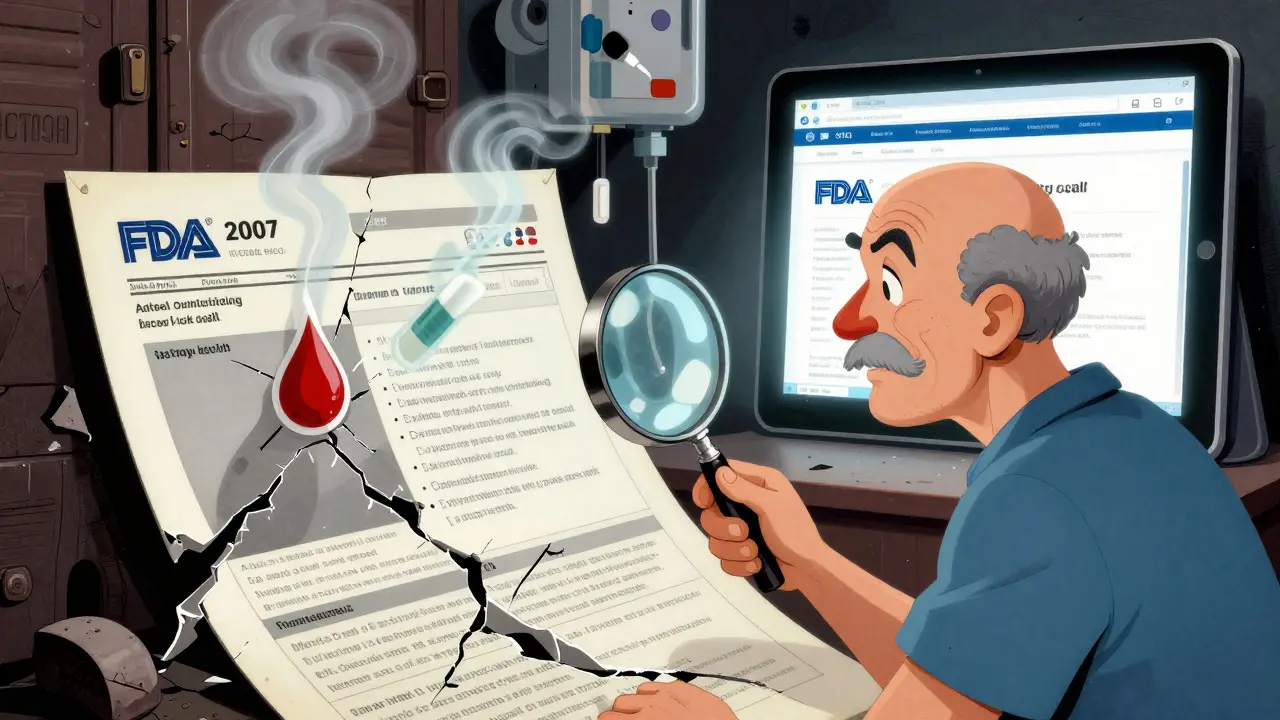
This is where things get tricky. The SrLC Database only starts in 2016. If you’re researching labeling changes for a drug approved in 2005, you won’t find them here. The DSCs start in 2010, so anything before that isn’t in the modern digital archive.For pre-2010 safety info, you need the FDA.gov Archive. This tool lets you view old versions of FDA web pages that have since been updated or removed. It’s not perfect-it’s a web crawler snapshot, not a structured database-but it’s the only way to find a 2007 alert about a specific blood thinner or a 2009 warning about a faulty infusion pump.
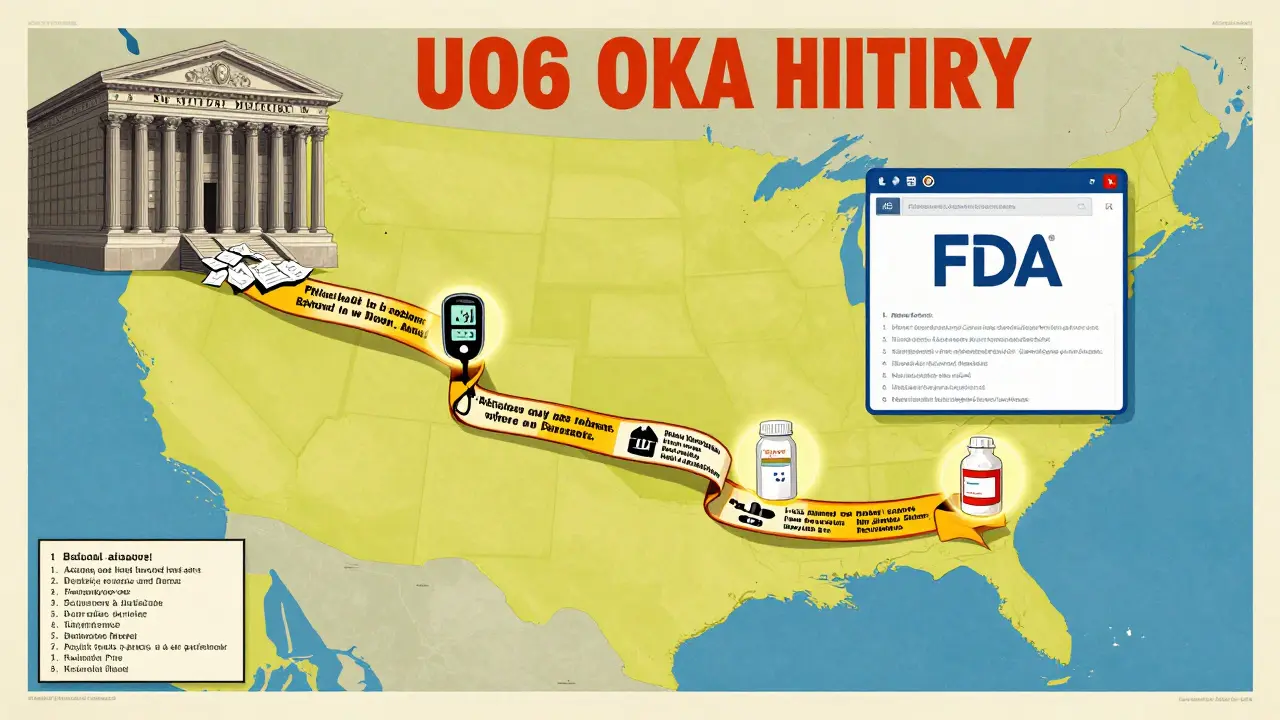
For even older records-think 1940s to 1970s-you’re looking at physical archives. The National Archives in Philadelphia holds Record Group 88: Records of the FDA. That includes correspondence, inspection reports, and memos from manufacturers dating back to 1906. These aren’t online. You’d need to visit in person or request copies through their research system. But for anyone studying the history of drug safety-like how the “Poison Squad” experiments of Dr. Harvey Washington Wiley led to the 1906 Pure Food and Drug Act-these are gold.
Why does this archive matter?
It’s not just about looking backward. It’s about understanding patterns. Researchers use the archive to study how the FDA responds to emerging risks. Did a warning about liver damage from a certain statin lead to a drop in prescriptions? Did a device recall cause hospitals to switch brands? The archive lets you track those effects.It also reveals gaps. A 2012 study in the PMC journal found that some FDA warnings had immediate, strong impacts on prescribing behavior, while others had little to no effect. Why? Maybe the language was too technical. Maybe the warning was buried in a long document. Or maybe doctors didn’t see it. The archive helps answer those questions.
For patients, it’s a tool for informed decisions. If you’re on a medication and hear rumors of side effects, you can check the FDA’s own records-not blogs, not social media, not pharmaceutical marketing. You can see exactly what the agency has said, when, and how it changed over time.
How to use the archive effectively
Start with the FDA’s Drug Safety and Availability page. From there:- For recent drug warnings (2010-2024), go to Drug Safety Communications and browse by year.
- For exact labeling changes since 2016, use the SrLC Database. Search by drug name or change type (e.g., “boxed warning added”).
- For medical devices, visit the Medical Device Safety Communications page. Look for “Early Alerts” for the most urgent warnings.
- For anything before 2010, use the FDA.gov Archive. Enter the drug or device name and a date range.
- For historical research (pre-1980s), contact the National Archives for Record Group 88.
Pro tip: Use the search function on the FDA site with exact phrases. Try “drug name + safety communication” or “device model + alert.” Avoid vague terms like “problem” or “issue.” The system responds better to precise language.
What the archive doesn’t tell you
The FDA archive gives you official statements. It doesn’t give you context about how many people were affected, how often the issue occurred, or whether the risk was higher in certain populations. That data lives in other systems-like the FDA’s Adverse Event Reporting System (FAERS), which tracks patient-reported side effects. The archive tells you what the FDA said. FAERS tells you what patients experienced.Also, the archive doesn’t include non-safety communications. If the FDA issues a reminder about proper storage or a change in manufacturing location that doesn’t affect safety, it won’t show up here. This archive is strictly for risk-related alerts.
What’s new in 2025-2026?
In October 2023, the FDA announced a new resource to help researchers collect historical data on drug approvals. It’s still in development, but it aims to fill the gap between pre-2016 labeling changes and the current SrLC Database. This could eventually make it easier to trace the full safety history of a drug from approval to today.On the device side, the expansion of Early Alerts to cover all medical devices in September 2025 means more transparency. No longer will only high-risk devices trigger public warnings. Even low-risk implants or diagnostic tools will be monitored and reported if new safety issues emerge.
Where to go if you’re stuck
If you can’t find what you’re looking for, contact the FDA’s Division of Drug Information. They handle inquiries about drug safety and can help direct you to the right archive or dataset. Call (855) 543-3784 or (301) 796-3400, or email [email protected]. They don’t give medical advice, but they know where the records are.For device-related questions, the Center for Devices and Radiological Health (CDRH) has its own contact page. The key is to be specific: name the product, the year, and what kind of information you need. The more precise you are, the faster they can help.
Final thoughts
The FDA Safety Communications Archive is one of the most underused public health tools in the U.S. It’s not flashy. It doesn’t have apps or dashboards. But it’s the most reliable source for understanding how drug and device risks have been identified, communicated, and managed over the last 15 years. Whether you’re a researcher, a clinician, a patient, or just someone trying to understand a warning you saw online, this archive gives you the facts-not rumors, not opinions, not marketing.It’s history. It’s science. And it’s free.
Can I find old FDA drug safety warnings from before 2010?
Yes, but not in the modern Drug Safety Communications archive, which starts in 2010. For warnings before that, use the FDA.gov Archive tool, which lets you view older versions of FDA web pages. For records from the 1900s to the 1970s, you’ll need to contact the National Archives in Philadelphia, which holds physical records from the FDA’s early years, including correspondence and inspection reports.
What’s the difference between Drug Safety Communications and the SrLC Database?
Drug Safety Communications (DSCs) are public alerts explaining safety concerns about drugs or devices. They’re written for doctors and patients. The SrLC Database, on the other hand, is a technical record of exact changes made to drug labels since January 2016. It shows you the updated wording in sections like BOXED WARNINGS or DRUG INTERACTIONS. DSCs tell you something changed; SrLC shows you exactly what changed.
Are medical device warnings included in the same archive as drug warnings?
No. Medical device safety communications are kept in a separate system from drug warnings. The FDA’s Medical Device Safety Communications page includes Early Alerts and recalls for all devices, expanded to cover all device types as of September 2025. Drug warnings are on the Drug Safety Communications page. They’re related but distinct archives.
Why can’t I find labeling changes for a drug approved in 2010 in the SrLC Database?
The SrLC Database only includes labeling changes made after January 2016. If a drug was approved in 2010 and had label updates before 2016, those changes aren’t in the SrLC Database. You’ll need to check the FDA.gov Archive or historical Drug Safety Communications to find those earlier updates.
Is the FDA Safety Communications Archive free to use?
Yes. All FDA Safety Communications, the SrLC Database, and the FDA.gov Archive are publicly accessible at no cost. There are no subscriptions, login requirements, or fees. The FDA provides these resources to support transparency and public health.
How often does the FDA update the archive?
The FDA issues new Drug Safety Communications and Medical Device Safety Communications regularly-often weekly. The SrLC Database is updated as soon as labeling changes are approved, usually within days of FDA action. The archive is continuously growing, with new entries added from 2010 through 2024, and updates for 2025 already being added.
Can I use the FDA archive to challenge a prescription or medical decision?
The archive provides official safety information, but it’s not legal or medical advice. You can use it to inform your conversation with your doctor or pharmacist-especially if you’re concerned about a drug’s history of warnings. But you cannot use it to override a clinical decision. Always discuss safety concerns with a licensed healthcare provider.
Erwin Kodiat
January 20, 2026 AT 06:59Man, I’ve been using this archive for my research for years-and most people don’t even know it exists. It’s like the FDA’s secret library of truth. No hype, no ads, just cold hard facts about what went wrong and when. If you’re a clinician, a student, or just someone who got scared by a Reddit post about their meds-go here first. Seriously.
Christi Steinbeck
January 21, 2026 AT 02:06This is the kind of resource that should be taught in high school health class. Not just for patients, but for future doctors too. So many people panic because they see a headline about a drug being ‘dangerous’-but they don’t know if it’s a one-in-a-million thing or a systemic failure. This archive shows the full story. Thank you for making this so clear.
Jake Rudin
January 21, 2026 AT 10:27It’s fascinating-how the FDA’s communication strategy evolved from vague, bureaucratic notices in the ’90s to these hyper-specific, structured alerts today. The SrLC Database? Genius. It’s not just about safety-it’s about epistemology. We’re tracking how knowledge itself changes over time, not just drug labels. And yet, no one talks about this. Why? Because transparency isn’t sexy. But it’s the only thing keeping us from repeating the thalidomide disaster.
Aman Kumar
January 21, 2026 AT 13:13Typical American arrogance-thinking the FDA is some kind of global gold standard. In India, we’ve had drug safety scandals since the ’80s, and our regulators don’t even publish half this. You people have a database? How quaint. Meanwhile, my cousin died from a counterfeit diabetes drug last year because the local pharmacy didn’t even know the batch was fake. Your archive won’t help him.
Astha Jain
January 22, 2026 AT 00:57lol i just googled ‘fda archive’ and found this. so much info its kinda overwhelming. like why do they even have 3 diffrent systems? its like the gov cant decide what they want. anyway, thanks for the tip on the national archives. gonna try to find that 1998 recall for my grandma’s pacemaker.
Valerie DeLoach
January 23, 2026 AT 08:40I teach medical ethics, and I use this archive every semester. It’s the most honest thing the FDA does. No spin. No PR. Just the facts, in chronological order. Students always assume regulators are reactive-but this shows how often they’re proactive. And the Early Alerts for devices? That’s a quiet revolution. Every patient deserves to know if a device they’re being implanted with has a hidden flaw-even if it’s not ‘high risk.’ This isn’t bureaucracy. It’s care, in document form.
Jacob Hill
January 23, 2026 AT 17:09Just wanted to add-when searching the SrLC Database, use the exact drug name + ‘boxed warning’ or ‘contraindication’-the wildcard search doesn’t work well. Also, don’t forget to check the ‘effective date’ column. Sometimes the change was approved months before it was publicly posted. Small detail, but it’s saved me hours.
Lewis Yeaple
January 24, 2026 AT 19:09While the archive is indeed a valuable repository of regulatory documentation, one must exercise caution in interpreting its contents as definitive evidence of clinical significance. The absence of a safety communication does not equate to absence of risk; likewise, the presence of one does not necessarily imply a causal relationship between the agent and the adverse event. Furthermore, temporal correlation is often conflated with causation in lay discourse. The FDA’s role is to communicate potential hazards-not to adjudicate medical outcomes.
Jackson Doughart
January 26, 2026 AT 16:46I’ve spent years digging through old FDA memos for my dissertation on opioid prescribing trends. The pre-2010 archive is a ghost town-half the links are dead, the scans are blurry, and you have to cross-reference with journal articles just to confirm dates. But when you find that one 2004 alert buried in a forgotten page? It’s like uncovering a clue in a cold case. This archive isn’t just data-it’s medical archaeology.
Malikah Rajap
January 26, 2026 AT 19:09Wait, so if I found a 2008 warning about my antidepressant and my doctor says it’s ‘fine now’… should I be mad? I mean, I get it’s not legal advice, but… isn’t it kind of wild that the agency knew this 16 years ago and now it’s just… not talked about? Like, why do we trust them at all if the warnings just disappear into the archive? I’m not trying to be dramatic-but this feels like emotional gaslighting. 🤔