
 Dec, 2 2025
Why You Feel So Tired When Exercising on Beta-Blockers
You used to be able to run 5K in under 25 minutes. Now, even a brisk walk leaves you winded. You’re not lazy. You’re not out of shape. You’re on beta-blockers.
These medications - like metoprolol, propranolol, or atenolol - are lifesavers for people with high blood pressure, heart rhythm problems, or heart failure. But they also quietly shut down one of your body’s main tools for exercise: heart rate. Beta-blockers block adrenaline’s effect on your heart, which lowers your resting heart rate and prevents it from spiking during activity. That’s good for your heart, but it makes exercise feel harder than it should.
Studies show beta-blockers can reduce your maximum heart rate by 20-30%. If you used to hit 170 bpm on a run, you might now max out at 120-130 bpm. That’s not weakness. That’s pharmacology. Your heart isn’t failing - it’s being held back on purpose. And when your heart can’t speed up, your muscles don’t get enough oxygen. Your VO₂ max - your body’s ability to use oxygen during exercise - drops by 10-15%. That’s why you feel exhausted faster.
How Beta-Blockers Compare to Other Heart Medications
Not all heart medications slow you down the same way. ACE inhibitors like lisinopril or calcium channel blockers like amlodipine rarely affect heart rate during exercise. Diuretics might make you dehydrated or crampy, but they don’t cap your heart rate. Beta-blockers are unique. They directly limit how fast your heart can beat - and that’s the core reason you feel fatigued.
That’s why the old advice - “keep your heart rate at 60-70% of your max” - doesn’t work anymore. If your max is artificially lowered, chasing that number could mean you’re pushing too hard. You might feel dizzy, overly breathless, or even nauseous. And that’s not a sign you’re getting fit - it’s a sign you’re fighting your own medication.
Stop Tracking Heart Rate. Start Using the Talk Test.
Forget your smartwatch’s heart rate zone. It’s lying to you.
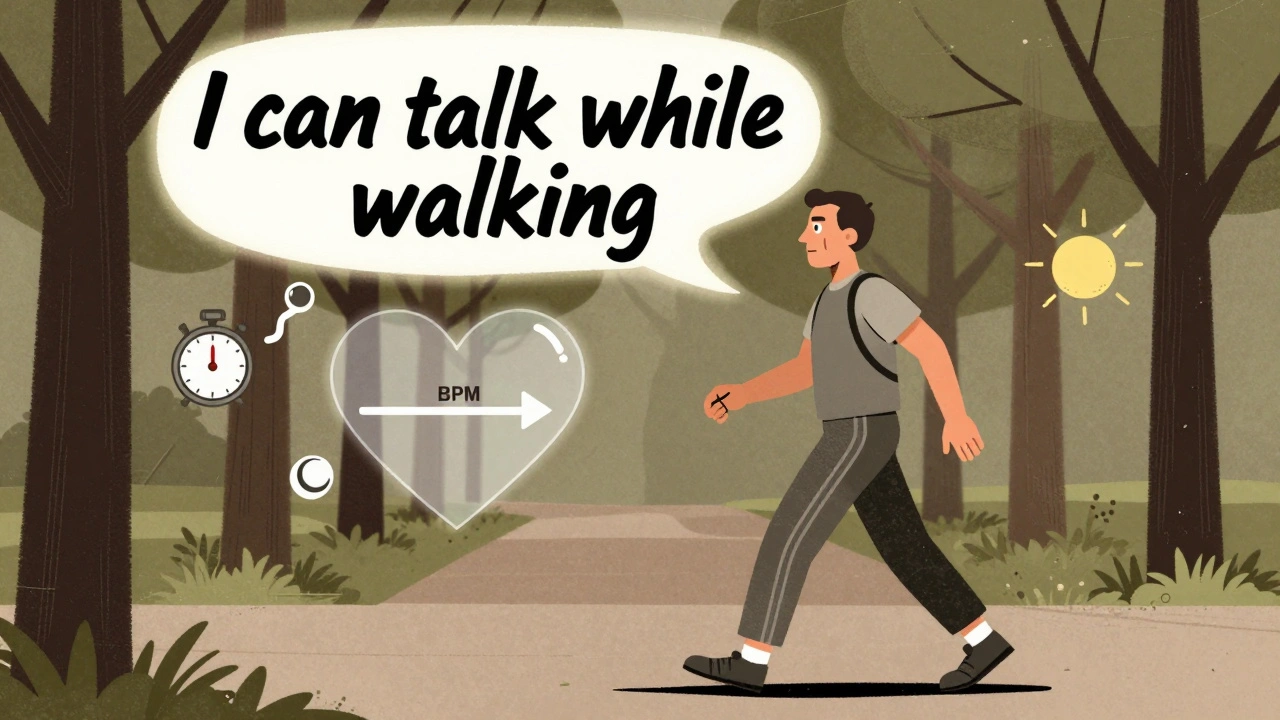
The American Heart Association recommends a simple, proven alternative: the talk test. If you can talk comfortably during exercise - not sing, but not gasping for air - you’re in the right zone. That’s moderate intensity. If you can only say a few words before needing to breathe, you’re pushing too hard.
One user on the American Heart Association’s support forum said: “Switching from heart rate to the talk test let me keep walking every day on atenolol.” That’s the power of this method. It doesn’t care what your heart rate is. It cares what your body feels. And that’s what matters.
Use the Borg RPE Scale Instead
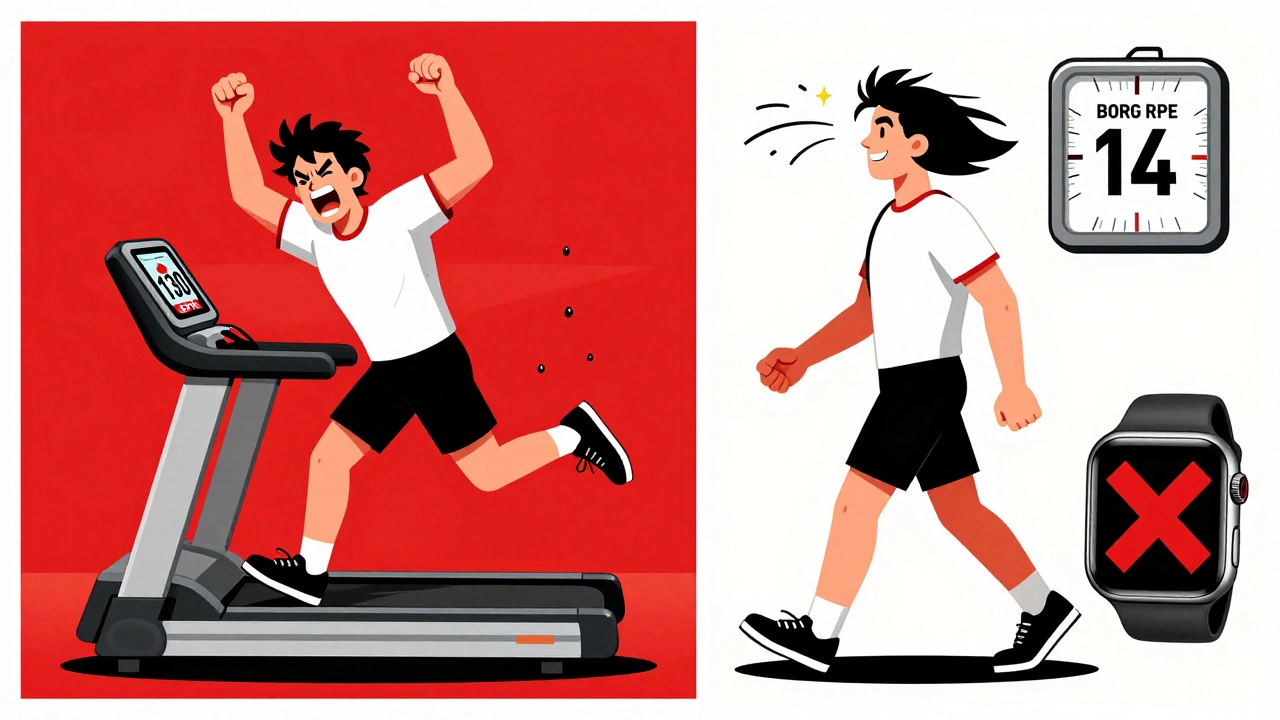
If the talk test feels too vague, try the Borg Rating of Perceived Exertion (RPE) scale. It’s a 6-20 point scale where 6 means “no exertion at all” and 20 means “maximal effort.”
For moderate exercise on beta-blockers, aim for 12-14. That’s “light to somewhat hard.” You’re working, but you’re not gasping. For vigorous exercise, 15-16 is enough - no need to push to 17-19 like you used to. Most people on beta-blockers need to drop their target intensity by one level. If you used to aim for 16, now aim for 14.
Dr. Martha Gulati from UCLA says this is the gold standard. “Your body knows how hard you’re working better than any device ever will,” she wrote in the Journal of the American College of Cardiology.
Adjust Your Workout Structure - Not Your Goals
You don’t need to quit exercising. You just need to change how you do it.
- Warm up longer. Extend your warm-up to 10-15 minutes. Your heart needs more time to adjust.
- Extend your workout time. If you used to do 30 minutes of brisk walking, now do 36-38 minutes. The American Heart Association recommends 180-188 minutes of moderate activity per week instead of 150 when you’re on beta-blockers.
- Choose steady over sprinting. High-intensity interval training (HIIT) can be less effective because your heart can’t reach the required rates. Stick to continuous, steady-state movement - walking, cycling, swimming.
- Reduce weights, not reps. If you lift weights, drop the load by 15-20%, but keep the number of reps. Beta-blockers don’t weaken your muscles - they just limit your heart’s ability to support them.
Watch for Red Flags - When to Stop and Call Your Doctor
Some fatigue is normal. Some is dangerous.
Stop exercising and contact your doctor if you experience:
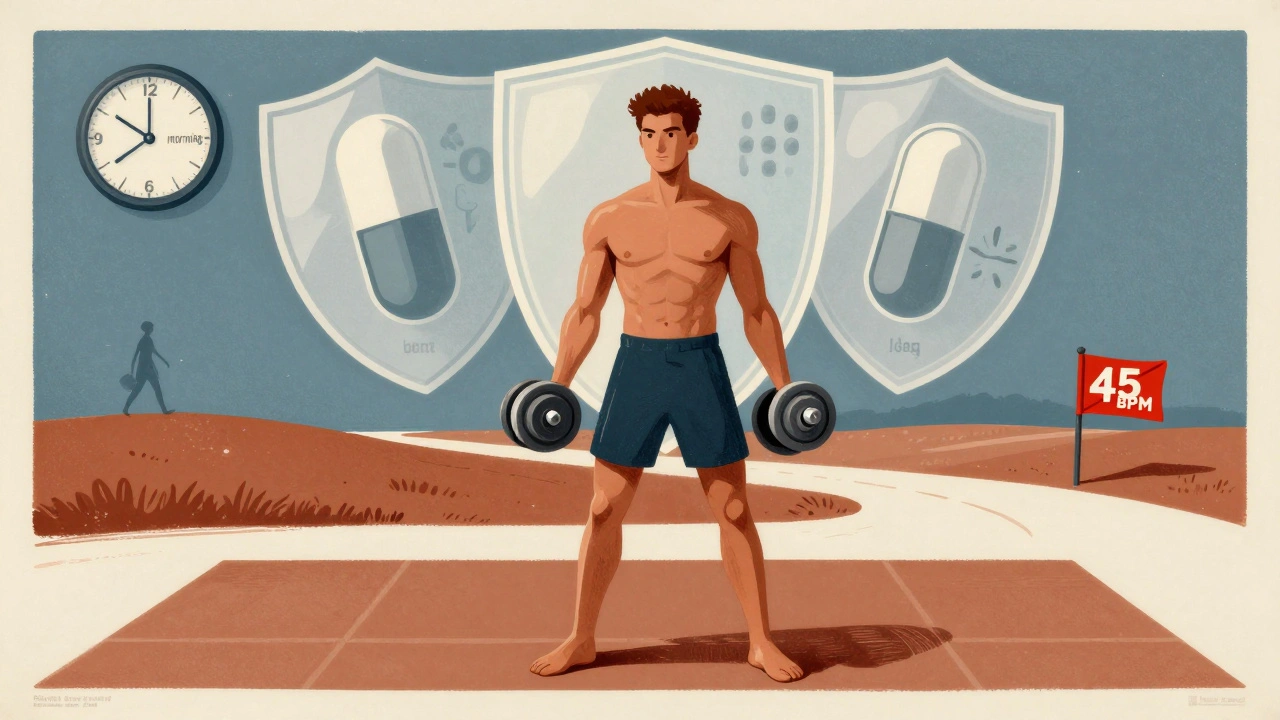
- Resting heart rate below 45 bpm with dizziness or lightheadedness
- Systolic blood pressure dropping below 90 mmHg during activity
- Extreme shortness of breath that doesn’t improve with rest
- Dry mouth or lack of sweat during mild effort - this signals dehydration risk
These aren’t just discomforts. They’re warning signs. About 5% of beta-blocker users have dangerously low heart rates. About 3% experience dangerous blood pressure drops during exercise. Don’t ignore them.
What About Other Medications?
Beta-blockers aren’t the only drugs that cause exercise fatigue. Other medications can play a role too:
- Diuretics can drain your electrolytes, leading to muscle cramps or weakness.
- Statins may cause muscle soreness in some people, especially with intense activity.
- Antidepressants like SSRIs can reduce energy levels and motivation.
If you’re on multiple drugs, fatigue might be a combo effect. Talk to your doctor about your full medication list. Sometimes, switching to a more cardioselective beta-blocker like nebivolol (Bystolic) can reduce fatigue by 8-10% compared to older versions.
What’s New in 2025? Wearables Are Starting to Catch Up
Apple Watch’s latest software (version 9.1, released in September 2023) now includes beta-blocker-adjusted heart rate zones. It doesn’t show your real heart rate - it shows what your heart rate should be if you weren’t on the drug. It’s still experimental, and not yet validated in clinical studies, but it’s a step forward.
Cardiac rehab centers are also using cardiopulmonary exercise testing (CPET) more often. This test measures how well your heart, lungs, and muscles work together during exercise. It’s the most accurate way to create a personalized exercise plan. If you’re on long-term beta-blockers, ask your cardiologist if CPET is an option.
You Can Still Be Active - Just Differently
Being on beta-blockers doesn’t mean you have to sit on the couch. It means you have to listen differently. Your body is still strong. Your lungs still work. Your muscles still respond. You just need to stop measuring success by heart rate numbers and start measuring it by how you feel.
One Reddit user on r/BetaBlockers wrote: “I used to run 5K in 25:30. Now it’s 29:15. But I’m still doing it. And I’m not collapsing afterward.” That’s the win.
Exercise isn’t about beating your old time. It’s about staying alive, strong, and independent. And with the right adjustments, you absolutely can.
Can I still do cardio if I’m on beta-blockers?
Yes, absolutely - but you need to change how you monitor intensity. Forget heart rate targets. Use the talk test or Borg RPE scale instead. Aim for 12-14 on the RPE scale for moderate exercise. Walking, cycling, and swimming are ideal. Avoid high-intensity intervals unless cleared by your doctor.
Why does my heart rate stay so low even when I’m working hard?
Beta-blockers block adrenaline from speeding up your heart. This is intentional - it protects your heart from overworking. But it also means your heart can’t respond to exercise the way it used to. Your maximum heart rate might be 20-30% lower than before you started the medication. That’s normal. It’s not a sign your heart is failing.
Should I stop exercising if I feel too tired?
No - but do adjust. Feeling tired is common. Feeling dizzy, faint, or having chest pain is not. If you’re just tired but can still talk, keep going at a slower pace. If you feel lightheaded, stop immediately. Drink water, sit down, and call your doctor if symptoms don’t improve within minutes.
Do beta-blockers make me lose muscle or strength?
No. Beta-blockers don’t weaken your muscles. They limit your heart’s ability to deliver oxygen during effort. That’s why lifting feels harder - your body can’t support the effort the way it used to. But your strength is still there. Reduce the weight by 15-20%, keep the reps, and you’ll maintain muscle just fine.
Is it safe to use a fitness tracker on beta-blockers?
You can use one - but don’t rely on it. Your heart rate readings will be artificially low and misleading. Use the tracker for steps, sleep, or activity duration - not for intensity zones. Focus instead on how you feel: your breathing, your ability to talk, and your level of effort.
What’s the best time of day to exercise on beta-blockers?
Morning is often best. Beta-blockers peak in your bloodstream 2-4 hours after taking them. If you take your dose in the morning, your heart rate will be lowest then. Exercising later in the day, when the drug’s effect has worn slightly, can feel easier. But listen to your body - if you feel better in the afternoon, go then.
Can I switch to a different beta-blocker to reduce fatigue?
Possibly. Nebivolol (Bystolic) is a newer beta-blocker that causes less reduction in VO₂ max - about 8-10% less than older ones like propranolol. It also has fewer side effects like cold hands or fatigue. Talk to your doctor about whether switching could help - but never stop or change your medication without medical advice.
How long does it take to adjust to exercising on beta-blockers?
Most people notice improvement within 4-8 weeks as their body adapts to lower heart rates. Your muscles get better at using oxygen. Your breathing becomes more efficient. Your confidence returns. Stick with it. Use the talk test. Don’t compare yourself to your old self. You’re not losing fitness - you’re learning a new way to be active.
Katherine Gianelli
December 2, 2025 AT 19:52Thought I was dying every time I got winded
Then I tried the talk test and it was like a weight lifted
Now I walk 45 minutes daily and I don't check my watch once
My heart rate? Doesn't matter. My breathing? That's the guide.
You're not broken. You're just adapting. And you're doing great.
Ignacio Pacheco
December 3, 2025 AT 20:58Jim Schultz
December 4, 2025 AT 07:20Kidar Saleh
December 6, 2025 AT 01:05Chloe Madison
December 6, 2025 AT 18:37Vincent Soldja
December 8, 2025 AT 01:54Joykrishna Banerjee
December 8, 2025 AT 22:07Myson Jones
December 9, 2025 AT 16:42parth pandya
December 11, 2025 AT 13:05Albert Essel
December 12, 2025 AT 02:56Charles Moore
December 12, 2025 AT 18:18