
 Jan, 16 2026
Every year, dozens of blockbuster drugs lose patent protection. Patients expect prices to drop. Generic versions flood the market. But in many cases, they don’t. Why? Because companies have spent years preparing for this moment-not by inventing new medicines, but by evergreening.
What Evergreening Really Means
Evergreening isn’t a new drug. It’s not even real innovation. It’s a legal trick. When a drug’s 20-year patent is about to expire, companies file for new patents on tiny changes-like switching from a pill to a capsule, changing the dose, or adding a new coating. These aren’t improvements that help patients. They’re legal loopholes designed to delay generics. The strategy exploded after the 1984 Hatch-Waxman Act in the U.S. That law let generic companies enter the market faster-but it also gave brand-name drugmakers new ways to extend their monopoly. Instead of competing on price or effectiveness, companies compete on paperwork. AstraZeneca, for example, piled up patent protections on six drugs, extending their market control by over 90 years total. One of those drugs, Nexium, was just a slightly modified version of Prilosec. The active ingredient? The same. The price? More than double.How It Works: The Five Common Tactics
Evergreening isn’t one trick. It’s a toolkit. Here’s how it plays out in real life:- New formulations: Changing how the drug is delivered-like switching from a tablet to a liquid or a slow-release version. No better results, just a new patent.
- Combination drugs: Mixing two old drugs into one pill and patenting the combo. Even if each ingredient was off-patent years ago.
- Method-of-use patents: Claiming a new use for an old drug. For example, patenting a heart medication for weight loss, even if the original use was for high blood pressure.
- Pediatric exclusivity: Running small studies on children to earn six extra months of protection. Often, the drug isn’t even meant for kids.
- Product hopping: Pulling the old version off the market and pushing patients to the new, patented version. Patients can’t switch back. Pharmacists can’t substitute generics. The old drug disappears, and the new one stays protected.
AbbVie’s Humira is the most extreme case. Over 247 patents were filed on one drug. That’s not innovation-that’s a patent thicket. Each patent is a fence. Together, they form a wall. Generic makers can’t afford to challenge them all. So Humira stayed price-controlled for nearly two decades, earning about $40 million a day at its peak.
Why This Costs Patients Billions
When generics arrive, prices drop by 80 to 85% within the first year. That’s the rule. But evergreening blocks that drop. The result? Millions of Americans pay hundreds or even thousands of dollars a month for drugs that could cost $20. Diabetes, GERD, autoimmune diseases-these aren’t rare conditions. They affect tens of millions. And when companies use evergreening to protect drugs for these conditions, they’re not just protecting profits. They’re blocking access. A 2023 study found that 78% of new patents on prescription drugs were for existing drugs, not new ones. That means the system is being used to protect old products, not reward new science. The cost? U.S. healthcare spends over $1.4 trillion a year on prescription drugs. A huge chunk of that goes to drugs kept artificially expensive by evergreening.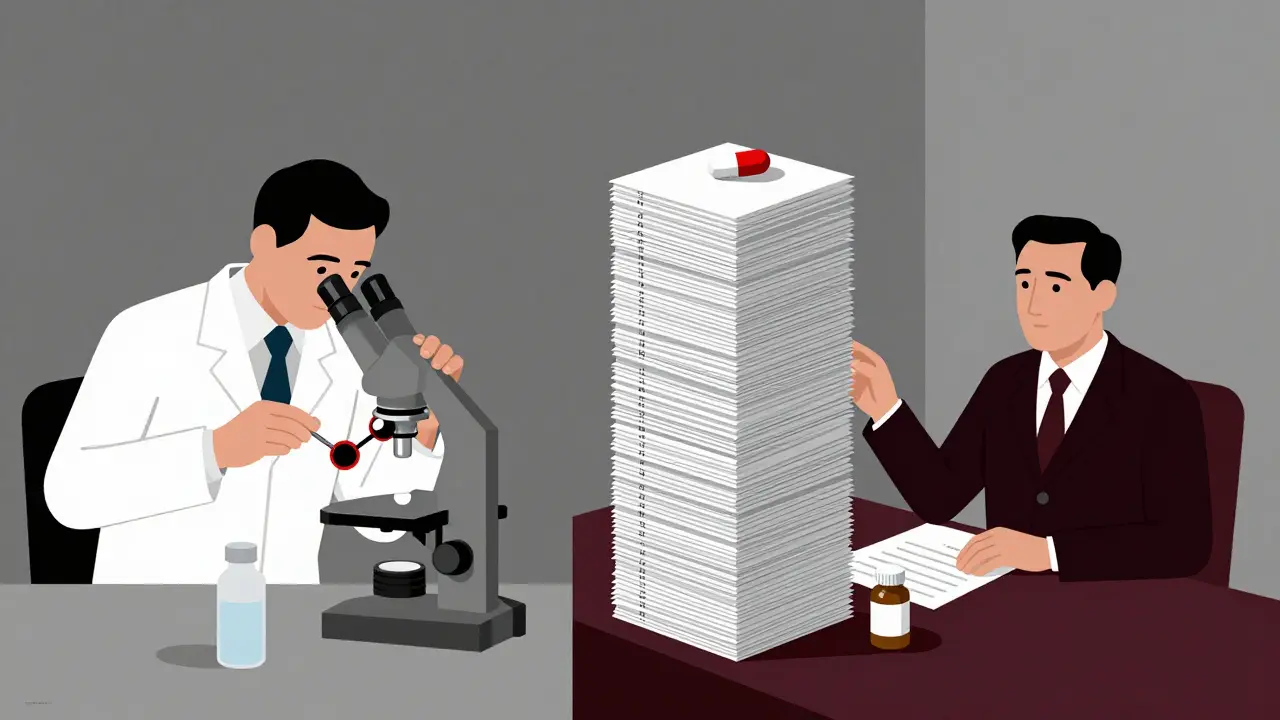
The Financial Math: R&D vs. Patent Games
Developing a truly new drug takes 10 to 15 years and costs about $2.6 billion. That’s real science. Real risk. Evergreening? A few million dollars. A small clinical trial. A patent lawyer. Done in 18 months. No new molecules. No new science. Just legal tweaks. The return on investment? Sky-high. Humira made $20 billion in sales in a single year. AstraZeneca’s Nexium brought in $5 billion annually at its peak. Those numbers don’t come from better outcomes. They come from keeping generics out. Companies argue they need these extensions to fund future research. But the data says otherwise. The money spent on evergreening far exceeds what’s spent on actual discovery. Harvard researchers found that companies use evergreening not to fund innovation, but to replace it.Who’s Fighting Back?
Regulators are starting to push back. The U.S. Federal Trade Commission sued AbbVie in 2022 over Humira’s patent strategy, calling it anticompetitive. The Inflation Reduction Act of 2022 gave Medicare the power to negotiate prices for the most expensive drugs-something that directly undermines evergreening’s financial model. The European Medicines Agency now requires companies to prove a “significant clinical benefit” before granting extra exclusivity. That’s a big deal. It means you can’t just tweak a pill and call it new. In India and Brazil, courts have rejected evergreening claims outright. They see it for what it is: a way to abuse the patent system. The World Health Organization has called it a barrier to global health equity.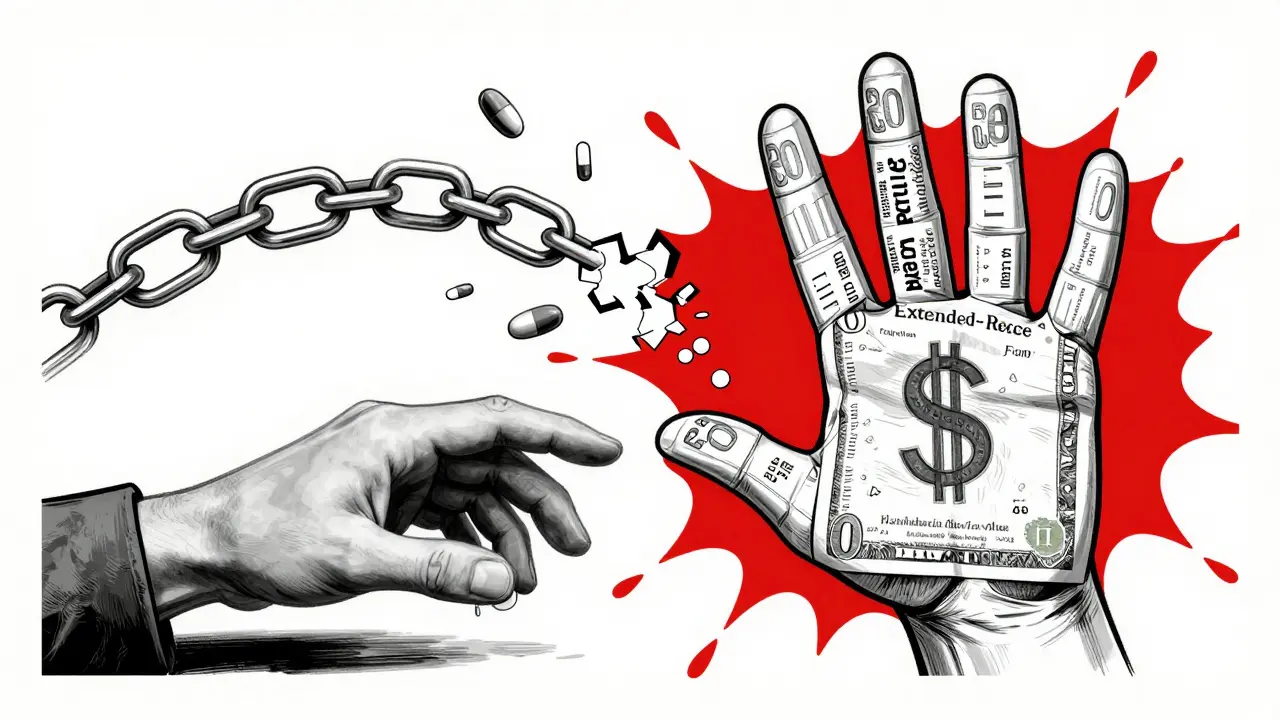
What’s Next? The Future of Evergreening
Companies aren’t giving up. They’re just getting smarter. Now, they’re moving into biologics-complex drugs made from living cells. These are harder to copy. Even if a patent expires, making a true generic version takes years and millions more. That’s the new frontier. Some are using pharmacogenomics-patenting genetic tests that predict who responds to a drug. If you need a test to use the drug, and the test is patented, you can’t use generics without paying extra. Others are launching “authorized generics”-their own generic version sold under a different label. It looks like competition, but it’s still the same company. It keeps prices high and confuses patients and pharmacies.What Patients Can Do
You can’t stop evergreening alone. But you can fight back:- Ask your doctor if a generic version exists-even if your prescription says the brand name.
- Check GoodRx or other price comparison tools. Sometimes the brand is cheaper than you think.
- Join patient advocacy groups. Pressure on lawmakers matters.
- Ask your insurer why they’re covering the brand instead of the generic. Demand transparency.
Every time you choose a generic, you’re voting against evergreening. Every time you question a high price, you’re pushing the system to change.
Why This Matters Beyond the Pharmacy
Evergreening isn’t just about pills. It’s about trust. It’s about whether the patent system serves innovation-or just profit. When companies spend more on lawyers than on scientists, the whole system loses credibility. Patients shouldn’t have to choose between paying rent and buying medicine. Doctors shouldn’t have to explain why a $20 generic isn’t available. And the law shouldn’t reward the same drug 247 times. The patent system was meant to encourage innovation-not to create endless monopolies. Evergreening breaks that promise. And it’s time we called it out.Is evergreening legal?
Yes, in most cases, it’s legal. The U.S. patent system allows companies to file multiple patents on minor changes to existing drugs. Courts have often upheld these patents unless they’re clearly obvious or non-inventive. But legality doesn’t mean fairness. Many regulators and health advocates argue that these patents abuse the system and should be blocked.
How long can a drug stay protected through evergreening?
A drug’s original patent lasts 20 years from filing. But with evergreening, total protection can stretch to 30, 40, or even 50 years. Humira’s patent protections were extended to 2034-over 20 years past its original approval. AstraZeneca’s Prilosec/Nexium line kept exclusivity for over 90 years across multiple patents.
Do evergreened drugs work better than generics?
Almost never. Studies show that most evergreened versions-like Nexium or extended-release pills-have no meaningful improvement in effectiveness or safety over the original drug. Patients get the same benefit at a fraction of the cost with generics. The only difference is the price tag.
Can generic manufacturers challenge evergreen patents?
Yes, but it’s expensive and risky. Challenging one patent can cost millions. When a company files 10, 20, or even 100 patents-as AbbVie did with Humira-it becomes nearly impossible for a generic maker to fight them all. Most give up. That’s the whole point of patent thickets.
What’s the difference between evergreening and real innovation?
Real innovation creates a new molecular compound with a new mechanism of action. It treats a disease differently or helps patients who didn’t respond to old drugs. Evergreening changes the pill’s shape, color, or release speed. It doesn’t change how the drug works in the body. One saves lives. The other just saves profits.
Are there any countries that ban evergreening?
India and South Africa have explicitly rejected evergreening in court rulings. India’s patent law requires a drug to show “enhanced efficacy” to qualify for a new patent-meaning a minor change isn’t enough. Brazil and Argentina have also cracked down. These countries prioritize access over corporate profits.
Will the Inflation Reduction Act stop evergreening?
Not directly. But it weakens the financial incentive. If Medicare can negotiate prices for top drugs, companies lose the ability to charge sky-high prices even with patents. That makes evergreening less profitable. It won’t end it, but it will make it less attractive.
Melodie Lesesne
January 16, 2026 AT 11:31Wow, this is such an eye-opener. I had no idea companies were doing this kind of stuff. I just thought generics were slower to come out because of bureaucracy. Turns out it’s all just legal trickery to keep prices high. Feels gross.
evelyn wellding
January 17, 2026 AT 09:29This is why I always check GoodRx 😤 I saved $300 last month just by switching my acid reflux med to generic. People need to know this stuff!!
john Mccoskey
January 18, 2026 AT 20:59The patent system was designed to incentivize innovation, not to be weaponized into a corporate extortion racket. The fact that Humira has 247 patents isn't a triumph of engineering-it's a failure of governance. Every single one of those patents was filed not to protect invention, but to delay competition. The FDA and USPTO are complicit. They've turned intellectual property law into a corporate welfare program disguised as capitalism. The real crime? Taxpayers fund the basic research that makes these drugs possible, then get gouged for the final product. This isn't free market-it's feudalism with a law degree.
swarnima singh
January 19, 2026 AT 09:54india is the only country that got it right... they said no to these fake patents... why? because they care about people not wall street... america is just a pharmacy for rich people now
Ryan Hutchison
January 19, 2026 AT 11:59Let’s be real-this is what happens when you let lawyers run medicine. We don’t need more ‘innovation,’ we need to stop letting pharma turn patents into a monopoly game. The Hatch-Waxman Act was supposed to fix this, not give them a playbook. And don’t even get me started on how they use pediatric exclusivity to extend patents for drugs no child should even be taking. This isn’t capitalism-it’s legalized theft, and it’s killing people who can’t afford insulin.
Isabella Reid
January 19, 2026 AT 15:37My mom’s on Humira. She pays $12k a year. We found out last year the generic version exists in Canada for $300. She’s been paying $12k because her doctor never asked if she could switch. That’s the problem-not just the patents, but the silence from doctors. We’re being gaslit by the system.
Corey Sawchuk
January 21, 2026 AT 11:52so i just looked up my blood pressure med... yeah it's a Nexium-level tweak from the old one... and yeah it's 3x the price... i'm switching to generic tomorrow
kanchan tiwari
January 21, 2026 AT 12:31THIS IS A GLOBAL COVERUP. BIG PHARMA IS WORKING WITH THE GOVERNMENT TO KILL THE POOR. YOU THINK THIS IS ABOUT HEALTH? NO. IT'S ABOUT CONTROL. THEY WANT YOU DEPENDENT. THEY WANT YOU PAYING. THEY WANT YOU TOO SCARED TO ASK QUESTIONS. THE FEDS KNOW. THE FDA KNOWS. THEY'RE ALL IN ON IT.
Stephen Tulloch
January 22, 2026 AT 09:50Oh wow, a whole article about something that’s been obvious since 2010? Congrats, you discovered the pharma-industrial complex. Meanwhile, in Europe, they just capped drug prices. In India, they laughed at patent trolls. We’re still here arguing about whether a slow-release capsule counts as ‘innovation.’ We’re not just behind-we’re willfully stupid.
Bobbi-Marie Nova
January 23, 2026 AT 21:27so i asked my pharmacist why my prescription is still brand name... she sighed and said ‘because insurance won’t cover the generic unless you file a prior auth’... so i did... took 3 weeks... they denied it... so i paid $400... again... thanks america
Allen Davidson
January 25, 2026 AT 07:12There’s a reason why the U.S. spends 3x more per capita on drugs than any other developed country. It’s not because we’re sicker. It’s because we’re being played. Every time you choose a generic, you’re not just saving money-you’re saying ‘I refuse to be a customer in this rigged system.’ Keep asking questions. Keep pushing back. Change starts with one person refusing to pay the markup.
Samyak Shertok
January 26, 2026 AT 10:04lol imagine spending billions on a drug that’s literally the same as the one you made 10 years ago... and then you call it innovation? i mean if i repainted my car and called it a new model... would you buy it? no. but in pharma? you get a standing ovation. capitalism is a joke
Corey Chrisinger
January 26, 2026 AT 23:36Evergreening is the perfect metaphor for late-stage capitalism: take something that already works, make a meaningless tweak, slap a new label on it, and charge 10x. The system rewards manipulation over merit. The patent office isn’t a gatekeeper of innovation-it’s a toll booth for the rich. And we’re the ones paying the toll every time we fill a prescription. It’s not just about drugs. It’s about how we’ve allowed profit to replace purpose in every corner of our lives.
Bianca Leonhardt
January 27, 2026 AT 01:33People still act surprised by this? You really think Big Pharma gives a damn about your health? They’re in the business of profit. If they could patent oxygen, they would. This isn’t a flaw-it’s the entire business model. Stop being naive. The only way to fix this is to nationalize drug production. Or burn it all down.