
 Jan, 17 2026
Energy Drink & Stimulant Risk Calculator
This tool estimates your combined cardiovascular risk when mixing energy drinks with stimulant medications based on medical research. Enter your details to see personalized risk assessment.
Input Your Details
Risk Assessment
Based on Mayo Clinic and FDA studies: Combining stimulants can increase systolic BP by 20-30mmHg, significantly increasing cardiac risk.
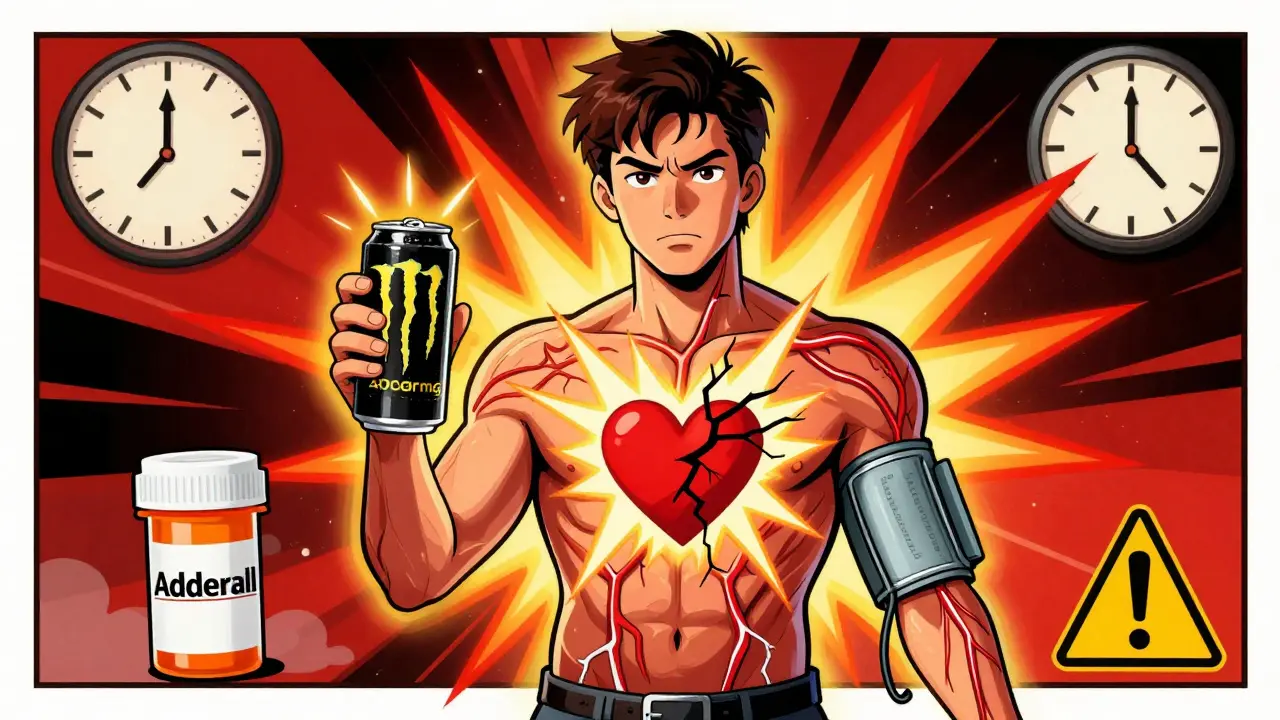
When you down a can of energy drink before a workout, or pop a pill of Adderall to get through a long day, you might think you’re just boosting focus and energy. But what if that boost is secretly stressing your heart? The truth is, combining energy drinks with stimulant medications like Adderall or Ritalin doesn’t just multiply the buzz-it multiplies the danger. And it’s not just about feeling jittery. This combo can spike your blood pressure, throw your heart rhythm out of whack, and in extreme cases, trigger heart attacks-even in young, otherwise healthy people.
How Much Caffeine Are You Really Getting?
Energy drinks aren’t like coffee. A typical cup of coffee has about 95 mg of caffeine. A single 16-ounce can of Monster Energy? That’s 160 mg. Bang Energy? 300 mg. Some newer brands push past 400 mg per can. That’s more caffeine than most people get from three or four cups of coffee in one sitting. And that’s just the caffeine. Many energy drinks also contain guarana, a plant seed that’s naturally high in caffeine-sometimes adding another 40 to 80 mg per serving. Then there’s bitter orange, which contains synephrine, a stimulant that acts like adrenaline. Taurine, often marketed as a "performance enhancer," doesn’t directly raise blood pressure, but it may make caffeine more potent. Together, these ingredients don’t just add up-they interact. The result? A chemical cocktail that can send your heart racing and your blood pressure soaring.What Happens to Your Body When You Mix Them?
Prescription stimulants like Adderall (amphetamine salts) and Ritalin (methylphenidate) are designed to increase alertness by boosting dopamine and norepinephrine. They already raise heart rate by 3-13 beats per minute and systolic blood pressure by 2-7 mmHg, according to FDA data. Now, add a 300 mg energy drink on top of that. The combined effect isn’t just additive-it’s exponential. A 2015 Mayo Clinic study found that a single 240 mg caffeine energy drink increased systolic blood pressure by 6.2% in healthy young adults. That might sound small, but for someone with undiagnosed high blood pressure or a weak heart, that spike can be dangerous. In some cases, blood pressure jumped by 20-30 mmHg within 30 minutes. That’s the difference between normal (120/80) and stage 2 hypertension (140/90 or higher). And it’s not just about pressure. These drinks and meds can cause arrhythmias-irregular heartbeats that feel like fluttering, pounding, or skipping. A 2021 review of case studies found that arrhythmias made up 35% of all cardiac events linked to energy drinks. One person in a documented case developed acute cardiomyopathy after drinking two Monster Energy drinks and taking Adderall. Another suffered a heart attack at age 19 after consuming three Monster Energy drinks in two hours.Who’s Most at Risk?
You might think, "I’m young and fit-I’m fine." But age isn’t the only factor. People with undiagnosed heart conditions, even mild ones, are at higher risk. So are those with anxiety disorders, thyroid problems, or a family history of sudden cardiac arrest. And teens? They’re especially vulnerable. The American Academy of Pediatrics says kids and teens should avoid energy drinks entirely. Yet, the CDC reports that 30% to 50% of adolescents consume them regularly. Emergency room visits for caffeine-related issues in kids under 18 more than doubled between 2017 and 2023. Many of these cases involved energy drinks mixed with alcohol, prescription meds, or both. Adults on stimulant medications for ADHD are another high-risk group. A 2024 study tracking 5,000 energy drink consumers found that those who combined stimulant meds with energy drinks had a 3 to 5 times higher risk of serious cardiovascular events compared to those who used either alone. The effects aren’t always immediate. Some people develop long-term damage-like stiffened arteries and endothelial dysfunction-after months or years of daily use, even if they never had a "scary" episode.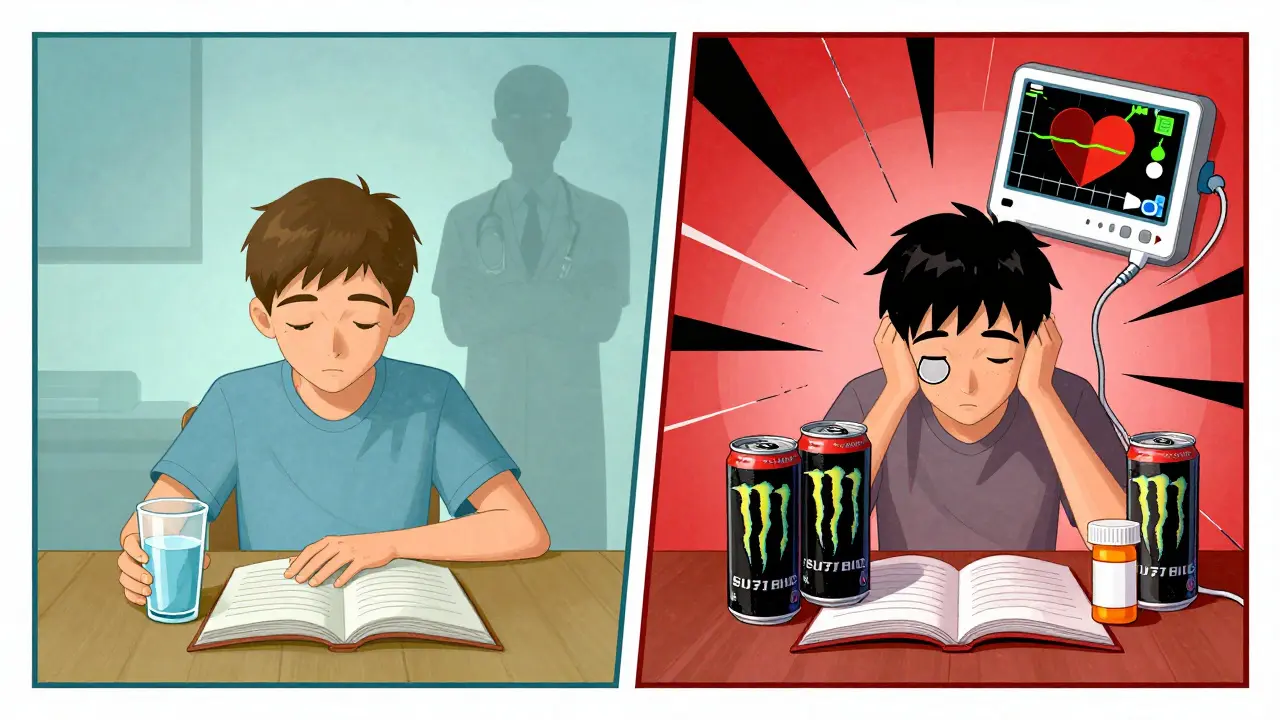
Real Stories, Real Consequences
Online forums are full of people who didn’t realize how dangerous this combo could be. One Reddit user, u/BloodPressureWatcher, tracked their numbers before and after drinking a 300 mg energy drink. Their systolic pressure jumped from 120 to 145 in under an hour. Another, u/HeartPalpitations, said they felt their heart "racing like a jackhammer" for three hours after two Monster cans. Doctors on medical forums report seeing the same patterns. Young patients with no prior heart issues are showing up with new-onset high blood pressure and constant tachycardia-all tied to daily energy drink use. One cardiologist in Texas told a patient who drank three energy drinks a day and took Adderall: "Your heart is working like it’s under siege. You’re not just tired-you’re in cardiac overload."What’s Safe? What’s Not?
The FDA says up to 400 mg of caffeine per day is safe for most healthy adults. But that’s not a target-it’s a ceiling. And it doesn’t account for other stimulants in energy drinks or prescription meds. Teens should cap caffeine at 100 mg per day. Anyone with high blood pressure, heart disease, or a history of arrhythmias should avoid energy drinks entirely. If you’re on Adderall, Ritalin, or similar meds, the safest rule is this: don’t drink energy drinks. Not occasionally. Not "just one." Even one can can push you past a dangerous threshold. If you need an energy boost, try water, a short walk, or a 20-minute nap. These don’t spike your heart rate-and they actually help your brain work better.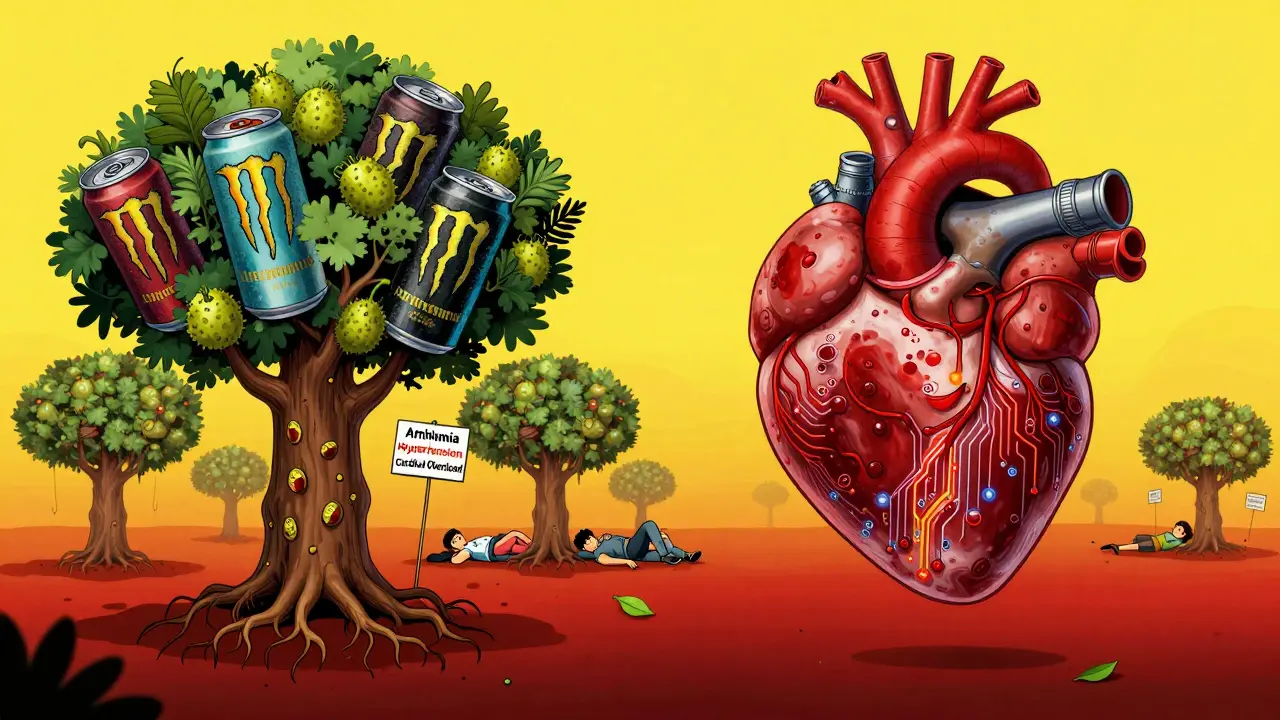
Warning Signs You Can’t Ignore
If you’ve consumed energy drinks and stimulant meds and start feeling any of these, stop. Immediately. Call for help:- Chest pain or pressure
- Heart palpitations lasting more than a few minutes
- Severe headache or blurred vision
- Shortness of breath, even at rest
- Dizziness or fainting
What’s Being Done? What’s Next?
Regulators are waking up. Canada requires warning labels on energy drinks with over 180 mg of caffeine. The European Food Safety Authority limits single doses to 200 mg. The FDA has issued warning letters to companies selling caffeinated alcohol and is now checking labels more closely-some drinks contain up to 20% more caffeine than stated. In 2022, a 19-year-old in California sued Monster Beverage after suffering a heart attack following three energy drinks in two hours. The lawsuit claimed the company failed to warn about cardiovascular risks. It’s one of 147 similar lawsuits filed since 2018. The American Heart Association now recommends that people with known heart disease avoid energy drinks completely. A 2024 UC Davis study found that regular users showed early signs of artery damage-damage that can lead to heart disease years later.What Should You Do?
If you’re taking stimulant medication:- Stop drinking energy drinks. Period.
- Check your caffeine sources: soda, coffee, tea, pre-workout powders, even some pain relievers contain caffeine.
- Track your heart rate and blood pressure at home if you’re concerned.
- Talk to your doctor about safer alternatives for focus and energy.
- Don’t let energy drinks become part of daily life.
- Look at the label-not the marketing. "Zero sugar" doesn’t mean "zero risk."
- Teach kids that "energy" from a can isn’t the same as real, sustainable energy from sleep, food, and movement.
Can energy drinks cause a heart attack?
Yes. While rare, there are documented cases of heart attacks in young people after consuming multiple energy drinks, especially when combined with stimulant medications like Adderall or Ritalin. The combination can cause severe spikes in blood pressure, irregular heart rhythms, and even coronary spasms that block blood flow to the heart.
Is it safe to drink one energy drink while on Adderall?
No. Even one energy drink can push your total stimulant load into dangerous territory. Adderall already increases heart rate and blood pressure. Adding 160-300 mg of caffeine from an energy drink can double or triple that effect, raising your risk of arrhythmia, stroke, or heart attack-even if you’re young and healthy.
How long does caffeine stay in your system when mixed with stimulant meds?
Caffeine’s half-life is about 5 hours, but stimulant medications like Adderall can last 8-12 hours. When combined, their effects overlap and amplify. This means your heart could be under stress for 12-16 hours or longer after consumption, increasing the risk of nighttime arrhythmias or elevated blood pressure while you sleep.
Are sugar-free energy drinks safer for your heart?
No. Sugar-free energy drinks often contain the same or higher levels of caffeine and other stimulants like synephrine and guarana. The absence of sugar doesn’t reduce the cardiovascular risk-it just removes one health concern while leaving the dangerous stimulants intact.
What are safer alternatives to energy drinks for focus and energy?
For sustained energy and focus, try drinking water, getting 7-8 hours of sleep, taking short walks, eating balanced meals with protein and complex carbs, and practicing deep breathing. If you’re on stimulant medication, talk to your doctor about adjusting your dose or timing instead of adding more stimulants from drinks.
Jodi Harding
January 18, 2026 AT 03:48Kristin Dailey
January 18, 2026 AT 04:47christian Espinola
January 19, 2026 AT 14:58kenneth pillet
January 21, 2026 AT 09:56Chuck Dickson
January 23, 2026 AT 00:12Selina Warren
January 24, 2026 AT 01:35Danny Gray
January 24, 2026 AT 17:14Naomi Keyes
January 26, 2026 AT 09:07Zoe Brooks
January 27, 2026 AT 10:03Jay Clarke
January 27, 2026 AT 13:42Robert Davis
January 28, 2026 AT 08:51Andrew McLarren
January 28, 2026 AT 18:52