
 Jan, 10 2026
Digoxin-Dose Reduction Calculator for Amiodarone
This tool calculates the recommended digoxin dose reduction when starting amiodarone. Based on guidelines from the European Heart Rhythm Association and American Heart Association.
Warning: This patient is at high risk for digoxin toxicity. Check serum levels within 72 hours of starting amiodarone.
Why This Drug Pair Can Kill You
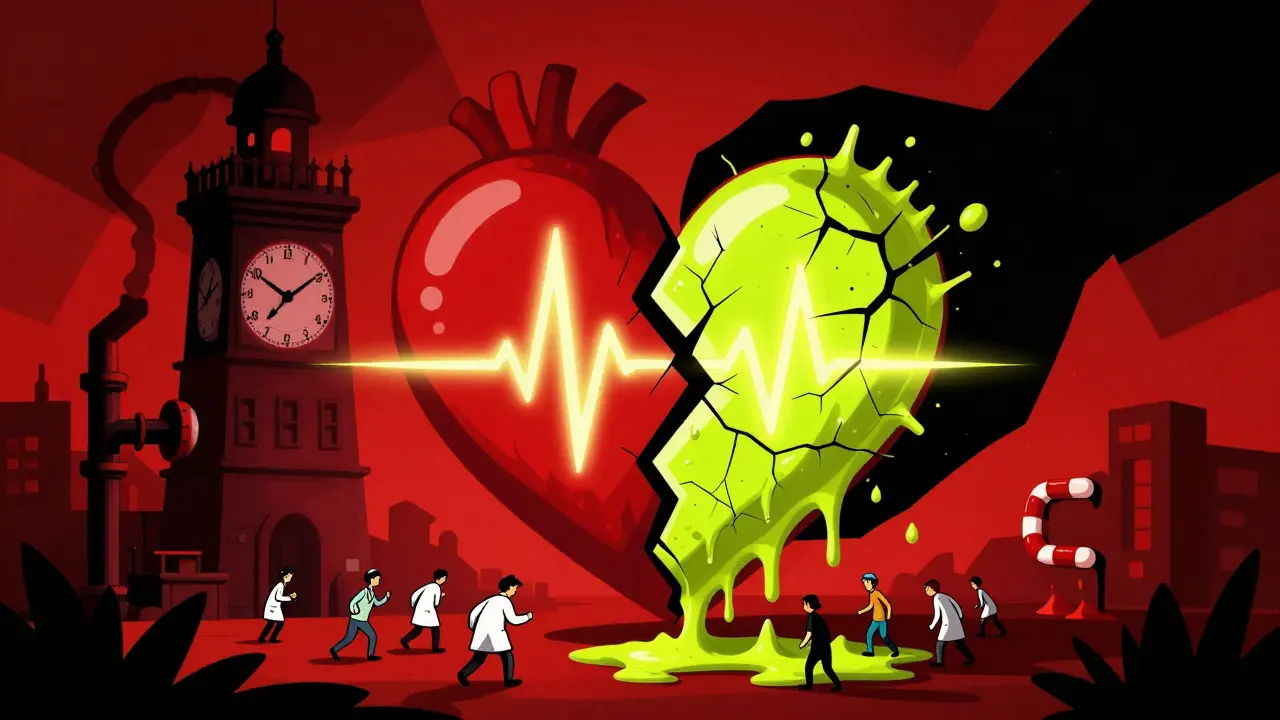
Imagine you’re taking digoxin to control your irregular heartbeat. It’s been working fine for months. Then your doctor adds amiodarone to keep your rhythm stable. Sounds logical, right? But here’s the catch: digoxin and amiodarone don’t just coexist-they amplify each other’s danger. Together, they can push digoxin levels into toxic territory without warning. And because digoxin has one of the narrowest therapeutic windows in medicine-just 0.5 to 0.9 ng/mL-it doesn’t take much to cross the line.
This isn’t theoretical. In 2021, a major study in Circulation: Arrhythmia and Electrophysiology found patients on both drugs were over twice as likely to be hospitalized for toxicity compared to those on digoxin with other common heart meds. The numbers don’t lie: one wrong dose can mean bradycardia, vomiting, confusion, or even cardiac arrest. And it’s not rare. Over 1.2 million Americans with atrial fibrillation are on one or both of these drugs. That’s a lot of people walking into a hidden trap.
How Amiodarone Turns Digoxin Into a Time Bomb
Amiodarone doesn’t just sit beside digoxin-it actively changes how your body handles it. The key mechanism? P-glycoprotein inhibition. This protein normally pumps digoxin out of your cells so it can be cleared from your body. Amiodarone blocks that pump. Think of it like clogging a drain. Digoxin builds up. And because amiodarone has a half-life of up to 100 days, the clog doesn’t clear quickly. Even after you stop amiodarone, digoxin levels stay high for weeks.
Research from the 1984 Singh study showed serum digoxin levels jumped nearly 100% when amiodarone was added. Later studies confirmed this: total body clearance drops by 29%, nonrenal clearance drops by 33%. The result? Your body can’t get rid of digoxin fast enough. Even if your digoxin dose was perfect before, it becomes too much after amiodarone starts.
It’s not just one pathway. Amiodarone also slightly inhibits CYP3A4, another enzyme involved in digoxin metabolism. And its metabolite, desethylamiodarone, sticks around for months-continuing the interference long after the parent drug is gone. This is why timing matters. Toxicity doesn’t hit the day you start amiodarone. It creeps in over 1-2 weeks, often when you feel fine. That’s why waiting for symptoms to appear is a fatal mistake.
What Happens When You Don’t Adjust the Dose
Too many clinicians still don’t reduce digoxin when starting amiodarone. A 2022 study across 15 U.S. hospitals found only 44% of patients had their digoxin dose lowered. In community hospitals, it was worse-68% got the full dose. That’s not negligence. It’s ignorance. And it’s deadly.
Dr. Gregg C. Fonarow’s 2021 analysis showed that patients who kept their full digoxin dose while on amiodarone had a 27% higher chance of dying within 30 days. That’s not a small risk-it’s catastrophic. One case report from Massachusetts General Hospital described a 72-year-old man who developed potassium levels of 6.8 mEq/L (normal is 3.5-5.0) and a dangerously slow heart rate. He ended up in the ICU for four days. He survived. Many don’t.
The DIG trial’s 2023 post-hoc analysis added another layer: patients on both drugs had a 38% higher risk of dying from any cause. Worse, Stanford’s 2024 study linked the combo to more strokes. Why? High digoxin levels may trigger blood clotting. So now you’re not just risking your heart rhythm-you’re risking your brain too.
The Only Safe Way: Dose Reduction and Monitoring
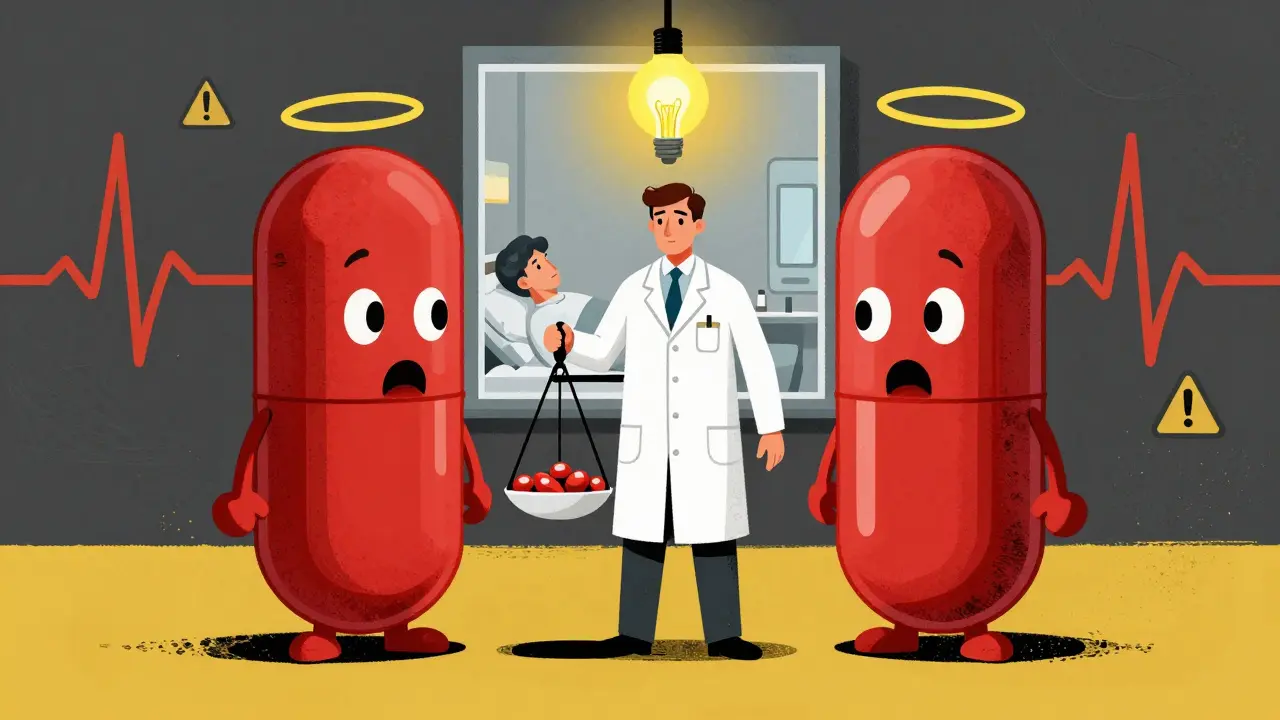
There’s a clear, proven fix: reduce digoxin by 50% when you start amiodarone. That’s not a suggestion. It’s a rule. The European Heart Rhythm Association, the American Society of Health-System Pharmacists, and the American Heart Association all say the same thing. And it works.
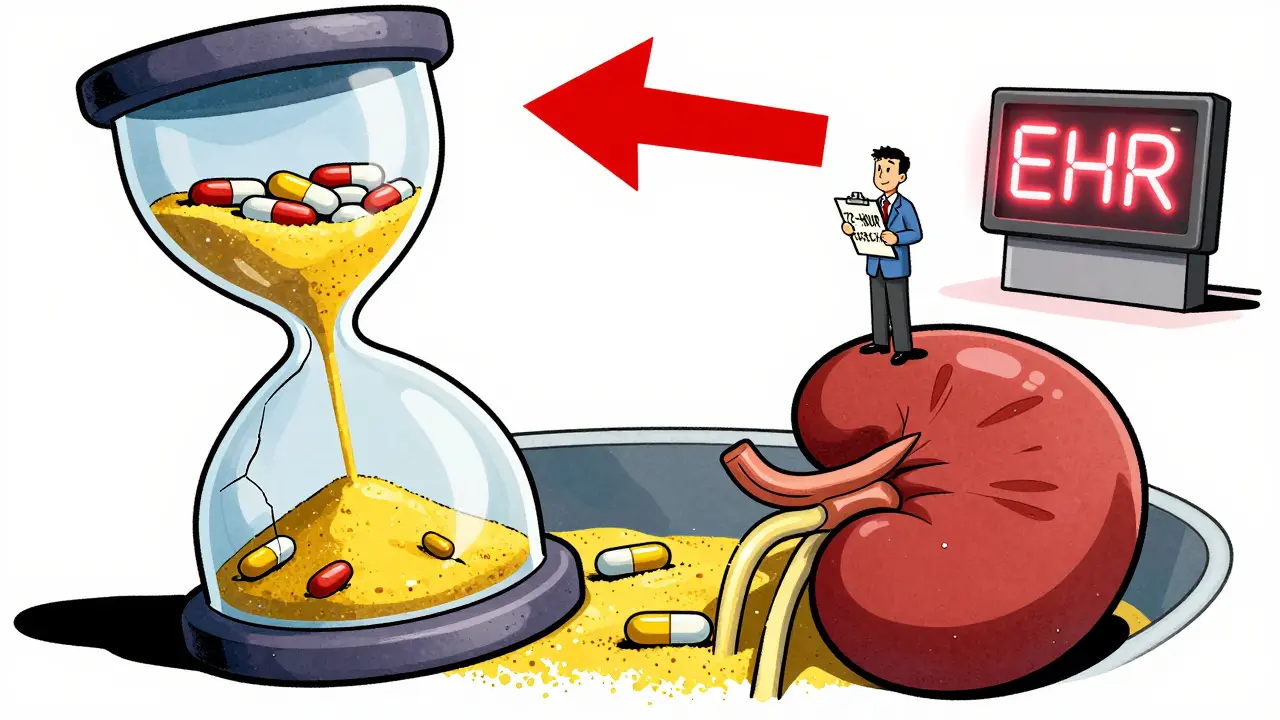
University of Michigan’s protocol cut digoxin toxicity from 12.3% to 2.1% by mandating a 50% dose reduction and checking serum levels within 72 hours of starting amiodarone. At the Veterans Health Administration, an EHR alert that pops up when both drugs are prescribed cut toxicity events by 41%. These aren’t outliers-they’re proof that systems save lives.
Here’s what you need to do:
- Check your digoxin level before starting amiodarone. Record it.
- Reduce your digoxin dose by 50% on day one of amiodarone therapy. Don’t wait.
- Check your digoxin level again at 72 hours. If you have kidney problems (creatinine clearance under 50 mL/min), reduce to 33% and check at 24, 72, and 168 hours.
- Keep checking levels weekly for the first month. Levels keep rising for up to two weeks.
- Even after stopping amiodarone, keep monitoring for 60 days. Its metabolite lingers.
Don’t rely on symptoms. Nausea, blurry yellow vision, fatigue, or a slow pulse? Those are late signs. By then, it’s too late.
Who’s Most at Risk?
This interaction doesn’t hit everyone the same. Age, kidney function, and other meds make the difference.
Older adults-especially over 75-are at highest risk. Their kidneys clear digoxin slower. Their bodies hold onto it longer. Dr. Michael Chen, a cardiologist, says he’s seen three cases of toxicity in the past year alone-all in patients over 75 with stage 3 kidney disease.
People with kidney impairment (eGFR under 60) need even lower doses. The University of California, San Francisco protocol recommends cutting digoxin to 33% of the original dose for these patients. Don’t guess-calculate your creatinine clearance.
Those on other drugs like verapamil, quinidine, or macrolide antibiotics? You’re stacking risks. Each can raise digoxin levels further. A 2020 study showed amiodarone alone increases digoxin exposure by 40-60%. Add another inhibitor? That number can double.
And here’s the kicker: digoxin is still used in heart failure patients who can’t take newer drugs like sacubitril/valsartan. That means even as its use declines overall, the patients who still need it are the most vulnerable to this interaction.
What’s Changing in Guidelines
The tide is turning. The 2024 European Society of Cardiology draft guidelines now recommend avoiding digoxin altogether in atrial fibrillation patients if amiodarone is likely to be needed. Beta-blockers or diltiazem are safer for rate control. Why risk a life-threatening interaction when alternatives exist?
But digoxin isn’t going away. It still has a role in heart failure with reduced ejection fraction, especially when other drugs aren’t enough. That’s why the focus now isn’t on banning it-it’s on managing it with surgical precision.
The DIG-AMIO trial (NCT05217891), launching in 2025, will compare 50% vs. 33% digoxin dose reduction with amiodarone. We’ll soon know if the lower dose is safer for kidney-impaired patients. Until then, stick with the 50% rule.
What You Can Do Right Now
If you’re on digoxin and your doctor just added amiodarone:
- Ask: “Did you reduce my digoxin dose?”
- Ask: “When will my level be checked?”
- Ask: “Do I have kidney issues that mean I need an even bigger reduction?”
If you’re a clinician:
- Never start amiodarone without reducing digoxin by 50%.
- Set an EHR alert if your system allows it.
- Involve a pharmacist. Studies show pharmacist-led interventions cut inappropriate dosing from 58% to 12%.
This interaction is preventable. It’s not mysterious. It’s not rare. It’s predictable. And it’s still killing people because we assume someone else will catch it. Don’t assume. Act.
What to Watch For-Toxicity Symptoms
Even with dose reduction, toxicity can happen. Know the signs:
- Visual changes: yellow or green halos around lights
- Nausea, vomiting, loss of appetite
- Unexplained fatigue or dizziness
- Heart rate below 50 bpm
- New or worsening arrhythmias (like atrial tachycardia with block)
- High potassium levels (hyperkalemia)
If you notice any of these, stop digoxin and get a serum level checked immediately. Don’t wait for the next appointment. This isn’t a “call your doctor tomorrow” situation. It’s a “go to the ER now” situation.
Jay Powers
January 12, 2026 AT 04:15People need to stop treating this like a 'maybe' and treat it like a bomb. It's not complicated. 50% down. Check at 72 hours. Done.
Alice Elanora Shepherd
January 13, 2026 AT 02:24Christina Widodo
January 13, 2026 AT 05:55Prachi Chauhan
January 13, 2026 AT 22:25jordan shiyangeni
January 14, 2026 AT 06:23Abner San Diego
January 16, 2026 AT 03:13Eileen Reilly
January 17, 2026 AT 18:14steve ker
January 18, 2026 AT 22:22