
 Jan, 30 2026
Why Diabetic Nephropathy Is a Silent Threat
One in three people with diabetes will develop kidney damage. It doesn’t come with pain, swelling, or obvious symptoms at first. By the time someone feels unwell, the kidneys may already be failing. This is diabetic nephropathy - a slow, silent breakdown of the kidney’s filtering system caused by high blood sugar over years. The first real sign? Protein leaking into the urine. That’s not normal. Healthy kidneys keep protein in the blood. When they start letting it out, it’s a red flag.
Doctors don’t wait for symptoms. They test for albumin in the urine - even if blood pressure is normal. If someone with diabetes has more than 30 mg of albumin per gram of creatinine on two tests three months apart, they’re diagnosed with early kidney damage. Left unchecked, this can lead to end-stage kidney disease, dialysis, or transplant. And it doesn’t just hurt the kidneys. People with diabetic nephropathy are five times more likely to die from a heart attack or stroke.
How ACE Inhibitors and ARBs Work - Beyond Blood Pressure
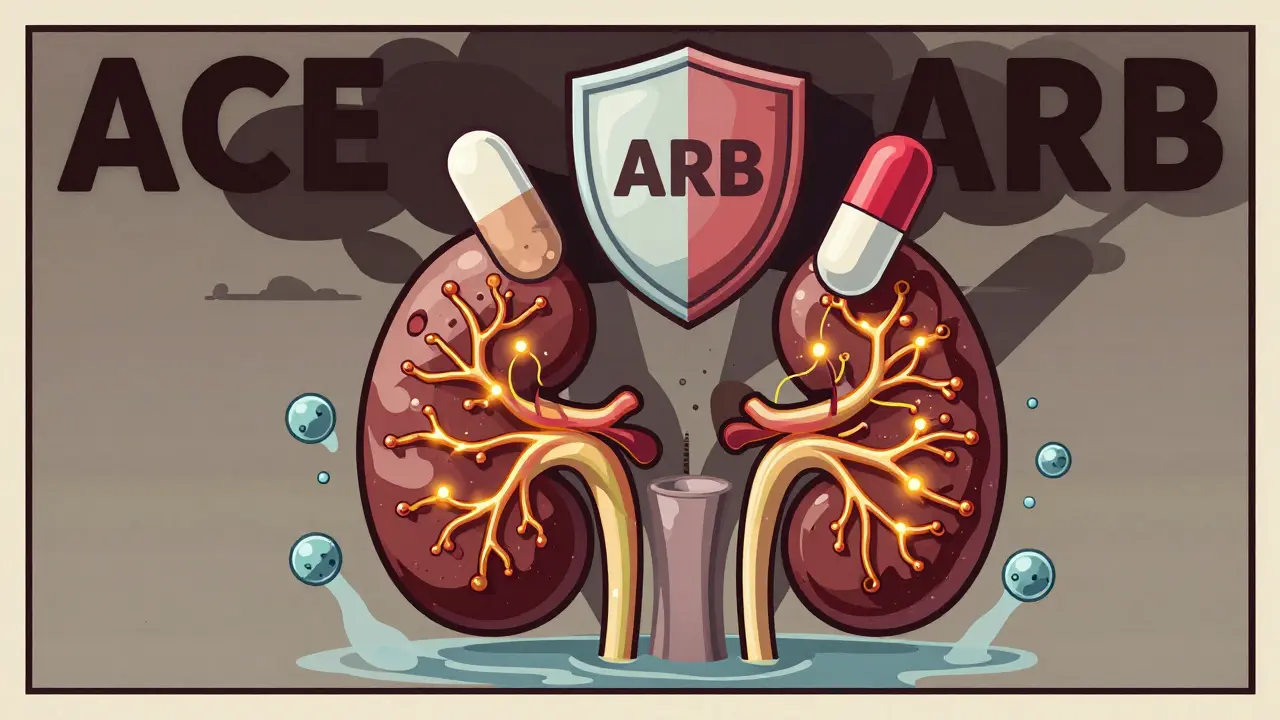
Many assume these drugs are just for lowering blood pressure. That’s only part of the story. ACE inhibitors and ARBs target the renin-angiotensin-aldosterone system (RAAS), a hormonal pathway that tightens blood vessels and increases pressure inside the kidney’s filtering units - the glomeruli. High pressure there crushes the delicate filters, causing protein to leak out.
ACE inhibitors like ramipril, a medication that blocks the enzyme that produces angiotensin II, reducing blood pressure and intraglomerular pressure and captopril, the only ACE inhibitor with FDA approval specifically for diabetic nephropathy stop the body from making angiotensin II. ARBs like losartan, an angiotensin II receptor blocker that prevents angiotensin II from binding to receptors in the kidney and irbesartan, a drug shown in the IDNT trial to reduce progression to kidney failure in type 2 diabetes block the receptor so angiotensin II can’t act at all. Either way, pressure drops inside the kidney. Protein leakage slows. The filters get a chance to heal.
It’s not magic. It’s physics. Lower pressure = less damage. And the data proves it. The RENAAL and IDNT trials showed ARBs cut the risk of kidney failure by up to 30% in people with heavy proteinuria. ACE inhibitors like captopril reduced kidney disease progression by 40% in type 1 diabetes patients in the DCCT trial. These aren’t small wins. They’re life-changing.
Protein Control: The Hidden Lever
Reducing protein in the urine isn’t just a lab result - it’s the clearest sign the treatment is working. The goal isn’t to get proteinuria to zero. That’s unrealistic. But bringing it down from 300 mg/g to under 100 mg/g? That’s a major win. Studies show every 50% drop in proteinuria cuts the risk of kidney failure by nearly half.
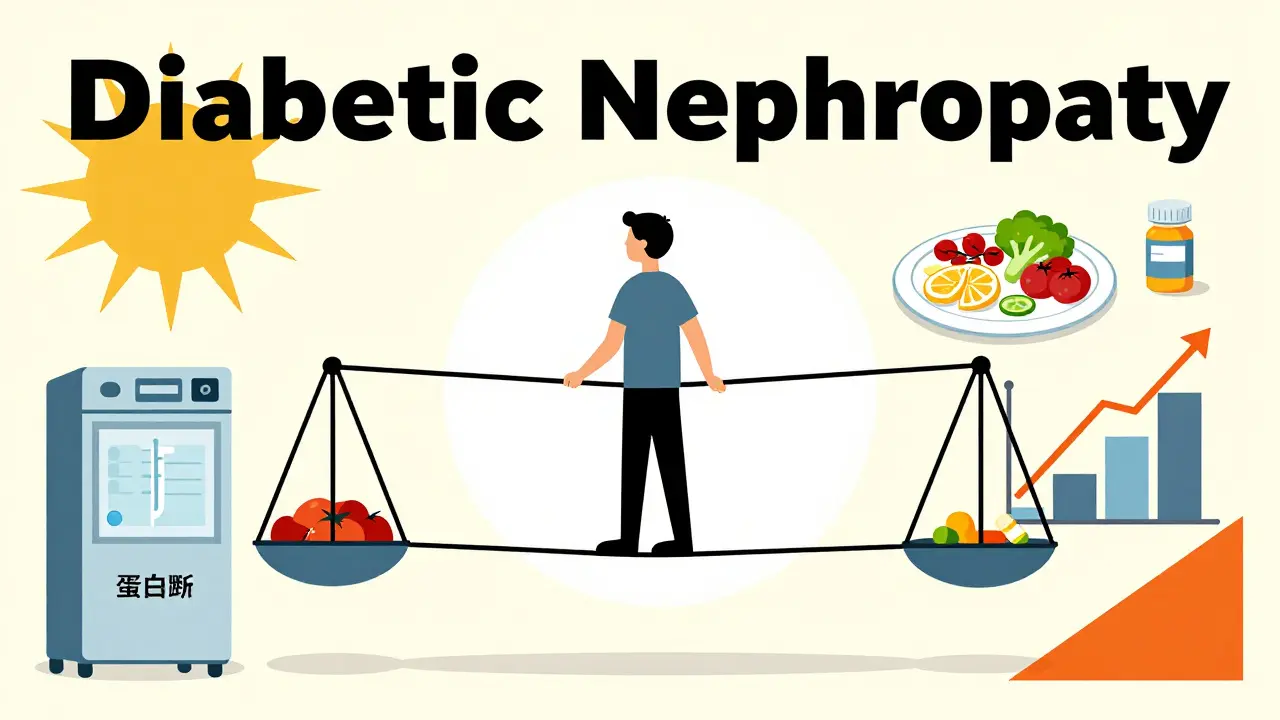
How do you get there? Two things: medication and diet. ACE inhibitors and ARBs are the main drivers. But diet matters too. Too much protein can strain already damaged kidneys. Most guidelines recommend 0.8 grams of protein per kilogram of body weight per day - not more. That’s about 56 grams for a 70 kg person. It’s not a low-protein diet. It’s a smart one. Avoiding processed meats, excessive dairy, and protein shakes helps. Real food, balanced meals. No need for extreme restrictions.
And don’t confuse proteinuria with other signs. Swelling in the ankles? That’s fluid retention, often from poor heart or kidney function. High blood pressure? That’s a trigger, not the root cause. Protein in the urine? That’s the direct marker of kidney damage. Monitoring it regularly - every 3 to 6 months - tells you if your treatment is on track.
Why Dosing Matters More Than You Think
Too many people are on too little. A 10 mg dose of ramipril? That’s for mild hypertension. For diabetic nephropathy, the goal is 20 mg daily - or higher if tolerated. Captopril? 25 mg three times a day, not once. Losartan? 50 to 100 mg, not 25. Clinical trials used these high doses. Real-world practice often doesn’t.
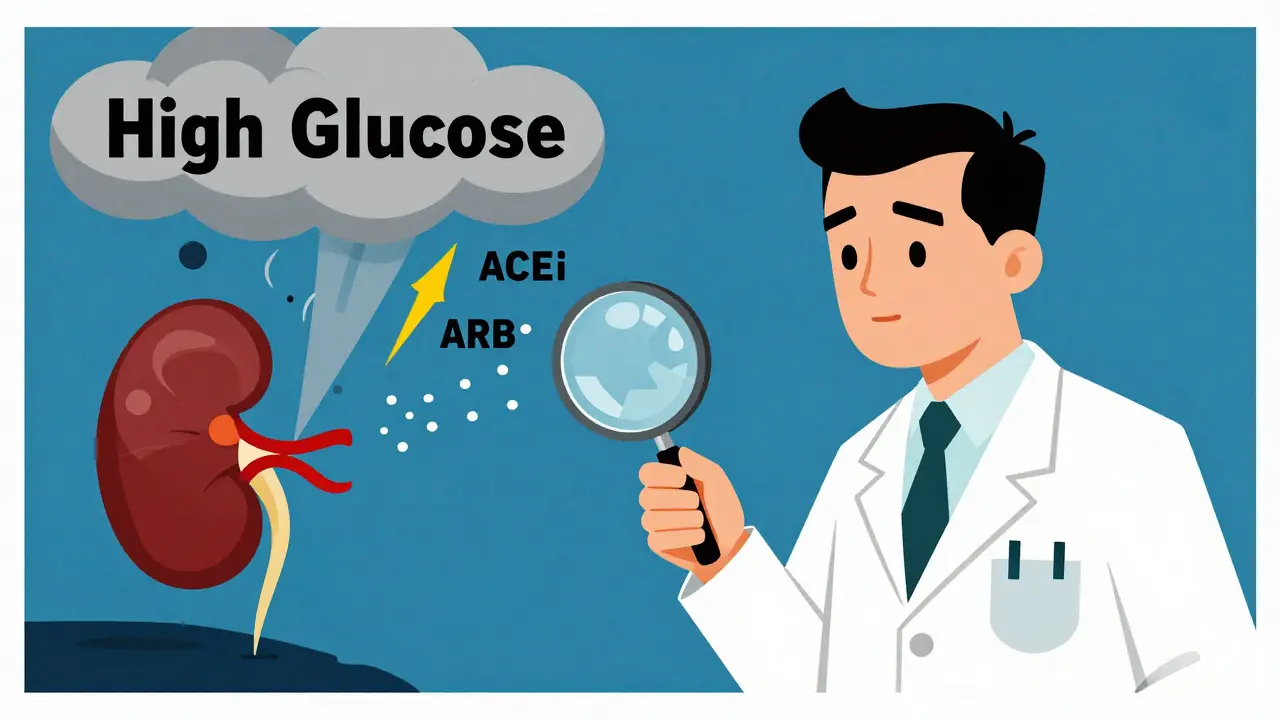
Why? Fear. When people start these drugs, their creatinine - a waste product filtered by the kidneys - often rises by 10% to 30%. Doctors panic. They think the drug is hurting the kidneys. It’s not. That rise is a sign the drugs are working. They’re reducing pressure inside the glomeruli, which temporarily lowers filtration rate. That’s a hemodynamic change, not kidney injury.
The American Diabetes Association says: Don’t stop or reduce the dose for a creatinine rise under 30% unless there’s volume depletion. That’s a hard rule. But it’s backed by decades of evidence. Stopping the drug because of a creatinine bump is one of the biggest reasons people end up on dialysis sooner than they should.
Why You Shouldn’t Combine ACE Inhibitors and ARBs
Some doctors think: if one is good, two must be better. That’s not true here. The VA NEPHRON-D, ONTARGET, and ALTITUDE trials all tested combining ACE inhibitors with ARBs. The results were clear: no extra kidney protection. Just more side effects.
Hyperkalemia - dangerously high potassium - happened two to three times more often. Acute kidney injury doubled. Patients ended up in the hospital more. The risk wasn’t worth it. The same goes for adding direct renin inhibitors like aliskiren. No benefit. More danger.
Even mixing these drugs with NSAIDs like ibuprofen or naproxen is risky. Those painkillers reduce blood flow to the kidneys. Add them to an ACE inhibitor or ARB? You’re cutting off the kidney’s backup supply. That’s a recipe for sudden kidney failure. Diuretics like furosemide (Lasix) can also make things worse if you’re dehydrated.
Stick to one. Pick the best-tolerated one. And stick with it at the right dose.
Who Should Get These Drugs - And Who Shouldn’t
Guidelines are clear. Start an ACE inhibitor or ARB if you have:
- Diabetes + high blood pressure + protein in urine
- Diabetes + eGFR below 60 mL/min/1.73 m² (even without proteinuria)
- Diabetes + severely increased albuminuria (UACR ≥300 mg/g)
But don’t use them if you’re normotensive and have no protein in your urine. The NIH and ADA both say: no benefit for prevention in people with normal kidney function. Taking them just in case doesn’t help - and adds risk.
And avoid them if you’re pregnant. These drugs can cause serious birth defects. If you’re planning a pregnancy, talk to your doctor about switching to safer blood pressure meds like methyldopa or labetalol.
The New Players: SGLT2 Inhibitors and MRAs
Things are changing. New drugs like empagliflozin, an SGLT2 inhibitor that reduces glucose reabsorption in the kidneys and lowers kidney disease progression risk and finerenone, a nonsteroidal mineralocorticoid receptor antagonist shown to reduce kidney and heart risks in diabetic nephropathy are now part of the conversation. They protect the kidneys too - even more than ACE inhibitors in some studies.
But here’s the catch: every major trial testing these drugs did so in people already taking ACE inhibitors or ARBs at maximum tolerated doses. That means these new drugs are add-ons - not replacements. They work best when the foundation is solid.
If someone can’t tolerate an ACE inhibitor because of cough, switch to an ARB. If they can’t take either due to high potassium or low blood pressure, then yes, an SGLT2 inhibitor might be the next best thing. But don’t skip the RAAS blocker unless you have to.
What’s Still Not Working in Real Life
Here’s the ugly truth: only 60% to 70% of eligible patients get these drugs after being diagnosed with kidney damage. Why? Time. Cost. Fear. Lack of follow-up. Some doctors don’t know the guidelines. Others are scared of the creatinine bump. Some patients stop because they feel fine - and don’t realize the damage is still happening.
It’s not just about prescribing. It’s about monitoring. Regular urine tests. Blood pressure checks. Creatinine and potassium levels. Dose adjustments. Patient education. This isn’t a one-time script. It’s a long-term plan.
And it works. People who stick with their ACE inhibitor or ARB at the right dose live longer. They stay off dialysis longer. Their hearts stay healthier. That’s the real goal.
What to Do Next
If you have diabetes and haven’t had a urine albumin test in the last year - get one. If you’re on blood pressure meds but not an ACE inhibitor or ARB - ask why. If you’re on one but at a low dose - ask if you can go higher. If your creatinine went up - don’t panic. Ask if it’s a hemodynamic effect.
This isn’t about perfection. It’s about progress. One step at a time. Medication. Diet. Monitoring. Consistency. You don’t need to fix everything at once. But you do need to start.
Can ACE inhibitors or ARBs reverse kidney damage in diabetes?
They can’t fully reverse damage, but they can significantly slow or even halt progression. In early stages, with good control, some people see a drop in proteinuria that suggests the kidneys are stabilizing. But once scarring (fibrosis) sets in, it’s permanent. The goal is to prevent further harm, not undo what’s already done.
Do I need to take these drugs for life?
Yes, unless you can’t tolerate them or your kidney function declines so much that they become unsafe. These drugs are not a cure - they’re long-term protection. Stopping them increases the risk of rapid kidney decline and cardiovascular events. Think of them like insulin for your kidneys: you need them to stay healthy.
Can I take an ACE inhibitor if I have a cough?
A dry cough is a common side effect of ACE inhibitors, affecting about 10% of users. If it’s bothersome, switch to an ARB. ARBs don’t cause cough because they work differently. Many people switch and never look back. It’s not a reason to stop kidney protection - just a reason to change the drug.
What if my potassium level is high?
High potassium (hyperkalemia) is a real concern with these drugs. If it’s mild (5.1-5.5 mmol/L), you can often stay on them with diet changes - avoid salt substitutes, bananas, potatoes, and tomatoes. If it’s higher, your doctor may add a potassium binder like patiromer or reduce the dose. Never stop the drug without talking to your provider - the kidney protection is too important.
Are these drugs safe if my eGFR is below 30?
Yes - and they’re more important than ever. New data shows people with eGFR below 30 still benefit from ACE inhibitors and ARBs. They reduce heart failure, hospitalizations, and death. The risk of acute kidney injury is higher, but not if you’re monitored closely. Stopping them at this stage is often more dangerous than continuing them.