
 Dec, 17 2025
Cumulative Drug Toxicity Calculator
How This Calculator Works
This tool calculates how much of a medication accumulates in your body over time. It shows your current cumulative dose compared to known safe limits for common high-risk drugs. Input your dosage details to assess potential toxicity risk.
Cumulative Dose
0.00 mgEnter your medication details to see results
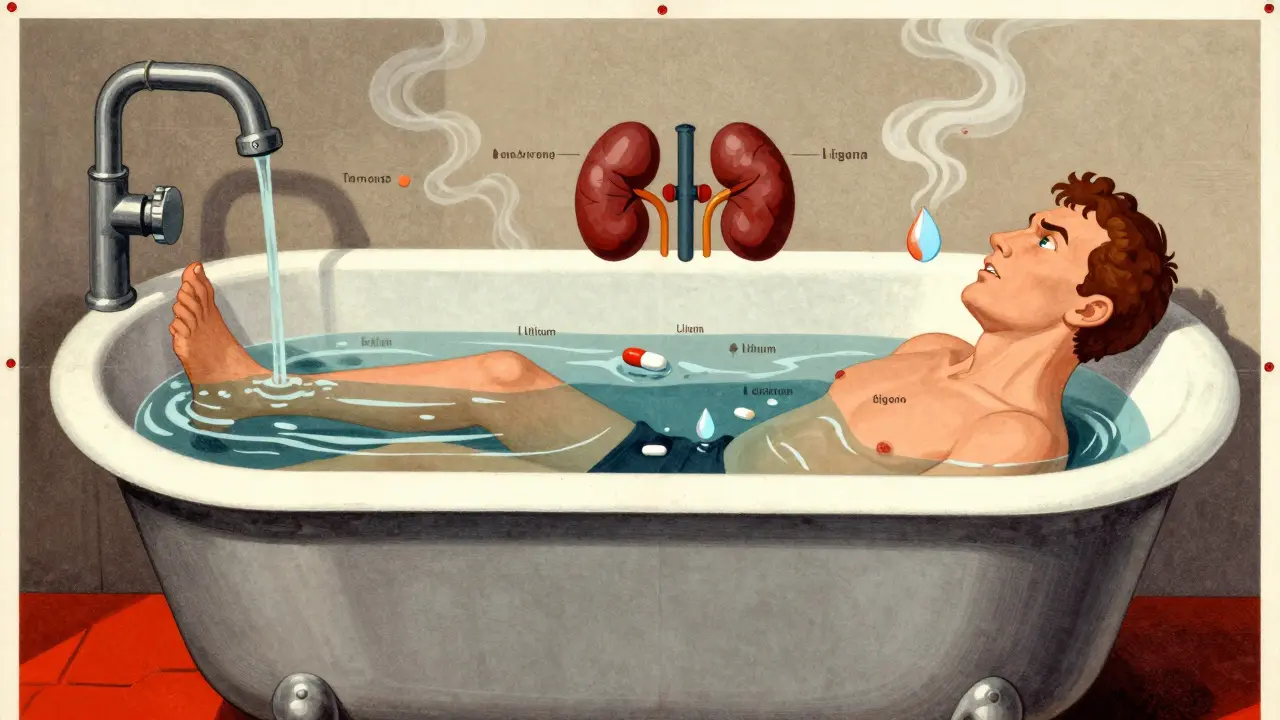
Most people assume that if a medication doesn’t cause problems right away, it’s safe to keep taking. But that’s not always true. Some drugs don’t hurt you on day one - they wait. They slowly build up in your body, like water filling a bathtub with the drain half-closed. Over weeks, months, or even years, the dose adds up until your body can’t handle it anymore. That’s cumulative drug toxicity.
What Exactly Is Cumulative Drug Toxicity?
Cumulative drug toxicity happens when your body absorbs a medication faster than it can get rid of it. Instead of clearing out after each dose, the drug lingers. Each new pill or injection adds to what’s already there. Over time, the total amount in your system rises - sometimes quietly, without warning. Eventually, it crosses a line from therapeutic to toxic. This isn’t the same as an allergic reaction or an overdose. You don’t feel sick right after taking the pill. The damage creeps in. Think of it like rust on a car. You don’t notice it at first. But after years of exposure to rain and salt, the metal gives way. Drugs with long half-lives are the biggest culprits. A half-life is how long it takes for half the drug to leave your body. If a drug has a half-life of 24 hours or more, it’s likely to build up. Examples include amiodarone (for heart rhythm), digoxin (for heart failure), lithium (for bipolar disorder), and certain chemotherapy agents like doxorubicin. Fat-soluble drugs - like vitamin A, D, E, and K - also stick around longer because they store in fat tissue instead of flushing out through urine.Why Do Some People Get Hit Harder Than Others?
Not everyone accumulates drugs the same way. Your liver and kidneys do the heavy lifting of breaking down and removing medications. If they’re not working at full strength, even normal doses can become dangerous over time. Older adults are especially at risk. As we age, kidney function naturally declines. Liver metabolism slows. Studies show that elderly patients have a 30-50% reduction in drug clearance compared to younger adults. That’s why the American Geriatrics Society Beers Criteria lists 34 medications as high-risk for seniors due to cumulative toxicity. People with chronic conditions like diabetes, heart failure, or kidney disease are also more vulnerable. A 2019 study in the Journal of the National Cancer Institute found that 68% of adverse drug reactions in older patients were linked to cumulative effects - not mistakes in dosing, but the slow, silent buildup over time. Even lifestyle factors play a role. Poor nutrition, alcohol use, and exposure to environmental toxins can overload your body’s detox systems. Some traditional medicine systems, like Ayurveda, even have a concept called Dushi Visha - chronic toxins that accumulate from long-term exposure to poor diet, stress, or pollution. Modern science is starting to catch up.How Do You Know It’s Happening?
The tricky part? Symptoms often show up long after you’ve started the drug - and they can be vague. You might feel more tired than usual. Your hands might shake. You could get short of breath, notice swelling in your ankles, or develop a dry cough. These aren’t emergencies. They’re quiet red flags. One real-world case, shared by an oncologist on Reddit, involved a patient on long-term amiodarone. Every blood test looked fine. Trough levels were normal. But after taking a cumulative dose over 600 grams, the patient developed severe lung scarring - pulmonary fibrosis. The damage was irreversible. In cancer treatment, the pattern is clearer. A 2019 study tracked patients receiving molecularly targeted drugs. In the first cycle, only about 25% had serious side effects. By cycle six, that number jumped to over 50%. The drug wasn’t getting stronger - the body was just full of it.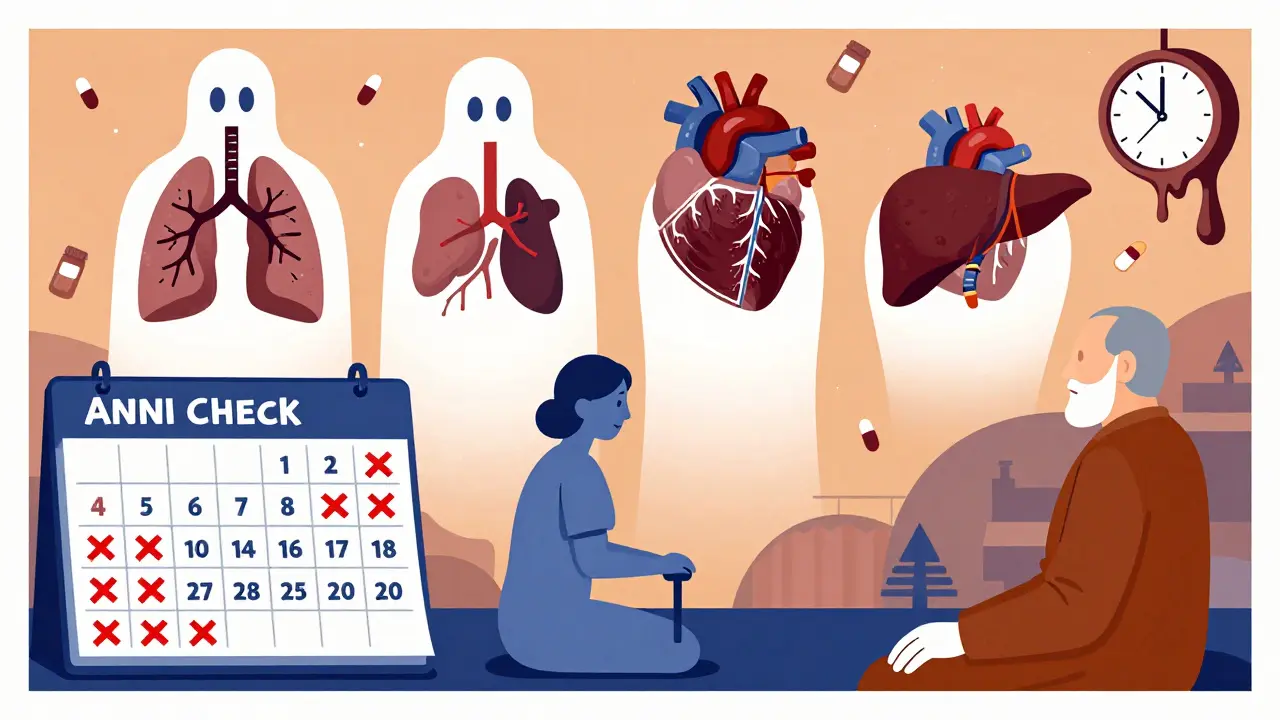
What Medications Carry the Highest Risk?
Some drugs are known for cumulative toxicity. Here are the big ones:- Anthracyclines (like doxorubicin): Used in chemotherapy. Lifetime cumulative dose should not exceed 450 mg/m² - beyond that, risk of permanent heart damage spikes.
- Amiodarone: For irregular heartbeat. Can cause lung, liver, and thyroid damage after months or years.
- Digoxin: For heart failure. Narrow therapeutic window. Small changes in kidney function can push levels into toxic range.
- Lithium: For bipolar disorder. Kidneys can’t keep up over time. Leads to tremors, confusion, and kidney failure if not monitored.
- Aminoglycosides (like gentamicin): Antibiotics. Can damage hearing and kidneys after repeated doses.
- Methotrexate: Used for rheumatoid arthritis and cancer. Builds up in liver and bone marrow. Can cause severe infections or liver scarring.
How Do Doctors Track It?
Therapeutic drug monitoring (TDM) is the gold standard for high-risk drugs. That means regular blood tests to measure exactly how much of the drug is in your system. For drugs like lithium or digoxin, this isn’t optional - it’s life-saving. But here’s the problem: not all doctors do it. A 2022 Medscape survey found that 82% of physicians say patients don’t stick to their monitoring schedules. Why? Because the side effects don’t show up right away. Patients feel fine. They skip appointments. Then, one day, they’re in the hospital. Some clinics are fixing this. A 2021 study in the Journal of Clinical Pharmacy and Therapeutics showed that when a rheumatology practice started tracking cumulative methotrexate doses automatically, adverse events dropped by 37%. Pharmacist-led programs cut hospital admissions for drug toxicity by 29% across 45 healthcare systems. The technology exists. Electronic health records can calculate cumulative doses. But only 38% of systems in the U.S. have that feature built in, according to the Office of the National Coordinator for Health IT in 2023.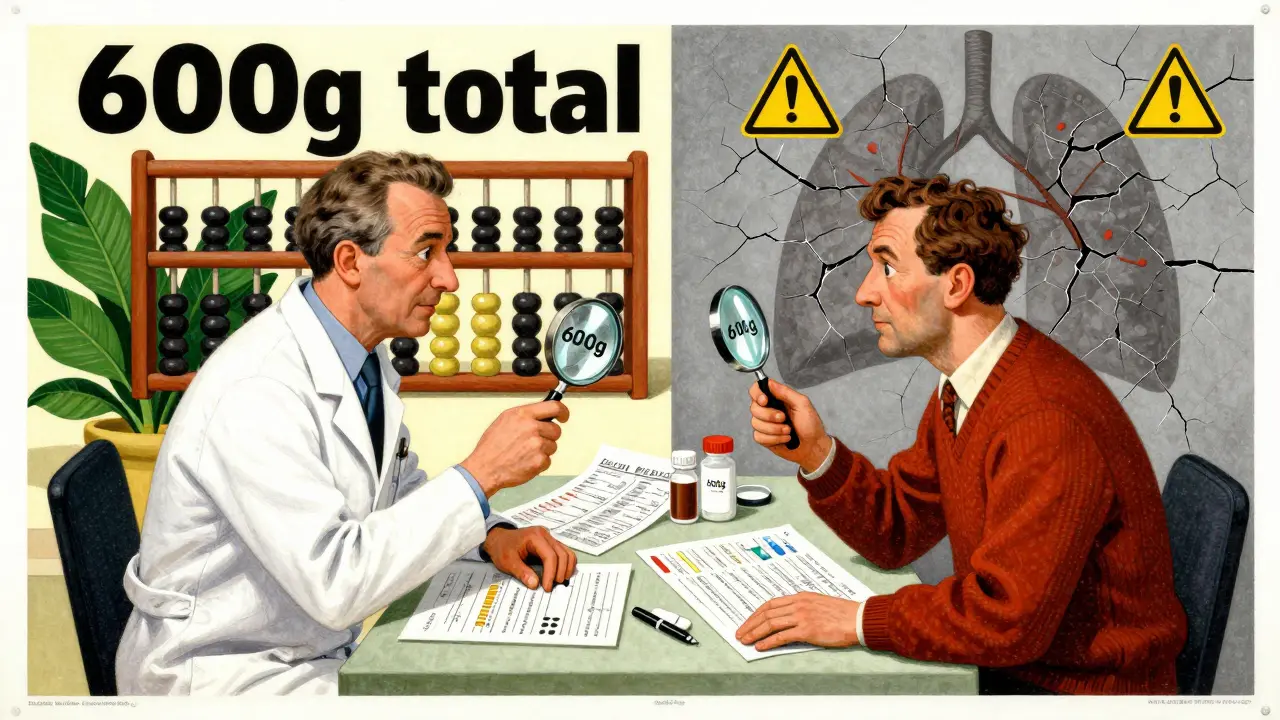
What Can You Do to Protect Yourself?
You don’t have to wait for a crisis. Here’s how to stay safe:- Know your meds. Ask your doctor or pharmacist: “Is this drug known to build up over time?”
- Keep a log. Write down every dose you take, even over-the-counter ones. Note when you started and why.
- Don’t skip blood tests. If your doctor orders a lab check for drug levels - go. Even if you feel fine.
- Watch for subtle changes. Unexplained fatigue, dry cough, tingling in fingers, irregular heartbeat, or sudden weight gain? Tell your doctor. Don’t assume it’s just aging.
- Ask about alternatives. Is there a drug with less accumulation risk? For example, some newer heart rhythm drugs have shorter half-lives and don’t build up like amiodarone.
What’s Changing in the Medical World?
The tide is turning. The European Medicines Agency now requires cumulative toxicity assessments for all new drugs meant for chronic use - a rule that started in January 2024. In the U.S., the FDA’s Sentinel Initiative now scans data from 190 million patients to spot hidden patterns of drug buildup. Researchers at Memorial Sloan Kettering are testing AI models that predict your personal risk of toxicity by analyzing 27 factors - your genetics, kidney function, age, other meds, even your diet. Early results show 82% accuracy. The global market for therapeutic drug monitoring is expected to hit $4.7 billion by 2028. Why? Because hospitals and clinics are realizing: preventing one case of liver failure or lung scarring saves far more than the cost of a blood test.Bottom Line: It’s Not Just About the Dose - It’s About the Total
Medication isn’t a one-time fix. For many drugs, it’s a marathon. And just like a marathon runner needs to hydrate and rest, your body needs to clear out what it doesn’t need. When that system gets overwhelmed, harm follows - slowly, silently, and sometimes too late. The good news? You’re not powerless. Awareness, tracking, and communication with your care team can stop cumulative toxicity before it starts. Don’t wait for symptoms. Ask the question: “Could this drug be building up in me?” It might save your health - or even your life.Can cumulative drug toxicity be reversed?
Sometimes, yes - but not always. If caught early, stopping the drug and supporting organ function (like hydration, dialysis, or liver support) can help your body clear the excess. But if damage has already occurred - like lung scarring from amiodarone or heart muscle damage from doxorubicin - it may be permanent. Early detection is key.
Do over-the-counter drugs cause cumulative toxicity?
Yes. While most OTC meds are safe short-term, long-term use of some can build up. For example, high doses of acetaminophen (Tylenol) over months can cause liver damage. Herbal supplements like kava or comfrey can accumulate in the liver. Even daily NSAIDs like ibuprofen can harm kidneys over time, especially in older adults.
Why don’t doctors always warn patients about this?
Many doctors assume patients will follow monitoring plans. Others aren’t trained to think in terms of cumulative exposure. Patient non-adherence is a huge issue - 82% of physicians report patients skip blood tests. But the bigger problem is that cumulative toxicity isn’t taught well in medical school. It’s often seen as a niche concern, not a routine risk.
How long does it take for cumulative toxicity to develop?
It varies. For some drugs like lithium or digoxin, it can happen in weeks if kidney function drops. For others like amiodarone or anthracyclines, it may take months or years. There’s no set timeline - it depends on your metabolism, age, organ health, and total lifetime dose.
Are there any drugs that don’t build up?
Yes. Many antibiotics, like penicillin or azithromycin, have short half-lives and clear out within hours. Most pain relievers like ibuprofen or naproxen are cleared within a day. These are low-risk for accumulation - but only if used as directed. Long-term daily use of any drug, even short-acting ones, can still cause harm through other mechanisms.
Gloria Parraz
December 18, 2025 AT 05:35This is one of those posts that makes you pause and rethink everything you thought you knew about meds. I’ve been on lithium for 12 years and never once thought about cumulative toxicity-just assumed if my blood levels were ‘in range,’ I was fine. Turns out, that’s the trap.
My kidneys aren’t what they were at 35. My doctor never mentioned it. I didn’t ask. Now I’m scheduled for a full renal workup next week. Thank you for the wake-up call.
anthony funes gomez
December 19, 2025 AT 07:54It’s not toxicity-it’s thermodynamic inevitability. Pharmacokinetics is a closed system with entropy-driven accumulation; the body isn’t a sieve, it’s a reservoir with a leaky valve. Half-lives aren’t statistics-they’re countdowns. And we treat them like birthdays.
Amiodarone isn’t dangerous because it’s potent-it’s dangerous because it’s persistent. Fat-soluble. Lipophilic. Bioaccumulative. Like PCBs in fish. We’re not prescribing drugs-we’re stocking biological landmines with expiration dates written in glomerular filtration rates.
And no one talks about the epistemological gap: medicine treats symptoms, not systems. We diagnose ‘heart failure,’ not ‘drug overload.’ The system is designed to ignore the slow burn.
Carolyn Benson
December 19, 2025 AT 10:08Of course doctors don’t warn you. They’re trained to fix the immediate problem, not think 5 years ahead. Medical school doesn’t teach ‘long-term consequences’-it teaches ‘acute intervention.’ You want to live? Stop taking everything. Or better yet, don’t get sick in the first place.
And don’t get me started on supplements. Kava? Comfrey? People think ‘natural’ means ‘safe.’ It means ‘unregulated.’ You’re basically doing a slow suicide with herbal tea.
Sahil jassy
December 21, 2025 AT 04:40Kathryn Featherstone
December 22, 2025 AT 04:56I’ve seen this with my mom. She was on digoxin for years. Felt fine. Then one day she got dizzy, collapsed, and ended up in ICU. They said her levels were 3x the upper limit. She hadn’t missed a dose. Her kidneys just… slowed down. No one told her that aging changes how your body handles meds.
It’s not fearmongering. It’s just biology. And we’re not taught to respect it.
Chris porto
December 24, 2025 AT 00:37My dad died from amiodarone-induced lung fibrosis. He was 78. Took it for 4 years. No one ever told him it could wreck his lungs. He didn’t even know he had a cough until it was too late.
Doctors think if you’re not in the hospital, you’re fine. But you’re not fine. You’re just waiting.
Ask your doctor: ‘What’s the lifetime limit?’ If they don’t know, find someone who does.
Guillaume VanderEst
December 25, 2025 AT 16:22So let me get this straight-we’re giving people drugs that slowly turn their organs into Swiss cheese, and the solution is… more blood tests? That’s it?
Why not just stop prescribing the damn things? I’ve got a friend on 11 medications. Half of them are for side effects of the other half. We’re not treating disease-we’re running a pharmacological Jenga tower.
And now you want me to track my doses in a notebook? Like I’m a 1950s diabetic?
It’s not my job to be a pharmacist. It’s theirs.
Nicole Rutherford
December 27, 2025 AT 12:31