
 Dec, 10 2025
Getting used to CPAP therapy is hard. You bought the machine, you followed the instructions, you’re using it every night - but you still wake up with a dry mouth, your mask is leaking air like a sieve, or the pressure feels like someone’s sitting on your chest. You’re not alone. About 42% of CPAP users deal with dry mouth, over half report mask leaks, and nearly a third say the pressure settings feel wrong. These aren’t design flaws - they’re fixable problems.
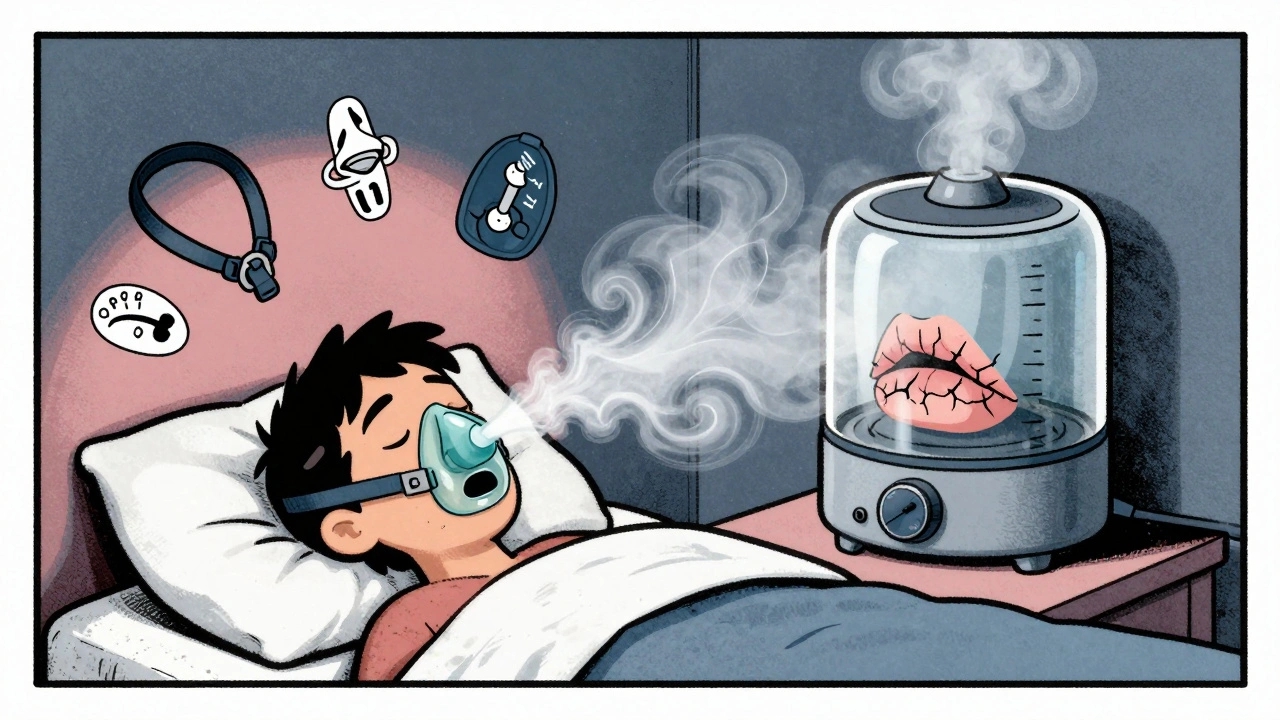
Dry Mouth? It’s Probably Not Your Humidifier
Most people assume dry mouth means their humidifier isn’t working hard enough. So they crank the heat setting to max. That might help a little, but it won’t fix the real issue. The main cause? Mouth breathing during sleep. When you breathe through your mouth while wearing a nasal mask or nasal pillows, the pressurized air flows right out instead of staying in your airway. That dries out your throat fast. It’s not about humidity levels - it’s about airflow escape. The solution isn’t always more steam. Try these three fixes:- Switch to a full-face mask. This covers both nose and mouth, so even if you open your mouth, the air stays contained. One Reddit user reported dry mouth vanished within three nights after switching.
- Use a chin strap. It’s a simple fabric band that holds your jaw closed. Used by 45% of mouth breathers, it’s cheap, non-invasive, and often works instantly.
- Check your humidifier settings. Set it between level 3 and 4 on a 0-6 scale. Too high (level 6) can cause condensation in the tube - that’s water dripping into your mask, not helping your throat.
Heated tubing also helps. It keeps the air warm from the machine to your mask, reducing moisture loss. Philips’ 2022 clinical trial showed heated tubing cuts dry mouth by 32%.
Mask Leaks: Why Your CPAP Sounds Like a Train
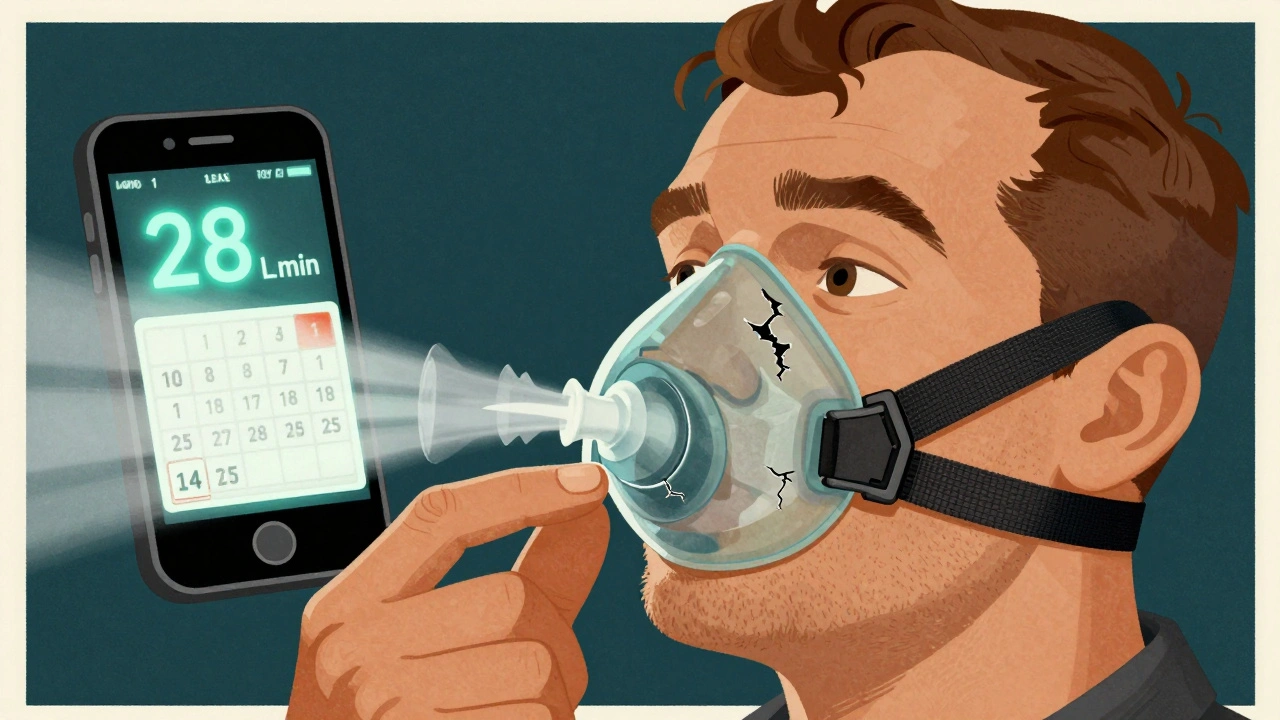
If your CPAP machine is making loud hissing noises, or you see your pressure readings spiking on your app, you’ve got a leak. Leaks aren’t just annoying - they reduce therapy effectiveness. Dr. David White from Harvard says leaks over 24 L/min seriously compromise treatment. Here’s how to find and fix leaks:- Do the airflow test. Put on your mask, turn on the machine, and listen. Adjust the straps slowly. The goal? Silence. When the hissing drops to a soft whisper, you’ve got a good seal. Most people need 3-5 small adjustments.
- Check the cushion. If your mask is over three months old, the silicone cushion has likely hardened or cracked. Replace it. 92% of DME providers recommend replacing cushions every 90 days.
- Don’t overtighten. A mask that’s too tight digs into your face, creates pressure points, and actually causes more leaks. Let the mask rest lightly on your skin - the air pressure will hold it in place.
- Look for facial hair interference. Beards and stubble can break the seal. Try a mask designed for facial hair, or trim the area where the cushion sits.
Modern machines like the ResMed AirSense 11 and Philips DreamStation 2 detect leaks automatically and show you the exact rate in their apps. If your device says you’re leaking more than 20 L/min consistently, it’s time to check your mask fit - not your pressure.
Pressure Too High? Too Low? Don’t Guess - Adjust Right
Pressure settings are not one-size-fits-all. A setting of 14 cm H₂O might be perfect for one person and crushing for another. Many users report chest discomfort, headaches, or bloating from pressure that’s too high. Others feel like they’re not getting enough air, especially if they’re active sleepers or sleep on their back. The truth? Most people don’t need the highest pressure their doctor set. Dr. Nancy Collop from Johns Hopkins says pressure settings below 5 cm H₂O can still be effective - and far more comfortable - for many patients. Here’s what to do:- Don’t adjust pressure yourself. Most machines let you tweak pressure by ±2 cm H₂O, but going beyond that voids your warranty and risks under-treatment. Always consult your sleep specialist.
- Use auto-adjust (APAP) mode. Machines like the ResMed AirSense 11 AutoSet or DreamStation 2 Auto adjust pressure every 5-10 seconds based on your breathing. These are smarter than fixed settings. ResMed’s AutoSet has a 4.2/5 star rating for comfort; DreamStation’s is 3.8/5.
- Enable expiratory pressure relief. This feature lowers pressure slightly when you breathe out. It’s a game-changer for people who feel like they’re fighting the machine. One user on Reddit went from 14 cm H₂O to 9 cm H₂O with pressure relief enabled - and stopped waking up with chest pain.
- Review your data. Apps like DreamMapper or ResMed’s myAir show your nightly AHI (apnea events per hour). If your AHI is above 5, your pressure may be too low. If it’s below 1 and you still feel uncomfortable, your pressure might be too high.
Don’t assume your initial prescription is perfect. Many sleep doctors set pressure based on a single night’s titration study. Your needs change over time - weight loss, nasal congestion, or sleeping position can all affect what pressure works.
Why Most People Quit CPAP - And How to Stay On Track
The biggest reason people stop using CPAP isn’t because it doesn’t work. It’s because it feels uncomfortable. Studies show 29-45% of users stop within the first year. But here’s the good news: 78% of users master basic troubleshooting within two weeks. You don’t need to be a technician. You just need to know what to check - and when to ask for help.- Mask fit matters more than pressure. A poorly fitting mask makes even the perfect pressure feel unbearable.
- Humidification is a tool, not a cure. Fix mouth breathing first, then fine-tune heat.
- Patience is key. It takes 2-4 weeks to adjust. Don’t give up after three nights.
- Support is available. ResMed offers 24/7 technical support with a 97% same-day response rate. Smaller providers? Expect 2-3 days.
Use your machine’s app. It tracks leaks, pressure, usage, and AHI. If you see a pattern - say, leaks spike every time you sleep on your back - you can adjust your position or try a different mask.
When to Call Your Sleep Specialist
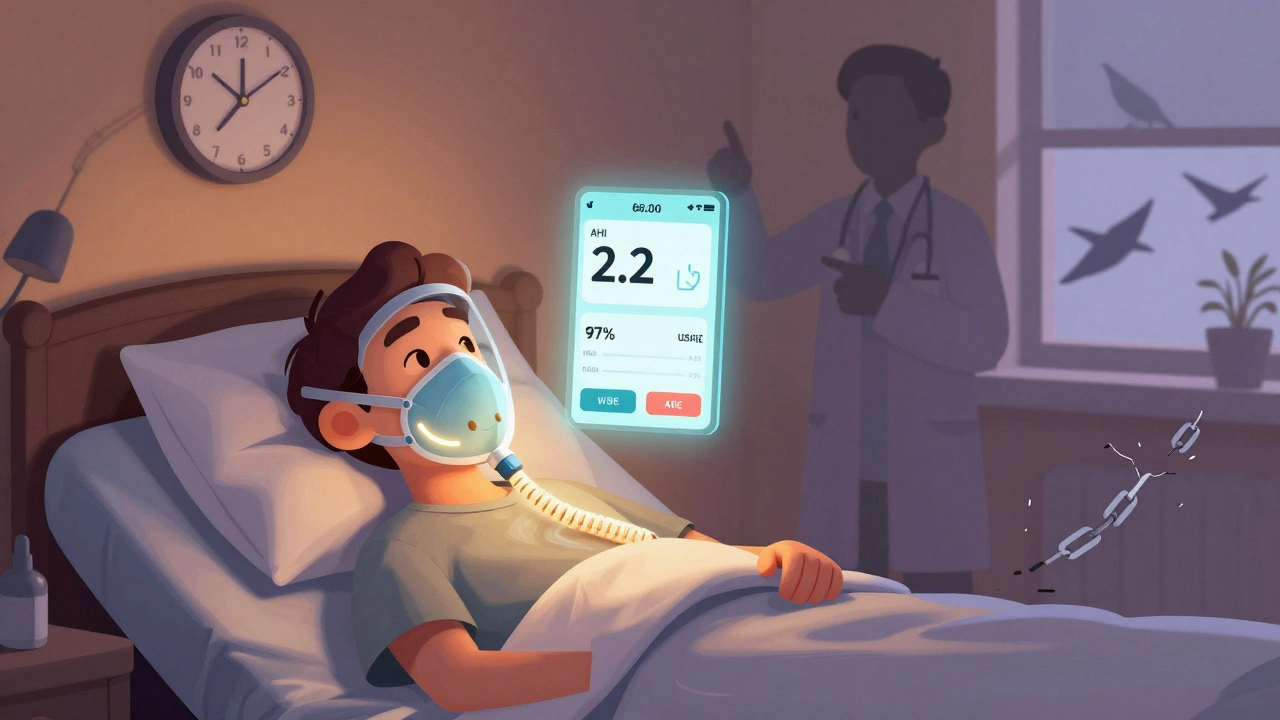
You can fix most issues yourself. But some signs mean it’s time to get professional help:- Your AHI stays above 5 for more than two weeks despite good mask fit and proper humidification.
- You’re leaking over 24 L/min even after replacing the cushion and adjusting straps.
- You’re still waking up with dry mouth after trying a full-face mask and chin strap.
- You feel dizzy, short of breath, or have persistent headaches in the morning.
These aren’t normal. They could mean your therapy isn’t working - or you have another sleep issue, like central sleep apnea or a nasal obstruction.
Medicare and most insurers require 4+ hours of nightly use for 30 consecutive days to continue coverage. If you’re struggling, talk to your provider early. Many now offer telehealth follow-ups. You don’t have to wait months for an appointment.
What’s Next for CPAP Therapy
The technology is getting smarter. ResMed’s upcoming S+ algorithm (coming in Q2 2024) promises 23% better leak compensation. Newer machines now detect small leaks as low as 12 L/min with 92% accuracy. AI-driven pressure adjustments are becoming standard. But the biggest upgrade isn’t in the machine - it’s in you. The more you understand your symptoms, the better you can communicate with your care team. You’re not just a patient. You’re the most important part of your own treatment.CPAP isn’t a cure. It’s a tool. And like any tool, it only works when you know how to use it - and when you don’t give up when it feels hard.
Why does my mouth feel dry even with a humidifier on high?
Dry mouth from CPAP is usually caused by mouth breathing, not low humidity. When air escapes through your mouth, it dries out your throat. A humidifier helps, but won’t fix the root cause. Try a chin strap or switch to a full-face mask to keep air inside your airway.
How often should I replace my CPAP mask cushion?
Replace your mask cushion every 3 months. Silicone breaks down over time from oils on your skin and cleaning. A hardened or cracked cushion causes leaks and discomfort. Most DME providers recommend replacement every 90 days - and 92% of users who follow this report fewer leaks.
Can I adjust my CPAP pressure on my own?
You can make small adjustments within the machine’s allowed range (usually ±2 cm H₂O), but don’t change it beyond that. Going too low risks untreated sleep apnea. Going too high can cause discomfort, bloating, or even damage your airway. Always consult your sleep specialist before making major changes - and never override manufacturer limits, or you’ll void your warranty.
My CPAP machine is loud. Is that normal?
Newer models like the ResMed AirSense 11 and Philips DreamStation 2 run at 25-28 decibels - quieter than a whisper. If your machine sounds louder than a refrigerator humming, check for leaks. Air escaping through a poor seal is the most common cause of excess noise. Also, make sure your filter is clean and your tubing isn’t kinked.
Is CPAP better than oral appliances for sleep apnea?
For moderate to severe sleep apnea, CPAP is more effective - reducing apnea events by 70-90% compared to oral appliances’ 45-55%. Oral devices work better for mild cases or people who can’t tolerate CPAP. But CPAP is the first-line treatment recommended by sleep specialists because it works immediately when properly fitted.
How do I know if my CPAP pressure is set right?
Check your machine’s app for your nightly AHI (apnea-hypopnea index). If it’s below 5, your pressure is likely correct. If it’s above 5 despite good mask fit and no leaks, you may need a higher setting. If you’re uncomfortable and your AHI is below 1, your pressure might be too high. Always discuss changes with your sleep doctor.
Why do I still feel tired after using CPAP?
If you’re using CPAP correctly but still tired, your therapy might not be working. Check for leaks, ensure you’re using it 4+ hours per night, and review your AHI data. Other causes could include untreated insomnia, low iron, thyroid issues, or another sleep disorder. Talk to your sleep specialist - you may need a new titration study or additional testing.
If you’ve tried everything and still struggle, don’t give up. CPAP adherence improves over time - especially when you understand what’s going wrong. You’re not failing. You’re learning.
Eddie Bennett
December 10, 2025 AT 13:31Been using CPAP for 3 years and this guide nailed it. The chin strap tip? Life changer. I was about to toss my mask until I tried one. No more waking up with a desert in my mouth.
Also, don't over-tighten. I used to think more tension = better seal. Nope. Just gave me a headache and made leaks worse. Let it sit, man.
Just saying - you don't need to be a genius. Just patient and willing to tweak.
Monica Evan
December 11, 2025 AT 21:52OMG YES the humidifier on 6 is a trap 🤦♀️ I did that for months thinking more steam = more hydration turns out i was just drowning my tube and getting swamp water in my nose. Level 4 changed everything. Also chin strap = cheap as hell and works like magic. Why do docs never tell you this??
Lisa Stringfellow
December 12, 2025 AT 20:19Wow. Another CPAP guru post full of half-truths and corporate fluff. You think replacing a cushion every 90 days is the solution? Try getting insurance to cover it. Or better yet - try paying $80 for a new cushion every three months when you’re on Medicare.
And don’t get me started on ‘auto-adjust’ mode. My machine keeps dropping pressure when I actually need it most. It’s not smart. It’s lazy engineering.
This isn’t troubleshooting. It’s denial wrapped in a ResMed ad.
Kristi Pope
December 13, 2025 AT 07:12I just want to say thank you to whoever wrote this. I was ready to quit after 2 weeks - felt like I was fighting a dragon every night.
Switched to full-face mask + chin strap combo. First night? No dry mouth. Second night? Slept through the whole thing. Third night? Forgot I was even wearing it.
You’re not broken. You just haven’t found your fit yet. And that’s okay. Take your time. You got this 💪
Aman deep
December 15, 2025 AT 00:34From India here - we dont have access to all these fancy machines but the basics still work. My cousin used a simple nasal mask + cotton chin strap made from an old t-shirt. No humidifier. No heated tube. Just clean water in the tank and patience.
He was snoring like a chainsaw before. Now he sleeps like a baby. You dont need the latest tech. Just the right mindset.
Also - clean your mask daily. Soap and water. Not just wiping it with a tissue. Trust me.
And dont listen to people who say 'just sleep with your mouth shut' - try doing that when you're half-asleep and your nose is stuffed. Impossible.
Jimmy Kärnfeldt
December 16, 2025 AT 06:21It’s funny how we treat CPAP like a machine problem when it’s really a human problem.
We think if we tweak the settings enough, the machine will fix us.
But the real fix? Accepting that sleep isn’t a checkbox. It’s a ritual. A quiet space. A moment where you let go.
The mask? It’s just the tool. The real work is learning to breathe again - not just with your lungs, but with your peace.
And yeah - sometimes that means changing the cushion. But sometimes it means changing how you see the night.
Vivian Amadi
December 16, 2025 AT 08:53Stop being so nice to people who are clearly lying. If your AHI is above 5 and you’re still tired - you’re not ‘learning’ you’re being gaslit by your doctor.
They set your pressure based on a 1-night sleep study in a lab where you were terrified and couldn’t sleep. Of course your numbers are off.
And ‘replace cushion every 90 days’? That’s a sales pitch. I’ve used the same one for 14 months. No leaks. No issues. Stop pushing replacement cycles like it’s a subscription service.
Ariel Nichole
December 17, 2025 AT 17:31Just wanted to add - if you’re using a full-face mask and still leaking, check your headgear. The straps on mine were twisted. Like, literally crossed behind my head. Took me 3 months to notice. Once I fixed it - silence. No more hissing.
Also - don’t sleep on your back if you can help it. Side sleeping = way fewer leaks. I use a body pillow now. Weird looking but worth it.
john damon
December 19, 2025 AT 03:49Just tried the chin strap 😍
First night: felt like a medieval prisoner
Second night: okay maybe this isn’t the worst thing ever
Third night: slept like a log and didn’t wake up thirsty
thank u sm 🙏❤️
matthew dendle
December 20, 2025 AT 16:11So you're telling me the solution to dry mouth is not drinking more water but wearing a damn strap to keep your mouth shut? Wow. Genius. Next you'll say we should tape our eyes shut so we don't see the world.
And 'replace cushion every 90 days'? Sounds like someone's getting kickbacks from ResMed. I use mine for 6 months. No problems. Your 'experts' are just selling upgrades.
Taylor Dressler
December 20, 2025 AT 20:01For anyone struggling with pressure discomfort: try enabling expiratory pressure relief. It’s not a gimmick. It’s physics. Your lungs aren’t designed to inhale against constant pressure. The slight drop on exhale makes all the difference.
I went from 14 cm H₂O to 10 cm H₂O with EPR on - and my AHI dropped from 8 to 1.2.
Don’t be afraid to experiment within the safe range. Your body will tell you what it needs. Just track it. And talk to your doctor before going beyond ±2.
Jean Claude de La Ronde
December 21, 2025 AT 10:48CPAP is the modern monk’s cell. You lock yourself in with a machine that breathes for you, hoping it’ll save your soul from the chaos of the night.
But what if the problem isn’t your airway?
What if it’s your life?
Maybe the apnea isn’t just in your throat - maybe it’s in your schedule, your stress, your silence.
Fix the mask? Sure. But fix your bedtime routine too. No screens. No caffeine. No anxiety. Just stillness.
The machine won’t heal you if you keep living like you’re running a marathon in your sleep.
Jim Irish
December 22, 2025 AT 12:15Good summary. Practical advice. Appreciate the data-backed tips.
One note: humidifier levels vary by climate. In dry regions like Arizona, level 4 may be too low. In humid areas like Florida, level 3 might be enough. Adjust based on your environment, not just the manual.
Also - clean your water chamber daily. Mold grows faster than you think. Use distilled water. It’s worth the extra $2.