
 Jan, 31 2026
What’s the real difference in price between authorized generics and first-to-file generics?
If you’ve ever picked up a prescription and wondered why two different versions of the same pill cost different amounts, you’re not alone. The answer lies in a quiet but powerful battle in the U.S. drug market: authorized generics versus first-to-file generics. Both are cheaper than the brand-name drug, but how much cheaper-and who benefits-depends on who’s selling it and when.
Let’s cut through the jargon. An authorized generic is the exact same drug as the brand-name version, made by the same company, in the same factory, with the same ingredients. The only difference? It’s sold without the brand name and logo. Think of it like a store-brand soda that’s actually made by Coca-Cola. Meanwhile, a first-to-file generic is made by a different company that was the first to submit paperwork to the FDA to copy the brand drug. That company gets a special 180-day head start with no competition, thanks to the Hatch-Waxman Act of 1984.
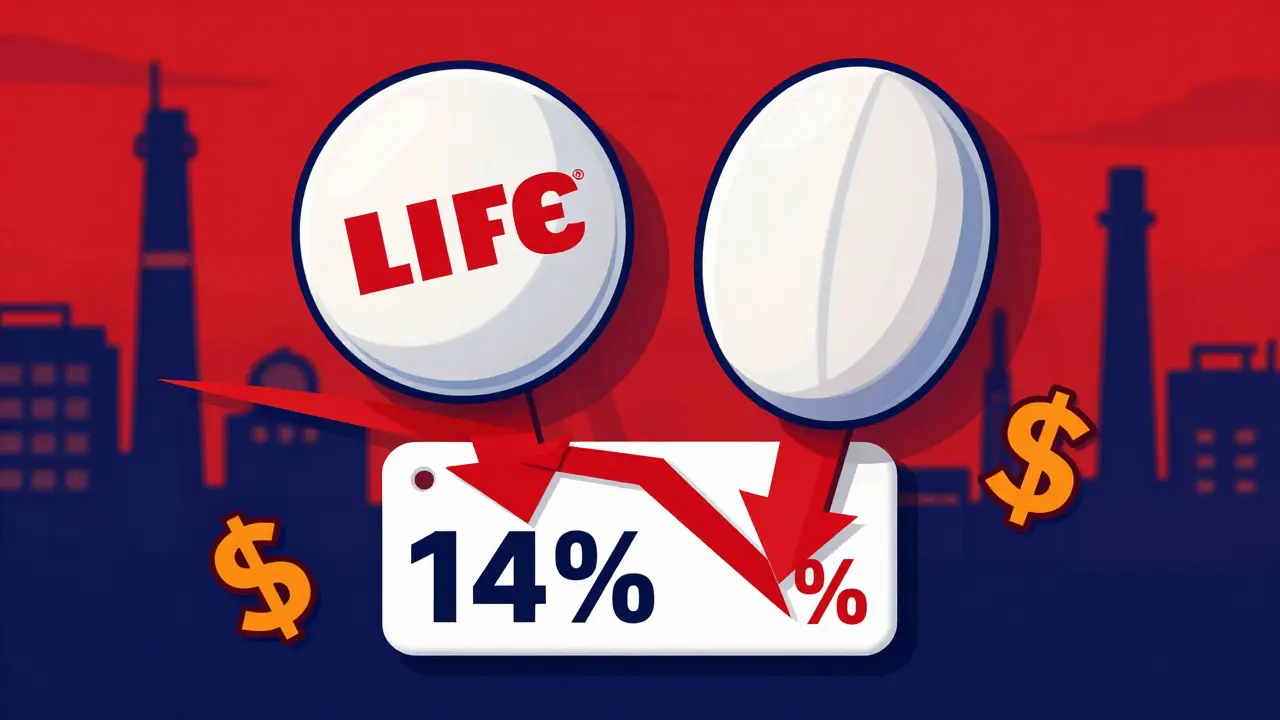
Here’s the kicker: when both types show up at the same time, prices drop even further. That’s not theory-it’s data from the Federal Trade Commission (FTC). In markets where only the first-to-file generic is selling, the price is about 14% lower than the brand. But when an authorized generic joins the market during that 180-day window, the discount jumps to 18%. That might sound small, but on a $500 monthly prescription, that’s $20 extra saved per month. Multiply that across millions of prescriptions, and you’re talking billions in savings for patients and insurers.
Why does the first-to-file generic get a 180-day monopoly?
The 180-day exclusivity isn’t a gift-it’s a reward. When a generic company files an Abbreviated New Drug Application (ANDA), they’re taking a big risk. They have to prove their version works just like the brand, and they often have to fight patent lawsuits from the original maker. If they win, they get 180 days to be the only generic on the market. That’s their chance to make back the money they spent on legal fees and development.
That exclusivity period can be worth hundreds of millions of dollars. One study found that the first-to-file company can earn up to $500 million in revenue during those six months. No wonder they fight hard to get there. But here’s where things get complicated: the brand-name company can choose to launch its own authorized generic during that same window. And when they do, they’re not just competing-they’re undercutting their own potential profits.
Why would a brand company do that? Sometimes, it’s part of a legal settlement. Instead of letting a generic company win the exclusivity and then face years of price competition, the brand might agree to launch its own version early. It’s a trade-off: the brand gives up some short-term revenue, but avoids a long, expensive legal battle and keeps a piece of the generic market.
How much cheaper are authorized generics really?
The numbers don’t lie. According to the FTC’s analysis of 95 drugs, when an authorized generic enters the market alongside the first-to-file generic, pharmacy acquisition costs drop by 27% compared to the original brand price. Without the authorized generic, that number is only 20%. That 7-percentage-point difference? That’s pure savings passed on to consumers.
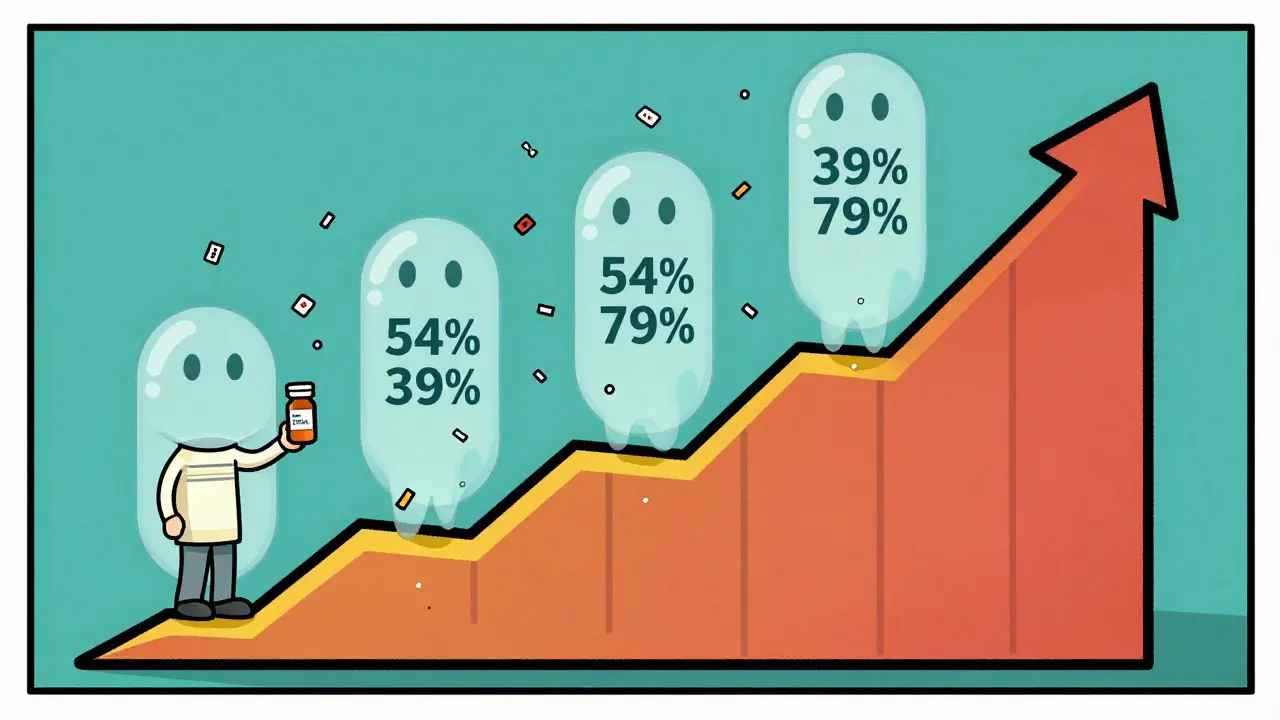
Let’s look at it another way. In 2019, the FDA analyzed drugs that entered the generic market between 2015 and 2017. When only one generic was selling (the first-to-file), the price was 39% lower than the brand. But when a second competitor-usually an authorized generic-joined, the price dropped to 54% below brand. That’s a 15-point jump in discount just by adding one more player.
And it doesn’t stop there. When four generic versions are on the shelf, prices fall to 79% below the brand. With six or more, you’re looking at 95% off. Authorized generics don’t just lower prices during the exclusivity window-they speed up the race to the bottom. The more competitors, the faster prices crash.
By 2022, the average generic drug cost 80% to 85% less than the brand. That’s not just a bargain-it’s a lifeline for people managing chronic conditions like high blood pressure, diabetes, or depression. And authorized generics are a big reason why.
Who profits when authorized generics enter the market?
It’s not just patients who win. Pharmacies see their profits rise too. When the first-to-file generic hits the market, pharmacy gross profit per prescription jumps. But when an authorized generic joins, profits go up even more. Why? Because pharmacies buy both versions at low wholesale prices and sell them at the same retail rate. More competition means lower costs for them, and they keep the difference.
But the brand-name company? They lose. The FTC found that when an authorized generic enters during the 180-day exclusivity, the first-to-file generic’s revenue drops by 40% to 52%. And that hit doesn’t fade after 180 days-it lasts for at least 30 months. That’s a massive financial blow to the generic manufacturer.
So why do brand companies still do it? Because they’re playing the long game. If they don’t launch an authorized generic, another company might. And if that happens, they lose control of the market entirely. By launching their own version, they keep some of the revenue, delay the flood of cheaper generics, and avoid the risk of being completely squeezed out.
Do authorized generics hurt innovation?
That’s the big question critics ask. If brand companies can just launch their own generics and crush the first-filer’s profits, won’t that scare off other companies from trying to challenge patents? Won’t fewer generics get made over time?
The FTC looked at this closely. Their 2013 report found no measurable drop in the number of patent challenges by generic companies. Even with authorized generics cutting into first-filer profits, companies still filed ANDAs at the same rate. Why? Because the potential reward is still huge. Winning that 180-day exclusivity is worth the risk-even if someone else might join you later.
Dr. Robin Feldman, a top pharmaceutical policy expert, put it simply: “The 180-day exclusivity period can be worth several hundred million dollars.” That’s enough to justify the legal costs, even if you know an authorized generic might show up.
And here’s another surprising fact: authorized generics don’t charge more than other generics. Some worried they’d be priced higher because they’re “brand-backed.” But the FTC found no evidence of that. In fact, they’re often the cheapest option on the shelf.
What’s changing in the generic drug market?
The rules are shifting. The FDA’s Generic Drug User Fee Amendments (GDUFA), updated in 2022, have sped up approval times. Back in 2012, only 20% of generic applications got approved on the first try. Now, it’s 66%. That means generic companies get to market faster-sometimes 13 months sooner than before. That cuts their development costs by an average of $3.5 million per drug.
What does that mean for authorized generics? It changes the balance. If a generic can get approved faster, they don’t need to rely as much on the 180-day exclusivity to make money. That reduces the pressure on brand companies to launch authorized generics as a settlement tactic.
But there’s still a twist. Sometimes, brand companies don’t wait for generics to come in. They just launch a new version of the drug-say, an extended-release formula-and get a new patent. That can shrink the market for the first-to-file generic by up to 29% in the first year. So even if a generic wins the race, the finish line keeps moving.
For now, the system still works. Patients get lower prices. Pharmacies make more. Generic companies still challenge patents. And brand companies still hold some control. The FTC continues to monitor the market closely, warning against anti-competitive behavior. But as long as authorized generics stay priced fairly and competition stays open, the system keeps delivering savings.
What should you do as a patient?
When your doctor prescribes a brand-name drug, ask: “Is there a generic version?” Then ask: “Is there an authorized generic?” Your pharmacist can tell you. Authorized generics often have the same name as the brand, just without the logo. Sometimes they’re labeled as “brand-name generic” or “same as [Brand Name].”
Don’t assume the cheapest generic is the best deal. Sometimes the authorized generic is the same quality, priced lower, and covered by your insurance just like any other generic. And if your pharmacy doesn’t stock it, ask them to order it. Demand drives supply.
And if you’re on a long-term medication-like statins, blood pressure pills, or antidepressants-those 10-20% savings add up fast. Over a year, you could save hundreds. That’s not just a discount. It’s real financial relief.
What’s the difference between an authorized generic and a regular generic?
An authorized generic is made by the same company that makes the brand-name drug, using the same ingredients and factory. It’s identical in every way, just sold without the brand name. A regular generic is made by a different company that copied the drug after proving it works the same way. Both are safe and effective, but authorized generics often hit the market faster and can be priced lower because they skip the manufacturing setup costs.
Why are authorized generics sometimes cheaper than first-to-file generics?
Because they’re produced by the brand company, they don’t need to invest in new manufacturing lines or regulatory filings. That cuts their costs. When they enter the market during the first-to-file’s 180-day exclusivity, they create competition that forces prices down. The first-to-file generic can’t raise prices to recoup its investment, so it drops its price too. The result? Lower prices for everyone.
Do authorized generics delay other generics from entering the market?
Not really. The FTC studied this for years and found no evidence that authorized generics reduce the number of patent challenges or slow down future generic entries. Generic companies still file ANDAs at the same rate. The 180-day exclusivity remains valuable enough to make the risk worthwhile, even with authorized generics in the mix.
Can I ask my pharmacy for an authorized generic specifically?
Yes. Pharmacists can usually tell you which generic version they have in stock. If they don’t have the authorized version, ask them to order it. Many pharmacies will do so if you request it. Authorized generics often have the same name as the brand, just without the logo-like “Metformin HCl (brand name)” instead of “Metformin HCl.”
Are authorized generics as safe as brand-name drugs?
Absolutely. Authorized generics are made under the same FDA inspections, using the same formulas and quality controls as the brand-name version. They’re not a cheaper knockoff-they’re the real thing, just sold under a different label. The FDA requires them to meet the same bioequivalence standards as any other generic drug.
Final thought: More competition = lower prices
There’s no magic formula here. Lower drug prices come from one thing: more players in the game. Authorized generics aren’t a loophole-they’re a tool that adds competition exactly when it matters most. They don’t break the system. They fix it.
For patients, the message is simple: ask. Ask your doctor. Ask your pharmacist. Ask your insurer. If you’re paying more than you need to, it’s not because you’re not trying hard enough. It’s because you don’t know what’s available. And now you do.
Melissa Melville
February 1, 2026 AT 04:16Naomi Walsh
February 2, 2026 AT 14:09June Richards
February 3, 2026 AT 11:02Jaden Green
February 3, 2026 AT 14:48Nicki Aries
February 4, 2026 AT 12:00Angel Fitzpatrick
February 5, 2026 AT 00:54vivian papadatu
February 6, 2026 AT 02:05Bob Cohen
February 7, 2026 AT 11:15Lu Gao
February 8, 2026 AT 07:15Ed Di Cristofaro
February 8, 2026 AT 09:52Deep Rank
February 9, 2026 AT 13:36Nancy Nino
February 11, 2026 AT 04:16Lilliana Lowe
February 11, 2026 AT 21:08Jamie Allan Brown
February 13, 2026 AT 03:21